

Ken Loucks
Angels make frequent appearances in scripture. But who is the Angel of the Lord?
[Steve Myers] A question came in from a Beyond Today viewer and they asked the question, "Who is the Angel of the Lord?" Throughout the Old Testament, that phrase seems to pop up several times over and over again and so it's a good question. Who is the Angel of the Lord? So, where would we start to begin to answer a question like that Gary?
[Gary Petty] Well, when you look at the Bible—of course there's angels, who are messengers, supernatural messengers from God that He's created. They go back and forth between human beings and God. But there is a special Angel that is mentioned a number of places in the Old Testament—the Angel of the Lord. And He is quite different than other angels. First of all, He allows Himself to be worshiped. In other places, He actually speaks as if He is God. One place, I think of, it's in Exodus, you know, where the Angel of the Lord is in the burning bush and talks to Moses (Exodus 3:1-21 and Exodus 4:1-16). And there He presents Himself as God and as the Angel of the Lord. So what we have here in someone who is God but He's also the Angel of the Lord. So what we have here is actually the pre-incarnate Jesus Christ.
[Steve Myers] Yeah, and it's interesting because it does tie into the literal meaning of the word "angel" as being a messenger of the Lord. And so God can speak for Himself at times as well through the burning bush we've got Him identifying Himself as the I AM—as the One who would become Jesus Christ. So even the translators in some of the different translations get it right because they'll capitalize the "A" for Angel realizing it's something more than just an ordinary angel.
[Gary Petty] That's right. Even Abraham, you know when he went to sacrifice his son, Isaac, the person who talks to him there is the Angel of the Lord (Genesis 22:9-12). And He speaks as if He is God. There's other places where the Angel of the Lord speaks and people say "I have seen God." So what we have is God, but not the Father. And so once again we have Jesus Christ.
[Steve Myers] Right and you can tell that by the context more often than not when you can read it and if an angel is not allowing worship, we know that's just an ordinary angel. But there's a great example of this. It's in Judges chapter 13. And here's where Sampson's parents are inquiring of God, they're talking to the Angel of the Lord. And so there's a good example of this—the father of Sampson, Manoah, said to the Angel of the Lord, "What is Your name, that when Your words come to pass, we may honor You?" So he asked Him outright, you know, who are you? And of course, the Angel of the Lord says in verse 18, "Why do you ask My name seeing it is wonderful?" So, there's a little bit of insight that this is not any ordinary angel. And so ultimately by the time we get to the end of the story down in verse 21, it says, "When the Angel of the Lord appeared no more to Manoah and his wife, then Manoah knew that He was the Angel of the Lord." So we don't get the whole story there, but in the next verse He says, "Manoah said to his wife, 'We shall surely die because we have seen God,'" And so here we see it all put together very clearly that the Angel of the Lord, especially in this case, is God. And so we know His identity in that case (Judges 13:6-24).
[Gary Petty] So if you want to do an interesting study, go through the Old Testament and look up all of the places where you can see "Angel of the Lord" and study it in context and you will find out how the pre-incarnate Jesus Christ came and He interacted with human beings as the Messenger of God.
[Steve Myers] That's BT Daily. We'll see you next time.

Who was Jesus? Few will dispute that a man named Jesus lived 2,000 years ago and that He was a great teacher who impacted the world from His time forward.
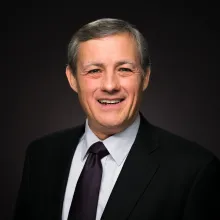
Gary Petty is a 1978 graduate of Ambassador College with a BS in mass communications. He worked for six years in radio in Pennsylvania and Texas. He was ordained a minister in 1984 and has served congregations in Longview and Houston Texas; Rockford, Illinois; Janesville and Beloit, Wisconsin; and San Antonio, Austin and Waco, Texas. He presently pastors United Church of God congregations in Nashville, Murfreesboro and Jackson, Tennessee.
Gary says he's "excited to be a part of preaching the good news of God's Kingdom over the airwaves," and "trusts the material presented will make a helpful difference in people's lives, bringing them closer to a relationship with their heavenly Father."

Steve is the Operation Manager for Ministerial and Member Services of the United Church of God. He is also an instructor at Ambassador Bible College and served as a host on the Beyond Today television program. Together, he and his wife, Kathe, have served God and His people for over 30 years.
