United Church of God, an International Association
Search:
United Church of God - Facebook
United Church of God - Twitter
United Church of God - Email
Literature Library
[ Home ]
Article Reprints
Bible Study Lessons
Booklets
Frequently Asked Bible Questions
Good News Magazine
Good News Bible Reading Program
This is the Way
United News
UCG Commentary
Vertical Thought
Virtual Christian Magazine
World News & Prophecy
 
Good News Magazine

Frequently Asked Bible Questions

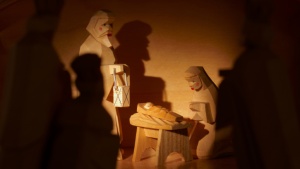
When was Jesus Christ born? Was Jesus born on December 25—Christmas Day?

History shows that December 25 was popularized as the date for Christmas, not because Christ was born on that day, but because it was already popular in pagan religious celebrations as the birthday of the sun. But could December 25 be the date of Christ's birth?

"Lacking any scriptural pointers to Jesus's birthday, early Christian teachers suggested dates all over the calendar. Clement...picked November 18. Hippolytus...figured Christ must have been born on a Wednesday...An anonymous document[,] believed to have been written in North Africa around A.D. 243, placed Jesus's birth on March 28" (Joseph L. Sheler, U.S. News & World Report, "In Search of Christmas," Dec. 23, 1996, p. 58).

A careful analysis of Scripture, however, clearly indicates that December 25 couldn't be the date for Christ's birth. Here are two primary reasons:

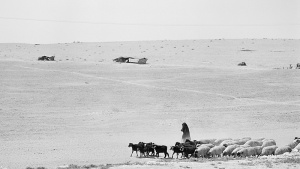
First, we know that shepherds were in the fields watching their flocks at the time of Jesus' birth (Luke 2:7-8). Shepherds were not in the fields during December. According to Celebrations: The Complete Book of American Holidays, Luke's account "suggests that Jesus may have been born in summer or early fall. Since December is cold and rainy in Judea, it is likely the shepherds would have sought shelter for their flocks at night" (p. 309).

Similarly, The Interpreter's One-Volume Commentary says this passage argues "against the birth [of Christ] occurring on Dec. 25 since the weather would not have permitted" shepherds watching over their flocks in the fields at night.

Second, Jesus' parents came to Bethlehem to register in a Roman census (Luke 2:1-4). Such censuses were not taken in winter, when temperatures often dropped below freezing and roads were in poor condition. Taking a census under such conditions would have been self-defeating.

Given the difficulties and the desire to bring pagans into Christianity, "the important fact then which I have asked you to get clearly into your head is that the fixing of the date as December 25th was a compromise with paganism" (William Walsh, The Story of Santa Klaus, 1970, p. 62).

If Jesus Christ wasn't born on December 25, does the Bible indicate when He was born? The biblical accounts point to the fall of the year as the most likely time of Jesus' birth, based on the conception and birth of John the Baptist.

Since Elizabeth (John's mother) was in her sixth month of pregnancy when Jesus was conceived (Luke 1:24-36), we can determine the approximate time of year Jesus was born if we know when John was born. John's father, Zacharias, was a priest serving in the Jerusalem temple during the course of Abijah (Luke 1:5). Historical calculations indicate this course of service corresponded to June 13-19 in that year (The Companion Bible, 1974, Appendix 179, p. 200).

It was during this time of temple service that Zacharias learned that he and his wife, Elizabeth, would have a child (Luke 1:8-13). After he completed his service and traveled home, Elizabeth conceived (verses 23-24). Assuming John's conception took place near the end of June, adding nine months brings us to the end of March as the most likely time for John's birth. Adding another six months (the difference in ages between John and Jesus) brings us to the end of September as the likely time of Jesus' birth.

Although it is difficult to determine the first time anyone celebrated December 25 as Christmas Day, historians are in general agreement that it was sometime during the fourth century. This is an amazingly late date. Christmas was not observed in Rome, the capital of the Roman Empire, until about 300 years after Christ's death. Its origins cannot be traced back to either the teachings or practices of the earliest Christians.

To learn more about the origin of Christmas, request or download your free copy of the booklet Holidays or Holy Days: Does It Matter Which Days We Keep?


Related Online Resources

Christmas: The Untold Story from the booklet Holidays or Holy Days: Does It Matter Which Days We Keep?
People almost everywhere observe Christmas Day. But how did Christmas come to be observed? How did the customs and practices associated with Christmas make their way into traditional Christianity's most popular holiday?

Why Some Christians Don't Celebrate Christmas
Many feel that December 25 marks Christ's birthday and that it honors Him. After all, can 2 billion professing Christians be wrong? Yet a few Christians don't observe Christmas, believing that Jesus didn't sanction it and that it dishonors Him. Who is right?


Contact Us

Don't see your Bible FAQ here? Ask our team of caring, dedicated ministers for a personal answer. (Please allow a week or so for an e-mail response.)


Bible FAQ Topics

What do Bible prophecies of the future mean?
What is the good news of the Kingdom of God?
What happens after I die?
How can I improve my marriage and family life? What does God say about marriage and sex?
What should I do to live a Christian life?
What's involved with becoming a new Christian?
What does God want us to do?
What is sin and how can I overcome it?
What does the Bible say about jobs, money, debt and finances?
What Holy Days and holidays does God want (or not want) us to celebrate?
Who is God?
What is the Church of God?
How can we know that God created everything and that it didn't all evolve?
Does God care how I look? How does He want us to look?
What is the Bible and how can I gain the most from it?
How can you explain Bible scriptures that are difficult to understand?


© 1995-2010 United Church of God, an International Association | Web Site Policy | Web Site Map
Reproduction in whole or in part without permission is prohibited. All correspondence and questions should be sent to info@ucg.org. Send inquiries regarding the operation of this Web site to webmaster@ucg.org.