King Solomon and the Bible
A careful reading of the writings of Solomon that have been preserved in the Bible provides the reader with both human and divine wisdom.
Solomon left us with many proverbs (Proverbs 1-29), the book of Ecclesiastes, and the Song of Solomon. Of course, not all of his writings found their way into the Bible. But a careful reading of these preserved books provides the reader with both human and divine wisdom.
For example, the Song of Solomon was written by Solomon himself (Song of Solomon 1:1), as many scholars agree. He is specifically mentioned seven times in the book and is identified as the groom. The internal evidence, including descriptions of royal luxury and rich imported goods (Song of Solomon 3:6-11), indicates that King Solomon was the author.
Ecclesiastes was also written by Solomon. The author calls himself "the son of David, king in Jerusalem" (Ecclesiastes 1:1, 12). The explorations of pleasure, the impressive accomplishments and the unparalleled wealth described in Ecclesiastes 2:1-10 can only be attributed to King Solomon.
Solomon was also responsible for 29 chapters of the book of Proverbs, which constitute both human and divine wisdom. Many men and women have quoted them directly or created variations based on them. Perhaps you have heard the saying, "It is better for a man to keep his mouth shut and have people think he's a fool, than to open it and remove all doubt." This saying has been ascribed to both Abraham Lincoln and Mark Twain. Yet in principle Solomon preceded these words by some 3,000 years when he wrote, "Even a fool is counted wise when he holds his peace; when he shuts his lips, he is considered perceptive" (Proverbs 17:28).
Solomon's words have been quoted for nearly 3,000 years.
Course Content
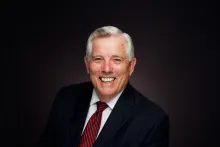
Jerold Aust
Jerold Aust has served in the ministry for 52 years, as a public speaker for 58 years, a published writer for 38 years, and is employed by UCG’s Media and Communications Services. He is a Senior Writer, interviewer, and editor for Beyond Today Magazine and has taught Speech Communication for UCG’s ministerial online program and the Book of Revelation for ABC.
Jerold holds a BA in theology from Ambassador College, Pasadena (1968), an MA in Communication from California State University, Fullerton (1995), a distance-learning Ph.D (2006), and a Famous Writers School diploma in non-fiction writing (1973). Additionally, he studied post-grad communication at University of Southern California (1995), radio, TV, voice-overs, and Public Relations at Fullerton College (1995-1996), and graduate communication at Wichita State University (1978). Jerold has taught communication at the University of South Alabama (7 years) and ABC (17 years). His published works include, Ronald Reagan’s Rhetoric: Metaphor as Persuasion and EZSpeakers: Public Speaking Made Easy in 7 Steps. Jerold's overarching goal is to share with humankind its incredible destiny!

