Is Acceptance of Religions Key to Stability?
Will religious diversity and tolerance save our world?
On November 6, for the first time in history, the Pope granted an audience to the king of Saudi Arabia, Keeper of the Two Holy Mosques of Mecca and Medina. Benedict XVI met King Abdullah publicly at the Vatican before they visited privately through interpreters for half an hour.
How far will this meeting of the top representatives of the world's two largest religions push forward international stability and hoped for world peace?
I borrowed the title for this commentary from American columnist Thomas L. Friedman. But his title, "Acceptance of Religions Is Key to Stability" was a statement. While the earth surely needs stability, Bible prophecy and history disagree with Mr. Friedman's title.
But if acceptance of religions is not the key to stability, then what is?
Ask Paul of Tarsus. He was one of the great apostles of Jesus Christ. Under divine inspiration he authored many of the letters included in the New Testament. And...he started a talk show...in Athens!
Athens was where Athens is today. In the first century it was a center of Greco-Roman religion and learning. Acceptance of religious plurality was practiced. "For all the Athenians and the foreigners who were there spent their time in nothing else but either to tell or hear some new thing" (Acts 17:21).
However, the Jews in Greece weren't so tolerant—especially of renegade rabbis, which many considered Paul to be. Understand this, the Romans until sometime in the mid 60's AD considered Jesus of Nazareth a rabbi and "Christianity" a sect of Judaism because the apostles and their converts kept the seventh day Sabbath and the annual holy festivals of the Bible—but as Christian holy days and festivals.
Some antagonistic Jews had pursued Paul from town to town in northern Greece. The other ministers and members spirited Paul away from his persecutors in Thessalonica to cool his heels for awhile in Athens.
The fiery apostle was on the lam. With nothing to do but wait, this creative dynamo and true preacher of Jesus as the Messiah found a way to occupy his time; he started a talk show.
Talk about acceptance of religions! Athens was a city full of idols and temples dedicated to every god or goddess the Athenians could think of! Paul knew—as can you—that these religions had no root in the truth of the great God who created everyone and everything.
An evangelistic educator, Paul the professor was struck by the lack of true spiritual light in the city. He set up shop in the marketplace, talking about the one true God and His Son Jesus Christ—an early, literal "talk" show.
He had callers from his first minutes "on the air" in the arena of ideas, talking to Jews and pagans alike. Within days his talk show gained the attention of the educational establishment. In their quest for diversity some Stoic and Epicurean philosophers invited him to address the Areopagus, the elite club of Athens' sagacious thinkers.
Paul's famous but short message is a must read: The Sermon on the Unknown God (Acts 17:22-31).
Enamored with the idea that acceptance of religions is key to stability, the Athenians placed empty, statue-less pedestals around the city, inscribed: "To the Unknown God." They didn't want to offend any religion or deity. How similar their societal climate is to ours today!
Paul the dauntless had his angle. "Men of Athens, I perceive that in all things you are very religious [read: politically correct plus culturally and religiously diversified]. I found this inscription to the Unknown God...I know Him! Let me tell you about Him. This God made from one blood all nations to dwell on earth...and is willing to overlook these times of ignorance, calling upon all men to change their minds and ways to come under the merciful judgment of His Son" (paraphrased).
Pope Benedict's and King Abdullah's meeting aside, the world today is headed for an internationally religious cataclysm. Man can attempt religious acceptance on a wide scale, but if one religion or faction advocates holy war (in whatever language), there will be "holy"—or rather unholy—war.
Acceptance of religions is not the key to stability. Acceptance of the true religion, headed by the Jesus that Paul spoke of, is. But understand, Christ's Christianity doesn't look like traditional Christianity—or any other kind of religion. All nations will find stability only when Jesus returns to this earth to become Head of both Church and State!
Course Content
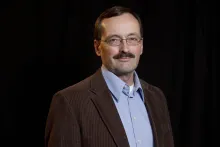
Randall Stiver
Randy Stiver is pastor of the United Church of God congregation in Rapid City, South Dakota.

