Prices Go Up, Up, Up! What Should We Do?
In these trying times, should our daily needs seem unattainable, it is important to remember the encouraging words of Matthew 6:25-34. Here Jesus promises that if we "... seek first the kingdom of God and His righteousness ... all these things [the necessities for survival] shall be added to you" (verse 33).
Each of us is receiving a continuing education on the intricate part played in the world's economy by the price of fossil fuel. As it goes higher, so do the costs of a long list of commodities and services necessary for our own productivity and survival.
Electricity is up. Gasoline and diesel are up. Fuel oil is up. Natural gas is up. The cost of coal is up. Prices of corn, wheat, milk and eggs, as well as all foods made from them are up. The price of commercial fertilizer, made from petroleum or natural gas, has also skyrocketed. Some types are up 300 percent in just a year, with both cost and short supplies keeping farmers from buying what they need.
As a result, it costs more to grow our groceries; more to buy our groceries; more to get our groceries; more to refrigerate our groceries; more to cook our groceries. In April, the World Bank reported cost increases for the 36 months before February 2008. The global price of wheat rose 181 percent and the average global price of all foods increased by 83 percent.
All of this threatens not only the pocketbook but also life itself for tens of millions of the world's poor. But it's not merely the developing world's problem or only a problem for the Western world. It's a worldwide problem.
What will the average person do? For some, it's possible to cut back on leisure spending and redirect their finances to offset the oil-price-caused increases. For many, it's comes down to sorting the bills that need to be paid and deciding which ones have priority.
Another direct consequence of these increased costs is a shrinking job market, causing some to need charity just to survive. A businessman in northern Africa wrote us a few days ago, after reading our booklet, Managing Your Finances. He is facing bankruptcy after barely beginning in business. From all appearances, he made reasonably good decisions, got an education in a field with available jobs and obtained a small business loan to start up. But the worldwide tidal wave of the rising cost of living overtook him just at the wrong time.
Few situations in life are more frightening than what many will face in the current financial crisis. The following words capture this raw fear: "I felt weak from fear, and my lips quivered. My bones seemed to melt, and I stumbled around." The writer describes a wrecked economy: "Fig trees may no longer bloom, or vineyards produce grapes; olive trees may be fruitless, and harvest time a failure; sheep pens may be empty, and cattle stalls vacant ...."
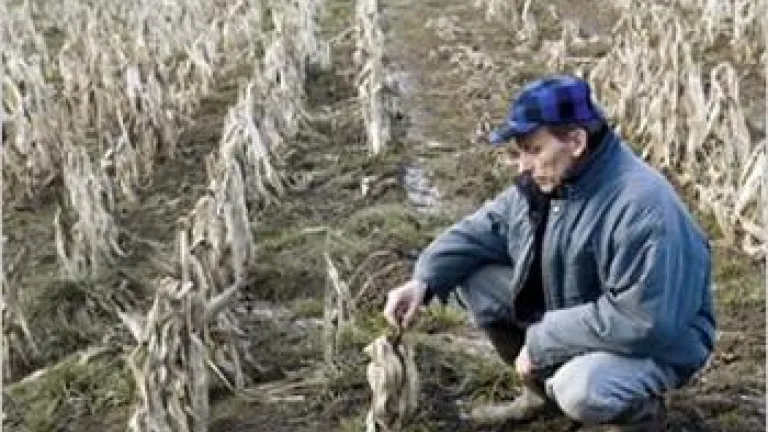
No harvest and no livestock indicate not only an immediate shortage but also a continuing one where there is no grain to eat, no seed for the next crop, no meat to eat and no breeding stock to produce more animals. This could either represent a straight agricultural assessment or symbolize the most common ways people make their living. Either way, the imagery is clear. Hope of income is gone.
The writer isn't someone from the 21st century, but from approximately 26 centuries ago! He was the biblical prophet Habakkuk who had to live through his prophecy's fulfillment. His message was not only useful for his time but is also useful instruction for us.
Habakkuk considered God's promises carefully. This greatly bolstered his confidence, his faith. So his tone changes as he continues: "... but I will still celebrate because the LORD God saves me. The LORD gives me strength. He makes my feet as sure as those of a deer, and he helps me stand on the mountains" (Habakkuk 3:16-19, Contemporary English Version).
The above wording symbolizes the prophet's confidence that he would survive; that God would make it possible for him to walk securely (like a sure-footed deer) when otherwise he would have fallen. Godly faith is assurance of support when no apparent support is visible. It is a godly confidence in the future when no physical evidence suggests hope (see Hebrews 11:1).
God has promised to respond the same for us today, if we really trust Him. In these trying times, should our daily needs seem unattainable, it is important to remember the encouraging words of Matthew 6:25-34. Here Jesus promises that if we "... seek first the kingdom of God and His righteousness ... all these things [the necessities for survival] shall be added to you" (verse 33).