The Passover Festival Season: Passover and The Feast of Unleavened Bread Means a Transformation

We should all perennially ask the question, Has the death of Jesus Christ made a real difference to me? Is my life really transformed? When I observe the feast of Unleavened Bread, year after year, does it have an impact on my life?
These are questions Paul required the Corinthians to ask themselves as they partook of the Passover bread and wine, symbolizing the broken body of Jesus Christ and His shed blood. "But let a man examine himself and so let him eat of the bread and drink of the cup" (1 Corinthians 11:28). Some were guilty of participating in the Passover service of God's Church in an "unworthy manner" (verses 27, 29).
Observing the Passover Unworthily
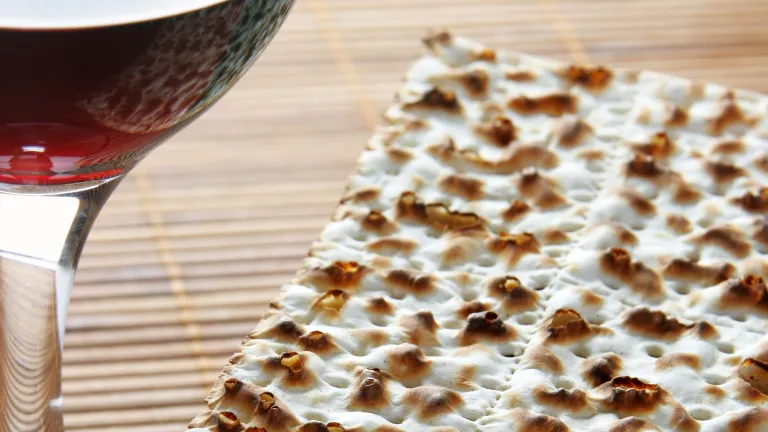
What were they doing? First, they were making a meal out of the Passover service. The Passover that Jesus instituted consisted of a piece of unleavened bread and wine (1 Corinthians 11:23-26), not the supper itself (verse 20). However, in mistakenly incorporating the meal as a part of the Passover, they violated yet another godly principle. Some who had food and drink would eat a meal together before others arrived for the Passover service. Also some of the "haves" would eat in front of the "have-nots" of the congregation without a thought of sharing their blessings (verses 17-22). They were not considerate of the poverty of their brethren in the very Body of Christ at the time of the Passover service, which itself pictures that we should all be united as one body.
It is in the context of this problem that Paul requires them to examine themselves so they would not eat and drink in an unworthy manner. To partake of the Lord's Passover service with this procedure of a meal and made worse by an attitude of partisan spirit, demonstrated that they did not "discern" (or understand or appreciate fully) the Lord's body.
The major problem in the Corinthian congregation is that it became divided. Groups of individuals would line up behind a leader of their own choosing (1 Corinthians 1:10-12). Rather than judging or examining themselves, they spent their time judging others in their own congregation. They were demeaning others in the congregation and their conduct at the Lord's Passover highlighted their violation of the lesson and meaning of Passover.
It was the time of the Passover, and the Feast of Unleavened Bread—festivals that were observed by the Church Christ founded. The Church understood clearly that the Feasts of the Lord were to be observed by the disciples of Christ. They resisted pagan observances and customs that would tend to later creep into the Christian faith.
Unleavened Bread Symbolizes Putting Sin Out
In addressing yet another problem in the Corinthian congregation, Paul referred to the observance of the Feast of Unleavened Bread. There was sexual immorality and excessive drinking among members of the congregation. There apparently was little done to remedy these sins. When Paul corrects the congregation for their permissive approach toward the new way of life in Christ, he refers to the Feast of Unleavened Bread. "Therefore purge out the old leaven, that you may be a new lump, since you truly are unleavened. For indeed Christ, our Passover, was sacrificed for us, Therefore let us keep the feast, not with old leaven, nor with the leaven of malice and wickedness, but with the unleavened bread of sincerity and truth" (1 Corinthians 5:1, 7-8).
The observance of God's Feast had special meaning. Here Paul succinctly gives a very deep meaning to the observance of the Passover and Unleavened Bread. Because Christ was sacrificed for us, we should go on to become a new lump without the leaven of sin of our former ways. The old ways of this world such as malice and wickedness were symbolized by leaven. Now since Christ died for us, freeing us from past sin, let us go on to live a new life in Christ.
Does this observance have this profound impact in our lives? Do we focus on becoming a new man through Christ living in us? Do we strive to put sin out of our lives? Is there a strong desire for sincerity and truth? Christ declared, "Your word is truth" (John 17:17). Are we able to sincerely examine ourselves against the pure motives of love that was so obvious in the life of Jesus Christ?
The observances of these festivals tell us that real permanent change is possible! Jesus Christ expects a transformation in our lives.
Change From What to What?
The observances of these festivals tell us that real permanent change is possible! Jesus Christ expects a transformation in our lives.
Paul again remarks of many in the Corinthian congregation: "Ffor you are still carnal. For where there are envy, strife, and division among you, are you not carnal and behaving like mere men?" (1 Corinthians 3:3). The natural behavior of humans, which results in envy and strife among ourselves, tends to become dominant in some situations where one's own self-interest and importance is at stake. The Bible calls this carnal, of the flesh. It is a standard response of humans when our self-interests are threatened.
You and I were born in this world and we are influenced by an intensely selfish spirit that pervades most of human behavior. We acquire at a very early age these urges to promote the self without regard for the best interests of others. "Where do wars and fights come from among you? Do they not come from your desires for pleasure that war in your members? You lust and do not have, you murder and covet and cannot obtain. You fight and war…" (James 4:1-2). James describes the appalling condition of this world. The results of war and violence between nations, tribes, families or individuals can be traced back to the inability of the individual to successfully curb the human desires to gratify the desires of the flesh.
It is our human nature that must change. Jesus Christ overcame the world (John 16:33) and He expects all those whom He has called in this age to also overcome the world (Revelation 2:26, 3:21). Christ wants to use us and will depend on those whom God has called to acquire and commit permanently to the very mind of Christ. Our lives must change from the carnal human tendencies that so easily reverts to anger, strife and violence. We must in turn acquire the more deliberate and controlled behavior characterized by love, patience and humility. He has made it possible for us to transform our lives through His power and mind abiding within us.
Conformed to the Image of Christ
God has a purpose He is working out here on this earth amidst the ever deteriorating condition of humankind. "And we know that all things work together for good to those who love God, to those who are the called according to His purpose. For whom He foreknew, He also predestined to be conformed to the image of His Son, that He might be the firstborn among many brethren" (Romans 8:28-29).
God's purpose clearly stated is that we are "to be conformed to the image of His Son"—to be a representation of Him. The entire creation is waiting on this most important work to be completed (verse 19). The world tomorrow will only include those whom the Father has called and chosen and who have developed the mind of Christ as a permanent feature of their character.
It is in the Feasts of God that the plan of God, to first bring salvation to a few and then later to the whole world, is revealed. One must observe the feasts clearly with this in mind and should prepare for the observances of these festivals with self-examination—not an examination of others!
Unleavened Bread Means Becoming a New Person
When eating unleavened bread for a period of seven days as God commands, you are demonstrating that you are prepared to live by the very Word of God. You are saying that you will do your part to place the Word of God within you—in your mind and heart, and live by the pure Word of God. There is the saying, "You are what you eat." So too, if we feed on the values expressed by this world through the print media, television or movies, we will tend to conform to those values. Paul emphatically says, "Do not be conformed to this world, but be transformed by the renewing of your mind" (Romans 12:2). One of the big lessons of the Days of Unleavened Bread is that we must put the Word of God within us and in sincerity and truth examine ourselves against the Word of God.
We know that Jesus Christ is the Word of God. This same symbolism is also pictured in the Passover service. The piece of unleavened bread we eat at Passover represents the broken body of Jesus Christ. When we eat this piece of bread we are saying that we are prepared to have Christ Himself live within us. Christ lives in us through the Holy Spirit which He sent when He ascended to heaven after His death and resurrection from the dead. When Christ lives in you at your request, He can give to you the attributes of God Himself. You can become a new person through the very mind of God residing within you.
Our observance of the Passover and Unleavened Bread represents our commitment to seeking the very life and mind of Jesus Christ to live within us, and also our commitment to actively seek His mind and ways in His very word.
Passover and Unleavened Bread mean change for the individual. It means no less than a deep, continuing and permanent change. It is only through Jesus Christ that we can truly change our lives. Will this Passover and Unleavened Bread have the impact on your life that God intended? UN
Article originally published in the United News in the March 1999 issue.

Course Content

Bill Bradford
Bill Bradford is a contributor to United Church of God publications in addition to being the pastor for several United Church of God congregations in Queensland, Australia.