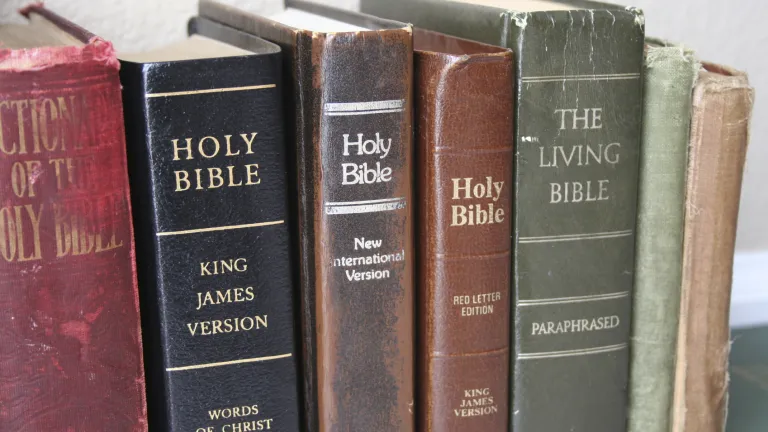
What Bible translation should I use?
Do you recommend a particular version? What are the strengths and weaknesses of various English-language translations of the Bible? Is there a best translation out there?
The United Church of God has chosen the New King James Version (NKJV) as its standard English-language translation. We recommend this as a good all-around translation for your everyday use.
Although there are more than 60 English versions of the Bible available today, we can divide them into three broad types: word-for-word, meaning-by-meaning and paraphrased. The word-for-word and meaning-by-meaning are referred to as translations, but the paraphrased are considered just that, paraphrases, not translations. (Most Bibles explain in their introductory pages which approach was used in preparing that particular version.)
The word-for-word versions most accurately follow the Hebrew, Aramaic and Greek texts. They can be slightly harder to follow the meaning sometimes, due to the word-for-word approach, but are generally slightly more accurate. The King James Version and its modern counterpart, the New King James Version, are word-for-word translations. The King James Version is a good translation. The NKJV is equally good, and it is easier to read. That's why we selected it as the standard translation for our publications. (We also occasionally refer to other translations, when they make the meaning of a given passage clearer—always taking care to ensure accuracy.)
The New International Version is one example of a meaning-by-meaning translation. This type can be useful as a secondary source. Some English translations also use slightly different Greek manuscripts as their source for the New Testament too.
Paraphrased Bibles, such as the Living Bible, can be useful, too, but should not be sources for establishing doctrine. The goal of a paraphrase is to make the Bible easily understandable, and in doing so, the authors exercise "poetic license." The result often reflects their personal religious ideas.
For additional resource in your personal study, please read our booklet How to Understand the Bible.