What do people mean when they claim we don't have to keep God's Law anymore under the New Covenant because it's written on our hearts?

Some say that what we do should be based on what we feel in our hearts and that it is no longer necessary to keep the Commandments. Further, some say that we only keep God’s laws, such as observing the Sabbath and Holy Days, voluntarily.


Answer:

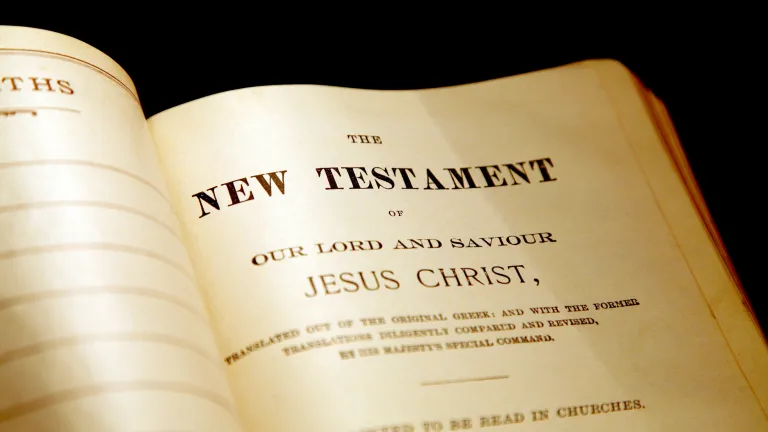
What you are describing is the prevailing attitude among most people who call themselves Christian. The general approach is to consider the BibleThe books (Greek, "biblia" ) that are acknowledged as canonical (authoritative) by the early Christian Church. It includes both the books of the ancient Hebrew prophets and those of the apostolic witnesses to Jesus Christ. to be two totally different segments—the Old TestamentThose books that make up the Hebrew Bible generally accepted by Christians, Jews and to some extent Muslims. It contains a threefold division: the Law (the five books of Moses), the Prophets and the Writings. that has a harsh God (the Father) who dealt with people one way and the New TestamentThe 27 authoritative books of the apostolic writings: the four Gospels of Christ, Acts (a history), 21 apostolic letters and the book of Revelation., which has a loving God (Jesus the Son) who deals with people in a totally new and different manner. Many problems come from such an artificial dissection of God's Word.

Some want to argue that Jesus only kept the Commandments and upheld them because He came as a Jew and had to keep them until He died. They then claim that the apostle Paul did away with the Commandments of God and only focused on love and mercy. However, Paul told the Corinthian church that the Commandments were what really mattered in life (1 Corinthians 7:19). This was written around A.D. 55, which is 24 years after Christ died. That doesn't sound like the Commandments ended at His death! In addition, somewhere around A.D. 90 the apostle John wrote that the way we know we love God is if we keep His Commandments, and if we don't keep them, we don't have God's love in us (1 John 2:3-6). You might also notice this passage ends with the statement that we should walk as Jesus walked—meaning, live like He did.

It's obvious that the law that is to be "written in our hearts" is the law of God, summarized by the Ten Commandments. If you wish to read more about them you can read our booklet on the Ten Commandments.

Related Content

Posted July 17, 2006
Posted July 22, 2006

Nobody has commented yet. Be the first to kick off the discussion!

Login/Register to post comments

Ask a Question

Ask a Question

Printer-friendly version

Got a question?  If you don't see your question here, ask our team of caring, dedicated ministers for a personal answer. (Please allow a week or so for an e-mail response.)

Related Booklet

The New Covenant: Does It Abolish God's Law?

The New Covenant: Does It Abolish God's Law?

Does the New Covenant negate God's law and do away with any need to obey the Ten Commandments and other laws of God? The belief that it does has long been a popular teaching in traditional Christianity. We'll thoroughly examine this question in this booklet. Even more important, we'll address the real purpose of God's biblical covenants—more than one—and their vital role in the Creator's overall plan for mankind. It's highly important that we understand their true meaning.

The Ten Commandments

The Ten Commandments

Can you find a proven source for lasting standards and values? God revealed the heart of His standards--the Ten Commandments--long ago at Mount Sinai. But what sets them apart from man-made rules and guidelines? What do they reveal about nature of God Himself. In this booklet you'll discover the answers to these questions and more.

Connect with us on Facebook

Connect with Vertical Thought

© 1995-2012 United Church of God, an International Association | Privacy Policy | Terms of Use

Reproduction in whole or in part without permission is prohibited. All correspondence and questions should be sent to info@ucg.org. Send inquiries regarding the operation of this Web site to webmaster@ucg.org.


X
You may login with either your assigned username or your e-mail address.
The password field is case sensitive.
Loading
