

Gary Antion
Part 1 of the Acts bible study series presented by Gary Antion and Peter Eddington.
The Bible Study was opened with prayer by Mr. Peter Eddington
We are very happy to have you all here at our first Bible Study. We are going to try to do four of them over the next eight weeks. Mr. Eddington and I start off this time. In two weeks, it will be Mr. Steve Myers and myself and in two weeks following that, it will be Mr. Eddington and Mr. Stiver. Then, the two weeks following it will be Mr. Stiver and Mr. Myers. We will be sharing the wealth.
We are very excited to go through the Book of Acts with you. I taught the Book of Acts at Ambassador College in Pasadena. I taught it the first two years that we had Ambassador Bible Center and I have taught it when we had a summer session out in Pasadena. We had a huge number of people, in fact, we had to meet at the Lecture Hall at the Fine Arts Building because there were so many who signed up to take it.
It is an exciting book, the Book of Acts. I will read to you what Scoffield has in his beginning section before the Book of Acts. In his opening paragraph he says: “This Book is of the highest importance because it is the only inspired account of the beginning and early work of the Church. “
What we will be able to find in this book is how real Christians, who followed Jesus Christ and the apostles and how they actually lived. What they did, how they acted, how they interacted with each other. We are going to see some amazing scriptures. I have a whole list of important scriptures that I will have done for you to hand out to you next time. Some of them are scriptures that you will want to know like “repent and be baptized”, “repent and be converted”, or “we ought to obey God and not man”, and/or “God gives His holy spirit to those who obey Him”, or on and on, Scripture after Scripture, that are so important. But there are others that provide a story flow the Book of Acts and what those original apostles were like.
The Book is titled, “Acts of the Apostles” or “the Acts”, but it could better be titled, “The Acts of Peter and Paul” because James and John are only mentioned incidentally. As far as any other Apostles being mentioned, I don’t believe any others are mentioned in the Book.
The first twelve chapters deal with Peter, then all of a sudden Peter drops out of the scene and Paul becomes the lead character throughout the rest of the Book of Acts. It is interesting that the Book of Acts has no definitive ending. I don’t know that God will add to this book but I am sure that there will be church history added, somewhere. I don’t think that God is going to give other people an advantage scripturally, than He gives us. We have the Word of God for us. This is the Word we get to use toward eternal life, to guide us and help us. I am not sure He is going to add more so that other people have more inspired Scripture. I think He will add history but I don’t necessarily think He will add to the Book. That is just my personal opinion. Others may have their opinions but that is fine, too.
To give you some background on the Book, the Apostle Paul, in his epistles, wrote of instruction and correction but the Book of Acts speaks about what was done by the Apostles. How they handled situations, how they lived, and what they did.
It was written between 62 and 63 AD. That is pretty well, standardly understood because of the mention of several of the proconsuls and the leaders that can be tied to certain dates. So, we have a pretty good idea when this book was written. The author was Luke, the doctor. Doctors in those days were known to have performed surgeries. It is interesting that when Luke has a chance in the Gospel of Luke, he has chance to use certain words, he chooses medical words. I think the word for needle in the Book of Luke, is the word for surgical needle. He doesn’t use just the normal word that is used in the other Gospel accounts of the same event.
In this book, which I will be referring to, it is Barclay’s Daily Bible Study series on the Acts of the Apostles. In the background, let me read to you a couple of comments about Luke. He says, for instance, we could have guessed that Luke was a doctor because of this distinctive use of medical words. In Luke 4:35, telling of the man who had the spirit of an unclean devil, he says, when the devil had thrown him down, he uses the correct medical word for convulsions.
In Luke 9:38, when he draws a picture of a man who asked Jesus, “I beg you to look upon my son”, he employs the conventional word for a doctor paying a visit to a patient. So, doctor/ patient relationship. The most intriguing examples is the saying about the camel and the needle. All three synoptic writers give us that saying, (Mat. 19:24, Mark 10:25, Luke 18:25), for “needle”, both Mark and Matthew used the Greek word, “raphais”, which is the ordinary word for a tailor’s needle or a household needle. Luke, alone, uses “belone”, a technical word for a surgeon’s needle.
Luke was a doctor and a doctor’s words came most naturally to his pen. He probably was of great service to the Apostle Paul because he was one of the Apostle Paul’s closest friends, traveled with him a lot. In fact, the several chapters, from Chapter 15 onward, we find him using the term, “we went” here, “we went” there, “we did” this, “we did “that, which means Luke was including himself in the party with the Apostle Paul. Whereas in the first chapters of the Book, the first 15 approximately, he has to draw on other historical documents. Perhaps the church in Jerusalem; perhaps the churches in Antioch and other areas provided him with information when he was gathering this for the most excellent Theophilus.
Barclay feels that maybe Luke had been a Gentile slave. Slaves were often of various professions, including doctors, musicians, entertainers and educators. The feeling is that he may well have saved Theophilus’ life. And, for that, Theophilus gave him a bill of freedom so that he no longer had to serve him. That is just a thought. It is conjecture. You can’t find that, necessarily, in Scripture.
The thought is that, if Luke was Theophilus’ doctor, he may have saved his life or helped him get well or something like that. And this is the one romantic theory that, in conjecture, Luke was a doctor of Theophilus, and he goes on to say in gratitude, he gave Luke his freedom.
Luke’s aim in writing, Luke had an aim in writing. Some think this may have actually been a defense for the Apostle Paul to explain about Christianity because Christianity, at this time, when Luke was writing, was not very well liked. By this time, they had realized that this was not a Jewish sect but, rather, a different organization, which was trying to turn the whole world upside down.
I think it is interesting, just one quote I want to share with you, in talking about the purpose of the Book. This is on page 4 from the Book of Acts. He says this, “It was to show the purpose of the Book set out by the risen Jesus Christ”. In Chapter 1, verse 8, which is a major purpose of the Book, “you shall be my witnesses in Jerusalem, in all of Judea, and Samaria, and to the end of the Earth” or “the uttermost parts of the world”.
Now, I believe they could go to Judea and I believe they could go to Samaria and I believe they could go to some of the areas there. Did they really go to the “ends of the Earth”? Or, was that prophecy and a prediction of what God’s servants, later on, would do? I thought it was rather interesting, he says, “It was to show the expansion of Christianity. It was to show how that religion, which began in a little corner of Palestine, had, in not much more than thirty years, already reached Rome.”
Because, as you recall, the Apostle Paul went to Rome and was taken on trial there because he appealed to Ceasar. The book ends there with him still being in captivity but being allowed, in his own hired house, to be able to have people come and go. And, it is thought, because in some of the other books that Paul wrote, he says, “Greet those of Caesar’s household”. The thought is that there were guards sitting there for hours when Paul was explaining the Scriptures, expounding God’s word, making good sense in an nonsensical world. Making good sense to the individuals who came to him and, as a result of that, many of them were converted. They had to sit there with him. I don’t know if they had their handcuffs on with him and every time he would try to gesture, their hands would go up. Or, if they took his handcuffs off and just let him speak. But, they were there with him, to guard him. So they heard him speak and preaching the Word of God. I thought that was rather interesting that Christianity, in this Book, is shown as being for all men of every country.
All men. Christianity was not for one group. Any you have the conversion of the Gentiles in Acts 10 with the Apostle Peter being used in that particular are to bring that about, along with Cornelius, the Italian. You have many other instances. You have Philip reaching the Samaritans. You have Stephen making his stand for Christianity. You have Peter accepting Cornelius. You have Christians bringing the Truth to the Gentiles at Antioch. And then you have Paul traveling and winning people in Europe.
The first convert in Europe was Lydia, being baptized over there. It is to show that Christianity is for all people everywhere. I thought that was rather significant.
I am going to give you a few more comments on this. By the way there are only three references to Luke in the Bible. (Col. 4:14, 2 Tim. 4:11, Philemon v. 24). Luke seems to be one of Paul’s really close friends, but he also seems to be a Gentile.
Let’s talk about Theophilus.
Chapter 1:1
I will save Chapter 1 for Mr. Eddington to go through. I am just going to give you background now.
It says, “the former account I made, O Theophilus.” Theophilus means “ a lover of God, a God-lover”. The thought is that this may not even be the name of a person but, rather, a name given, an alias, you might say, in order to cover the identity of someone who is, maybe, high up in the Roman government, or high up in leadership in the world, who did not want his name to be known. So, it might be just talking about a lover of God. But he knows who it is but he is not telling us.
“In the former account I made of all that Jesus began both to do and to teach…”. He had a former account of this. We go back to Luke 1:3. I will be reading out of New King James. He writes this, “It seemed good to me, having had perfect understanding of all things that were from the very first, to write to you, most excellent Theophilus.” The term, “most excellent Theophilus”, could have been a title given to a Roman ruler or someone in government. You would not call an average person, “most excellent”, whatever his name would be.
He said, “that you might know the certainty of those things wherein you have been instructed.” So he said, “I have written this to you”, so again, another hint we get, this person was likely someone who was in the Roman government. This might not have been his actual name but the name “God lover”; someone who was coming to know and love God but did not necessarily want his real identity to be known.
Acts gives the account of early Christianity. The purpose of the Book is to show that Christianity is good and is for all people. The thought was, maybe, Luke did this for his friend, Paul, to have as a defense when he went to Rome. So they could say, “Look. A good many things Christianity did. Ya, they were persecuted. They bounced back. Look at the people who were healed. Look at the people that were helped. And look how they did. Look how it grew from the beginning to the end. There was much growth.”
Barclay adds something on Page 2 which is interesting and that is this may have been a defense for Paul. And, what Luke does in Acts, is very, very complimentary to all the Roman officials that he talks about. He is very good.
Barclays says, on Page 2: “Luke was writing in the days when Christians were disliked and persecuted. And he told this story in such a way to be sure that the Roman magistrates had always been perfectly fair to Christianity and they had never regarded Christians as evil men, as most people thought. In fact,” Barclays says,” the very interesting suggestion is being made that Acts is nothing other than a brief prepared for Paul’s defense when he stood his trial before the Roman Emperor.” That is one reason why he thinks Acts ends before Paul gets judged. Maybe this what Paul was using to show the history of the church and what he was involved in to the Roman officials.
I think it is very interesting that he does speak very highly of the Roman officials, even the ones who were about to have him beaten. Paul knew the law and Paul was able to use the law.
So, the purpose of the Book is to show that Christianity is good and to show it is for all people. And, another purpose of the Book that you will find very strongly mentioned, is the resurrection of Jesus Christ. These men had seen Jesus Christ when He was alive and they saw Him dead. They saw His lifeless body. Some of them helped prepare it. They went back to find it again and it was gone. And then they saw Him walk through walls and come to them, eat with them, and hold a barbecue on the beach for them. Remember the fish barbecue? After He told them where the real fish were, Peter jumped out of the ship, naked, and came swimming into Him and was so embarrassed that He didn’t recognize him. They saw Him, day in and day out, for many days. They had an opportunity to say, “Our Lord is resurrected.” Those men didn’t fear anything after that because they knew, if their Lord and Savior could be resurrected from the dead, so could they. He was the first born of many brethren. So, it was pretty awesome.
In the Book, we see in Acts 8, the Samaritans are reached by the Gospel.
In Acts 10, we see the Romans are reached by the Gospel. In fact a Roman centurion of the Italian band. (They have accordions and tambourines, in the Italian band that they played in – joke).
Acts 11, you see Gentiles are reached by the Gospel, Gentiles as a whole.
In Acts 16, you see the Philippian jailer, this European jailer, is reached and converted.
It shows that God’s way was for everyone, not just for the Jews. It was for everyone.
You remember Paul’s battle that he had. In the early church because it was heavily Jewish to start with, they expected you became a part of physical Israel before you became a part of spiritual Israel.
To this extent one man in England thought that he should be circumcised and, before any of us could get to this man, this man circumcised himself. Because he thought he had to be physically circumcised in order to be accepted by God spiritually. When they got there, this man was hurting “big time”. They got there too late to see him.
Acts 1:8 gives us the main theme for it.
We do well to read it (it’s in yellow in my Bible). When you have the Holy Spirit to motivate you; I want you to take this Gospel and go forth with the Spirit of God. Don’t just have the spirit of God. Don’t just hold it. Use it. And use it to spread the Truth of God. Use it to help other people be in such a position that they also receive that precious spirit of God. It is important to get the powerful message of God’s Kingdom, and how you can be a part of it, out to the world.
That first part of the Book is about Peter; Chapters 1-11, 12. The second part is about the Apostle Paul.
James was beheaded and you had John mentioned, briefly, but not much else.
Acts goes from about 31 AD to 61 AD and then it ends. There is no signing off. God may add to the Scriptures but I don’t think He will. I personally think the Scriptures were complete. Since this is what He uses to give you eternal life, this is what He will use for others. But, I could be wrong.
44 AD was the death of Herod. Worms consumed him. Eaten of worms from the inside out.
And God said, “you took glory and you knew better…”, he was a Jew. You knew better. You knew the law. You knew we shouldn’t worship idols. You knew we shouldn’t worship other people and you let them do that to you. He died.
50-51: Galio’s proconsulship during Acts 15,
Festus, (not Gunsmoke’s/Matt Dillon’s sidekick) but Festus, the one who was a Roman ruler, was a procurator in either 60 or 61 AD. So we know the Book was written right around 62-63 AD.
There is much in this Book about Jesus Christ because they had spent so much time with Him, 3 ½ years. They had seen all the miracles He had performed. They had seen Him humiliated and killed. They had mourned for three days. They had Christ appear to them. They saw Him after His resurrection. They saw Him walk through walls. They were inspired and they fully realized that they could, also, be resurrected - a powerful lesson for them. That is how they could go forward and preach. And, when they were taken in and apprehended, when the Jews called on Gamaliel to give them a rendering, he said, “Let them alone. If this is of men, it will come to nothing and if it is of God, you can’t fight against it, unless you fight against God.” So, his counsel was to release them. They did more than release them. They beat them first. Then they let them go.
And what were the disciples words? “You judge whether we will stop preaching in the name of Jesus Christ.” And they walked out of there, not with their “tails between their legs”, but with renewed zeal and vigor to preach the word of God.
Some key verses about the resurrection, which was central to their message, because this was a grand event that had just taken place.
I will just pick out a few of these verses for you and that will leave you with five main thoughts of the early church.
Acts 2:24
“Whom God hath raised up, having loosed the pains of death: because it was not possible that he should be holden of it.”
Acts 2:25
“For David speaketh concerning him, I foresaw the Lord always before my face, for he is on my right hand, that I should not be moved:”
Acts 2:26
“Therefore did my heart rejoice, and my tongue was glad; moreover also my flesh shall rest in hope:”
Acts 2:27
“Because thou wilt not leave my soul in hell, neither wilt thou suffer thine Holy One to see corruption.”
My body will not be in that sepulcher long enough to putrify but rather I will be resurrected.
Chapter 11:18
Acts 11:18
“When they heard these things, they held their peace, and glorified God, saying, Then hath God also to the Gentiles granted repentance unto life.”
So, again, here He gave them, here, that opportunity, talking about the Gentiles being converted.
Just some key verses:
Acts 13:46
“Then Paul and Barnabas waxed bold, and said, It was necessary that the word of God should first have been spoken to you: but seeing ye put it from you, and judge yourselves unworthy of everlasting life, lo, we turn to the Gentiles.”
So they had a very strong message as they went forth. They had the resurrection of Jesus Christ behind them and they had a very strong message of repentance that they taught. The message was hope of eternal life. It was said that they “turned the world upside down”. Oh, that people could say that of us. “You have done so much that this world is upside down. You are pests. When are you going to go away? Like ants at a picnic. You are pests.
Today, most would not know who we are. We have a work to do. A big work to do and we are trying to do it. We are trying to do it with the internet and Beyond Today on WGN America. We have a big work to do.
Let me leave you with five main thoughts of the early church. This is what the early church was thinking about.
Acts 2:14
“But Peter, standing up with the eleven, lifted up his voice, and said unto them, Ye men of Judaea, and all ye that dwell at Jerusalem, be this known unto you, and hearken to my words:”
Acts 2:15
“For these are not drunken, as ye suppose, seeing it is but the third hour of the day.”
Acts 2:16
“But this is that which was spoken by the prophet Joel;”
Acts 2:17
“And it shall come to pass in the last days, saith God, I will pour out of my Spirit upon all flesh: and your sons and your daughters shall prophesy, and your young men shall see visions, and your old men shall dream dreams:”
No, it had not already begun. That was wishful thinking.
This was only a type of what would finally come to pass in the future.
That is, in type, sort of true, but not quite. You can find that in Acts 2:20 and 31.
This has happened because Jesus Christ is now resurrected and at God’s right hand. After His living a perfect life, being put to death and the resurrection.
Christ is the head of the Church.
Acts 4:11
“This is the stone which was set at naught of you builders, which is become the head of the corner.”
Well, He is the head, but He is not the head of everybody. He is the not head of physical Israel.
They thought Christ was coming back in their time.
Act 10:42
“And he commanded us to preach unto the people, and to testify that it is he which was ordained of God to be the Judge of quick and dead.”
He is going to come back and judge the world. He is coming back soon.
They told the people to repent in order to part of that new order. That is part of the preaching in
Acts 2:38-39
Acts 3:19
He told the Gentiles that God used to wink at what you did before, but now He has commanded every man, everywhere, to repent. So, they had a message of repentance.
We have a job to do.
God is the One who does the calling but we have a powerful message to reach out to them with. The Book of Acts gives us a lot of great Scriptures, a lot of great examples for us to follow as we go through it.
Mr. Eddington:
Acts 1:
Thank you, Mr. Antion, and good evening everyone. Once again, it is good to have everybody here. Hello to everybody on the webcast as well.
When I think of the Book of Acts, I think, “This is us.” Put yourself in there. I wonder what it would have been like when God and Jesus Christ began the Church. It is interesting, one thing Barclay says in his introduction is that in one sense, Acts is the most important book in the New Testament. It is a simple truth that, if we did not possess Acts, we would have apart from what we could deduce from the letters from Paul, no information whatsoever about the early church itself. You have to try to figure it out from the works of Paul. But Acts tells you how the church was formed; what they did; how they ordained deacons. There is a lot of information in the Book of Acts.
So think of yourself as being there. What would it have been like to have been called in that age. As we go through Chapter 1, Mr. Antion can interrupt at any time. He is the experienced teacher here having taught Acts for years at Ambassador College.
Acts 1:1 and we will go through this verse by verse.
As Mr. Antion mentioned, the “former account”
The King James version says, “the former treatise”, which just means the former book or the former work, the former account that Theophilus made. Of course, as you know, Luke wrote two book or two accounts, or two volumes. The first volume is the story of Jesus on earth. The second volume is the story of Jesus’ church after He was resurrected. So one is the church after He was resurrected and the first is of Jesus life on earth.
Verse 2:1-2
John 15:16 Christ said, “You did not choose me but I chose you and appointed you.” That is what Luke is referring to here. That is something that we read at the time of the Passover.
So, Christ chose these key disciples to begin with. Put yourself in that seat today and, of course, we are the chosen ones now that God is working with. So, we are being called. We are being chosen by Christ through the Father. No one can come unless the Father draws him as you know.
Verse 3: Christ is referred to here again to whom He also presented Himself alive after His suffering. So this is once again referring to His resurrection. By many infallible proofs being seen by them forty days and speaking of the things pertaining to the Kingdom of God.
And that is the work of the church. The work of preaching the Gospel of the Kingdom. The Good News of the soon coming Kingdom of God. Christ worked with them for an additional fourty days, speaking all things pertaining to the Kingdom of God. It was like He was giving them a mission, telling them what they needed to be about.
Matthew, Mark, Luke, and John, all refer to having seen Christ alive after His death, after His resurrection.
Mat. 28:17, Mark 16:14, Luke 24:36, and John 20:19, talk about Him showing Himself alive after His passion, His crucifixion.
That relates to verse 3.
You might want to also note on that that, in 1 Cor. 15:3-8, 500 brethren saw Him after His resurrection.
V. 4-5
He was referring to the day of Pentecost.
Acts 2:33, “The promise of the Holy Spirit” is the promise being referred to here.
John 14:16-17
We are reminded that Christ said, “I will pray the Father and He will give you another Comforter, even the Spirit of Truth”. So what Luke is referring to here, in verses 4 and 5, is that promise, the promise of the Holy Spirit that would come upon them, which manifested itself on the Day of Pentecost.
V6: Mr. Antion referred to this a little bit ago where Luke writes, “when they came together…” They, in many ways expected that this Kingdom was about to begin. They really did. You recall back in Luke 19:11, once again Luke’s pen. They thought that the Kingdom of God would immediately appear. So there was this common thread throughout the first century of the idea that the Kingdom was about to be set up on earth. But, what the disciples were conceiving of, really, was a kingdom in political terms. They were looking for freedom from the Romans. They were looking for the Messiah to come and be their king instead of Caesar. They wanted to be free from Roman domination. So they really, very much, thought of this kingdom in terms of a political kingdom.
Mr. Antion: I wanted to make a comment about the Holy Spirit. In the Book of Acts, the Holy Spirit is mentioned over 50 times. We are talking about Acts of the apostles. How did they do those acts? How did they perform those acts? By what means? By what strength? By the spirit of God.
Mr. Eddington:
V. 7:
He is saying the Kingdom is not right now but neither is it at a time for you to know exactly when it will be. You recall from Matt. 24:36 where Matthew was quoting Jesus as saying that “both the day and hour no ones knows, not even the angels of heaven but My Father only.” Mark mentions an identical statement by Jesus. Mark 13:42. That is what is being referred to in this passage.
V. 8: the theme of the Book of Acts, which the power of the Holy Spirit, working in the New Testament church. Of course the Greek word for power there is “dynamos”, where we get the word “dynamite” from. So the power of the Holy Spirit is something to be reckoned with. It is powerful, like dynamite. It is not just some weak little essence. So, to attain the Kingdom of God, men, need the Holy Spirit dwelling in them. So, when it comes to the Kingdom being set up and being part of the Kingdom, you have to have the power of the Holy Spirit. You have to have that Comforter that was promised by the Father when Jesus was speaking His final words on Earth. This verse here also includes instructions to preach to the whole world. Yes, they can go to Judea, Samaria, as far as Rome, maybe. But, when it comes to the whole world that is something that we can, actually, do today, as you know. With the power of the internet and the power of the people even in this room, those listening in and watching this Bible Study. That was impossible when Luke wrote this. We are in a completely different age now where information is so available. Just think of it in terms of us today being able to go to the end of the Earth. The power of the Holy Spirit, here, was going to make them Christ’s witnesses and that witness was to operate, as Barclay says, in his book on Page 12, “in an ever-extending series of concentric circles, first in Jerusalem, throughout Judea, and Samaria, the semi-Jewish state, with a kind of bridge leading out into the heathen world. Finally, this witness was to go out to the ends of the earth. So what happened in the Book of Acts was the germination of that, the very beginning of that.
It is also interesting that the Apostle Paul did so much work in trying to preach the Gospel that he felt he preached he preached the Gospel to the world in his day. Col. 1:23 So the Apostle Paul felt that he had done the job in his day. What about all the people who lived after him? What about all the people who lived before him. So, we have a job to do. You never quit doing the job. God wants us to keep working right to the end.
Some church of God groups say we don’t need to preach the Gospel any longer because Mr. Armstrong did that. But I think it is close to 2 billion people that have lived since his death that also need to be witnessed to as Luke says and to be preached to and to be given the opportunity, if God is calling them now, to be a part of His work and His church.
I find interesting here, in Verse 8, this verse and the couple before, is very similar to verses in the last chapter of the Book of Luke. It is like he is repeating himself here.
Luke 24:46-49
Here are the similarities I have already read in the first 8 verses. Luke is reiterating the last chapter of his first treatise here in the beginning of his second volume. In Greek the word for witness and the word for martyr are the same. It is the Greek word “martus”. So a witness has to be ready to become a martyr. To be a witness means to be loyal no matter the cost. It may require your death. To be a witness as mentioned here in Verse 8 is more than just some casual belief in Jesus Christ. To be a witness means you may have to be a martyr for what you believe. And to be loyal to Jesus Christ and the Father no matter the cost. So that is an important point.
Let me give you three passages from Isaiah that talk about being witnesses.
Isa. 43:10, 12
When we are witnesses for Jesus Christ, we are witnesses of who even God is by the way we live our lives.
Isa. 44:8
It is to declare the works of God is why we are witnesses, not to declare ourselves but to declare Jesus Christ.
I should also mention that Jehova Witnesses use those verses to say they are Jehova’s witnesses.
Verse 9
Once again, very similar to the last chapter of Luke. It seems Luke is reiterating these things, he sets the stage for the whole rest of the Book of Acts.
Luke 24:51
Verses 10-11
These would be angels of God.
Zech. 14:4 is a good passage to parallel this. This is talking about Christ returning in the very same way that He left.
Verse 12
This all took place on the Mount of Olives, the very place where Jesus Christ will return as recorded in Zech. 14.
The Mount of Olives is the east of Jerusalem.
The Jews, at that time, limited a Sabbath’s day journey to 2000 cubits. It is not in the Bible that you have to do that but that was their tradition. A cubit was 18 inches so a Sabbath day’s journey was a little over half a mile. The Mount of Olives is near enough to Jerusalem to be continued a legal Sabbath day’s journey in the legalese of the time.
Not according to the Scriptures.
V 13
Here you see the eleven apostles. One is missing obviously. Mat 10:2-4 gives the original list of the twelve apostles or disciples if you want to make a note of that. Acts here gives the remaining eleven without Judas Iscariot.
You might want to note that Judas, the son of James, is the same one as Thaddeus.
V 14
Of one accord here doesn’t mean they are all sitting around having a cup of tea. It means they are of one mind, one spirit, true unity. They were very much unified at this time. It was more than just a meeting together in the upper room. It was a very unified gathering is what we know from this, of prayer and supplication.
V. 15
120 disciples out of a population, in the Holy Land, of about 4 million residents, is what historians gather to be there at that time. This small gathering was given the audacious task of being witnesses to the whole world. Even for us today that is a huge task. To think that 12 to 20 thousand of us, in the United Church of God, can be witnesses of Jesus Christ to the whole world. Yet we are a very, very small percentage of the population and our budget is just a drop in the bucket compared to what even some individuals make in regular, annual incomes. What we have here is a very audacious task. With the power of the Holy Spirit, great things are possible. So, that is what we pray for and that is what we look for. As long as we stay humble before God.
I just want to point out, that Mary, the mother of Jesus, is not referred to as “the Virgin Mary”, but he calls her Mary the mother of Jesus. As you know the Catholics have a doctrine of perpetual virginity. She was a virgin before, during, and after the birth of Jesus. The other thing I want to point out was she was there with His brothers. Now, the other guys could have been considered His brothers, as far as spiritual brothers. So, if he is talking about brothers, he must be talking about brothers. So there is a great proof that Mary had children after she had Jesus.
And the brothers are mentioned in association with their mother and the next verse talks about the rest of the disciples. So there are three different groups. There is Mary, there are the brothers, and there are the rest of the disciples in verses 14 and 15.
They were being given the task of being witnesses to the whole world. God’s church started from a small beginning from the power of the Holy Spirit, the church then, and we today, can accomplish great things if we humble ourselves before God as I said.
V 16
Here is an explanation of what happened to the twelfth disciple, the twelfth apostle. It was something that had to be fulfilled as you know, from many Old Testament prophecies. One being referred to here is probably Psalm 41:9 where David wrote. “Even my own friend…”
That is probably what Luke is referring to here as the Scripture had to be fulfilled.
V 17
Judas was one of the twelve. He was part of the team until it all went wrong. Judas, in Verse 16, was a guide to them who also took Jesus. He led them and said, “Here He is.” The fact that Judas was the guide is mentioned in four places in Matthew 26:47, Mark 14:43, Luke 22:47, and John 18:3.
V. 18, talking of Judas. Now listen to this description of the death of Judas. When you read about it, say in the Book of Matthew, it doesn’t give you those kinds of details.
Mat. 27:3-5
Judas was remorseful.
This says he hanged himself but here we read that “he fell headlong and burst open and all his entrails gushed out.” Something went terribly wrong even with the hanging. It was a horrible, gruesome death that Judas went through.
V 19
Mat. 27:6-10 the 30 pieces of silver, the price of blood
V. 20
Referring to Psalms
The King James Version, which I have here in front of me, says his “bishoprick”. What is his bishoprick? Thankfully the New King James version translates it his “office”. Let another take his office, or his charge, or his overseer-ship.
Ps. 69:25 Is related to here in companion to verse 20.
Ps. 109:8 Continues the thought.
It is amazing how many parallel quotes there are between Old and New Testaments. Obviously Luke and others who wrote the New Testament were very familiar with the scrolls which, to them, was all they had. It wasn’t even called the Old Testament.
V. 21
What I want to point to you here is they are about to try and chose a twelfth apostle.
The prerequisite to being chosen as the twelfth apostle was that the man had to accompany Jesus in His ministry, get to know Him.
It is the same for us today. To be counted amongst the sons and daughters of God, we have to accompany Jesus throughout our day or He needs to be accompanying us, living in us. He must be with us day by day, week by week, month by month. We must be living with His powers in us. He must be using us in His work. We must have His accompaniment, too, if we want to be counted amongst His disciples. We too have to be those who accompany Him, with Him by our side, of course, spiritually.
V 22
Another prerequisite to being one of the twelve was being a witness of Jesus’ resurrection. They had to be there. The real sign of a Christian is not only that He knows about Christ, something you have heard in the church for many years. Not just knowing about Christ but we must live the message that Jesus taught. That has become a part of us. Not just head knowledge. It has to be a part of how we live as a true witness, as martyr for the cause. Christ’s life is not just a story in a book here. Christ is alive through the resurrection and Jesus must live His life in us through the dunomis or the power of the Holy Spirit so we, too, can be witnesses of Him to the outermost parts of the earth. It has to be part of our whole life. So, just like in those days they were looking for the twelfth person being someone who would accompany Jesus, saw the resurrection, in our heart and mind we, too, accompany Jesus in everything we do. He is with us and then we also believe in His resurrection as if we saw it happen.
V23-24
Remember what the Lord said to Samuel in 1 Sam. 16:7, So they prayed for God’s influence and deliverance in choosing and making this decision.
V 25
I might quote from Barclay here, for a moment, from Page 17, “The Acts of the Apostles”. He says here, “Look briefly at the method of choosing someone to take Judas’ place and the number of the Apostles. It may seem strange to us that the method was that of casting lots but amongst the Jews it was a natural thing to do because all of the offices and duties in the Temple were settled that way. The names of the candidates were written on stones, as most likely happened. The stones were put into a vessel and the vessel was shaken until one stone fell out. He whose name was on that stone was elected to office.
Now the giving of lots is no longer recorded as being used in the church beyond this point. This is the last time we see lots being used. What is interesting, of course, Verse 1 of the very next chapter is when Pentecost comes and the Holy Spirit is given. So the Holy Spirit now dwells in the people of God to inspire and guide our decisions. We don’t cast lots any longer.
In Old Testament times, the general population, the priests of the Temple, were not filled with the Holy Spirit. But today we have an additional guidance through that Dunamos, that power that God has given us. So, even for us today, to be in the running, to be the twelve disciples. If you want to be the twelfth disciple, if you want to be in the running for the job, you have to know Christ; He has to be living in you and believe in His resurrection.
So that is Acts Chapter 1.
Anything else to add?
I just want to mention about the casting of lots. People believe that that’s the way you should do everything. Then I talk to them about, “Is that the way you make every major decision?” So, lets say you counsel for baptism, you pray, you repent, you believe, you talk to God, you lay it all out, you think your’re ready. Do you cast lots? Maybe I’m not ready yet? Or, do you make a decision. I believe God’s Holy Spirit leads us to make decisions today. I think that a lot of people want to cast lots for one thing. This is one way. Barclay says there are other ways they cast lots into the lamb and then what comes up.
And there are other ways, we don’t really know; is it drawing straws? Is it writing a name on a stone? What is it? Do we know how to do it, number 1? Number 2, doesn’t that take away from the Holy Spirit inspiring your mind to make decisions on the greatest decision you ever make in your life which is choosing life or death, blessing or cursing.? God doesn’t say, “Shake, look, use lots.” What does He say, “Choose”.
When He talks about looking for a wife, He doesn’t say “Cast lots.” He says, “Whosoever finds a wife, finds a good thing.” So, He does not tell you casting lots is something that you should do.
I remember one man was very interested in casting lots. He thought that’s the way Counsel Members should be chosen. That was why I said, what about someone counseling for baptism. You have worked with them, you have talked with them, you have seen them, you have instructed them, you have coached them, you have guided them, and you see them. But they have to cast lots?
I believe now, with the Holy Spirit, let me give you four things:
When might I flip a coin? I might flip a coin if I had two, equally-qualified individuals. If both of them were absolutely equal. I don’t know which one to choose. I would pray about it and say, “right or left”. If I had two choices that were so identical, I’m not sure which one of these. They are fully identical and I don’t know which but I can only choose one. I might say, “Okay, I am going to flip a coin and draw which ever one it is.” That might be something I might do. But not when you have opportunity to investigate, to look at, to understand, to study, to muse on, to meditate on. That is what God’s Holy Spirit does. To me, it is a “cop out” when you just want to use drawing of lots. That is my opinion.
Apostleship is not only for those twelve. The original Apostleship was for them but you have individuals like Barnabas, you find in the book of Ephesians 4:11-12. Through the years? Possibly.
Did Paul see Jesus? I don’t know. But he wasn’t being counted among the twelve. He often said that he was the one who came afterwards. So, there were other apostles, likely, in the church. We think many times that Barnabas was an apostle. There were many other apostles who maybe had never seen Jesus Christ or His resurrection. The Bible seems to indicate that there were. So, again, in our system, we work hard not to have people work their way up. Rather, God shows us which people are the right ones by the fruits that they bear. Thank God for the Apostle Paul who helps us to understand when it comes to ordination, what requirements there are for deacons and elders.
1 Tim. 3
Titus 1
Thank God for Him.
I might just add on, briefly, part of God using His Holy Spirit in us, is to help us to make decisions, to help us build character. Because not every decision you make is the right one or the perfect decision and you learn from that. You grow and you experience. If you just flip a coin for every decision you make, you wouldn’t really be learning much and it would be a “cop out”. When you say, “Well that is what the Umin and Thummin said…”, “That is what the pebble told me”, it is a “cop out” on personal responsibility. And thinking properly about things and asking God to empower you with the Holy Spirit to make the best decision doesn’t mean you will always make the right decision. But you will learn from it and you will be guided by it and the next time you will do better as you prepare to be in His family in the Kingdom.
Do we need to take a break, or do have a question to send up?
Question 1: “It might just be me, because I am not very detail-oriented, but Jesus started His ministry when He was around 33, right?”
“Age 33?”
“Right”
“Yes.”
“I just realized tonight, that when you were saying this, it was about 65-69 AD. So, what was He, about 70 when He died?”
“Who?”
“Jesus”.
“Jesus was already dead at this time.”
“That was the age that the Book was written, not when Jesus died. He said that it was in the 60’s AD that the Book was written. That was 30 years after He died.”
“The Book was written as the Acts of the Apostles, not the Acts of Jesus. This includes about 30 years of history in the Book of Acts. It wasn’t written until the 60’s, about 30 years later.”
Other oral questions we can address?
Other questions, you can write them down and pass them to the front.
Any other questions from people on our cybercast?
Not yet.
We have one here, then.
Question 2: “Verse 16 of Acts 1: It appears Judas was condemned before he betrayed Jesus. Did he have a choice? I believe he did, otherwise he was created just for this act that signed his eternal death warrant. Please explain did he have a choice to follow Jesus as we do, leading to eternal life.”
“Very good question. Actually, I believe it says, it would have been better if this man had not been born. I don’t know if you could say that of somebody, and, I don’t know, you know, God can be merciful to whom He will be merciful. He could say Judas was never converted though He was around Christ all the time. He was a thief. We knew he was a thief. It says that he would pilfer money from the general treasury and he was the treasurer and God must have let him do that. Did Christ know this man’s character? I think He did. So, was he chosen because he was likely to be the one to do it? Probably.
Does that mean he was a se up, or a patsy? I don’t know.
Did he have a choice in this matter? Everyone, I believe, has choices. I don’t think he became a robot. I don’t think God forced him to do it. And, as you know, by the end, after he did that, he had remorse or regret for having done that.
Some liken Judas to a man who was a zealot who thought that Jesus Christ had come to rescue the Jewish people from Roman government. And, now they have this Man performing all these miracles. I mean, if He could walk on water, and if He could feed 4,000, 5,000 people with only a few fish and a few pieces of bread, this many is a dynamite. If He could raise the dead; if He could cure the sick; boy, we’ve got Him on our side. Maybe He will lead us against the Romans.
One scenario is that Judas was a zealot and he was very disappointed that Jesus Christ would not even “break a reed”. He got mad and upset at the moneychangers in the Temple but, by and large, He did not do that. He was one Man who was humble, the Bible talks about Him saying He won’t even break a reed as He walks through the marsh or the fields.
So He was not there to cause trouble at His first coming. Some think that Judas wanted Him to and was upset and, therefore, betrayed him. Do I believe he had a choice? Yes. Do I believe he has committed the unpardonable sin? The Bible says it would be better for him if he had never been born. I don’t know if that means God will never forgive him or if that means that this guy is in bad shape.”
“Some people have a proclivity for certain things and Jesus may have seen that in Judas and realized that this could be the way it would pan out. If you are a bank robber (not that any of you are). But, if you are a bank robber and you are looking for a partner in crime, you kind of know who to go to that will probably do it with you. Become a partner and help you with a bank heist. You can pick some of these people out. They may refuse and say, “no”, they don’t want any part of that. Judas could have said that but he didn’t. And a partner in a bank robbery usually goes along with you, if you pick the right person. So, it is a matter of Jesus knowing who to choose to fulfill the Scripture as well. That is what I would say.”
“I was just looking to see if I could find the Scripture that says it would be better for a man if he had never been born but I can’t find it right now. (Mark 14:21) He did make that comment to him and I think it was right before the end of his death.”
Anyone have any comments, anybody have any questions. Anything they would like to add. Any thoughts you have about the Book of Acts.”
If you’d like, I can do a few more verses in Chapter 2, or we can take a break early. It is a quarter to nine and we have some goodies for you, in the back. So I think we should just call it close and save Chapter 2 for next time.
Let me just give you a couple of comments prepared that I didn’t use. I had a summary of some of the chapters we’re going to find as we go through the Book.
We will save Chapter 2 for next time.
Let me just give you a couple of comments that I had prepared that I didn’t use tonight.
I had a summary of some of the chapters we are going to find as we go through the Book.
Chapter 2: The coming of the Holy Spirit. The formula for baptism: repent and be baptized. Of course, believe before that.
Acts 4: The only name given under heaven whereby men might be saved. We are going to see that disciples had to hang tough even though they were taken in and apprehended.
Chapter 6: deacons, the choosing of deacons and we’re going to see how even the church had a part in it.
By the way, you all have a part in it, deacons and elders. If, at any time, you think someone is doing a really great job and could be useful for the church in an official capacity, as a representative being ordained. Please feel free to send me a note and tell me why you think that person is a good guy. I would love to have your input.
Chapter 7: Steven standing tall and being stoned. They actually ran on him and mashed on him and bit him.
Chapter 8: Persecution. The Word spread anyway. The Ethiopian eunich. Remember him? Great example. You have Philip going out and ministering.
Chapter 9: You have Tabitha raised. You have Saul converted.
Chapter 10: Cornelius’ conversion, opening the way for all of us who are Gentiles to be a part of the church.
Chapter 11: You find persecution but you find Peter being kept safely.
Chapters 13 and 14: Paul and Barnabas spreading the Word of God.
Chapter 15: You find the conference where they came together to decide that you don’t have to be circumcised, the Gentiles don’t have to undergo this physical rite to be part of the family of God.
Chapter 16: The first European convert, Lydia, seller of purple.
Chapter 17: We find Paul’s custom of keeping the Sabbath
Chapter 18: Paul at Corinth and the conversion of Apollos.
Chapter 20: Paul departing.
On through you find Paul’s departure for Jerusalem and all the disciples are begging him not to go because they will apprehend him, they are lying in wait for him. Paul said, “I must go.”
Tom Disher indicated that someone on the webcast had sent in the Scripture about Judas (Mark). Then the subject of Judas was addressed again. Mr. Eddington read the passage and the dialogue on Judas was continued by Mr. Antion:
“It doesn’t seem like this is a set up. It seems like he made a choice. And now, does that mean he won’t have a chance to learn God’s way and to know God’s way?”
Online question:
1. “Some people say God’s government is one man’s government. Jesus left 12 Apostles. Was their a chief apostle?”
“Was their a chief apostle? The Church has had a couple of different views on that over the years. 50-60 years ago, in the Church of God, there was no “Chief Apostle”. Later on, some thought that the Apostle Peter was the chief apostle. There are churches of the world that believe that also – that Peter was the Chief Apostle. Personally, I don’t hold to that myself so much. Mr. Antion?”
“No. I don’t believe there was a Chief Apostle. I believe that, if Peter had been the chief apostle, why would he not, in the Book of Acts, Chapter 15, have given the final word. He did not. James stood up and gave the final word. It does not mean that James was in charge of Peter or Paul. Peter had the ministry to the circumcision as Galations points out and Paul had the ministry to the uncircumcision. But, when it came to a decision to be made at the home church, or headquarters church in Jerusalem, it was James, the brother of Jesus, who stood up and gave the final rendering after hearing the information. If you read carefully after the Book of Acts Chapter 15, you will read, “they sent them…”, “we sent them…”, “they”, “we”, It does not say, “I sent them”. So, you find a lot more in the New Testament of people working together, a collaborative approach of the brethren recommending people to be ordained as deacons. Let the brethren search out among you those who are faithful. I listen carefully to the brethren before I ever ordain somebody. I listen carefully to the deacons. I listen carefully to the elders and I listen carefully to the brethren. How do I do that? By being in touch with them? By watching. By observing. By seeing the examples that others have upon them. I do not believe there was a chief apostle. I believe Peter was very gregarious and very dynamic and was, certainly, a natural born leader. He was first in everything. He was risky. He was willing to step out there and take the lead. He was a leader in many things. But, do I believe he was a chief apostle like the first Pope? No. I do not believe that.”
“From a purely practical standpoint, in that day and age, where the Apostles were sent far and wide to different regions of Asia Minor and across the Mediterranean, where John ended up all by himself, to have any kind of cohesive, organized, one man rule, would have been virtually impossible. With they way they were sent out, each with their own mission, some to the Gentiles; some to the circumcision, it would have been very difficult for one person to keep a handle on all of that. Now, Christ trusted each of them to go and do what He asked and gave them their mission statement.”
“It is interesting that, in the Book of Acts, prior to that, Paul had already been telling the Gentiles, “You don’t have to be circumcised”. On what authority was he telling them that? Think for a minute. Where was he trained for three years? By Jesus Christ in the desert of Arabia. He was trained by Jesus Christ for 3 years. So, you might say Paul had the latest word on things yet he did not over ride everybody. But he believed that this should not be. He understood the difference. He was practicing, he had been taught under Gamaliel. He knew the Jewish law. He was a “Pharisee of the Pharisees”. He knew everything and did everything according to the law, of course, the physical side of it. And, what he believed was that you did not have to be circumcised if you were not part of physical Israel. He did not believe you had to be physical Israel to be Spiritual Israel. That was what he was practicing. That is why it came to the attention that they needed to take a look at this,saying, “Hey. Is this right because the people in Jerusalem are saying, ‘You can’t do that, you’ve got be a part of us before you can be part of the Kingdom.’” And that just wasn’t so. And that is the decision they arrived at.”
Question 3: from webcast viewer:
James (the viewer) says, “From the information about Judas and the disciples not knowing he was a thief, indicates strongly that, even though Jesus knew Judas’ character, Jesus did not go behind Judas’ back and tell any of the others.”
“That is a very plausible explanation. The others did not know; were not aware; were not so discerning but Jesus probably was.”
“I am sure Jesus was. Jesus knew the hearts of the children of men. He could read their attitude and read their heart, look right through them. He knew what they were about. He could tell.”
Another comment (from webcast viewer).
Question 4:
“Concerning Judas”, it says, “opinion sorrowful but unconverted concerning Judas’ (very awkward wording, here) I don’t believe he would have killed himself if he had committed the unpardonable sin. Why hasn’t Satan, for instance, hung his head and thrown himself into the bottomless pit?”
“My question is why would you not kill yourself if you committed the unpardonable sin? That is a question I had.”
“If he were sorrowful, and there is a Godly sorrow and there is a worldly sorrow. There is a sorrow, perhaps, for himself, that he did the wrong thing but, not necessarily, a sorrow that he did it. “Maybe I did the wrong thing, here.” Maybe it is about him as far as repenting is concerned.
“It is possible that he did realize, too late, what he had done.”
It also says that Satan had entered into him, right? And drove him. So, for Satan to enter into you, you have to be a willing participant. You have to let yourself get so spiritually afar from Jesus Christ that Satan can, actually have that kind of sway over your life. And a lot of things can be said regarding Judas. But, as far as I am concerned, I can hope I am there. That is what I hope. If I get there, I am going to be happy there, I’m going to be happy for anybody to get there. If God chooses for Judas to have a chance, I am going to be there, right on his side, because I am going to say, “Hey God, thank You for saving me and anybody else who makes it there.” What if you are changed and you see Billy Graham. Will you say, “Billy. What are you doing here?” Are you going to be mad because Billy Graham made it? I am not saying Billy Graham will be in the first resurrection. I think Billy Graham is a decent human being, from everything I have read about him. But, am I going to be upset? I don’t think I will be in the Kingdom if I get upset because God chooses to save anybody. God can save anybody He wants. He can give anybody a chance. Or, if I think it is a second chance, a second chance, if that is what He wants. I am not going to quibble, are you? I am just going to be happy if God is merciful and lets me be there. I think we all ought to be.
There are other stories like this in the Bible like Pharoh, where God hardened the heart of Pharoh. We can say, “Well that wasn’t fair was it? The Pharoh had no choice.” There are all kinds of ethical questions like that that we don’t have the answers for. God does.
When I was a freshman in college, they would say, “Now, what would have happened if Adam hadn’t sinned? What would have happened if he had said, ;Eve, put that apple down? Don’t you dare eat that or that banana, or peach.’” What would have happened? It isn’t really “what if”, because we really don’t know, do we?
What we do know is what did happen. And what did happen is that they sinned and they were denied access to the Holy Spirit. Would they have been a Spirit being if they hadn’t eaten of that Tree of Life? I doubt it. I think eating of the Tree of Life would have meant that they would have been converted and would have had the Spirit of God in their lives, which would have enabled them to have eternal life. But, instead they were cut off from it. What if? I don’t know.
What if Satan repents? He won’t. He crossed the line a long time ago. He will be kept away and his power will be nullified in the World Tomorrow. That is a beautiful thing.
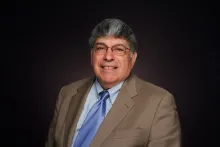
Gary Antion is a long-time minister, having served as a pastor in both the United States and Canada. He is also a certified counselor. Before his retirement in 2015, he was an instructor at Ambassador Bible College, where he had most recently also served as Coordinator.

Peter has retired as Operation Manager of Media and Communications Services.
He studied production engineering at the Swinburne Institute of Technology in Melbourne, Australia, and is a journeyman machinist. He moved to the United States to attend Ambassador College in 1980. He graduated from the Pasadena campus in 1983 with a Bachelor of Arts degree and married his college sweetheart, Terri. Peter was ordained an elder in 1992. He served as assistant pastor in the Los Angeles and San Luis Obispo, California, congregations from 1995 through 1998 and the Cincinnati, Ohio, congregations from 2010 through 2011.

