The Eighth Day: Eternal Life Offered to All

What does God have in mind for those who have never believed in Christ or understood any of God's truth? How does the Creator provide for them in His plan?
The Bible makes abundantly clear in Acts 4:12 that "there is no other name under heaven" than that of Jesus Christ by which human beings can be saved.
This particular passage raises troubling questions for anyone who believes that God is desperately trying to save the whole world in this age. If this is the only time for salvation, we must conclude that Christ's mission to save humanity has largely failed. After all, over the centuries billions of people have lived and died without once hearing the name of Jesus Christ. Even now thousands die every day never having heard of Christ.
In spite of the missionary zeal of so many over the centuries, far more people have been "lost" than "saved." If God is truly all powerful, why have so many not even heard the gospel of salvation? The traditional portrayal of conflict between God and Satan over mankind leaves God on the losing side of the struggle.
What is the fate of these people? What does God have in mind for those who have never believed in Christ or understood any of God's truth? How does the Creator provide for them in His plan? Are they lost forever without any hope of salvation?
We should not doubt God's saving power! Let's examine some common assumptions and come to an understanding of our Creator's marvelous solution.
Resolving the dilemma
Paul tells us that God "desires all men to be saved and to come to the knowledge of the truth" (1 Timothy 2:4). Peter adds that God is "not willing that any should perish but that all should come to repentance" (2 Peter 3:9). This is God's overriding goal in dealing with mankind: He desires as many as possible to repent, come to the knowledge of the truth and receive His gift of salvation!
Jesus explained how this will come to pass. John 7:1-14 describes how Jesus went to Jerusalem for the Feast of Tabernacles. He appeared publicly and stood in the midst of the people, crying out: "If anyone thirsts, let him come to Me and drink. He who believes in Me, as the Scripture has said, out of his heart will flow rivers of living water" (John 7:37-38).
Christ's message recorded here most likely was given on the seventh day of the Feast of Tabernacles. Scholars vary on whether this was the seventh day or the day following, but the weight of evidence and the series of events indicate that John 7 describes incidents on the seventh day while the setting moves to the eighth day in John 8 and 9.
It is also possible that Christ's teaching recorded in John 7:37-38 came at the end of the seventh day or the very beginning of the eighth day (God's Holy Days begin with sunset and end at the following sunset), as the chapter concludes with people returning to their homes after sundown for the night. The theme of Christ's teaching then continues in chapter 8 (which is clearly the next morning, John 8:2) and includes the offer of salvation to all mankind.
In Leviticus 23:39, we see that this day immediately follows the Feast of Tabernacles but is a separate festival with its own distinct meaning. Based on Christ's words and the theme of offering salvation to all mankind, this festival is sometimes referred to as "the Last Great Day," although the Bible simply calls it "the eighth day."
Symbolism of Christ's teaching
What was the significance of Christ's teaching about "living water"? In His day, according to tradition, during the Feast of Tabernacles the priests would bring golden vessels of water from the Pool of Siloam on the south side of Jerusalem and pour it over the altar at the temple. Joyous celebration along with the sounding of trumpets marked this ceremony as the people sang the words of Isaiah, "With joy you will draw water from the wells of salvation" (Isaiah 12:3).
Jesus stood where all could hear Him and drew a lesson from the water, revealing that all who were thirsty could come to Him and be refreshed—forever. In Christ's analogy, the water represented God's Holy Spirit, which those who believed in Jesus would receive (John 7:39). He showed that the basic wants of spiritual thirst and hunger could be satisfied only by Him as "the bread of life" (John 6:48) and the source of living water.
But when would this happen? Within six months Christ's own countrymen pressured the Roman authorities to execute Him. About 40 years later the temple and all its ceremonies, including those described above, were brought to an end at the hands of the Roman legions.
Humanity still hungers and thirsts for the message Christ brought—and for the means to live as they ought to and find true happiness. God's promise to pour out His Spirit on all flesh (Joel 2:28) has not yet fully taken place. Thousands of millions have died with their deepest spiritual needs unrealized. When will they be refreshed by the life-giving power of God's Spirit?
A physical resurrection to an opportunity for salvation
To find the answer, we must consider again a question the disciples put to Christ just before He ascended to heaven: "Lord, will You at this time restore the kingdom to Israel?" (Acts 1:6). When the disciples spoke of this restoration, they understood it in the context of the many prophecies of a reunited nation of Israel under the coming rule of the Messiah.
One such prophecy is in Ezekiel 37. This passage describes Ezekiel's vision of a valley full of bones. God asks, "Son of man, can these bones live?" to which the prophet replies, "O Lord God, You know" (Ezekiel 37:3). God then says to the bones: "Surely I will cause breath to enter into you, and you shall live. I will put sinews on you and bring flesh upon you, cover you with skin and put breath in you; and you shall live. Then you shall know that I am the Lord" (Ezekiel 37:5-6).
In this vision a physical resurrection takes place. The account acknowledges the hopeless situation in which these people had found themselves: "Our bones are dry, our hope is lost, and we ourselves are cut off!" (Ezekiel 37:11).
Their Creator, however, offers them the hope of a resurrection and the gift of the Holy Spirit in the setting of a reunited nation. In this dramatic vision, ancient Israel serves as the model for all peoples, whom God will resurrect to physical life. God says: "Behold, O My people, I will open your graves and cause you to come up from your graves . . . I will put My Spirit in you, and you shall live" (Ezekiel 37:12-14). At this future time God will make freely available the life-giving spiritual water of His Holy Spirit.
God says He will "make a covenant of peace with them, and it shall be an everlasting covenant with them . . . My tabernacle also shall be with them; indeed I will be their God, and they shall be My people" (Ezekiel 37:26-27).
The apostle Paul also referred to this yet-future event: "I say then, has God cast away His people? Certainly not! For I also am an Israelite, of the seed of Abraham, of the tribe of Benjamin. God has not cast away His people whom He foreknew" (Romans 11:1-2).
As Paul further wrote, "And so all Israel will be saved" (Romans 11:26). This does not mean every last individual, as some will ultimately reject God's offer of salvation ("What Is the Fate of the Unrepentant?"). But clearly the preponderance of the nation will be saved.
Yet not only Israel, but all who have never had a chance to drink from the living waters of God's Word and His Holy Spirit will at last be able to do so (Romans 9:22-26). God will freely offer them the opportunity for eternal life.
The Great White Throne Judgment
In Revelation 20:5 John writes that "the rest of the dead did not live again until the thousand years were finished." Here John makes a clear distinction between the first resurrection, which occurs at Christ's second coming (Revelation 20:4-6), and the second resurrection, which takes place at the end of Christ's millennial reign. Remember that the first resurrection is to eternal life. By contrast, God raises those in the second resurrection to a physical, flesh-and-blood existence.
John discusses this same second resurrection to physical life that Ezekiel wrote about: "Then I saw a great white throne and Him who sat on it, from whose face the earth and the heaven fled away. And there was found no place for them. And I saw the dead, small and great, standing before God, and books were opened. And another book was opened, which is the Book of Life. And the dead were judged according to their works, by the things which were written in the books. The sea gave up the dead who were in it, and Death and Hades delivered up the dead who were in them. And they were judged, each one according to his works" (Revelation 20:11-13).
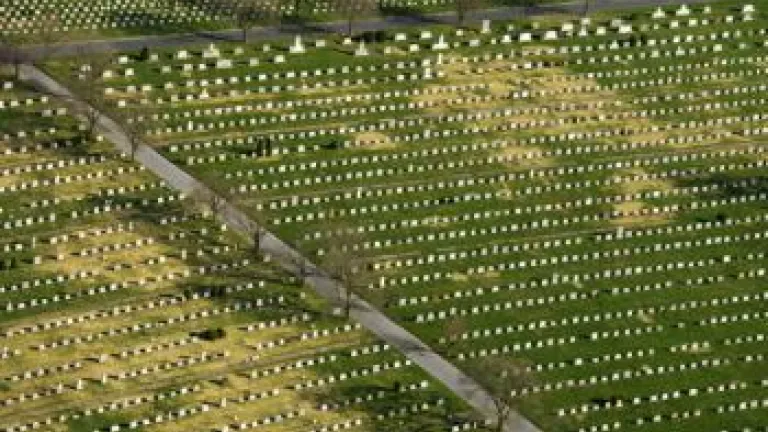
The dead who stand before their Creator are all those who died never knowing the true God. Like Ezekiel's vision of dry bones coming back to life, these people emerge from their graves and begin to know their God. The books (biblia in Greek, from which we get the word Bible) are the Scriptures, the only source of the knowledge of eternal life. Finally all will have an opportunity to fully understand God's plan of salvation.
This physical resurrection is not a second chance for salvation. For these people it is a first opportunity to really know the Creator. The resurrected are "judged according to their works, by the things which were written in the books" (Revelation 20:12). This judgment will involve an evaluation period during which they will enjoy the opportunity to hear, understand and grow in God's way of life, having their names inscribed in the Book of Life (Revelation 20:15). During this time billions of people will gain access to eternal life.
This final commanded festival of the year shows how deep and far reaching are the merciful judgments of God. Jesus Christ spoke of the wonderful truth depicted by this day when He compared three cities that failed to respond to His miraculous works with three cities of the ancient world:
"Woe to you, Chorazin! Woe to you, Bethsaida! For if the mighty works which were done in you had been done in Tyre and Sidon [ancient pagan cities], they would have repented long ago in sackcloth and ashes. But I say to you, it will be more tolerable for Tyre and Sidon in the day of judgment than for you. And you, Capernaum, who are exalted to heaven, will be brought down to Hades; for if the mighty works which were done in you had been done in Sodom, it would have remained until this day. But I say to you that it shall be more tolerable for the land of Sodom in the day of judgment than for you" (Matthew 11:21-24).
The inhabitants of ancient Tyre, Sidon and Sodom—cities that had incurred the anger of God for their depravity—will receive mercy in the day of judgment. Unlike Chorazin, Bethsaida and Capernaum of Christ's day, these cities of old had little opportunity to know God. Yet He will ultimately resurrect these people just after the first 1,000 years of Christ's reign over the world, including them in the time of judgment when even those who lived in bygone ages will be reconciled to God.
In similar examples, Jesus refers to the long-dead people of the pagan city of Nineveh, to the queen of the South (of Sheba) of Solomon's time and again to ancient Sodom along with Gomorrah, these serving as the epitome of wickedness (Matthew 10:14-15; Matthew 12:41-42). God doesn't tolerate perversion and sinfulness, but it is evident that He has not finished working in the lives of the people of these ancient generations. This requires that they be resurrected—brought to life again—and at last instructed in God's ways.
Jesus was describing a time during which people from all past ages—the long-dead people of the ancient Assyrian city of Nineveh and the biblical "queen of the South" from Solomon's time will rise with those from His generation and live at the same time. Together they will all come to understand the truth about who Christ was and the purpose of life. It will be a time of universal knowledge of God. From the least to the greatest, all will know Him (Hebrews 8:11). Those whom Jesus specifically mentioned, and countless more like them, will at last experience their opportunity for salvation.
This final period of judgment completes God's plan of salvation for the world. It will be a time of love, deep mercy and the unsearchable judgment of God. The opportunity to drink of the life-giving waters of the Holy Spirit will indeed quench the deepest thirsts of men and women. This time of righteous judgment will bring back to life those long forgotten by humanity, but never forgotten by God.
What is the fate of those who die with no real knowledge of Jesus Christ, the Son of God? What hope is there for the billions who have lived and died without knowledge of God's purpose? The Scriptures show that these are not cut off without hope. He will bring them back to life and give them their opportunity for eternal life as spirit beings in God's Kingdom.
God will see His plan through and bring many sons to glory (Hebrews 2:10). His promise to pour out His Spirit on all flesh will find its fullest manifestation. The thirst-quenching waters of the Holy Spirit will be available to all in the time depicted by the Eighth Day, the last of God's annual festivals.
What a marvelous plan these biblical festivals portray. How great would be our lack of understanding without them!