The Passover: Why Did Jesus Christ Have to Die?

Most of us have heard that Jesus Christ died for our sins, but what does that really mean? Why was His death necessary?
Most of us have heard that Jesus Christ died for our sins, but what does that really mean? Why was His death necessary? What part does Christ's sacrifice play in God's plan for mankind? How is Jesus Christ's death reflected in God's holy festivals? This chapter on the New Testament Passover will address these important questions.
Christ's sacrifice is the pivotal event in God's plan to save humanity. Jesus foretold the fact that He would be "lifted up" in crucifixion so that "whoever believes in Him should not perish but have eternal life. For God so loved the world that He gave His only begotten Son, that whoever believes in Him should not perish but have everlasting life" (John 3:14-16).
We see here that Jesus' sacrifice, the central message of the Passover, was a supreme act of love for humanity. This important event laid the foundation for the annual festivals that would follow. It is the most momentous step in God's plan.
Just before the Passover feast that would see His execution, Jesus said that "for this purpose I came to this hour . . . And I, if I am lifted up from the earth, will draw all peoples to Myself" (John 12:27, John 12:32).
The day on which this profound event, the crucifixion, transpired was the 14th day of the first month of God's calendar, the very same day on which the Passover lambs were to be slain (Leviticus 23:5). Paul would later tell the congregation at Corinth that "Christ, our Passover, was sacrificed for us" (1 Corinthians 5:7).
Now let's look back through the Bible for the instructions and meaning God gave concerning this day. Doing so will help us understand why God expects us to continue observing the Passover.
God's Passover instruction
As previously mentioned, God through Moses told Pharaoh, "Let My people go, that they may hold a feast to Me in the wilderness" (Exodus 5:1). Through a series of plagues, God displayed His great power and delivered the Israelites from slavery in Egypt. After nine plagues He gave Israel specific instructions about the next and final terrifying calamity and the steps each Israelite family would have to take to escape it.
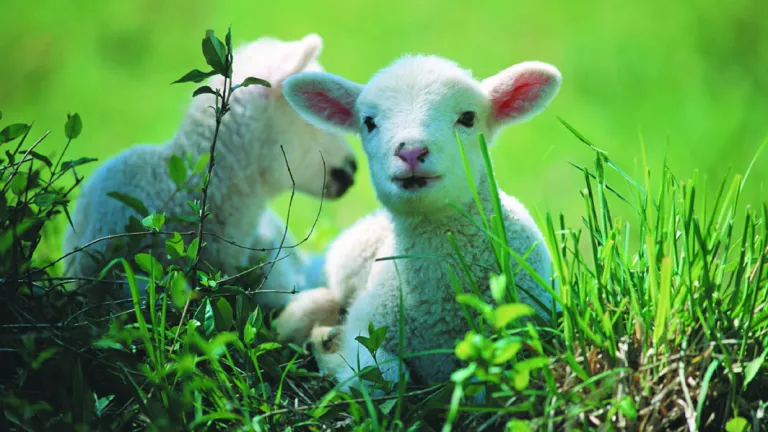
The unblemished male lamb represented Jesus Christ as the perfect, sinless sacrifice for our sins.
God said that on the 10th day of the first month (in the spring in the Middle East) each Israelite was to select a lamb or goat large enough to feed each household (Exodus 12:3). The animal chosen was to be a yearling male without any sort of defect. On the 14th day of that month at evening, the Israelites were to kill the animals and place some of their blood on the doorposts of their homes. The animals were then to be roasted and eaten along with unleavened bread and bitter herbs.
The Creator further instructed the Israelites that on this evening He would kill all the firstborn of Egypt to convince Pharaoh to release the Israelites from slavery. The firstborn of each Israelite family would be protected if the sign of the blood were on the entrance of their homes. God would "pass over" their homes to spare them—thus the meaning of the name of this observance (Exodus 12:13).
God said this day would be to the Israelites a memorial, "and you shall keep it as a feast to the Lord throughout your generations. You shall keep it as a feast by an everlasting ordinance" (Exodus 12:14). Bible writers later explained that the annual Passover observance symbolized Christ. Paul, as we just saw, referred to Christ as "our Pass-over" (1 Corinthians 5:7), and the apostle John recorded that John the Baptist recognized Christ as "the Lamb of God who takes away the sin of the world!" (John 1:29).
The unblemished male animal represented Jesus Christ as the perfect, sinless sacrifice who died in our place, His death paying the penalty for our sins and reconciling us to God. Hebrews 9:11-12 tells us that "Christ came as High Priest of the good things to come . . . not with the blood of goats and calves, but with His own blood He entered the Most Holy Place once for all, having obtained eternal redemption." Jesus Christ bought us with His blood, pouring out His life as our Passover lamb so our sins could be forgiven.
Why did Jesus Christ have to die? Our Savior had to die because in this way God could mercifully forgive our sins while maintaining the integrity of His law and perfect justice. The Bible tells us that sin is the violation of God's law of love (1 John 3:4). We have all sinned and fallen short of the glory of God (Romans 3:23). We have each earned the death penalty for our disobedience (Romans 5:12; Romans 6:23).
Paul illustrated the profound love of Jesus Christ in giving up His life on our behalf (Romans 5:6-8). All would be doomed eternally had not the penalty for our sins been paid somehow. Christ, who lived a perfect life as the unblemished Lamb of God, substituted His death for ours. In fact, His death was the only possible substitution for ours. His sacrifice became the payment for our sins. He died in our place so we could share life with Him forever. We can no longer live according to our own desires. We become God's redeemed, or bought and paid-for, possession (1 Corinthians 6:19-20).
Both Jesus and Paul made it clear that the Passover is to continue as a Christian observance. Jesus Himself specified elements of the Passover meal that must still be ceremonially partaken of to teach Christians important truths about Himself and God's continuing plan of salvation.
The Passover sacrifice in the Old Testament foreshadowed Christ's crucifixion. The New Testament Passover memorializes that crucifixion. By observing the Passover, we "proclaim the Lord's death till He comes" (1 Corinthians 11:26). Now let's examine Christ's specific instructions concerning the Passover ceremony and the lessons we should learn from it.
A lesson in humility and service
The apostle John described the events of Jesus Christ's last evening with His disciples: "Now before the feast of the Passover, when Jesus knew that His hour had come that He should depart from this world to the Father, having loved His own who were in the world, He loved them to the end." During the meal Jesus "rose from supper and laid aside His garments, took a towel and girded Himself. After that, He poured water into a basin and began to wash the disciples' feet, and to wipe them with the towel with which He was girded" (John 13:1-5).
Washing the feet of another was an act of lowly servitude (1 Samuel 25:41). Jesus stooped down to wash the disciples' feet Himself to teach important spiritual lessons. The account continues: "So when He had washed their feet, taken His garments, and sat down again, He said to them, 'Do you know what I have done to you? You call me Teacher and Lord, and you say well, for so I am. If I then, your Lord and Teacher, have washed your feet, you also ought to wash one another's feet'" (John 13:12-14).
Jesus left His disciples with a lasting reminder of the importance of humble service to others. This reinforced an earlier lesson He had given them recorded in Matthew 20:25-28, where He admonished His disciples about the wrong and right kind of leadership: "You know that the rulers of the Gentiles lord it over them, and those who are great exercise authority over them. Yet it shall not be so among you; but whoever desires to become great among you, let him be your servant. And whoever desires to be first among you, let him be your slave—just as the Son of Man did not come to be served, but to serve, and to give His life a ransom for many."
The simple act of washing the feet of others teaches us a vital lesson intimately associated with the Passover. He concluded: "I have given you an example, that you should do as I have done to you" (John 13:15). How many Christians today follow Christ's example and obey His simple instruction to wash each other's feet, and exemplify that attitude in their lives? As the redeemed possession of God through Christ's sacrifice, our lives should be devoted to serving God and our fellow man.
The bread: symbol of Christ's body
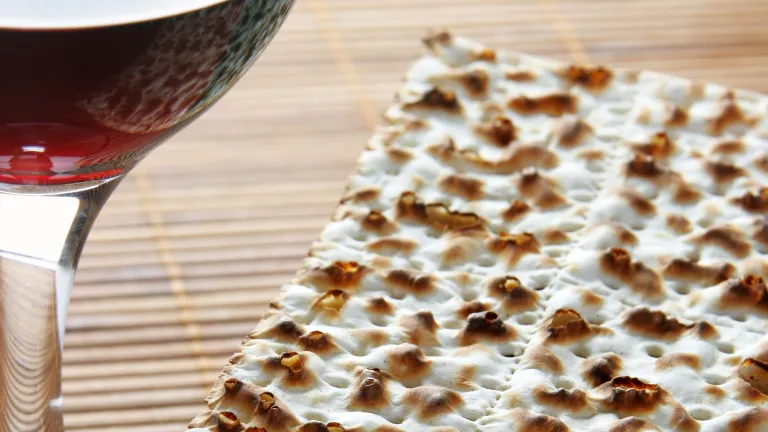
Later, while the disciples were eating, Jesus explained that one of them would soon betray Him (Matthew 26:21-25). But notice Matthew 26:26: "And as they were eating, Jesus took bread, blessed it and broke it, and gave it to the disciples and said, 'Take, eat; this is My body.'" So the unleavened bread eaten in the Old Testament Passover was to take on new significance for the disciples.
Christ's body was to become a sacrificial offering for sin, for indeed "we have been sanctified through the offering of the body of Jesus Christ once for all. And every priest stands ministering daily and offering repeatedly the same sacrifices, which can never take away sins. But this man . . . offered one sacrifice for sins forever . . . For by one offering He has perfected forever those who are being sanctified" (Hebrews 10:10-14). By accepting Jesus Christ's sacrifice in place of our own death upon our repentance and faith, God forgives us and "sanctifies" us—sets us apart—for the holy purpose of obedience to Him.
Our decision to eat the Passover bread means we understand that Jesus Christ has "put away sin by the sacrifice of Himself" (Hebrews 9:26). He willingly consented to suffer an excruciating death for us. Christ bore in His body mental and physical suffering brought on by sin.
Jesus' sacrifice is also intricately associated with our healing. Peter wrote of Christ's suffering that He "bore our sins in His own body on the tree, that we, having died to sins, might live for righteousness—by whose stripes you were healed" (1 Peter 2:24). Isaiah prophesied of Jesus' suffering on our behalf: "Surely He has borne our griefs and carried our sorrows; yet we esteemed Him stricken, smitten by God, and afflicted. But He was wounded for our transgressions, He was bruised for our iniquities; the chastisement for our peace was upon Him, and by His stripes we are healed" (Isaiah 53:4-5).
Matthew 8:16-17, describing incidents of healing in Jesus' ministry, states that He helped "many who were demon-possessed. And He cast out the spirits with a word, and healed all who were sick, that it might be fulfilled which was spoken by Isaiah the prophet, saying: 'He Himself took our infirmities and bore our sicknesses.'"
Jesus showed that He was the promised Messiah by miraculous healings. But besides demonstrating His compassion, such healings showed that Christ possessed the power to forgive sin (Matthew 9:2-6).
Sin brings suffering! The ultimate healing made possible by Christ's complete sacrifice includes the whole person, alleviating and eliminating the mental, emotional and physical sufferings that result from our sins.
Through the forgiveness of our sins, Christ also made possible our receiving eternal life. "I am the bread of life," He said. "Your fathers ate the manna [the nourishing substance God provided throughout Israel's 40-year desert wandering] in the wilderness, and are dead. This [Christ referring here to Himself] is the bread which comes down from heaven, that one may eat of it and not die. I am the living bread which came down from heaven. If anyone eats of this bread, he will live forever; and the bread that I shall give is My flesh, which I shall give for the life of the world" (John 6:48-51).
A relationship leading to a new way of life
The Passover bread reminds us of the close relationship Christians have with Jesus Christ. In Romans 6:1-6 Paul shows that, once we are symbolically united with Jesus in death through baptism, "we should no longer be slaves of sin" but "should walk in newness of life." Eating the bread demonstrates our commitment to allow Christ to live in us.
The apostle Paul describes this uniting with Christ in Galatians 2:20: "I am crucified with Christ: nevertheless I live; yet not I, but Christ liveth in me: and the life which I now live in the flesh I live by the faith of the Son of God, who loved me, and gave himself for me" (KJV). Paul understood that pursuing his own ways was no longer his life's focus. His relationship with Jesus Christ became supremely important to him.
The apostle John tells us what Christ expects of us in our relationship with Him: "Now by this we know that we know Him, if we keep His commandments . . . He who says he abides in Him ought himself also to walk just as He walked" (1 John 2:3-6).
The Passover bread reinforces our understanding that Jesus Christ, the true "bread of life," must live within us, enabling us to live an entirely new life. God forgives our sins to sanctify us—to continue to set us apart for a holy purpose, to redeem us (that is, purchase us for a price). We now belong to God so He can fulfill His purpose in us.
The meaning of the Passover wine
Why did Jesus command His disciples to drink wine as a symbol of His blood during the Passover service? What does this symbolize?
Christ knew that drinking a little wine as a symbol of His shed blood would impress deeply on our minds that His death was for the forgiveness of our sins.
It had become tradition among the Jews to drink wine at meals on sacred occasions, including the Passover. But Jesus attached special meaning to the wine on this night: "Then He took the cup, and gave thanks, and gave it to them, saying, 'Drink from it, all of you. For this is My blood of the new covenant, which is shed for many for the remission of sins. But I say unto you,
I will not drink of this fruit of the vine from now on until that day when I drink it new with you in My Father's kingdom'" (Matthew 26:27-29).
What are we to learn from this symbol? First, Christ knew that drinking a little wine as a symbol of His shed blood would impress deeply on our minds that His death was for the forgiveness of our sins. "This do," He said, "as often as you drink it, in remembrance of Me" (1 Corinthians 11:25). Jesus "loved us and washed us from our sins in His own blood" (Revelation 1:5). God forgives our sins through Jesus' shed blood (1 John 1:7).
Many people normally understand this tenet—that God forgives our sins through Jesus Christ's blood—but not everyone realizes how it occurs. Paul explained that "according to the Law . . . all things are cleansed with blood, and without shedding of blood there is no forgiveness [of sin]" (Hebrews 9:22, New American Standard Bible).
The Old Testament records God instructing Israel's priesthood to perform certain duties that included a system of cleansing and purification using the blood of sacrificed animals, thus foreshadowing the shedding of Christ's blood, the ultimate sacrifice for sin. He commanded the nation to follow this temporary system of the ritualistic cleansing of sin (Hebrews 9:9-10). Animal sacrifices served as a symbol or representation of the one and only real and future sacrifice, Jesus Christ, who would pay the penalty for everyone's sins once and for all.
The Bible teaches that one's life is in his blood (Genesis 9:4). When a person loses sufficient blood, he or she dies. Therefore blood, when poured out, makes the atonement for sin, which produces death (Leviticus 17:11). Jesus lost His blood when He was scourged, crucified and pierced (Luke 22:20; Isaiah 53:12). He poured out His blood, dying for the sins of humanity.
In partaking of the wine at the Passover service, we should carefully consider its meaning. That small portion of wine represents the very life blood that flowed from Jesus Christ's dying body for the remission of our sins (Ephesians 1:7). With this forgiveness comes ultimately freedom from death.
Not only does Jesus Christ's blood completely cover our sins, but it makes possible the removal of our guilt. Hebrews 9:13-14 compares the physical sacrifice of an animal with the blood of Christ: "For if the blood of bulls and goats and the ashes of a heifer, sprinkling the unclean, sanctifies for the purifying of the flesh, how much more shall the blood of Christ, who through the eternal Spirit offered Himself without spot to God, purge your conscience from dead works to serve the living God?"
The word conscience comes from the Latin word conscire, meaning "to be conscious of guilt." Our conscience is our awareness of right and wrong.
Our partaking of wine in the New Testament Passover ceremony is an expression of faith that God really has forgiven us. We are free from sin and guilt (John 3:17-18), and our hearts are "made free from the sense of sin" (Hebrews 10:22, Bible in Basic English). We live in newness of life with a clear conscience (Romans 6:14).
Some people, however, feel guilty even after they have repented. Although our consciences should readily convict us when we sin again, we should not continue to condemn ourselves over sins God has already forgiven. Instead, we should be fully confident in our God-given freedom from guilt (1 John 1:9; 1 John 3:19-20).
Access to the Father
Christ's shed blood also makes possible our access to the very throne of God the Father. Under the Old Covenant only the high priest could enter the area of the tabernacle known as the Most Holy Place or Holiest of All (Hebrews 9:6-10). The "mercy seat" positioned there atop the Ark of the Covenant represented God's throne. Leviticus 16 describes the ceremony that took place each year on another of God's sacred occasions, the Day of Atonement. At that time the high priest took the blood of a goat, representing the future sacrifice of Jesus Christ, and sprinkled it on the mercy seat so the Israelites could be symbolically cleansed of all their sins (Hebrews 9:5-16).
Because the blood of Jesus Christ removes sin, making us pure before God, we can enjoy direct access to the Father (Hebrews 9:24). Jesus, as our High Priest, entered into the Most Holy Place through His own blood (Hebrews 9:11-12). We can now approach God the Father without hesitation or fear of rejection, but with confidence and assurance (Hebrews 10:19-22).
Hebrews 4:16 speaks of this confidence we can have in approaching God: "Let us therefore come boldly to the throne of grace, that we may obtain mercy and find grace to help in time of need." Jesus Christ makes it possible for us to experience this intimate relationship with our Father.
Our covenant with God
The blood of Christ also signifies that He has entered into a covenant, or agreement. As we've seen, when Jesus presented the wine to His disciples during the observance of their final Passover together, He told them, "This is My blood of the new covenant" (Matthew 26:27-28).
Why is this wine called the "blood of the new covenant"? The writer of the book of Hebrews explains that, after God at Mount Sinai enjoined on ancient Israel what is now called the Old Covenant, and after the Israelites' response of obedient commitment, the covenant was ratified by the ceremony of the sprinkling of blood. The Bible writers called this the "blood of the covenant" (Hebrews 9:18-20; Hebrews 9:13:20; Exodus 24:3-8).
We must understand that repentance, baptism and the acceptance of the sacrifice of Jesus Christ—along with belief in His promise to forgive our sin—constitutes a covenant with God. Through this covenant, which we gratefully accept and can completely rely on (Hebrews 6:17-20), God grants us eternal life. By accepting the sacrifice of Christ for the remission of sin, we enter into a covenant relationship with the God of the universe. The terms of this covenant are absolute, because it was sealed with the shed blood of Jesus Christ (Hebrews 9:11-12, Hebrews 9:15). We are reminded of this covenant every year when we partake of the Passover.
What are the terms of this covenant relationship? "'This is the covenant that I will make with them after those days, says the Lord: I will put My laws into their hearts, and in their minds I will write them,' then He adds, 'Their sins and lawless deeds I will remember no more'" (Hebrews 10:16-17).
Ancient Israel did not have the heart to faithfully keep God's commandments (Deuteronomy 5:29). Under the New Covenant, however, God writes His laws in our hearts and minds. These laws are not those of physical purification contained in the system of sacrifices, washings and rituals in the tabernacle. Instead, they are the holy and righteous laws that define right behavior toward God and neighbor (Romans 7:12) and lead to eternal life (Matthew 19:17). Our drinking of the Passover wine is symbolic of our acceptance of this covenant relationship that is ratified by the blood of Jesus Christ.
Annual observance in the early Church
The New Testament shows that Christians continued to observe the annual festivals at the times commanded by God. As we've seen, Jesus in His youth observed the Passover annually on the specified day (Luke 2:41), and He continued the practice with His disciples. The early Church continued to observe the other feast days at their specified times. For example, Acts records that Jesus' followers met to observe the Feast of Pentecost: "Now when the Day of Pentecost had fully come, they were all with one accord in one place" (Acts 2:1).
Scripture gives no hint of the early Church adding to or changing the dates God ordained for His festivals. The phrase in 1 Corinthians 11:26—"for as often as you eat this bread and drink this cup"—simply means every time Christians do it. And that refers to observing the Passover each year on the appropriate day, thereby "proclaim[ing] the Lord's death till He comes."
The Bible specifies the yearly observance of the Passover, and history records its annual celebration as the practice of the early Church. Passover, as a memorial of Jesus' death, is to be observed once a year rather than whenever or however often one chooses, just as with all of the other annual festivals. Neither Jesus Christ nor His apostles indicated that we should change when or how often we observe any of God's sacred appointments.
Following their example, we should continue to observe the Passover at the beginning of the evening of the 14th day of the first month (Abib, or Nisan) of the Hebrew calendar. (See "The Annual Festivals of God - Holy Day Calendar" for dates listed.)
During His last Passover with His disciples, Jesus explained that this celebration has significant implications for the future as well. In Matthew 26:29 He told them, "I will not drink of this fruit of the vine from now on until that day when I drink it new with you in My Father's kingdom."
Keeping the Passover each year reminds us that God is the forgiver of sin who grants us eternal life in His Kingdom through the sacrifice of Jesus Christ, our Passover. This observance is a memorial of our Creator's continuing role in humanity's salvation.