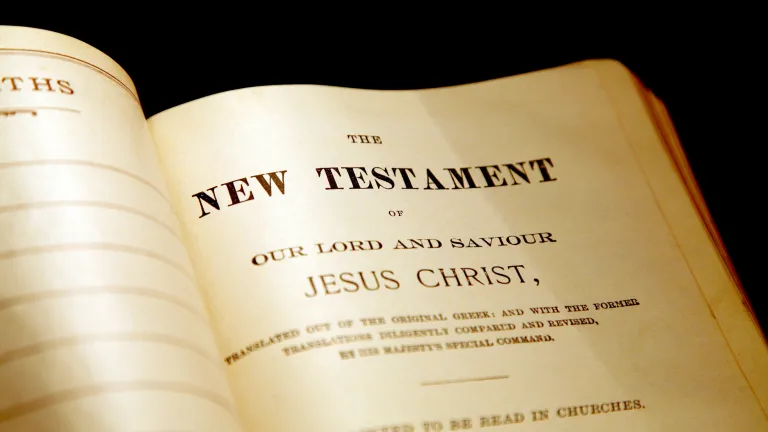
Do Christians use a book, more than half of which is obsolete and irrelevant? Did God provide humanity with two sets of inspired writings, the Old TestamentThose books that make up the Hebrew Bible generally accepted by Christians, Jews and to some extent Muslims. It contains a threefold division: the Law (the five books of Moses), the Prophets and the Writings. and the New?
One of the common misconceptions among readers of the BibleThe books (Greek, "biblia" ) that are acknowledged as canonical (authoritative) by the early Christian Church. It includes both the books of the ancient Hebrew prophets and those of the apostolic witnesses to Jesus Christ. is that a large part of it is obsolete-irrelevant for modern life. Sadly, some professing Christians have unwittingly turned a blind eye to much of God's revelation by rejecting what is known as the Old TestamentThose books that make up the Hebrew Bible generally accepted by Christians, Jews and to some extent Muslims. It contains a threefold division: the Law (the five books of Moses), the Prophets and the Writings.. They believe that the New TestamentThe 27 authoritative books of the apostolic writings: the four Gospels of Christ, Acts (a history), 21 apostolic letters and the book of Revelation.-the writings of the apostles-is what really matters; that the Old TestamentThose books that make up the Hebrew Bible generally accepted by Christians, Jews and to some extent Muslims. It contains a threefold division: the Law (the five books of Moses), the Prophets and the Writings. was valid up until Christ came, but at that time became old and outdated.
Did God, in essence, provide humankind with two Bibles? Did He inspire one set of writings-the Hebrew ScripturesThe books of the Old Testament.-for the Israelites living from Moses' time to Christ's birth, and then provide another set in the first century, with that set intended for everyone else?
Does the BibleThe books (Greek, "biblia" ) that are acknowledged as canonical (authoritative) by the early Christian Church. It includes both the books of the ancient Hebrew prophets and those of the apostolic witnesses to Jesus Christ. itself have anything to say about this idea? Would one part of the BibleThe books (Greek, "biblia" ) that are acknowledged as canonical (authoritative) by the early Christian Church. It includes both the books of the ancient Hebrew prophets and those of the apostolic witnesses to Jesus Christ. reject the other?
Let's see exactly what the BibleThe books (Greek, "biblia" ) that are acknowledged as canonical (authoritative) by the early Christian Church. It includes both the books of the ancient Hebrew prophets and those of the apostolic witnesses to Jesus Christ. itself has to say about the Old TestamentThose books that make up the Hebrew Bible generally accepted by Christians, Jews and to some extent Muslims. It contains a threefold division: the Law (the five books of Moses), the Prophets and the Writings.. We will see whether God gave us two different sets of writings-or one continuous inspired set of teachings and instruction.
Let's begin with the terms Old TestamentThose books that make up the Hebrew Bible generally accepted by Christians, Jews and to some extent Muslims. It contains a threefold division: the Law (the five books of Moses), the Prophets and the Writings. and New TestamentThe 27 authoritative books of the apostolic writings: the four Gospels of Christ, Acts (a history), 21 apostolic letters and the book of Revelation. . The general view is that the Old TestamentThose books that make up the Hebrew Bible generally accepted by Christians, Jews and to some extent Muslims. It contains a threefold division: the Law (the five books of Moses), the Prophets and the Writings. was old-and thus obsolete or worn out-and that it has been replaced by the New TestamentThe 27 authoritative books of the apostolic writings: the four Gospels of Christ, Acts (a history), 21 apostolic letters and the book of Revelation.. Is this view found in the BibleThe books (Greek, "biblia" ) that are acknowledged as canonical (authoritative) by the early Christian Church. It includes both the books of the ancient Hebrew prophets and those of the apostolic witnesses to Jesus Christ.? No, it isn't. The terms Old TestamentThose books that make up the Hebrew Bible generally accepted by Christians, Jews and to some extent Muslims. It contains a threefold division: the Law (the five books of Moses), the Prophets and the Writings. and New TestamentThe 27 authoritative books of the apostolic writings: the four Gospels of Christ, Acts (a history), 21 apostolic letters and the book of Revelation. are found in a few places in some BibleThe books (Greek, "biblia" ) that are acknowledged as canonical (authoritative) by the early Christian Church. It includes both the books of the ancient Hebrew prophets and those of the apostolic witnesses to Jesus Christ. translations, but the word translated "testament" is actually the word for "covenant." Those scriptures simply talk about the old and new covenants-not about books of the BibleThe books (Greek, "biblia" ) that are acknowledged as canonical (authoritative) by the early Christian Church. It includes both the books of the ancient Hebrew prophets and those of the apostolic witnesses to Jesus Christ..
If you had been around to ask the apostles John, Peter or Paul about the "Old TestamentThose books that make up the Hebrew Bible generally accepted by Christians, Jews and to some extent Muslims. It contains a threefold division: the Law (the five books of Moses), the Prophets and the Writings." or the "New TestamentThe 27 authoritative books of the apostolic writings: the four Gospels of Christ, Acts (a history), 21 apostolic letters and the book of Revelation.," they would have had no idea what you meant. The terms Old TestamentThose books that make up the Hebrew Bible generally accepted by Christians, Jews and to some extent Muslims. It contains a threefold division: the Law (the five books of Moses), the Prophets and the Writings. and New TestamentThe 27 authoritative books of the apostolic writings: the four Gospels of Christ, Acts (a history), 21 apostolic letters and the book of Revelation. were coined by men long after the books of the BibleThe books (Greek, "biblia" ) that are acknowledged as canonical (authoritative) by the early Christian Church. It includes both the books of the ancient Hebrew prophets and those of the apostolic witnesses to Jesus Christ. were written. The first use of the term New TestamentThe 27 authoritative books of the apostolic writings: the four Gospels of Christ, Acts (a history), 21 apostolic letters and the book of Revelation. is found in the writings of the early theologian Tertullian (ca. A.D. 155-220), a century or more after the deaths of the apostles.
Let's consider a few statistics to show how the writers of what is known as the New TestamentThe 27 authoritative books of the apostolic writings: the four Gospels of Christ, Acts (a history), 21 apostolic letters and the book of Revelation. viewed the Hebrew BibleThe books of the Old Testament., called the Old TestamentThose books that make up the Hebrew Bible generally accepted by Christians, Jews and to some extent Muslims. It contains a threefold division: the Law (the five books of Moses), the Prophets and the Writings. today. These are very revealing.
How many times do the writers of the New TestamentThe 27 authoritative books of the apostolic writings: the four Gospels of Christ, Acts (a history), 21 apostolic letters and the book of Revelation. quote the Old TestamentThose books that make up the Hebrew Bible generally accepted by Christians, Jews and to some extent Muslims. It contains a threefold division: the Law (the five books of Moses), the Prophets and the Writings.? An index in the Jewish New TestamentThe 27 authoritative books of the apostolic writings: the four Gospels of Christ, Acts (a history), 21 apostolic letters and the book of Revelation. catalogs 695 separate quotations from the books of the Old TestamentThose books that make up the Hebrew Bible generally accepted by Christians, Jews and to some extent Muslims. It contains a threefold division: the Law (the five books of Moses), the Prophets and the Writings. in the New (Jewish New TestamentThe 27 authoritative books of the apostolic writings: the four Gospels of Christ, Acts (a history), 21 apostolic letters and the book of Revelation. Publications, Jerusalem, 1989). There are many other passages where the Old TestamentThose books that make up the Hebrew Bible generally accepted by Christians, Jews and to some extent Muslims. It contains a threefold division: the Law (the five books of Moses), the Prophets and the Writings. is referred to , as in cases where an Old TestamentThose books that make up the Hebrew Bible generally accepted by Christians, Jews and to some extent Muslims. It contains a threefold division: the Law (the five books of Moses), the Prophets and the Writings. figure is mentioned, but no specific scripture is quoted. Depending on which scholar's work you examine, the number of quotations and references in the New TestamentThe 27 authoritative books of the apostolic writings: the four Gospels of Christ, Acts (a history), 21 apostolic letters and the book of Revelation. to the Old may be as high as 4,105 (Roger Nicole, The Expositor's BibleThe books (Greek, "biblia" ) that are acknowledged as canonical (authoritative) by the early Christian Church. It includes both the books of the ancient Hebrew prophets and those of the apostolic witnesses to Jesus Christ. Commentary , Zondervan, Grand Rapids, 1979, Vol. I, p. 617).
Compare those figures to the number of times other writers are quoted in the New TestamentThe 27 authoritative books of the apostolic writings: the four Gospels of Christ, Acts (a history), 21 apostolic letters and the book of Revelation.: four . The apostles quoted the Old TestamentThose books that make up the Hebrew Bible generally accepted by Christians, Jews and to some extent Muslims. It contains a threefold division: the Law (the five books of Moses), the Prophets and the Writings. 695 times , but other writers only four times . Yet some people insist that the teaching of the New TestamentThe 27 authoritative books of the apostolic writings: the four Gospels of Christ, Acts (a history), 21 apostolic letters and the book of Revelation. is that the Old is obsolete, only valid for a specific people during a limited time in history.
Consider a few more statistics. Of the 26 books and letters forming the New TestamentThe 27 authoritative books of the apostolic writings: the four Gospels of Christ, Acts (a history), 21 apostolic letters and the book of Revelation., 20 quote the Old. The only ones that don't directly quote the Old TestamentThose books that make up the Hebrew Bible generally accepted by Christians, Jews and to some extent Muslims. It contains a threefold division: the Law (the five books of Moses), the Prophets and the Writings. are the six shortest-Titus, Philemon, 1, 2 and 3 John, and Jude. However, Titus, 1 John, 3 John and Jude allude to Old TestamentThose books that make up the Hebrew Bible generally accepted by Christians, Jews and to some extent Muslims. It contains a threefold division: the Law (the five books of Moses), the Prophets and the Writings. personalities or passages.
Let's look at it the other way around too. The way modern Bibles are organized, there are 39 books in the Old TestamentThose books that make up the Hebrew Bible generally accepted by Christians, Jews and to some extent Muslims. It contains a threefold division: the Law (the five books of Moses), the Prophets and the Writings.. Of these 39 books, only nine are not quoted in the New TestamentThe 27 authoritative books of the apostolic writings: the four Gospels of Christ, Acts (a history), 21 apostolic letters and the book of Revelation.. However, since the Hebrew BibleThe books of the Old Testament. has long organized these books differently than they appear in modern Bibles, and some of these nine were originally combined with and part of other books, in reality only five of the Old TestamentThose books that make up the Hebrew Bible generally accepted by Christians, Jews and to some extent Muslims. It contains a threefold division: the Law (the five books of Moses), the Prophets and the Writings. books are not quoted in the New TestamentThe 27 authoritative books of the apostolic writings: the four Gospels of Christ, Acts (a history), 21 apostolic letters and the book of Revelation..
Some assume that the five books of Moses are obsolete, as they focus so heavily on laws supposedly annulled by Jesus Christ. However, these same five books are quoted at least 245 times and referred to many more. Paul, the apostle who some believe taught that the law contained in these five books is done away, quoted from those books between 70 and 110 times -more than any other New TestamentThe 27 authoritative books of the apostolic writings: the four Gospels of Christ, Acts (a history), 21 apostolic letters and the book of Revelation. figure. Jesus Christ quoted from these same books about 60 times.
With that background, let's consider some passages in the New TestamentThe 27 authoritative books of the apostolic writings: the four Gospels of Christ, Acts (a history), 21 apostolic letters and the book of Revelation. that directly discuss the Hebrew ScripturesThe books of the Old Testament..
Paul made his view of the Old TestamentThose books that make up the Hebrew Bible generally accepted by Christians, Jews and to some extent Muslims. It contains a threefold division: the Law (the five books of Moses), the Prophets and the Writings. clear in 2 Timothy, a letter filled with instruction for a younger minister. He wrote that "from childhood you have known the Holy ScripturesThe divinely inspired writings of both the Old and New Testaments. The term Scripture is used in the New Testament to refer to both the Hebrew Bible (Luke 24:44-45) and the new apostolic writings accepted as inspired (2 Peter 3:16; 1 Timothy 5:18)." (2 Timothy 3:15And that from a child thou hast known the holy scriptures, which are able to make thee wise unto salvation through faith which is in Christ Jesus.
See All..., emphasis added throughout).
What are the "Holy ScripturesThe divinely inspired writings of both the Old and New Testaments. The term Scripture is used in the New Testament to refer to both the Hebrew Bible (Luke 24:44-45) and the new apostolic writings accepted as inspired (2 Peter 3:16; 1 Timothy 5:18)." Paul refers to? At the time this was written, about A.D. 66, there was no "New TestamentThe 27 authoritative books of the apostolic writings: the four Gospels of Christ, Acts (a history), 21 apostolic letters and the book of Revelation."-some of what has since then been called the New TestamentThe 27 authoritative books of the apostolic writings: the four Gospels of Christ, Acts (a history), 21 apostolic letters and the book of Revelation. hadn't even been written at that point. Paul is referring very clearly to the Old TestamentThose books that make up the Hebrew Bible generally accepted by Christians, Jews and to some extent Muslims. It contains a threefold division: the Law (the five books of Moses), the Prophets and the Writings.; those were the Holy ScripturesThe divinely inspired writings of both the Old and New Testaments. The term Scripture is used in the New Testament to refer to both the Hebrew Bible (Luke 24:44-45) and the new apostolic writings accepted as inspired (2 Peter 3:16; 1 Timothy 5:18). Timothy had been taught since childhood by his Jewish mother (Acts 16:1-3 [1] Then came he to Derbe and Lystra: and, behold, a certain disciple was there, named Timotheus, the son of a certain woman, which was a Jewess, and believed; but his father was a Greek:
[2] Which was well reported of by the brethren that were at Lystra and Iconium.
[3] Him would Paul have to go forth with him; and took and circumcised him because of the Jews which were in those quarters: for they knew all that his father was a Greek.
See All...).
Though it may be surprising to some, Paul clearly states that these same ScripturesThe divinely inspired writings of both the Old and New Testaments. The term Scripture is used in the New Testament to refer to both the Hebrew Bible (Luke 24:44-45) and the new apostolic writings accepted as inspired (2 Peter 3:16; 1 Timothy 5:18). "are able to make you wise for salvation through faith which is in Christ Jesus" (2 Timothy 3:15And that from a child thou hast known the holy scriptures, which are able to make thee wise unto salvation through faith which is in Christ Jesus.
See All...). Salvation was available under the Old TestamentThose books that make up the Hebrew Bible generally accepted by Christians, Jews and to some extent Muslims. It contains a threefold division: the Law (the five books of Moses), the Prophets and the Writings. ScripturesThe divinely inspired writings of both the Old and New Testaments. The term Scripture is used in the New Testament to refer to both the Hebrew Bible (Luke 24:44-45) and the new apostolic writings accepted as inspired (2 Peter 3:16; 1 Timothy 5:18).. And how was it available? "Through faith which is in Christ Jesus." Moses, Abraham, Isaac, Jacob, Elijah, Daniel, DavidKing of Israel, killed the giant Goliath with a sling and stones, a man after God's own heart, only turned from God in the matter of Uriah the Hittite (1 Kings 15:5), had an affair with Bathsheba, Messiah would come from line of David, main author of Psalms and highly musical. and others who are promised eternal life elsewhere in the ScripturesThe divinely inspired writings of both the Old and New Testaments. The term Scripture is used in the New Testament to refer to both the Hebrew Bible (Luke 24:44-45) and the new apostolic writings accepted as inspired (2 Peter 3:16; 1 Timothy 5:18). received salvation the same way we do-through faith in Jesus Christ, through faith and belief in a promised MessiahA Hebrew word meaning literally "anointed one," synonymous with the Greek word christos, translated Christ. "In ancient Israel both persons and things consecrated to sacred purposes were anointed by having oil poured over them ... The Israelites did not think of crowning a king but of anointing him when he was enthroned ... [The future Messiah] is to destroy the world powers in an act of judgment, deliver Israel from her enemies, and restore her as a nation. The Messiah is the King of this future kingdom to whose political and religious domination the other nations will yield. His mission is the redemption of Israel and His dominion is universal. This is the clear picture of the Messiah in practically all of the OT passages which refer to Him" (The Zondervan Pictorial Bible Dictionary, "Messiah"). who would redeem them from their sins.
Jesus Christ did not die only for those who have lived since His death. He died for all the men, women and children who have ever lived, both before and after His physical life on earth.
What else does Paul say about these Holy ScripturesThe divinely inspired writings of both the Old and New Testaments. The term Scripture is used in the New Testament to refer to both the Hebrew Bible (Luke 24:44-45) and the new apostolic writings accepted as inspired (2 Peter 3:16; 1 Timothy 5:18). known as the Old TestamentThose books that make up the Hebrew Bible generally accepted by Christians, Jews and to some extent Muslims. It contains a threefold division: the Law (the five books of Moses), the Prophets and the Writings.? "
All ScriptureThe divinely inspired writings of both the Old and New Testaments. The term Scripture is used in the New Testament to refer to both the Hebrew Bible (Luke 24:44-45) and the new apostolic writings accepted as inspired (2 Peter 3:16; 1 Timothy 5:18). is given by inspiration of God ..." Paul described ScriptureThe divinely inspired writings of both the Old and New Testaments. The term Scripture is used in the New Testament to refer to both the Hebrew Bible (Luke 24:44-45) and the new apostolic writings accepted as inspired (2 Peter 3:16; 1 Timothy 5:18). with the term theopneustos . The first part of this word, Theo , means "God." The second part is pneustos , meaning "breathed." Paul says, as some translations put it, that "all ScriptureThe divinely inspired writings of both the Old and New Testaments. The term Scripture is used in the New Testament to refer to both the Hebrew Bible (Luke 24:44-45) and the new apostolic writings accepted as inspired (2 Peter 3:16; 1 Timothy 5:18). is God-breathed ," meaning it came directly from God . In other words, the Hebrew ScripturesThe books of the Old Testament., said Paul, came directly from the very breath and Spirit of God!
Continuing, Paul tells Timothy that ScriptureThe divinely inspired writings of both the Old and New Testaments. The term Scripture is used in the New Testament to refer to both the Hebrew Bible (Luke 24:44-45) and the new apostolic writings accepted as inspired (2 Peter 3:16; 1 Timothy 5:18). "is profitable for doctrine, for reproof, for correction, for instruction in righteousness, that the man of God may be complete, thoroughly equipped for every good work" (verses 16-17).
Consider another point about this passage. This letter was written about A.D. 66-only about a year before Paul was executed. This is Paul's last surviving letter before he died. And in it he tells another minister that the Old TestamentThose books that make up the Hebrew Bible generally accepted by Christians, Jews and to some extent Muslims. It contains a threefold division: the Law (the five books of Moses), the Prophets and the Writings. ScripturesThe divinely inspired writings of both the Old and New Testaments. The term Scripture is used in the New Testament to refer to both the Hebrew Bible (Luke 24:44-45) and the new apostolic writings accepted as inspired (2 Peter 3:16; 1 Timothy 5:18)., rather than being obsolete, are inspired by God and "profitable for doctrine, for reproof, for correction, and for instruction in righteousness," that Christians may be "complete, thoroughly equipped for every good work."
How did Paul himself preach and teach? We've already noted that he quoted the five books of Moses more than any other New TestamentThe 27 authoritative books of the apostolic writings: the four Gospels of Christ, Acts (a history), 21 apostolic letters and the book of Revelation. writer did. But are his letters the only time he quoted from the Old TestamentThose books that make up the Hebrew Bible generally accepted by Christians, Jews and to some extent Muslims. It contains a threefold division: the Law (the five books of Moses), the Prophets and the Writings.?
Acts 28 describes Paul's arrival in Rome and the conditions of his confinement there while awaiting trial. He could not leave, but he could receive visitors. "So when they had appointed him a day, many [of the Jewish leaders in Rome] came to him at his lodging, to whom he explained and solemnly testified of the kingdom of God, persuading them concerning Jesus from both the Law of Moses and the Prophets , from morning till evening" (Acts 28:23-24 [23] And when they had appointed him a day, there came many to him into his lodging; to whom he expounded and testified the kingdom of God, persuading them concerning Jesus, both out of the law of Moses, and out of the prophets, from morning till evening.
[23] And when they had appointed him a day, there came many to him into his lodging; to whom he expounded and testified the kingdom of God, persuading them concerning Jesus, both out of the law of Moses, and out of the prophets, from morning till evening.
[24] And some believed the things which were spoken, and some believed not.
[24] And some believed the things which were spoken, and some believed not.
See All...).
Here Paul, in about 63, almost 30 years after he had been called and converted, explained and persuaded a group of fellow Jews from "both the Law of Moses and the Prophets"-two of the major divisions of the Old TestamentThose books that make up the Hebrew Bible generally accepted by Christians, Jews and to some extent Muslims. It contains a threefold division: the Law (the five books of Moses), the Prophets and the Writings.. He did not tell them that they no longer needed to heed the Hebrew ScripturesThe books of the Old Testament., but rather taught Jesus Christ and the Kingdom of God from them-strange actions if you believe that Paul tried to turn people away from the Old TestamentThose books that make up the Hebrew Bible generally accepted by Christians, Jews and to some extent Muslims. It contains a threefold division: the Law (the five books of Moses), the Prophets and the Writings..
How did other apostles view the Old TestamentThose books that make up the Hebrew Bible generally accepted by Christians, Jews and to some extent Muslims. It contains a threefold division: the Law (the five books of Moses), the Prophets and the Writings.?
Peter's second epistle is his last surviving letter, written in prison shortly before his death. He knew he was going to die soon: "Moreover I will be careful to ensure that you always have a reminder of these things after my decease" (2 Peter 1:15Moreover I will endeavour that ye may be able after my decease to have these things always in remembrance.
See All...).
What were "these things" that Peter wanted others to remember after his death? This epistle contains his last words to the Church, so we should pay close attention to all of it. But what does he discuss immediately after mentioning he wanted them to remember "these things"?
In the next few verses Peter talks about the reality of Jesus Christ . He talks about the transfiguration of Christ when he, James and John saw Christ transfigured in His glory (verses 16-18; Matthew 17:1-9 [1] And after six days Jesus taketh Peter, James, and John his brother, and bringeth them up into an high mountain apart,
[2] And was transfigured before them: and his face did shine as the sun, and his raiment was white as the light.
[3] And, behold, there appeared unto them Moses and Elias talking with him.
[4] Then answered Peter, and said unto Jesus, Lord, it is good for us to be here: if thou wilt, let us make here three tabernacles; one for thee, and one for Moses, and one for Elias.
[5] While he yet spake, behold, a bright cloud overshadowed them: and behold a voice out of the cloud, which said, This is my beloved Son, in whom I am well pleased; hear ye him.
[6] And when the disciples heard it, they fell on their face, and were sore afraid.
[7] And Jesus came and touched them, and said, Arise, and be not afraid.
[8] And when they had lifted up their eyes, they saw no man, save Jesus only.
[9] And as they came down from the mountain, Jesus charged them, saying, Tell the vision to no man, until the Son of man be risen again from the dead.
See All...). He said that Christ wasn't a myth, He wasn't a "cunningly devised fable," but He was real -real enough for Peter to give his life for Him. Then Peter adds, "And so we have the prophetic word confirmed, which you do well to heed as a light that shines in a dark place, until the day dawns and the morning star rises in your hearts" (verse 19).
What is this "prophetic word"? He is referring to the return of Jesus Christ, which will happen when "the day dawns and the morning star rises in your hearts." This also ties in with the transfiguration, when Peter saw Jesus Christ in His glorified state as He will appear when He returns.
Peter seems to be saying that the vision he, James and John shared-of the glorified Jesus Christ-is the same kind of experience that the prophets of the Old TestamentThose books that make up the Hebrew Bible generally accepted by Christians, Jews and to some extent Muslims. It contains a threefold division: the Law (the five books of Moses), the Prophets and the Writings. had when they saw and recorded their visions of the LORD and the coming MessiahA Hebrew word meaning literally "anointed one," synonymous with the Greek word christos, translated Christ. "In ancient Israel both persons and things consecrated to sacred purposes were anointed by having oil poured over them ... The Israelites did not think of crowning a king but of anointing him when he was enthroned ... [The future Messiah] is to destroy the world powers in an act of judgment, deliver Israel from her enemies, and restore her as a nation. The Messiah is the King of this future kingdom to whose political and religious domination the other nations will yield. His mission is the redemption of Israel and His dominion is universal. This is the clear picture of the Messiah in practically all of the OT passages which refer to Him" (The Zondervan Pictorial Bible Dictionary, "Messiah").. Peter confirms that what the prophets wrote is true . They wrote of a MessiahA Hebrew word meaning literally "anointed one," synonymous with the Greek word christos, translated Christ. "In ancient Israel both persons and things consecrated to sacred purposes were anointed by having oil poured over them ... The Israelites did not think of crowning a king but of anointing him when he was enthroned ... [The future Messiah] is to destroy the world powers in an act of judgment, deliver Israel from her enemies, and restore her as a nation. The Messiah is the King of this future kingdom to whose political and religious domination the other nations will yield. His mission is the redemption of Israel and His dominion is universal. This is the clear picture of the Messiah in practically all of the OT passages which refer to Him" (The Zondervan Pictorial Bible Dictionary, "Messiah"). who would bring God's Kingdom. And Peter, James and John saw the same things when they saw Jesus Christ in His majesty.
Then Peter adds, "Knowing this first, that no prophecy of ScriptureThe divinely inspired writings of both the Old and New Testaments. The term Scripture is used in the New Testament to refer to both the Hebrew Bible (Luke 24:44-45) and the new apostolic writings accepted as inspired (2 Peter 3:16; 1 Timothy 5:18). is of any private interpretation, for prophecy never came by the will of man, but holy men of God spoke as they were moved by the Holy Spirit" (verses 20-21).
What "prophecy" and what "ScriptureThe divinely inspired writings of both the Old and New Testaments. The term Scripture is used in the New Testament to refer to both the Hebrew Bible (Luke 24:44-45) and the new apostolic writings accepted as inspired (2 Peter 3:16; 1 Timothy 5:18)." is Peter discussing? From the context, we see that he's talking about the prophecies that spoke of the coming MessiahA Hebrew word meaning literally "anointed one," synonymous with the Greek word christos, translated Christ. "In ancient Israel both persons and things consecrated to sacred purposes were anointed by having oil poured over them ... The Israelites did not think of crowning a king but of anointing him when he was enthroned ... [The future Messiah] is to destroy the world powers in an act of judgment, deliver Israel from her enemies, and restore her as a nation. The Messiah is the King of this future kingdom to whose political and religious domination the other nations will yield. His mission is the redemption of Israel and His dominion is universal. This is the clear picture of the Messiah in practically all of the OT passages which refer to Him" (The Zondervan Pictorial Bible Dictionary, "Messiah")., Jesus Christ. What is Peter's point? That the prophets of the Old TestamentThose books that make up the Hebrew Bible generally accepted by Christians, Jews and to some extent Muslims. It contains a threefold division: the Law (the five books of Moses), the Prophets and the Writings. were right. They were "holy men of God" who spoke and wrote God's words . The men who wrote the Old TestamentThose books that make up the Hebrew Bible generally accepted by Christians, Jews and to some extent Muslims. It contains a threefold division: the Law (the five books of Moses), the Prophets and the Writings. did so under the inspiration of God's Spirit.
What about Jesus Christ? How did He view the writings forming the Old TestamentThose books that make up the Hebrew Bible generally accepted by Christians, Jews and to some extent Muslims. It contains a threefold division: the Law (the five books of Moses), the Prophets and the Writings.? Let's examine what Jesus Christ had to say about its validity.
If ever Jesus Christ wanted to convey the idea that the Old TestamentThose books that make up the Hebrew Bible generally accepted by Christians, Jews and to some extent Muslims. It contains a threefold division: the Law (the five books of Moses), the Prophets and the Writings. was obsolete, surely He would have done so during His ministry or after His resurrection. But did He?
Luke 24 describes events following His resurrection. On that same day, Jesus met two of His followers, neither of whom recognized Him, and walked with them. They related the astounding events of the last few days, including Christ's execution and the disappearance of His body from the tomb (verses 13-24).
Notice Christ's reaction: "Then He said to them, 'O foolish ones, and slow of heart to believe in all that the prophets have spoken! Ought not the Christ [the MessiahA Hebrew word meaning literally "anointed one," synonymous with the Greek word christos, translated Christ. "In ancient Israel both persons and things consecrated to sacred purposes were anointed by having oil poured over them ... The Israelites did not think of crowning a king but of anointing him when he was enthroned ... [The future Messiah] is to destroy the world powers in an act of judgment, deliver Israel from her enemies, and restore her as a nation. The Messiah is the King of this future kingdom to whose political and religious domination the other nations will yield. His mission is the redemption of Israel and His dominion is universal. This is the clear picture of the Messiah in practically all of the OT passages which refer to Him" (The Zondervan Pictorial Bible Dictionary, "Messiah").] to have suffered these things and to enter into His glory?' And beginning at Moses and all the Prophets , He expounded to them in all the ScripturesThe divinely inspired writings of both the Old and New Testaments. The term Scripture is used in the New Testament to refer to both the Hebrew Bible (Luke 24:44-45) and the new apostolic writings accepted as inspired (2 Peter 3:16; 1 Timothy 5:18). the things concerning Himself" (verses 25-27).
What did Jesus Christ do immediately after His resurrection? He asked two of His followers, "Why is it so hard for you to believe what the prophets said would happen to the MessiahA Hebrew word meaning literally "anointed one," synonymous with the Greek word christos, translated Christ. "In ancient Israel both persons and things consecrated to sacred purposes were anointed by having oil poured over them ... The Israelites did not think of crowning a king but of anointing him when he was enthroned ... [The future Messiah] is to destroy the world powers in an act of judgment, deliver Israel from her enemies, and restore her as a nation. The Messiah is the King of this future kingdom to whose political and religious domination the other nations will yield. His mission is the redemption of Israel and His dominion is universal. This is the clear picture of the Messiah in practically all of the OT passages which refer to Him" (The Zondervan Pictorial Bible Dictionary, "Messiah").?" And then, from the five books of Moses and the writings of the prophets, He showed how everything that had happened was prophesied to happen. He confirmed the validity of the ScripturesThe divinely inspired writings of both the Old and New Testaments. The term Scripture is used in the New Testament to refer to both the Hebrew Bible (Luke 24:44-45) and the new apostolic writings accepted as inspired (2 Peter 3:16; 1 Timothy 5:18)..
Later He appeared to the 11 disciples and other followers. "Then He said to them, 'These are the words which I spoke to you while I was still with you, that all things must be fulfilled which were written in the Law of Moses and the Prophets and the Psalms concerning Me.' And He opened their understanding, that they might comprehend the ScripturesThe divinely inspired writings of both the Old and New Testaments. The term Scripture is used in the New Testament to refer to both the Hebrew Bible (Luke 24:44-45) and the new apostolic writings accepted as inspired (2 Peter 3:16; 1 Timothy 5:18)." (verses 44-45). Christ did not do away with "the ScripturesThe divinely inspired writings of both the Old and New Testaments. The term Scripture is used in the New Testament to refer to both the Hebrew Bible (Luke 24:44-45) and the new apostolic writings accepted as inspired (2 Peter 3:16; 1 Timothy 5:18)."-the Hebrew BibleThe books of the Old Testament.-but helped His followers to better understand and comprehend them.
Similarly, the apostle Paul cited passages from all three sections of the Old TestamentThose books that make up the Hebrew Bible generally accepted by Christians, Jews and to some extent Muslims. It contains a threefold division: the Law (the five books of Moses), the Prophets and the Writings.-the Law of Moses, the Prophets and the Psalms-in describing Christ's mission (Romans 15:7-13 [7] Wherefore receive ye one another, as Christ also received us to the glory of God.
[8] Now I say that Jesus Christ was a minister of the circumcision for the truth of God, to confirm the promises made unto the fathers:
[9] And that the Gentiles might glorify God for his mercy; as it is written, For this cause I will confess to thee among the Gentiles, and sing unto thy name.
[10] And again he saith, Rejoice, ye Gentiles, with his people.
[11] And again, Praise the Lord, all ye Gentiles; and laud him, all ye people.
[12] And again, Esaias saith, There shall be a root of Jesse, and he that shall rise to reign over the Gentiles; in him shall the Gentiles trust.
[13] Now the God of hope fill you with all joy and peace in believing, that ye may abound in hope, through the power of the Holy Ghost.
See All...; Psalm 18:49Therefore will I give thanks unto thee, O LORD, among the heathen, and sing praises unto thy name.
See All...; 117:1; Deuteronomy 32:43Rejoice, O ye nations, with his people: for he will avenge the blood of his servants, and will render vengeance to his adversaries, and will be merciful unto his land, and to his people.
See All...; Isaiah 11:1And there shall come forth a rod out of the stem of Jesse, and a Branch shall grow out of his roots:
See All..., 10). Why would Paul do this if he thought the Old TestamentThose books that make up the Hebrew Bible generally accepted by Christians, Jews and to some extent Muslims. It contains a threefold division: the Law (the five books of Moses), the Prophets and the Writings. had become invalid, as some suppose?
Such examples make it clear that one function of the Old TestamentThose books that make up the Hebrew Bible generally accepted by Christians, Jews and to some extent Muslims. It contains a threefold division: the Law (the five books of Moses), the Prophets and the Writings. ScripturesThe divinely inspired writings of both the Old and New Testaments. The term Scripture is used in the New Testament to refer to both the Hebrew Bible (Luke 24:44-45) and the new apostolic writings accepted as inspired (2 Peter 3:16; 1 Timothy 5:18). was to correctly identify the MessiahA Hebrew word meaning literally "anointed one," synonymous with the Greek word christos, translated Christ. "In ancient Israel both persons and things consecrated to sacred purposes were anointed by having oil poured over them ... The Israelites did not think of crowning a king but of anointing him when he was enthroned ... [The future Messiah] is to destroy the world powers in an act of judgment, deliver Israel from her enemies, and restore her as a nation. The Messiah is the King of this future kingdom to whose political and religious domination the other nations will yield. His mission is the redemption of Israel and His dominion is universal. This is the clear picture of the Messiah in practically all of the OT passages which refer to Him" (The Zondervan Pictorial Bible Dictionary, "Messiah").-the Anointed One-Jesus of Nazareth. But later Paul wrote that these same Old TestamentThose books that make up the Hebrew Bible generally accepted by Christians, Jews and to some extent Muslims. It contains a threefold division: the Law (the five books of Moses), the Prophets and the Writings. ScripturesThe divinely inspired writings of both the Old and New Testaments. The term Scripture is used in the New Testament to refer to both the Hebrew Bible (Luke 24:44-45) and the new apostolic writings accepted as inspired (2 Peter 3:16; 1 Timothy 5:18). were also "profitable for doctrine, for reproof, for correction, for instruction in righteousness" (2 Timothy 3:16All scripture is given by inspiration of God, and is profitable for doctrine, for reproof, for correction, for instruction in righteousness:
See All...), making us "wise for salvation through faith which is in Christ Jesus" (verse 15). Christ Himself showed us how to use the Hebrew BibleThe books of the Old Testament. as a very effective spiritual sword in combating the wiles of Satan.
Christ's view of the ScripturesThe divinely inspired writings of both the Old and New Testaments. The term Scripture is used in the New Testament to refer to both the Hebrew Bible (Luke 24:44-45) and the new apostolic writings accepted as inspired (2 Peter 3:16; 1 Timothy 5:18). was the same throughout His ministry. In Matthew 4 we see what Jesus Christ said about the Old TestamentThose books that make up the Hebrew Bible generally accepted by Christians, Jews and to some extent Muslims. It contains a threefold division: the Law (the five books of Moses), the Prophets and the Writings. at the very beginning of His earthly ministry.
"Then Jesus was led up by the Spirit into the wilderness to be tempted by the devil. And when He had fasted forty days and forty nights, afterward He was hungry. Now when the tempter came to Him, he said, 'If You are the Son of God, command that these stones become bread.' But [Christ] answered and said, 'It is written, "Man shall not live by bread alone, but by every word that proceeds from the mouth of God"'" (verses 1-4).
What was Christ's response to Satan's temptation? He quoted the Old TestamentThose books that make up the Hebrew Bible generally accepted by Christians, Jews and to some extent Muslims. It contains a threefold division: the Law (the five books of Moses), the Prophets and the Writings., specifically Deuteronomy 8:3And he humbled thee, and suffered thee to hunger, and fed thee with manna, which thou knewest not, neither did thy fathers know; that he might make thee know that man doth not live by bread only, but by every word that proceedeth out of the mouth of the LORD doth man live.
See All.... What words had proceeded out of the mouth of God at that point? The Old TestamentThose books that make up the Hebrew Bible generally accepted by Christians, Jews and to some extent Muslims. It contains a threefold division: the Law (the five books of Moses), the Prophets and the Writings.. The first book of the New TestamentThe 27 authoritative books of the apostolic writings: the four Gospels of Christ, Acts (a history), 21 apostolic letters and the book of Revelation. wouldn't be written for another 15 to 20 years. Man is not to live by either the Old TestamentThose books that make up the Hebrew Bible generally accepted by Christians, Jews and to some extent Muslims. It contains a threefold division: the Law (the five books of Moses), the Prophets and the Writings. or the New TestamentThe 27 authoritative books of the apostolic writings: the four Gospels of Christ, Acts (a history), 21 apostolic letters and the book of Revelation., "but by every word that proceeds from the mouth of God."
Satan continued his efforts to tempt Jesus, who responded again by quoting the Old TestamentThose books that make up the Hebrew Bible generally accepted by Christians, Jews and to some extent Muslims. It contains a threefold division: the Law (the five books of Moses), the Prophets and the Writings.-Deuteronomy 6:16Ye shall not tempt the LORD your God, as ye tempted him in Massah.
See All..., 6:13 and 10:20. Satan had to recognize the authority of that ScriptureThe divinely inspired writings of both the Old and New Testaments. The term Scripture is used in the New Testament to refer to both the Hebrew Bible (Luke 24:44-45) and the new apostolic writings accepted as inspired (2 Peter 3:16; 1 Timothy 5:18). and of Jesus Christ Himself, and he slunk away in defeat.
Immediately after this, Jesus began His earthly ministry. The "Sermon on the Mount" is one of the first recorded examples of His teaching, and what does He say? "Do not think that I came to destroy the Law or the Prophets [the Old TestamentThose books that make up the Hebrew Bible generally accepted by Christians, Jews and to some extent Muslims. It contains a threefold division: the Law (the five books of Moses), the Prophets and the Writings.]. I did not come to destroy but to fulfill" (Matthew 5:17Think not that I am come to destroy the law, or the prophets: I am not come to destroy, but to fulfil.
See All...).
Despite these clear words, some people still think Christ came to abolish the law revealed in the Old TestamentThose books that make up the Hebrew Bible generally accepted by Christians, Jews and to some extent Muslims. It contains a threefold division: the Law (the five books of Moses), the Prophets and the Writings.. Christ told His followers not to think that He came to destroy the Law or the Prophets-yet many people think that's exactly what He taught.
Jesus said He "did not come to destroy but to fulfill." The word fulfill in this verse means simply "to fill up." This same word is used of filling up nets with fish (Matthew 13:48Which, when it was full, they drew to shore, and sat down, and gathered the good into vessels, but cast the bad away.
See All...). When you fill up a net with fish, you don't throw the net away and say you don't need it anymore. Yet many distort Christ's words to say this is what He taught.
Jesus Christ fulfilled numerous prophecies of the Old TestamentThose books that make up the Hebrew Bible generally accepted by Christians, Jews and to some extent Muslims. It contains a threefold division: the Law (the five books of Moses), the Prophets and the Writings.-but there are many more that He didn't fulfill in His first coming. He fulfilled the Law in the sense that He showed its spiritual intent-He showed how we will be living if we truly live by God's law.
Lest anybody get the wrong idea about what He was saying, Jesus clarified His teaching even more: "For assuredly, I say to you, till heaven and earth pass away, one jot or one tittle will by no means pass from the law till all is fulfilled. Whoever therefore breaks one of the least of these commandments , and teaches men so, shall be called least in the kingdom of heaven; but whoever does and teaches them, he shall be called great in the kingdom of heaven" (Matthew 5:18-19 [18] For verily I say unto you, Till heaven and earth pass, one jot or one tittle shall in no wise pass from the law, till all be fulfilled.
[19] Whosoever therefore shall break one of these least commandments, and shall teach men so, he shall be called the least in the kingdom of heaven: but whosoever shall do and teach them, the same shall be called great in the kingdom of heaven.
See All...).
Sadly, some believe that the Old TestamentThose books that make up the Hebrew Bible generally accepted by Christians, Jews and to some extent Muslims. It contains a threefold division: the Law (the five books of Moses), the Prophets and the Writings. is only of human origin-a collection of good and helpful ideas, but nonetheless humanly devised. Some also apply this thinking to the laws revealed in the Old TestamentThose books that make up the Hebrew Bible generally accepted by Christians, Jews and to some extent Muslims. It contains a threefold division: the Law (the five books of Moses), the Prophets and the Writings.. Did Jesus Christ have anything to say about this notion?
Matthew 15 records a confrontation between Jesus Christ and a group of scribes and Pharisees. It is easy to read through this and miss a vital point in Christ's words. "Then the scribes and Pharisees who were from Jerusalem came to Jesus, saying, 'Why do Your disciples transgress the tradition of the elders? For they do not wash their hands when they eat bread.' He answered and said to them, 'Why do you also transgress the commandment of God because of your tradition? For God commanded , saying, "Honor your father and your mother"; and, "He who curses father or mother, let him be put to death"'" (verses 1-4).
Here Jesus quotes the Fifth Commandment, to honor one's parents, and Exodus 21:17And he that curseth his father, or his mother, shall surely be put to death.
See All..., which directed that one who curses his father or mother was to be put to death for his insolence and rebellion. But did you notice how Jesus quoted it? He didn't say, "For Moses commanded ..."-He said "God commanded" this. Three times in verses 3 through 6 He says that these are God's commandments, not the commandments of any man.
When we examine the words and actions of Jesus Christ and the apostles, we can only conclude with them that the Old TestamentThose books that make up the Hebrew Bible generally accepted by Christians, Jews and to some extent Muslims. It contains a threefold division: the Law (the five books of Moses), the Prophets and the Writings. is the inspired Word of GodThe books (Greek, "biblia" ) that are acknowledged as canonical (authoritative) by the early Christian Church. It includes both the books of the ancient Hebrew prophets and those of the apostolic witnesses to Jesus Christ., inspired by God Himself and written through human instruments. The writers of the New TestamentThe 27 authoritative books of the apostolic writings: the four Gospels of Christ, Acts (a history), 21 apostolic letters and the book of Revelation. believed and taught that it was valid in their time and gave no clue that it was abolished or annulled by Jesus Christ. They read the Old TestamentThose books that make up the Hebrew Bible generally accepted by Christians, Jews and to some extent Muslims. It contains a threefold division: the Law (the five books of Moses), the Prophets and the Writings. ScripturesThe divinely inspired writings of both the Old and New Testaments. The term Scripture is used in the New Testament to refer to both the Hebrew Bible (Luke 24:44-45) and the new apostolic writings accepted as inspired (2 Peter 3:16; 1 Timothy 5:18). and applied them as God's divine instruction for all humanity for all time. GN
Nobody has commented yet. Be the first to kick off the discussion!