Profiles of Faith: Josiah - A Kingdom Returns to God

If we are willing to mend our own ways, learning from and following the example of righteous King Josiah, we can be spiritually prepared for the dangerous times to come at the end of this age.
The prophet Jeremiah made a remarkable prediction about the kingdom of Judah in the days of King Josiah. Less than a century had passed since the northern kingdom, Israel, with its 10 of the 12 original Israelite tribes, had fallen into captivity. God had used mighty Assyria as an instrument of correction to punish Israel.
Josiah faithfully followed God’s laws. He influenced his closest servants, counselors and representatives to follow his example and obey God with all their hearts and minds.
Now God turned His focus on the southern kingdom of Judah, where the two remaining Israelite tribes had barely escaped the same fate. God's analysis of the character of Judah was ominous: "Have you seen what backsliding Israel has done? She has gone up on every high mountain and under every green tree, and there played the harlot. And I said, after she had done all these things, 'Return to Me.' But she did not return. And her treacherous sister Judah saw it" (Jeremiah 3:6-7).
"Then I saw that for all the causes for which backsliding Israel had committed adultery, I had put her away [through captivity at the hands of the Assyrian Empire] and [had] given her a certificate of divorce; yet her treacherous sister Judah did not fear, but went and played the harlot also. So it came to pass, through her casual harlotry, that she defiled the land and committed adultery with stones and trees. And yet for all this her treacherous sister Judah has not turned to Me with her whole heart, but in pretense ... Backsliding Israel has shown herself more righteous than treacherous Judah" (Jeremiah 3:8-11).
Josiah's Early Reign
It was in this time of idolatry and spiritual adultery with other gods that a new ruler came to power in Judah.
Josiah was only 8 years old when he ascended the throne of Judah. According to the Scriptures, his father, Amon, was a sinful king, an idolater. His own servants conspired to assassinate him. Josiah reigned 31 years in Jerusalem, "and he did what was right in the sight of the Lord, and walked in the ways of his father David; he did not turn aside to the right hand or to the left" (2 Chronicles 34:2).
It didn't take Josiah long to reverse the pattern of Judah's collective wickedness. "For in the eighth year of his reign, while he was still young [only 16], he began to seek the God of his father [ancestor] David; and in the twelfth year [at age 20] he began to purge Judah and Jerusalem of the high places, the wooden images, the carved images, and the molded images. They broke down the altars of the Baals in his presence, and the incense altars which were above them he cut down; and the wooden images, the carved images, and the molded images he broke in pieces, and made dust of them and scattered it on the graves of those who had sacrificed to them" (2 Chronicles 34:3-4).
"He also burned the bones of the priests on their altars, and cleansed Judah and Jerusalem. And so he did in the cities of Manasseh, Ephraim, and Simeon, as far as Naphtali and all around, with axes. When he had broken down the altars and the wooden images, had beaten the carved images into powder, and cut down all the incense altars throughout all the land of Israel, he returned to Jerusalem" (2 Chronicles 34:5-7).
Josiah zealously pursued obedience to God. Recognizing the calamity that had come on Israel because of the nation's idolatry and other acts of disobedience, Josiah purged not only Judah and Jerusalem of their idols, but much of the territory of the former kingdom of Israel.
He then concentrated on restoring the worship of the true God. The Levites collected money to repair the temple of God in Jerusalem. They hired workmen with special skills to lay stone and timber and repair the floors. The efforts were an inspiring sight for those who understood what was taking place. During the rebuilding and repairing process, Hilkiah the priest found a scroll of the law of God, a discovery that proved to be a turning point in Judah's return to God.
Finding the Book of the Law
Hilkiah must have been astounded when he came across the Book of the Law (2 Chronicles 34:14). It is a sad commentary on the spiritual state of the kingdom that this scroll containing God's inspired Word could have been lost. Earlier priests had apparently either misplaced it or hidden it for safekeeping as the nation's kings and people had turned from God to idolatry.
Hilkiah instantly knew the importance of the find and quickly delivered the scroll to Shaphan the scribe. Shaphan wasted no time carrying it to King Josiah. First the scribe reported how all the king's servants had dealt faithfully with the money collected to repair the temple of God. Only then did Shaphan direct the king's attention to the Book of the Law and began reading from it (2 Chronicles 34:16-18).
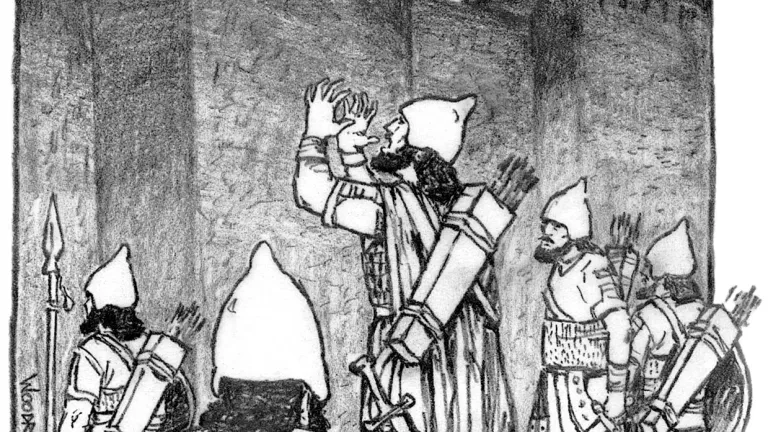
When Josiah heard the scribe reading the words of God, he tore his clothes in a common expression of grief and anguish (2 Chronicles 34:19). What prompted Josiah's reaction?
Perhaps Hilkiah had found the original copy of the Pentateuch that Moses had commanded should be placed beside the Ark of the Covenant (Deuteronomy 31:25-26). The account of the discovery in 2 Chronicles refers to "the Book of the Law of the Lord given by Moses" (2 Chronicles 34:14).
Some scholars have concluded, based on details in this account, that the "Book of the Law" was a scroll of the book of Deuteronomy. Deuteronomy 28 describes the curses that would come on the tribes of Israel if they disobeyed God. The shock of hearing the fate of his kingdom described in such graphic detail may well have been the cause of the anguished reaction of the king.
Josiah's subsequent declaration may confirm that this was indeed the content of the scroll. He gathered Hilkiah, Shaphan and other trusted servants and advisers and told them: "Go, inquire of the Lord for me, and for those who are left in Israel and Judah, concerning the words of the book that is found; for great is the wrath of the Lord that is poured out on us, because our fathers have not kept the word of the Lord, to do according to all that is written in this book" (2 Chronicles 34:21).
The king commanded "those who are left in Israel and Judah" to seek God's will regarding wayward Judah. They went directly to Huldah the prophetess, who confirmed the curses that would surely come on a nation that rejected God: "Thus says the Lord: 'Behold, I will bring calamity on this place and on its inhabitants, all the curses that are written in the book which they have read before the king of Judah, because they have forsaken Me and burned incense to other gods, that they might provoke Me to anger with all the works of their hands. Therefore My wrath will be poured out on this place, and not be quenched' " (2 Chronicles 34:24-25).
Meanwhile, Huldah spoke comforting words for Josiah: " 'Because your heart was tender, and you humbled yourself before God when you heard His words against this place and against its inhabitants, and you humbled yourself before Me, and you tore your clothes and wept before Me, I also have heard you,' says the Lord. 'Surely I will gather you to your fathers, and you shall be gathered to your grave in peace; and your eyes shall not see all the calamity which I will bring on this place and its inhabitants'" (2 Chronicles 34:27-28).
The king's servants brought back the prophetess's words to Josiah, who gathered the elders of Judah and Jerusalem and read to them the words of the newly found scroll. The king made a covenant to follow God wholeheartedly, keeping His commandments. He also made those present "take a stand" to obey God (2 Chronicles 34:31-32).
"Thus Josiah removed all the abominations from all the country that belonged to the children of Israel, and made all who were present in Israel diligently serve the Lord their God. All his days they did not depart from following the Lord God of their fathers" (2 Chronicles 34:33).
Restoring God's Festivals
Part of God's instruction that had been ignored was the command to observe God's festivals. Josiah determined to restore this aspect of the true worship of God, beginning with the coming Passover (2 Chronicles 35:1). He restored the priests to their proper duties and instructed the Levites to return the ark of God to the temple Solomon had built. The king instructed the priests to serve God and His people.
The king then gave to the people 30,000 lambs and young goats and 3,000 head of cattle, all from his own herds, for Passover offerings. Other officials contributed another 2,600 lambs and goats and 300 head of cattle.
This was a memorable time for King Josiah, as well as Judah in the south and all the remnant of Israel in the north who kept the feast in Jerusalem. "There had been no Passover kept in Israel like that since the days of Samuel the prophet; and none of the kings of Israel had kept such a Passover as Josiah kept, with the priests, and the Levites, all Judah and Israel who were present, and the inhabitants of Jerusalem. In the eighteenth year of the reign of Josiah this Passover was kept" (2 Chronicles 35:18-19). Josiah probably restored the other festivals of God as well (2 Chronicles 35:17; Deuteronomy 16:16; Leviticus 23:1-44).
The Passover season was a fitting time to begin the process of national repentance. The Passover sacrifice involved a sacrificial shedding of blood as an atonement for sins and to bring reconciliation to God.
The Passover lamb was a type of Jesus Christ. The apostle Paul tells us that the sacrifice of "Christ, our Passover," is not to be taken lightly (1 Corinthians 5:6-8). He confirms that, when one receives Christ's atoning sacrifice, he must repent of sins (Romans 6:11-23).
It was at this appropriate time, during the Passover season, that King Josiah initiated a return to true worship, restoring Judah's citizenry to a right relationship with God.
A Fatal Mistake
Although Josiah was a man of many admirable qualities, even righteous people can make foolish mistakes. Josiah's greatest mistake—at an early age—cost him his life.
Josiah had faithfully followed God's laws. He had repaired the temple and restored the priests and Levites to their proper service. He influenced his closest servants, counselors and representatives to follow his example and obey God with all their hearts and minds. What would motivate an otherwise successful king to presume to intervene in the conflicts of other nations?
King Josiah had his reasons. Before we consider them, it is important to note that God can and sometimes does use gentile leaders and peoples to carry out His will. For example, God had already used the Assyrians to punish the rebellious northern 10 tribes in the kingdom of Israel (Isaiah 10:5-7).
In Josiah's time Pharaoh Necho of Egypt was leading his army north, up the coast of Palestine, to join forces with the weakened Assyrian kingdom against the rising power of Babylon.
Josiah did not realize that God was dramatically shifting the regional balance of power. Pharaoh Necho was hurrying to a battle in which the Babylonians would slaughter the Egyptians at Carchemish and gain control of the Assyrian Empire. Was Josiah unwittingly working at cross purposes with God?
Josiah exhibited a common weakness. His reliance on his own reasoning apart from God's revelation clouded his judgment. We find no record that Josiah asked for counsel from his faithful advisers, nor that he sought God's will in this matter as he had consulted with Huldah during his early reign. God may have put it into the mind of Pharaoh Necho to join forces with the Assyrian forces. In fact, Necho said as much to Josiah before they met on the battlefield near Megiddo, cautioning Josiah to refrain from trying to defeat the will of God (2 Chronicles 35:21).
Josiah didn't heed the Egyptian ruler's advice. He tried to block the Egyptians' northward advance. In the ensuing battle Josiah disguised himself as an ordinary soldier but was mortally wounded in a hail of arrows. A chariot evacuated him to Jerusalem, but to no avail. "So he died, and was buried in one of the tombs of his fathers. And all Judah and Jerusalem mourned for Josiah" (2 Chronicles 35:24).
With Josiah out of the way, Necho continued his advance to Carchemish and his own disastrous destiny. Josiah's death spared him from witnessing the destruction of Judah at the hands of the Babylonians. With this righteous king gone, Judah's downfall would follow in a few short years.
Josiah was a great ruler in the annals of Judah's kings. Only Josiah and his great-grandfather, King Hezekiah, turned Judah back to God in such a wholehearted way.
A Matter of Life and Death
What lessons can we glean from Josiah's example? First, we can be glad that God does not look at age when He chooses a willing servant. Josiah was only 16 when he began to root idolatry out of Judah. Moreover, a mere youth can dedicate himself to God as Josiah did. Throughout this king's life (he was only 39 when he died), he faithfully followed God's commands just as he had pledged to do.
Only in the case of his rash venture against Pharaoh Necho does the Bible record a failure by the young monarch. Josiah should have consulted God on this venture rather than relying on his own judgment and placing confidence in his achievements. Too much success, and the weakness of the flesh, can spoil a person, prompting him to grow too self-dependent.
God intervenes in the affairs of mankind. Sometimes, as with Josiah, He provides a faithful, obedient ruler for His people. Judah listened to God for a time during Josiah's reign. But the Judahites quickly returned to their idols and spiritual adultery under the leadership of succeeding kings. It wasn't long before the prophesied disaster struck.
We live in precarious times. Of the days yet ahead, God says that His righteous servants should warn people to turn from their unrighteous and hypocritical ways (Isaiah 58:1-4). Will our people listen and learn?
If we are willing to mend our own ways, learning from and following the example of righteous King Josiah, Jesus Christ says we can be spiritually prepared for the dangerous times prophesied to come at the end of this age (Luke 21:34-36).

An Article from:
Good News Magazine: January - February 1999
Course Content

Jerold Aust
Jerold Aust has served in the ministry for 52 years, as a public speaker for 58 years, a published writer for 38 years, and is employed by UCG’s Media and Communications Services. He is a Senior Writer, interviewer, and editor for Beyond Today Magazine and has taught Speech Communication for UCG’s ministerial online program and the Book of Revelation for ABC.
Jerold holds a BA in theology from Ambassador College, Pasadena (1968), an MA in Communication from California State University, Fullerton (1995), a distance-learning Ph.D (2006), and a Famous Writers School diploma in non-fiction writing (1973). Additionally, he studied post-grad communication at University of Southern California (1995), radio, TV, voice-overs, and Public Relations at Fullerton College (1995-1996), and graduate communication at Wichita State University (1978). Jerold has taught communication at the University of South Alabama (7 years) and ABC (17 years). His published works include, Ronald Reagan’s Rhetoric: Metaphor as Persuasion and EZSpeakers: Public Speaking Made Easy in 7 Steps. Jerold's overarching goal is to share with humankind its incredible destiny!