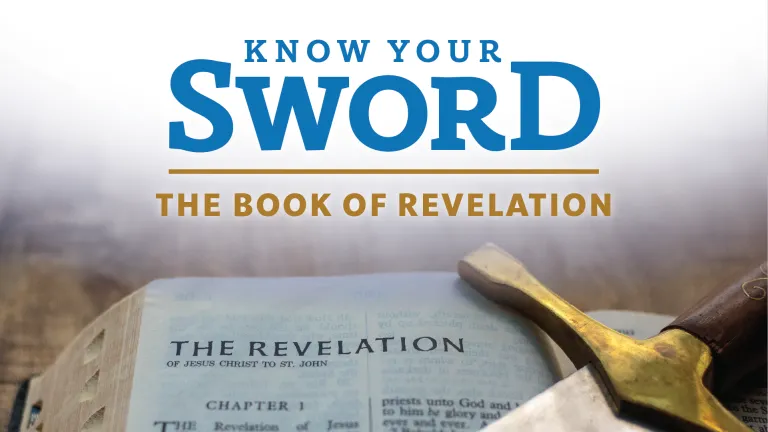
This Is the Way Walk in It: Who Is Worthy?

God wants us to give our attention and allegiance to His heavenly Kingdom, rather than despairing over the world of man. God commands the "eyes of our heart" to focus on Him alone; to look up rather than around.
Ever toed a line drawn in the sand when the call is made for a volunteer to step forward and take up a daunting challenge? Almost involuntarily, you look up and down the line to see who is responding, only to discover that no one is moving forward to accept the challenge. Nobody feels competent to accept the call to action.
You're hoping someone will, lest you have to respond and you're unsure if you'll have what it takes. You're "sweating bullets." The seconds and minutes of waiting melt into what seems hours. Everyone's body language is a "show and tell" of uneasy resignation that the call went out, but no one is going to respond. No one feels worthy.
Perhaps you have experienced this moment of drama in a high school gym class, a military boot camp or a summer youth program where everything was "cushy" until you were asked to step forward and make the difference.
But this story isn't reserved for you or me or, for that matter, the here and now. It parallels the above-mentioned scenario, but with one noticeable difference: Someone does courageously step forward—once and forever.
It is one of the incredible prophetic "Kodak moments" in which the scriptural signpost in the book of Revelation tells you: Photograph the moment; develop it in your heart, and bring it out repeatedly to remember its message. Where, when, why, who and how does this memorable snapshot take place in the realm of the prophetic landscape?
The door to heaven opens
Revelation's message opens with the ascended Jesus Christ walking in the midst of the churches to encourage them as they remain in a wayward world apart from God. The end of chapter 3 speaks of Christ knocking on doors of those whom God is calling and then, a new door opens, not on earth, but in heaven (Revelation 4:1).
Why is this transition from earth to heaven so important? The saints in this apocalyptic vision remain in a troubled world. Spiritual danger, as well as physical harm, appear to be their destiny. Everywhere are bewildering and seemingly insurmountable challenges to remain true to the divine calling.
As with the Old Testament prophet Ezekiel, God opens the heavens to the apostle John, to help us recognize and appreciate what has been rejected by humanity at large—the holiness of God! John describes how a voice commanded him to "come up here, and I will show you things that must take place after this."
Then John, in vision, is placed before a "throne set in heaven, and One [who] sat on the throne" (Revelation 4:2). Rather than describe God Almighty in anthropomorphic terms, the apostle describes a shining world of light beckoning with the brilliant shimmer of shining gems, rainbows, lightning and fire created by seven fantastic lamps (Revelation 4:3-5).
Dramatic about to occur!
The God of heaven introduces Himself as a conveyer of light and power in contrast to the darkened world below. The piercing brilliance of light into a dark world has a shattering effect on the psyche of man.
The stage is being set for the appearance and entrance of God into the affairs of man. With terms like trumpet (Revelation 4:1), lightning and thunder (Revelation 4:5), Christ inspires John to set a stage reminiscent of the trumpets, lightning and thunder of Mt. Sinai of old. Something even more dramatic than God's encounter with ancient Israel is about to occur. But what can it be? And through whom?
This unique view through heaven's door reminds us that everything that exists was created and is controlled in heaven; that God works with a plan that encompasses even "after these things" (Revelation 4:1)—past the brick wall of our human imagination.
God wants us to give our attention and allegiance to His heavenly Kingdom, rather than despairing over the world of man. God commands the "eyes of our heart" to focus on Him alone; to look up rather than around.
Beyond the roaring glow of divine light and glory, John perceives "in the right hand of Him who sat on the throne a scroll written inside and on the back, sealed with seven seals" (Revelation 5:1).
Scrolls of the time typically were made of papyrus and could be as long as 30 feet. At times they had clay or wax seals at critical points to maintain the confidentiality of what lay within. They had to be opened in a sequential manner, with one aspect of the message leading to the next, without disclosing the full content ahead of time. There are many thoughts about the number seven, but certainly it can convey that within this sealed scroll lay the complete revealed plan of God.
The moment arrives
The stage is now set. It's time to position ourselves for the "Kodak moment." The God of all history, beyond any beginning or end, is about to roll out His plan, but its details are tightly bound by those divinely imposed seals. So close, yet so far! What lies within that can offer any glimmer of hope to the age-old inquiry of the saints: "How long, O Lord?"
And then an angel makes a loud proclamation: "Who is worthy to open the scroll and to loose its seals?" (Revelation 5:2). John looks all around and comes to one conclusion: No one is stepping forward. No one is worthy. He declares, "And no one in heaven or on the earth or under the earth was able to open the scroll, or to look at it" (Revelation 5:3).
Utter despair sets in, as John discloses in Revelation 5:4, "I wept much." He is totally frustrated. Had not God promised earlier to this man that "I will show you things which must take place after this" (Revelation 4:1)? But now, those seals! And no one is stepping forward.
Isn't this the same God who had promised in the words of Amos, "Surely the Lord GOD does nothing, unless He reveals His secret to His servants" (Amos 3:7)? But the supernatural revelation comes to a standstill! No one is stepping forward.
"Stop weeping!"
And then a message comes via one of Jesus Christ's envoys, as found in Revelation 5:5: "Do not weep." It is, was and shall always be one of the most healing of Jesus' messages to those He encounters; whether it's when He shares this encouragement with the widow of Nain in her utter despair at the death of her son (Luke 7:13) or whether it's when He addresses the plight of Jairus regarding his daughter's death (Luke 8:52).
His caring ministry, be it in heaven or on earth, never ceases. It knows no bounds, it is seamless and the message always remains the same: There's no need to cry anymore!
But why? We are now about to witness the emergence of Jesus Christ on center stage. It is He who steps forward and by merit can open the seals. The heavenly herald proclaims in Revelation 5:5, "See, the Lion of the tribe of Judah, the Root of David, has triumphed. He is able to open the scroll and its seven seals" (New International Version).
“See, the Lion of the tribe of Judah, the Root of David, has triumphed. He is able to open the scroll and its seven seals” (Revelation 5:5, New International Version).
So what comes into John's view? What does he look for? You would think a lion, but no! Revelation 5:6 describes an incredible visual double take. Instead of seeing a lion with all of its power and size, we find John discovering "in the midst of the throne and of the four living creatures, and in the midst of the elders, stood a Lamb as though it had been slain, having seven horns and seven eyes, which are the seven Spirits of God sent out into all the earth."
Christ continues even in heaven to portray His sacrifice for all of God's children. It is real. It is tangible. He is forever our sacrifice! It is a title and visual concept that God never wants us to move too far from in our thoughts. Thus the term lamb is mentioned 29 times in the book of Revelation.
Both Lion and Lamb
Here, Christ is called a lion, which depicts authority and power, and yet at the same time the same One "who is worthy" is depicted as a lamb to show His submissiveness to the will of God. In one look at the ascended Messiah, John sees both the majesty of a lion and the meekness of a lamb.
As the Life Application Bible Commentary describes, "Christ the Lamb was the perfect sacrifice for the sins of all; therefore, only He can save us from the terrible events revealed by the scroll. Christ the Lamb won the greatest battle of all. He defeated all the forces of evil by dying on the cross. The role of Christ the Lion will be to lead the battle where Satan is finally defeated… Christ the Lion is victorious because of what Christ the Lamb has already done."
As Christ steps forward to claim His privilege to share and execute our Heavenly Father's will upon this earth, the hosts of heaven sing a "new song" proclaiming, "You are worthy to take the scroll, and to open its seals; for You were slain, and have redeemed us to God by Your blood out of every tribe and tongue and people and nation, and have made us kings and priests to our God; and we shall reign on the earth" (Revelation 5:9-10).
"Come up here"
Yes, there is a time in the future when God is going to draw a line in the sands of time. God Almighty is not a cosmic absentee landlord. He is much more than simply a "first cause" of the creation. He has designs upon you and me, as part of all humankind, which is made in His image and likeness. For now, He allows the world to go the course of its choosing. Unfortunately, that path is "a way that seems right to a man, but its end is the way of death" (Proverbs 14:12).
Who then will champion life that truly is life-giving? Who will cross the line and step forward when the fate of this earth hangs in the balance? Who is there for us, standing alone, when no one else shows up or ventures forward? I think you know.
Let's learn a lesson from the apostle John's vision of the court of heaven. It's in the words of the "first voice" of Revelation 4:1 that we may hear echoed the admonition of "this is the way, walk in it" (Isaiah 30:21) as the messenger beckons, "Come up here, and I will show you things which must take place."
The message is loud and clear and meant for us today. Keep the eyes of your heart looking "up here" to what God is choosing to perform, and do not worry who among us might dare to step forward, because God has already chosen a Champion, and He is more than worthy.

An Article from:
World News and Prophecy: July 2008
Course Content
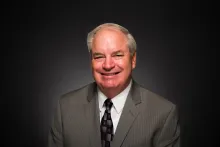
Robin S Webber
Robin Webber was born in Chicago, Illinois, in 1951, but has lived most of his life in California. He has been a part of the Church of God community since 1963. He attended Ambassador College in Pasadena from 1969-1973. He majored in theology and history.
Mr. Webber's interest remains in the study of history, socio-economics and literature. Over the years, he has offered his services to museums as a docent to share his enthusiasm and passions regarding these areas of expertise.
When time permits, he loves to go mountain biking on nearby ranch land and meet his wife as she hikes toward him.