Celebrating Truly Great Leadership
An important celebration is taking place this month that goes relatively unnoticed by most of the world. Its purpose is to celebrate the administrative plans and commitments of an even more important future world leader than the U.S. president.
People all over the world are keenly interested in the outcome of the U.S. presidential election, now less than month away. Interest in the direction of America's leadership role in the world under its next president is very high. No matter which candidate wins, there will be joyful celebrations—and deep disappointments.
Another important celebration is taking place this month that goes relatively unnoticed by most of the world. Its purpose is to celebrate the administrative plans and commitments of an even more important future world leader than the U.S. president.
The Bible reveals that Jesus Christ's return to earth from heaven will be the most important event in the history of mankind. It promise that He will come back to this earth in the same manner in which He left (Acts 1:11). There will be, of course, some opposition at first. But that will rapidly be put to rest.
When He comes, all human beings will stop what they are doing to witness His stunningly powerful arrival on the world scene as its permanent Ruler (Matthew 24:30). He will return to the exact spot from which He left, the Mount of Olives in Jerusalem (Zechariah 14:4), then proceed to set up His government over the entire earth (verse 9).
Many other scriptures describe this coming rule of Jesus Christ. Cities devastated by warfare will be rebuilt (Amos 9:14). Deserts will be transformed into lush orchards and farmland (Isaiah 35:1-2). And people everywhere will live to a ripe old age in peace and prosperity (Isaiah 65:19-23).
At that time all peoples will learn God's way of life from the Holy Scriptures. The Bible describes it as a time when the knowledge of God will cover the earth as water covers the seas today (Isaiah 11:9).
Imagine what an incredible world that will be when everyone keeps the Ten Commandments! Under the guidance of Christ's rule, peace and prosperity will be enjoyed everywhere! Families will stay together in love and happiness. There will be no more crime, no hatred, no murder, no more of the intense suffering that is so common today.
This is truly a time to look forward to with sincere anticipation and joyful celebration. That is why for the seven day period of October 14th through October 20th (on this year's Roman calendar)—many devoted Christians from around the world have come together to celebrate the Messiah' promised return for the purpose of administering His righteous rule over all nations.
The biblical name of this celebration is The Feast of Tabernacles. Its purpose is to celebrate the biblical promises of that coming time when Jesus Christ will bring real peace, prosperity, and happiness to all mankind. This festival's peaceful theme and atmosphere stand in stark contrast to the immense economic and political distress that is now dominating the headlines.
The wonderful, peaceful time that the Feast of Tabernacles represents is commonly known as the Millennium because during that time Jesus Christ is to be the Ruler of the world for one thousand years (Revelation 20:4). He will be assisted by the glorified saints as His administrative officials, teachers and priests (Revelation 1:4-6, 2:26, 3:21, 5:10).
Congregations of the United Church of God have joined together this week at numerous locations in the United States and Canada and in over forty other nations around the globe to celebrate this wonderful Feast of Tabernacles. Yet it is only one a total of the seven annual celebrations that are sanctified in the Bible by God as sacred, annual festivals. Together these seven festivals celebrate the various aspects of God's plan of for the salvation of mankind.
God tells us that these seven celebrations are His feasts (Leviticus 23:2). They are not celebrations instituted by man—or limited to any group of men or to any particular nation. God designed and instituted them for the benefit of all mankind.
And each festival celebrates a specific role that Jesus Christ, as our Savior, has played or will yet play in God's master plan for our salvation. It is He—the Prince of Peace—to whom we must look to bring truly great leadership and enduring peace to this distressed world.
Course Content
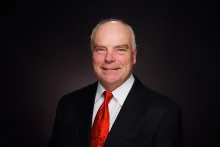
Rex Sexton
Rex Sexton grew up in Illinois and graduated from Ambassador College in Big Sandy, TX in 1976. He began a career as a construction engineer in the Nuclear industry at Hanford, WA , and was hired full time in the ministry in 1982, and earned a Certified Financial Planner certification in 1994. He and his wife, Patricia, have served congregations in Oregon, Washington, and Alaska. In addition to pastoring responsibilities, they have also taught at and directed youth summer camps for many years. Rex has authored many articles for church publications over the years and produced or appeared in several hundred Television programs.