Free Speech Does It Make Us Free
"Many voices most emphatically supporting free speech often use it to justify and defend behaviors that enslave the hearts and minds of those who practice them—filthy language, violence, pornography, homosexuality, abortion and the like."
A month ago Iranian President Mahmoud Ahmadinejad traveled to the United States to speak to the General Assembly of the United Nations.
He also accepted an invitation to speak at the World Leaders Forum hosted by Columbia University in New York City. In recent months, he has seized the attention of international media with his fiery rhetoric against the role of Western nations in the Middle East, against the nation of Israel and defiantly in support of Iran's nuclear development program.
Columbia University was fiercely criticized by a wide-ranging chorus of protesters, including local, state and national politicians, Jewish organizations and survivors of the infamous 9/11 attacks. But university president Lee Bollinger and others contended that encouraging controversial dialogue in open forums is an important exercise of free speech.
President Bollinger introduced Iran's president with a shocking level of audacity and arrogance toward a foreign head of state, some say actually winning sympathy for President Ahmadinejad. The president of Iran proceeded to further assert his opinion that the historical record of the Jewish Holocaust is not based in fact, and that al-Qaeda was not responsible for the 9/11 attacks. This much-publicized illustration of free speech in action furthered neither the cause of freedom nor better understanding for either side.
It does serve as a regrettable case in point: Freedom is rarely advanced when free speech is trumpeted as an event's raison d'etre. Many voices most emphatically supporting free speech often use it to justify and defend behaviors that enslave the hearts and minds of those who practice them—filthy language, violence, pornography, homosexuality, abortion and the like.
Ironically, many staunch advocates of free speech refuse to extend its privileges to those who disagree with causes they support, or to those who promote moral principles, traditional values or godly standards of behavior. Opponents of evolution, anti-abortion groups and those supporting traditional family structures are unlikely to receive any backing from the most vocal champions of free speech.
Columbia University itself has been repeatedly criticized for practicing anti-free speech bias in its programs. Columnist Cal Thomas reported, "Last October at Columbia, a mob of students stormed a stage, curtailing speeches by two members of the anti-illegal-immigration group known as the Minutemen. The students shouted, 'They have no right to speak,' which was revealing, given the 'academic freedom' argument that is used to defend liberal professors and their frequent anti-American rants…" (Fort Worth Star-Telegram, Sept. 25, 2007).
Unlike many free-speech advocates in our modern world, the apostle Paul made far better use of the freedoms available to him. Brought to a forum of public discourse, the Areopagus in the city of Athens, by some who were curious about the doctrines he preached, Paul used the privilege of speaking freely to proclaim Jesus Christ and the good news of the coming Kingdom of God (Acts 17:15-32). To learn more about that message, read or request The Gospel of the Kingdom.
Thankfully, freedom of speech is yet available to many whom God is working with in this present age. We should use these liberties to advance the cause of true freedom—a way of life that will soon be available to all through obedience to God's laws when His Kingdom is established at the return of Jesus Christ.
Until then, we can learn about true freedom by practicing Paul's inspired admonition: "Walk in wisdom toward those who are outside [the faith], redeeming the time. Let your speech always be with grace, seasoned with salt, that you may know how you ought to answer each one" (Colossians 4:5-6). VT
Course Content
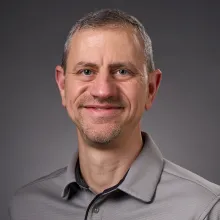
David Cobb
David is a member of the Indianapolis, Indiana, congregation of the United Church of God, along with his wife Mandie, daughter HannahBeth and sons Joshua and Elijah. He was born and raised in God’s Church.
David enjoys serving in the Indianapolis congregation with various activities including organizing activities, taking care of the nursery with Mandie and speaking.
David is an Indiana native and loves living in the Midwest. He has been employed in engineering drafting at Cummins Inc., a manufacturer of diesel engines and related products, since 1998. While working he was also a student until 2008, earning an Associates degree in Mechanical Engineering Technology from Purdue University, a Bachelors degree in Informatics from Indiana University, and a Masters degree in Business Administration from Indiana Wesleyan University.

