You, Me and Haiti... On the Tightrope of Techno-Society
What would we do if we faced such a crisis? With our dependence on all the modern conveniences, I think we would be even less prepared to cope.
I woke up sad Saturday morning thinking about the desperate condition of folks caught in the earthquake in Haiti.
In and around Port-au-Prince people had been struggling for four days to find a little food and drinkable water, while trying to rescue family or neighbors from the rubble with their bare hands. But they were plagued by lawless gangs roaming the streets, and lack of effective government action to spearhead any relief effort.
Then I turned on the faucet in our bathroom sink—and no water came out.
We still had phone lines that worked and were told by the township emergency people that the water main broke in our neighborhood at 5 a.m. Repairs were expected to be finished by late afternoon. Whew—just a tiny crisis!
But I tell you this—with no running water, my family and I felt even more empathetic with Haitians facing the breakdown of virtually all services. What would we do if we faced such a crisis? With our dependence on all the modern conveniences, I think we would be even less prepared to cope.
The trouble with technology
We live on a technological tightrope. One false step, like a damaging earthquake or a terrorist attack on the electric grid or a major fresh water supply, and wham, we're in serious straits.
The sad news is that much of the U.S. electric grid—substations, transmission lines, etc.—is seriously aging and at risk.
"The ‘information economy' requires a reliable, secure, and affordable electric system to grow and prosper. Unless substantial amounts of capital are invested over the next several decades in new generation, transmission, and distribution facilities, service quality will degrade and costs will go up" (U.S. Department of Energy, Gridworks).
Inventory, for a moment, the technology in your house. Do your "gadgets" all use electricity? What if electricity were cut off? Batteries, you say? Then what about when the batteries all run down?
Yes, solar chargers could help, but what about all the industries, stores, computers, traffic lights, fuel stations, etc.? Virtually all our services in wealthy nations are fundamentally electrified—including our water delivery.
Water, water hardly anywhere
Take the California Delta as a prime example. Located east of San Francisco at the confluence of the San Joaquin and Sacramento Rivers, it provides two thirds of the state's residents with fresh water. But the levee system is old and fragile. Another earthquake in the wrong place and cash-strapped California will be survival strapped!
Now transfer that scenario to numerous water supplies for cities and populations almost anywhere on earth. The technology required to provide fresh water to billions is precarious in so many ways.
Fat cities
In the Great Depression of the 1930s the world's cities were much smaller, and more of the population lived on farms. Half of Americans were rural residents then. They had greater skills at the most basic fundamentals of living. That knowledge, although recorded somewhere, is practically lost on today's generations.
Now we have fat cities everywhere, easy targets for disaster, man-made or natural. The advanced technologies make possible the extensive utility services that we're so used to and that our urban centers completely depend on.
In a sense, due to coping with long-standing government corruption and ineptitude, Haitians in Port-au-Prince are likely to be more resilient in dealing with this terrible seismic disaster than many "advanced" metro-minions would be.
The technology tightrope
Earthquakes and natural disasters are one thing; war and terrorism are another. With nearly 7 billion people walking a techno-tightrope, it wouldn't take much to spread Haiti's present trauma to many other areas.
World history hallmarked by human greed and immorality has brought us all to the great precipice of the ages. Is this the best that man can hope for?
Remarkably, Jesus Christ foretold our predicament. He said that in the years immediately before His second coming to earth, there would be deception, "wars and rumors of wars" and "earthquakes in various places" (Matthew 24:6-8).
Actually, He said that these and other dire things like disease epidemics would be just "the beginning of sorrows"!
But Jesus promises a much better world—ruled directly by Him with your help, if you choose the better way of living He offers. The Kingdom of God will bring rest and peace to a world reeling from disaster.
For more about the vulnerabilities of Western societies, see "America's Handwriting of Warning." For more about the wonderful world Jesus Christ will bring, see "How World Peace Will Come."
Remember, technology is not the answer to your, my, Haiti's or the world's problems; but Jesus Christ is.
Course Content
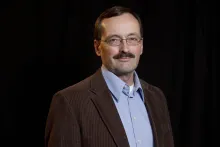
Randall Stiver
Randy Stiver is pastor of the United Church of God congregation in Rapid City, South Dakota.



