Let's Ask God: How Do You Want to be Worshipped?

I'm talking about those endeavoring to "put Christ back into Christmas"—thinking they are doing God a favor. If this seems to be your current challenge have you ever asked yourself: Heavenly Father or Jesus Christ, how do you want to be worshipped?
Whenever I have a gnawing feeling in my gut about the direction I'm going, I often reflect on the story of a lost safari tour in the middle of the bush. They were thrashing and slashing their way through the brush with their machetes, but progress was slow. Finally, one of them climbed the tallest palm tree he could find to get some needed bearings. Looking around, he became amazed at what he saw. He yelled down to his companions below, "We're in the wrong jungle!" They yelled back, "Come on down, and join us, at least we are making progress."
Have you ever asked yourself: Heavenly Father or Jesus Christ, how do you want to be worshipped?
This poignant story reminds me of the challenge set before many a sincere person striving to worship the Christ child on December 25th. I'm not talking about "mall people" with their endless shopping sprees for a secular festive occasion. I'm talking about those endeavoring to "put Christ back into Christmas"—thinking they are doing God a favor.
If this seems to be your current challenge have you ever asked yourself: Heavenly Father or Jesus Christ, how do you want to be worshipped?
Amazingly, God plainly states in the Bibles exactly how He chooses to be worshipped and honored. Additionally, you may be amazed to discover there is simply no mention of or command for the celebration of Christmas in Holy Scripture. If this startles you, by all means find a concordance of biblical words and check it out for yourself.
A sincere and open-hearted student of the Scriptures will approach the subject of how God desires to be worshipped with the following scriptural principles in mind:
"Man shall not live by bread alone, but by every word that proceeds from the mouth of God" (Matthew 4:4).
What then does the Bible say or not say about worshipping God?
"Whatsoever I command you to do, be careful to observe it; you shall not add to it nor take away from it" (Deuteronomy 12:32).
The bottom line is God objects to mankind adding or subtracting from what He alone can declare holy.
"…This people honors Me with their lips, but their heart is far from Me. And in vain they worship Me, teaching as doctrines the commandments of men." (Mark 7:6-7).
God's point is clear! We are not to confuse man's ways with His ways.
Any encyclopedia will show undeniably that observances associated with Christmas have non-Christian origins based on the worship of false gods. Even beyond the origin issue of the December 25 date there is simply no evidence that Christ, His apostles or any of His early followers ever observed any date or occasion that was related to His birth.
Please hear me loud and clear! As Christians, we are to acknowledge and appreciate those persons and events related to Jesus' birth—be it the humble setting in which He was born, the courage of His mother Mary, the thoughtfulness of Joseph, the joy of the shepherds or the determination of the wise men to honor Jesus as a king. But that gives us no license to relegate the impact of His birth to just one fixed date a year that was purposefully sequenced with the pagan Saturnalia festival and many other superstitions of antiquity associated with the winter solstice.
The United Church of God chooses to observe the biblical Holy Days that Christ observed. We follow the example of Christ's apostles who continued to observe these days after His crucifixion (Acts 2:1; Acts 20:16; 1 Corinthians 5:7-8).
Our sincere desire is to worship God in the manner that He says pleases Him rather than devising ways of worship based entirely on human reasoning and personal feelings. Yes, as Christians we appreciate beautiful music, family gatherings and feasting. However, it is our rule of faith and practice to center such activities upon the instructions revealed by God in the Holy Scriptures.
His festive celebrations focus our attention on His great love for all of humanity. They are annual reminders of His divine blueprint for the salvation of humanity. Each one is Christ-centered—together they proclaim His life, death, resurrection, and ultimate return to this earth to establish His Kingdom.
Where are you in regard to worshipping God? If you have been slashing your way through the "wrong jungle," have the courage to find the clear path that God intended from the beginning—before man wrapped the most beautiful story in history with pagan packaging.
Course Content
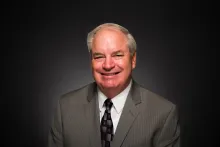
Robin S Webber
Robin Webber was born in Chicago, Illinois, in 1951, but has lived most of his life in California. He has been a part of the Church of God community since 1963. He attended Ambassador College in Pasadena from 1969-1973. He majored in theology and history.
Mr. Webber's interest remains in the study of history, socio-economics and literature. Over the years, he has offered his services to museums as a docent to share his enthusiasm and passions regarding these areas of expertise.
When time permits, he loves to go mountain biking on nearby ranch land and meet his wife as she hikes toward him.



