The Powerful Effects of Decisions!
The end result of people's choices is often the stuff that makes headlines—some good, some bad, some horrific. But many decisions greatly affect lives beyond those featured in the big type.
These past few weeks we seemingly have had more than a normal load of decision-related headlines. Someone decided to share a CIA agent's name. A jury now will decide the intent of that disclosure.
President Bush decided to nominate Harriett Meirs to the Supreme Court. Meirs decided to withdraw from that nomination. Then the President decided to replace her with Samuel Alito as the new nominee. Now senators must decide whether to vote for or against him. Some have seemingly already decided.
Someone decided to place bombs in public places in Iraq and India, killing innocents. Also, because they voluntarily decided to join the Armed Forces, young men and women are daily in harm's way in Iraq and Afghanistan.
Such decisions are the cutting edge of life. Everyday people have to make decisions in the 'battlegrounds of their own backyard.' Yet some—maybe some of you reading this commentary—have a habit of putting off or dodging serious decisions. It's as if they, or we, choose to put life permanently on neutral. But choosing to avoid a decision is itself a decision.
Oh, those decisions we make that negatively affect others besides ourselves! It is not just people of notoriety whose decisions may have negative or harmful consequences.
Even people who sincerely desire to serve God have been known to make decisions that 'backfired'—some 'big-time.' Their intentions may have been commendable, but their methodology was faulty, riddled with error. The results were costly not only to them but also to others around them.
A prime example from the Scriptures is a story about King David (1 Chronicles 13 and 15; 2 Samuel 6). He decided to return the Ark of the Covenant (the encasement for the 10 Commandments) to Jerusalem to unify the people and strengthen the city as the spiritual center of worship for all of Israel.
It was a great idea, a good decision. But he decided to go about it the wrong way! God had already taken all guesswork and decision making out of the way concerning how to get the Ark from point A to point B.
This box-like enclosure was to be carried by means of poles on the shoulders of the men of Levi who were trained and dedicated to God's service. No one was to touch the Ark of the Covenant on pain of death.
God knew that transporting this holy relic could not be entrusted to uncertain movements of beast of burden or to an untrained staff, lest it fall. But David, in his haste, consulted everyone but God and the plain words of the operation manual that God had given him—the Holy Scriptures.
To make a long story short, the Ark of the Covenant was placed on an ox-drawn cart and almost took a bumpy spill. A man named Uzzah, one well-intentioned but inadequately instructed driver, reached out in the suddenness of the moment and touched it. Apparently he was not a Levite, nor was the precious cargo being carried by poles as the Scriptures instructed. Uzzah's decision 'in suddenness of the moment' was to steady the Ark with his hand. He was struck dead on the spot.
Afterward, King David was given another chance to get it right. And he did—because this time he went by the manual, the Bible.
Like David, President Bush had another chance to make a Supreme Court nomination. But as with Uzzah, you and I may not always be given that second chance on important decisions we make.
So how are we doing with our big decisions in life, and our follow-up choices along the way? We may not be responsible for a Supreme Court nomination or sending people into war or transporting the Ark of the Covenant, but we are responsible for many important decisions.
Yes, we constantly face life-molding choices in being a good mate, a good parent, a good child, a good student, a good employee, and a good neighbor. But good intentions just aren't good enough in making good decisions. Ask David! Most of us decide to take too many short-cuts that wind up as dead-ends along the way.
Course Content
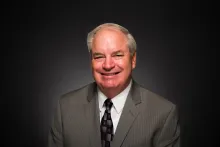
Robin S Webber
Robin Webber was born in Chicago, Illinois, in 1951, but has lived most of his life in California. He has been a part of the Church of God community since 1963. He attended Ambassador College in Pasadena from 1969-1973. He majored in theology and history.
Mr. Webber's interest remains in the study of history, socio-economics and literature. Over the years, he has offered his services to museums as a docent to share his enthusiasm and passions regarding these areas of expertise.
When time permits, he loves to go mountain biking on nearby ranch land and meet his wife as she hikes toward him.



