Why Give Thanks on Thanksgiving Day?

In a modern world filled with fast cars, fast money, fast foods and more—all lavished so liberally on the self—why consider a national occasion to pause and give thanks? Is it really that important? If it is, whom should we thank—and for what?
The North American 'Thanksgiving Day' was likely first held in Newfoundland in 1578 by an English minister named Woolfall, then in Virginia in 1607 and then again in Plymouth in 1620. These days of thanksgiving—held currently in Canada on the second Monday in October and in the U.S. on the fourth Thursday of November—are officially designated national occasions for giving thanks to God.
America 's first president George Washington proclaimed Thanksgiving Day in 1789; and the sixteenth U.S. President, Abraham Lincoln reaffirmed it in 1863. Since then it has been an official U.S. holiday. But how well do North Americans observe their days of thanksgiving? For that matter, how common is it for people around the world to take special time to give thanks to their Creator for providing the physical blessings they enjoy? Unfortunately, expressing thanks seems to be a diminishing custom.
Giving thanks is mentioned in the Bible at least 140 times. The word praise, which is similar in meaning to thanksgiving, is used many more times in Scripture. Praise means to appreciate, to prize—to consider precious, worthy of honor and/or thanksgiving. The Bible is replete with occasions of thanksgiving and praise, from Moses to Malachi, from Jesus to John's epistles. The Bible is also the source of early North American customs for celebrating occasions of thanksgiving.
The insightful words of Abraham Lincoln should resonate with all nations today:
"The year that is drawing towards its close, has been filled with the blessings of fruitful fields and healthful skies. To these bounties, which are so constantly enjoyed that we are prone to forget the source from which they come, others have been added, which are of so extraordinary a nature, that they cannot fail to penetrate and soften even the heart which is habitually insensible to the ever watchful providence of Almighty God"
(Lincoln's papers, Library of America series, Volume 2, pp. 520-521).
God's sobering thanksgiving instructions to ancient Israel are applicable to all human beings. After all, He is the Creator of all human life.
Perhaps Mr. Lincoln drew on the scriptural passage: "Be careful that you do not forget the Lord your God, failing to observe his commands, his laws and his decrees that I am giving you this day.
"Otherwise, when you eat and are satisfied, when you build fine houses and settle down, and when your herds and flocks grow large and your silver and gold increase and all you have is multiplied, then your heart will become proud and you will forget the Lord your God, who brought you out of Egypt, out of the land of slavery. He led you through the vast and dreadful desert, that thirsty and waterless land, with its venomous snakes and scorpions. He brought you water out of hard rock. He gave you manna to eat in the desert, something your fathers had never known, to humble and to test you so that in the end it might go well with you.
"You may say to yourself, 'My power and the strength of my hands have produced this wealth for me.' But remember the Lord your God, for it is he who gives you the ability to produce wealth, and so confirms his covenant, which he swore to your forefathers, as it is today. If you ever forget the Lord your God and follow other gods and worship and bow down to them, I testify against you today that you will surely be destroyed. Like the nations the Lord destroyed before you, so you will be destroyed for not obeying the Lord your God" (Deuteronomy 8:11-20, New International Version).
The whole idea of giving thanks turns on at least two great spiritual principles. First, a great God created and sustains life on earth and provides the abundance of resources that most people now tend to take for granted. Second, the vanity of human nature leads human beings to want to take credit for producing all they enjoy, leading them to ignore, or even forget, the real Source of their existence and blessings.
Course Content
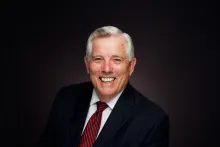
Jerold Aust
Jerold Aust has served in the ministry for 52 years, as a public speaker for 58 years, a published writer for 38 years, and is employed by UCG’s Media and Communications Services. He is a Senior Writer, interviewer, and editor for Beyond Today Magazine and has taught Speech Communication for UCG’s ministerial online program and the Book of Revelation for ABC.
Jerold holds a BA in theology from Ambassador College, Pasadena (1968), an MA in Communication from California State University, Fullerton (1995), a distance-learning Ph.D (2006), and a Famous Writers School diploma in non-fiction writing (1973). Additionally, he studied post-grad communication at University of Southern California (1995), radio, TV, voice-overs, and Public Relations at Fullerton College (1995-1996), and graduate communication at Wichita State University (1978). Jerold has taught communication at the University of South Alabama (7 years) and ABC (17 years). His published works include, Ronald Reagan’s Rhetoric: Metaphor as Persuasion and EZSpeakers: Public Speaking Made Easy in 7 Steps. Jerold's overarching goal is to share with humankind its incredible destiny!



