Why Does Evil Exist?
In the wake of the New York and Washington, D.C., suicide bombings, we need to find a plain answer to this great question.
Skeptics ask a valid question of believers: How can a loving God allow evil to exist? The believer in turn asks a valid question of moral relativists: How can you say something is evil when you deny absolute good or evil, arguing that good and evil can be defined only by what each person thinks?
Philosophers, religious thinkers and criminologists have long sought rational explanations to these important questions.
What is evil? From where did it come?
The Bible clears up these mysteries for us and provides a solution for the evil that is so widespread and entrenched in the world.
Did God create evil?
The Bible consistently explains evil as rebellion against God and His way of selfless, outflowing love for others-His way of giving. Evil is self-absorbed and uncaring of others, the way of getting and taking.
God's way of life is expressed in His law of love, and evil is the violation of that law. Thus evil is synonymous with sin (1 John 3:4), which is contrary to God. Any calamity that He allows or brings is actually done out of love.
But, some might argue, isn't all evil God's fault? The reasoning goes like this: Since God created everything, and evil exists, then God must be the author of evil.
Yet the Bible paints a picture in which God, in the beginning, created perfect surroundings for the first man and woman to live in. "Then God saw everything that He had made, and indeed it was very good" (Genesis 1:31, emphasis added throughout). That included man. How, then, did evil come into the picture?
The story tells us that a cunning "serpent" introduced evil into God's perfect creation. But Genesis 3:1 seems to say that God created the serpent, too, so that doesn't really answer the question. Maybe there is some force equal to or greater than God that is beyond His control. Or maybe God isn't good after all.
There is a better answer, a biblical one. We have seen that God made everything good, without the presence of evil. Yet, in doing so, He created man with moral freedom-with the ability to choose between good and evil. God did not create evil. He created us with free will. That is the framework for the existence of evil.
Free moral choice
But, since God is good, why didn't He create man unalterably good? He could have made us without the ability to choose. But that would have defeated His reason for creating us in the first place. God made us with free moral choice so we could develop His attributes of character, becoming like Him and having a relationship with Him.
God's overall plan was to create something special. His long-term purpose was to create additional members of His divine family, of which the Genesis creation was only the first step. To eventually achieve this creation, the development of divine character was essential to His plan. Hence the need to create human beings as free moral agents.
His choice, then, was to create beings with freedom. Without freedom they would never sin. But without freedom they would never have the opportunity to choose their own future; they could not have imagination, and they could not love others or appreciate love when it was shown toward them.
The highest of God's creation would then be as robots, which do not choose right or wrong, love or hate. God created us with the ability to choose love, hate or any feeling or attitude in between. It is only with free choice that we can attain to the love that God Himself possesses, the most important of all divine character traits. God is love!
When God created man, He began the process of bringing forth children in His image (Genesis 1:26; compare 5:1-3). We cannot force our own children to love us or do what is right. We can teach them these virtues and hope they will choose to follow them in spite of the negative evil influences they encounter. We can also enjoy a trusting and close relationship with our children, and we want that to continue long after they are grown.
When God embarked on His ambitious plan to create children for Himself who would have to choose to return His love, He also knew the risks. He was aware that they could choose an alternative way of life. He knew that there was a choice that existed between good and evil.
Yet man was not the first created entity to whom God gave such a choice.
When only God (the Father and the Word, John 1:1) existed, there was no evil. Yet long before the time of Adam and even before God created the heavens and earth, God created millions of spirit beings with free moral choice-the angels. His intention was to produce beings who would accept His way and live like Him forever.
But one of the most powerful spirit beings would disappoint Him.
Origin of evil
Ezekiel 28 begins with God addressing the "prince of Tyre," a human ruler of that ancient city-state along the Lebanese coast. But, starting in verse 11, the message shifts to the "king of Tyre," and it quickly becomes apparent that no human being is meant. Rather, the subject becomes the spiritual power behind the throne, the primary influence on the earthly ruler, for this power is specifically called a cherub, an angelic being (verse 14).
God tells him, "You were perfect in your ways from the day you were created, till iniquity was found in you" (verse 15). This angel, then, was part of God's perfect creation. Yet, because he had freedom to choose, he had the capacity to choose evil. We read here that "iniquity," or lawlessness, was, at some point, found in him. This was the first recorded instance of evil.
Isaiah 14 includes a similar description when God addresses the "king of Babylon." But this message, too, switches to the spiritual power behind the throne. Starting in verse 12, this entity is called Heylel (Lucifer in Latin), meaning "Light-Bringer"-for at first he was a vessel of the light of God's truth. Yet, as verse 13 shows, he began to imagine evil in his heart.
No one knows how long it took for this being to develop the way of evil in his heart. In any case, the philosophy he developed was all about self and what he could get. In essence, he was the first moral relativist. He denied absolute good and evil as defined by God and chose to define good and evil for himself. Eventually, he considered how he could be exalted above everyone else and acquire everything in existence, replacing God as ruler of all creation. Thus God changed his name to Satan, meaning "Adversary."
God did not create Satan. Rather, God created this angelic being as the "seal of perfection, full of wisdom and perfect in beauty" (Ezekiel 28:12). But he developed pride in his beauty (verse 17). He corrupted his wisdom by getting caught up in his own self-importance. This was his choice. So he turned himself into Satan.
Verse 16 says that he became filled with violence within. He ascended into heaven to exalt his throne (Isaiah 14:13). Revelation 12:2-3 speaks of this fallen angel as a dragon who draws a third of the stars (angels, Revelation 1:20) with him. Satan induced one third of the created angelic beings to turn against God.
How? Satan is also called the "devil," translated from a word meaning "slanderer." Jesus said of him, "When he speaks a lie, he speaks from his own resources, for he is a liar and the father of it" (John 8:44).
One can only imagine what he told the other angels. He probably expressed some dissatisfaction with the way God did things and implied that someone like himself would be better. He likely explained to the other angels that they could do better for themselves by adopting the way of rebellion rather than love. He no doubt aroused suspicion toward God through his criticism. Perhaps they felt they couldn't trust God anymore and proceeded to the fatal step of violence to overthrow Him.
The third of the angels who followed Satan chose to oppose God and adopt the devil's philosophy that promoted self above others. In doing so they became demons, evil spirits. God did not put the evil in their minds, nor did He introduce evil to Lucifer. Lucifer was free to follow God's way of love, or to consider the alternative. God didn't force him to go His way. He permitted him to ponder and finally choose the way of evil.
God cast Satan and his demons out of heaven. They fell to earth like lightning (Luke 10:18). The next we see of Satan is his appearance to Eve in the Garden of Eden as the serpent.
Man embraces evil
This brings us to the next question: Why was man exposed to the evil? As mentioned above, God was creating His own children through mortal human beings. They had to have free moral choice.
Thus the issue of evil once again had to be faced-and the sooner the better. God created two special trees in the Garden of Eden, the tree of life and the tree of the knowledge of good and evil. The first symbolized acceptance of God's way. The latter represented a rejection of God's instruction and deciding good and evil for oneself, which, of course, will always lead to selfish attitudes and actions, the same wrong way of life Satan had followed.
It didn't take long for the devil to present his alternative way of evil to Eve, who in turn influenced her husband. The devil appealed to Eve by suggesting that God was not telling her the whole story and that both she and her husband could do much better for themselves by adopting the other way of life.
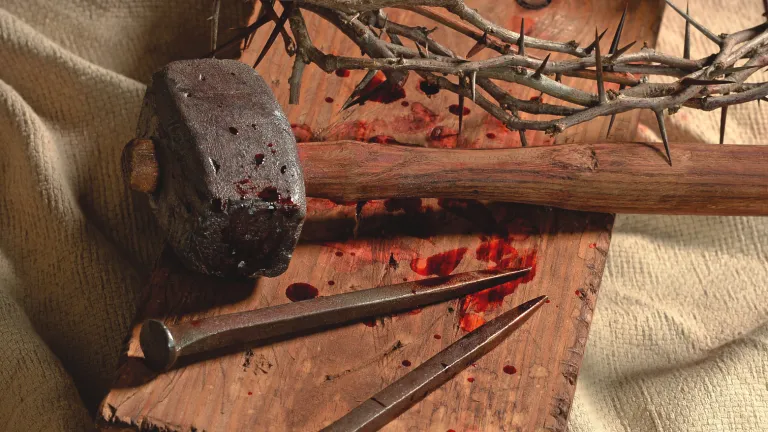
She persuaded Adam to take of the forbidden fruit against his better judgment. Adam knew better since the apostle Paul made it plain that he was not deceived (1 Timothy 2:14). Sadly, Adam and Eve made the fateful choice to follow Satan. So Satan became the ruler of this world (John 12:31) and the god of this age (2 Corinthians 4:4). Thus God allowed our first parents to disobey Him. But He would use this incident to help fulfill His great plan to bring human beings into His divine family.
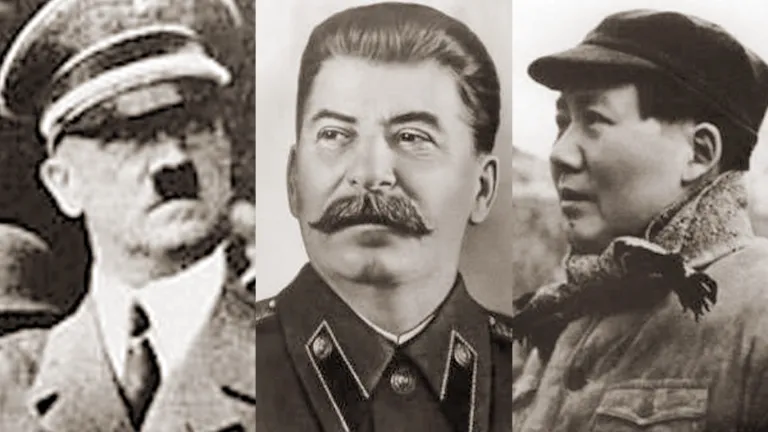
The choice our first parents made is why we see so much suffering, violence and killing in the world. When Lucifer chose to follow the alternative way of taking, the end was inevitably violence toward God. Once Adam and Eve chose to reject the way of life God revealed to them and to determine right and wrong on their own, the world was set on the path of serving the self at the expense of other people. This would mean suffering for all humanity down through the ages.
An immediate example of the consequence of Adam's and Eve's decision was that their son Cain murdered his brother Abel, setting a course mankind would follow from that point forward. Our civilizations have been wracked by war because someone wanted to have something or be someone greater than he was. The incessant inflicting of harm has never abated.
But why would God allow such suffering? God's intent is for His children to choose His way of love forever and never consider turning against Him. To ensure this, they must experience the consequences of choosing wrongly. The ultimate consequence is eternal death, because God will not permit evil to persist in a universe He rules (Romans 6:23). Thankfully, Jesus' death redeems us from that fate if we repent of the devil's way of life.
However, we must understand that there are consequences to sin. Sin means a lot of misery along life's way. God created us so we can experience pain temporarily for a good purpose. We learn through pain that what we do is not good for us. A little suffering because we do something minor saves us grief and anguish later if we learn the lesson and have the sense to avoid doing something major.
Yes, the suffering in this world is incalculable. But the pain we experience during this age of man's self-determination is far less than the consequences there would be if we rebelled as glorified beings in the future Kingdom of God. Furthermore, Paul explained that "the sufferings of this present time are not worthy to be compared with the glory which shall be revealed in us" if we remain faithful (Romans 8:18).
Consider also: Why did Christ have to suffer? Jesus, the one through whom God the Father created the universe (Ephesians 3:9), came to earth as a human being and subjected Himself not only to death, but suffered enormously on our behalf. Why?
Pain in ourselves and pain in the Body of Christ brings home to us one important truth: This is what sin causes. Any transgression of God's holy and righteous law will eventually cause someone to suffer.
We must come to know absolutely that no way other than the perfect way of love as defined by God's law will ultimately work.
Dealing with the cause
In the new millennial world God promises to usher in, the first cause of evil, Satan the devil, will at last be removed. Revelation 20 describes the time when God will seal him in a bottomless abyss, followed by 1,000 years of peace under the rule of Christ.
In this coming age God's way of love will be taught, and the devil won't be allowed to influence man. At that time war will no longer be taught or tolerated, and the Creator will guide all men, women and children into His way of life without Satan influencing them to reject God's offer of salvation. Of course, human nature will still be there to overcome, but, in the millennial age to come, the devil will have been banished before that new era even begins.
Why can't God remove Satan now? He could, but He won't, not until humanity has written the lesson of hard experience for what He considers sufficient time. Thankfully, that time appears to be nearing its end.
Ultimately God will remove evil altogether. None will be allowed in the new heavens and new earth described in Revelation 21 and 22. But this requires that every being of free choice either decide ultimately never to sin again or be taken out of the picture forever.
What is to guarantee no future rebellion beyond that? The first answer is pain. Yes, suffering. All who will live forever in the Kingdom of God must know without question that any violation of God's law will result in pain somewhere, somehow. They all will have come to grips with the understanding that their choice to violate God's law resulted in the death of Christ, who also suffered in this world.
The second answer is that all people one day will face the goodness of God that He demonstrated through Jesus Christ. Many have tried to achieve this kind of goodness but couldn't. You and I have caused suffering to others, sometimes deliberately or unknowingly, but we have caused others either mental or physical anguish. We finally begin to realize this when our minds are opened to the goodness God showed by sending His Son to die for us.
We cannot ever find this level of goodness in other human beings (Romans 5:6-8). To be convicted of our own sin, we must come face to face with the sacrifices God and Christ made for others who are so obviously undeserving of them. It is this compelling example of undeserved love from our Creator that brings us to the point that we never want to perpetrate any kind of evil on others.
In the end, those in God's family will nevermore consider evil as an option, and pain and sorrow will be no more (Revelation 21:4). God in His wisdom permits evil in our time to accomplish this grand purpose. GN

An Article from:
Good News Magazine: January - February 2002
Course Content

Bill Bradford
Bill Bradford is a contributor to United Church of God publications in addition to being the pastor for several United Church of God congregations in Queensland, Australia.