
Robin S Webber
This transcript was generated by AI and may contain errors. It is provided to assist those who may not be able to listen to the message.
While you were singing, I got my Bible and started moving towards the stage, and I thought, where are my notes? I've done that before and just given sermons, but it's nice when you do have notes. And I thought, where are my notes? And then I did recognize that I picked up the wrong Bible, so I do have it now. I want to say that I hear we had a very nice Bible check group, or adult Bible class, this morning. Thank you for all of your participation and involvement in that, and it's wonderful to open the Bible and be able to hear different people's thoughts and contributions. And thank you very much. It's been said that a man can counterfeit hope and love and faith and many other graces, but you can't counterfeit humility.
I want you to think about that for a moment and allow me to repeat it one more time to prepare you for the concept that we want to talk about today. It's been said that a man can counterfeit hope and faith and love and many other graces, but it's very difficult to counterfeit humility. You either are or you are not. I like to allow the words of Andrew Murray to speak to humility. Andrew Murray was a writer about 110 years ago, a writer from South Africa.
And Murray will share what humility is and thus define the opportunity and the challenge that lies before each and every one of us. This is Murray's words 110 years ago.
Humility is perfect quietness of heart. It is for me to have no trouble, never to be fretted, never to be vexed, never to be irritated, sore, or disappointed. It is to expect nothing, to wonder at nothing that is done to me, to tell nothing that is done against me.
It is to be at rest when nobody praises me and when I am blamed and or I am despised.
It is to have a blessed home in Christ where I can go in and shut the door and kneel to my Father in secret and be at peace as in a deep sea of calm when all around is trouble.
It is the fruit of the Lord Jesus Christ's redemptive work on the cross, manifested in those of His own who definitely subject themselves to the Holy Spirit. That's a mouthful.
That's a heartful. Let's allow Mr. Murray to just take us a step further for a moment, and I would like to again share a little bit of the challenge and, yes, the opportunity that lies ahead of each and every one of us to be humble before our God and to be humble before our fellow man. The humble man, quote, feels no jealousy or envy. He can praise God when others are preferred and blessed before Him. He can bear to hear others praised while He is forgotten because He has received the Spirit of Christ who pleased not Himself and who sought not after His own honor, therefore in putting on the Lord Jesus Christ, He has put on the heart of compassion, makeness, a long suffering, and humility. Now, as I said just a moment ago, that's a mouthful, and that's a heartful. And I have a question for you, and you don't have to raise your hand on this one, but how are you doing so far in the mirror of humility that I've just offered you?
Where are we as individuals before God and before our fellow person?
And do we have a ways to go yet? I know, certainly, Robin Weber, of all people, truly does. But the reason why I bring this up today, this incredible crystal clear reading of what humility is, is not to discourage you at all, but to place before you what the Spirit of God ought to be reaping, nurturing, and developing, and through God's grace transforming us to be. Sometimes we can hear a sermon, and we can go away either encouraged or discouraged. We can think, oh boy, I will never be able to obtain to that level. And no, you won't, often by yourself, and neither will I. Because it's not about us, it's about God. And it's not on our own human power, but it's by the Spirit of God that couples with ours that allows us to be. One thing that always gives me such hope and encouragement, friends, is that I always remember the first thing that Jesus told Peter. Just two words. You might want to jot it down if you don't jot anything else down today. And that is simply this. The first thing that's recorded of Jesus to Peter was simply this. Follow me. Follow me. And we know how to a degree that Peter followed the Christ. The last words that Peter recorded, that are recorded spoken of Jesus to Peter, John 21, it is the echo of his first words. Follow me. One thing that Jesus Christ will always do to each and every one of his disciples down through the ages, he will always bid them, follow me. Today we are going to learn how to follow Christ on the path of humility. And I want to do that by beginning to have you turn to the book of Philippians, if we can open up our Bibles on the Sabbath day, and learn the lesson together as a church family of what true humility is. And we go to the book of Philippians, and Philippians is oftentimes called the epistle of joy. And to recognize it's not called the epistle of happiness, because happiness and joy are two different things. Happiness depends upon good things happening to us externally. Happenings, happiness, everything coming to us that we humanly enjoy. That is not what joy is. Joy is having a smile on your heart, even when all of your external world is going down the drain. Because you know that you have been set aside as a sacred vessel, not because of what we are, but because of what God is. And he's working a work in us and through us to bring us into his family. Happiness, joy are two different things. Here in this epistle of Philippians, we come to the core teaching in this epistle about joy. And I'd like us to center, if you would, to turn to the page of where it is in Philippians, chapter 2, because that is where we are going to focus for most of this message. Here we are going to discover and talk about the five footsteps of humility. It's interesting that when you look at this, you were going to find out that Christ set the path and he set the way. The title of my message is simply this to you, dear brethren, today. To encourage you, to grow, and to develop, it is simply this, developing the humility of Christ. Let's begin by reading chapter 2 and verse 1 of the epistle of Philippians. And let's understand our responsibilities once the Father has called us, once we have responded to that call, and we have the indwelling of His Spirit and the example of Christ before us. This is not something that is just a list. This is a life-changing reality.
Therefore, if there is any consolation, any comfort, any tenderness in Christ, if any comfort of love, if any fellowship of the Spirit, if any affection and mercy, Paul says, fulfill my joy by being like-minded, having the same love being of one accord of one mind. When the Bible speaks of being of one accord or one mind, the Greek language is very figurative, and it's being spoken of as actually being knitted together, just like fabric, knitted together, seamless, and becoming one. Here was a church that was really going through it, and God inspired the Apostle Paul to implore them and to remind them about the power of love and the power of the fellowship of the saints of bonding together, of being one, of being knitted together by what God is doing through them. Then he says, let nothing be done through selfish ambition or conceit, but in lowliness of mind. Let each esteem others better than himself, and let each of you look out not only for his own interest, but the interest of others. As mentioned by the opening quote that I showed you, by the opening quote that I shared with you about the difficulty of counterfeiting humility, we go through this and we recognize that's a tough list for us to look at humanly. How do we do that? How are we able to become knit and oneness and be bonded by the power of love? Good question. Allow me to answer it. Verse 5. Verse 5 is the anchor of this set of Scripture. It is the anchor of all that precedes it, the first four verses, and then it is the anchor of that which will come after it. Verse 5 is cardinal in the discussion.
Let this mind be in you, which was also in Christ Jesus. Now, this is very important, and I'd like to have you consider the words that I'm about to speak to you.
Before we plunge into the defining elements of what that mind is, that perfect mind, there's a key biblical principle that I'd like to share with you.
It is important for New Covenant Christians to grasp. Let's understand in a full read of the Bible there are two things that God will grant us under the New Covenant. Are you ready to write them down and to think about it? Number one, he says that he will give us a new heart, and that is wonderful and that is beautiful.
Number two, it says that he will give us a new spirit. You go, wow, we're on a roll, but you will find that upon acceptance of the revelation and the call of God, God does not say that he gives us automatically a new mind. New heart? Are you with me? New spirit, but he doesn't give us a new mind.
What does that tell you and me that we have some mind work and some homework to come up to chapter, excuse me, in verse five? With that, join me, keep your place in Philippians 2. Join me, if you would, over in Romans, in Romans 12 and verse 2, because here it tells us, as Christians under the New Covenant, of the expectation and the opportunity that we have. Romans 12 and verse 2, and do not be conformed, shaped, fitted into this world, but be transformed by the renewing of your mind that you may prove what is that good and acceptable and perfect thing. Now, it's very interesting that when you understand what it means to be transformed, you go to Vines' commentary, and it puts it this way.
To be transformed means the adjustment of the moral and spiritual vision and thinking to the mind of God. There's a fit. It just doesn't come naturally, just like a square peg. Are you with me? And around the whole. You ever gotten into that one? And you try to jam it. It doesn't work that way. It takes the grace of God. It takes the spirit of God.
It takes the model of Christ's life. It takes your surrender to the Word of God to understand God's doing and our responsibility, and that mind then begins to be transformed. It's very interesting that when we talk about that there's an adjustment, to adjust something means to fit, to shape, to conform, and to come into agreement. Let me be blunt about this. Philippians 2.5, let this mind be in you, which is in Christ Jesus, simply means this.
You and I, brethren, here in Los Angeles, have the opportunity to come into agreement with the Son of God. How incredible is that? And that's what our Father above desires of us, that we come into agreement, into alignment, into fitting with the Spirit of Christ placed in us so that it might please the Father. This is not just gaining information, this is not just going down a list, my friends. This is about transformation, of coming into agreement with Jesus Christ and that mind. Now, with that stated, let's go a little bit further, let's go back to the book of Philippians and begin to understand what is being spoken here about humility.
Philippians 6. Once it says that this might be in you, which is in Christ Jesus, they say, okay, well, what is that? How can we have that mind that is humble? Who, being in the form of God, verse 6, did not consider it robbery to be equal with God, but he made himself of no reputation and taking the form of a bondservant and coming in the likeness of men. I remember when I was a young boy and I was first coming to the Church of God community, the preacher would often turn to Philippians 2, let this mind be in you, which is in Christ Jesus.
I can hear that echo still of Mr. David John Hill down in Long Beach Church. And I would look at that, I'd see this verse and it says, I kind of get it, but what is the robbery thing? Is there like a bank heist in heaven, or what is going on up there? What do you mean to be robbery with God? Allow me to, for a moment, read to you from the New Living Bible translation, and I think it'll make a little bit more sense.
It says, though he was God, he did not demand or cling to his rights as God. He made himself nothing. He took the humble position of a slave and appeared in human form.
Now, before we move into those five footsteps, I'm still giving you just a little background, and this is important for the discussion. And that is simply, what does it mean that Christ emptied himself? For we must understand that before we can go any further. Jesus, while as the Word was fully God in that sense, he emptied himself. He put aside certain of the divine privileges, which he and the one that we now know as God the Father had experienced in eternity. In the beginning was the Word, and the Word was God, and the Word was with God. In the beginning was the Word, and the Word was fully a part of that family that we know as God, as Halloween. But because of the Father's great love, and because of the Word's great love and what they had come to agreement with, that the one that would later become known to us in the Greek was Jesus, the Christ, who emptied himself. And he put aside portions of that divine privilege that he had. He had everything, and yet was willing to give up everything so that you and I could stand before our Father and be in agreement with him. He literally put off. The question then comes to this, if Christ is the epitome of humility, what is the humility that we learn from Philippians and other places? What did he do? How do we understand the footsteps? Allow me to give you the first footstep. Are you ready? Five footsteps should get us through the message. Number one, he relinquished.
He emptied himself. That word literally means he poured himself out until he was empty.
He emptied himself of his heavenly glory. Let's just think about that for a moment, friends.
It's hard for us to comprehend because we have not been on the other side of the mountain today, much less moved out of the world of time and space into the kingdom of God as experienced from that throne. And the glory and the wonderment of what that is all about. We get windows into that picture through different verses in the Bible, whether it be Ezekiel 1, where we see the throne of God moving through the heavens, to show Ezekiel to share with Israel the holiness that they had rejected. We're familiar with Ezekiel 1. We can go to Revelation 1, Revelation 4. We see that sea of crystal. We see that rainbow that is behind the throne of God. We know that Paul speaks to Timothy about that unapproachable light of which the family of God lives within. Unapproachable light, like hundreds of suns put together, that no amount of sunglasses is going to be able to help. You won't have any eyeballs left in that unapproachable light of and by yourself in our realm of the flesh had all of that. It moved through a universe that you and I cannot even begin to imagine. Total glory! Total oneness with the Father. And he gave all of that up. He emptied himself of that. John 17 in verse 5 reminds us that Christ is once again in that glory. John 17 in verse 5. On that last night, the night in which he was betrayed, Jesus prayed this prayer to his Father. John 17 in verse 5. And now, O Father, glorify me together with yourself, with the glory which I had with you before the world was. That glory was a beautiful thing. That glory that he and the one that has now been revealed as the Father was so beautiful, that the one that became Jesus Christ who had been the Word, thought it was so wonderful, that he died that we might one day have that glory and be a part of that and experience the Father and experience the Son forever and ever and ever. That's what Jesus did. That is a part of becoming humble. Let's put it this way if you're jotting notes down. Humility is emptying yourself.
Now, we may not have the spiritual celestial glory of the Father or the Son, but you know what, on this earth there's a lot of people walking around with a lot of physical glory. Things that they cling to. Remember, it says that Christ did not think it robbery. He did not cling to. He did not hold on to, but was willing to let it go. I have a question for you today, friends. As we're here at Sabbath Services and you and I have been given the sacred call to be the people of God, what are you holding on to? What are you clinging to that is so important that you have not been able to humble yourselves before your Father above? Jesus, the Christ, the Word of God, sets that example. So does another individual. Join me if you would in Philippians again. Philippians 3, we can see the example of one man, the guy that fell off the donkey on the road to Damascus, and that was a life-changing incident, not just simply because he got a big bump, but he got a heart, and he began to follow Christ. Philippians 2. Join me there, please. Philippians 2.
Did I say Philippians 2? Philippians 3. Paul, oven by himself before God brought him into relationship with him, no longer just simply through the law, but through Christ. He says this, Though I also might have confidence in the flesh, if anyone else thinks he may have confidence in the flesh, I more so. If you want to talk about the glory that I had as a human being, let me tell you something right now. I had it. Circumcised the eighth day of the stock of Israel, of the tribe of Benjamin, a Hebrew of the Hebrews, concerning the law of Pharisee, you want to talk about genealogy, you want to talk about genetics, you want to talk about pedigree. Right here, folks. And concerning zeal, persecuting the church, concerning the righteousness which is in the law, I was blameless. But what things were gained to me? Those things that my brethren in the Jewish community are still holding on to, the genealogy and the pedigree, and this and that, no longer is what I hold on to. I counted all lost for Christ, and yet, indeed, I also count on all things lost for the excellence of the knowledge of Christ Jesus, my Lord, from whom I have suffered the loss of everything, and count them as rubbish that I might gain Christ, and found in Him, not found in self-glory, not found in human strength, not found in corporal mental agility, but found in Christ, not having my own righteousness, which is from the law, but that which is through faith in Christ, the righteousness which is from God by faith, that I might know Him and the power of His resurrection, the fellowship of His suffering, being shaped, fitted, come into agreement. Are you with me? By His death.
To live in Christ before the Father means we must be willing to let go. Put all of that which was so very important to us before God began calling us, and put that aside, and allow the Spirit of God to begin to transform our mind that we might have the mind of Christ.
A question again. What are we holding on to of our former glory?
That we came to face with God. Now, what have we let go? Are we willing? Do we gladly give it up?
When we look at our former life, lust of the flesh, lust of the eyes, the pride of life, this is the world that God has called us out of. It's modern-day Egypt, let's face it, where people just hold on to this life as if this life alone is yet, and recognizing what God is calling us to. I have a question for you, brethren, and it is simply this. The question is simply, have we let go of any self-glory? Allow me to bring you to point number two. Step number two in the footsteps of humility. Jesus Christ relinquished and emptied himself of his independent authority. Jesus Christ relinquished and emptied himself of his independent authority.
He had been the Word. He came down to this earth and walked in the flesh, and He completely submitted himself to the will of the Father. Join me for a moment in Matthew 26 and verse 39.
Here he was in a garden. Here he was about to give his life, the one that was the life giver, the one that had created all things. And he's in that garden, and he's having a talk with his father above. And it says, Oh my Father, verse 39, if it is possible, let this cup pass from me, nevertheless, not as I will, but your will be done. John 5 and verse 30, again, another verse to accompany that to spread the thought and to think about it a little bit. John 5 and verse 30.
Jesus said this, He who had made the universe on behalf of God, He who had created all things, I can of myself do nothing as I hear, I judge, and my judgment is righteous, because I do not seek my own will, but the will of the Father who sent me. Amazing stuff here, brethren. How about our footsteps behind Christ? Can we say, not our will, but Father above, your will be done? Can we say the same? Well, we can say this, because when you think of the Bible, friends, I'm going to pick it up here for a second. This is the foundation for the body of Christ. This is the mind and the love of God and the will of God for us in print. And the Father and the Son have given us this wonderful book to have sovereignty and authority in our life. We come under the governance of God, the kingdom of God, by adhering to the scriptures of God.
Jesus Christ was always in that state of mind, always in that state of heart. Remember when he was taken up by the Spirit? We'll talk about that in the next point, to the wilderness. And then he was confronted with the adversary. And the adversary said, put back on, put back on, take to yourself this. I know I got the scene. You took it off and came down to this earth, but now you have the opportunity to put it on and up. I'll be your ally. I'll give you everything. And you won't have to worry about it. You're not going to have to pay the consequence for your actions. What did Jesus say each time when the adversary approached him? If, that was fun, if you be the Son of God, just do this. And Christ said, it is written. The will of God, the Word of God has sovereignty in my life.
I just have, can we talk a moment? May we? Some of you are veterans. You know, we are family here.
I've been there for a long time, 40 years in Pasadena. I've seen some of you coming to the church.
Does the Word of God, the Testament of God, still have that same sovereignty in your life today, as it did in 1992, 1982, 1972, 1962? Do you travel like the Word of God and desire to see this full humility as Jesus Christ, our Lord and Savior, did? He does. Or do we say, no, I've been around. I see it both ways now. I do not realize that how mature I am.
And I look back now, and it's kind of silly that I took God's Word, oh, so seriously.
Can't talk. Do we still have that approach and attitude towards God's Word? That it is His living and breathing dynamic sovereignty into our life? And that He has allowed us to come into this kingdom experience, to prepare Him out, to become kings and priests, and that we're in training.
And that His sovereignty and that Word guides our thoughts, our words, our deeds, both in public and in private, because we as Christians are not compartmentalized, but because of what we believe, we practice what we practice, we do. What we do is what we think we are seamless before God.
Just asking.
Because good preaching is really not just talking, it's meddling.
And as a servant of Jesus Christ, I've been called to not just simply talk about facts.
I'm not in the fact business. I'm not even just in the inspiration business.
I've been given the calling as a minister of Jesus Christ by God's privilege to help you understand the need to transform your heart, become pure before Him, and that purity comes by humility.
Point number three.
Jesus relinquished or emptied Himself of any voluntary display of His divine prerogatives. He emptied Himself of all the wizmo-gammo that He could do as the Word.
He put that aside.
He did not say, it's my prerogative, look what I can do, but He allowed the Spirit of God to guide and to lead Him. Let's see how this works. Luke 2.27. Luke 2.27. Let's follow the footsteps of Christ's life. Luke 2 and verse 27.
So He came by the Spirit into the temple, and when the parents brought in the child Jesus to do for Him according to the custom of the law, and He took up His in His arms and blessed God and said, and just goes on about the aspect of how the Spirit was there from the beginning, guiding and directing the life of Christ. But join me over in Matthew 4 and verse 1. That's probably where I want to go even more so. Matthew 4 and verse 1.
That He put aside His own divine prerogatives.
And notice what it says here in Matthew 4 and verse 1. And then Jesus was led up by the Spirit into the wilderness to be tempted by the devil. You know, when you and I pray, I would imagine that most of us do not ask, are you with me? Most of us don't ask God, on Tuesday I would like your Spirit to take me into the wilderness, all by my lone Son. God, can we make that date? But the Spirit that Christ subjected Himself and set aside His own prerogatives, He followed that Spirit so that He could be humbled before God in the wilderness.
Sometimes the Spirit of God will lead us to green pastures. Sometimes the Spirit of God will allow us to lie down by the still, oh, we like that. We love those still waters. And sometimes the Spirit of God will do what? Will lead us into the wilderness.
May I say something as a Christian to other Christians? Be ready for the full ride.
Now, why would God's Spirit guide us into the wilderness?
Because that's where we learn to rely on God and to become humble. Because if we just pray to God to allow us to be humble, what do we do? Do we take humble pills? If we ask God to sincerely allow us to be humble like Christ, He's going to put us in experiences that are, are you with me? Humbling. That are out of our control. That seems as if we're going down the long roller coaster of life without any end. So that we can say, as the psalmist did, stand still and know that I am God. And that because I put myself to the side, Father above, I know that you will give me the answer that I need. The question comes down to this. Do we relinquish and empty ourselves when God's Spirit teaches us from the Scripture?
When God's Word speaks to us from the Scripture and the Holy Spirit prompts us, and we come to Scripture and we see ourselves in the mirror and we see the visage of what God is wanting us to do, do we throw away our compass? Yeah, but God, I've got my GPS over here. I know exactly what I'm doing and I've got the power to do it. Or do we allow the Bible to direct our steps? Join me if you would for a moment in John 16. In John 16.
And let's pick up the thought. Pardon me. In verse 7.
This is the Spirit that Christ yielded Himself to to guide Him. Nevertheless, I tell you the truth. It is to your advantage that I go away, for I do not go away. The Helper will not come to you, if I will not come to you, but if I do depart, I will send Him to you. And when He has come, He will convict the world of sin and of righteousness and of judgment.
Of sin, because they do not believe in Me. Of righteousness, because I go to My Father, and you see Me no more. And of judgment, because the ruler of this world is judged.
The Spirit of God in us not only convicts us. This is exciting. The Spirit of God not only convicts us of the wrong, but strengthens and convicts us of righteousness to do the right.
And reminds us that for every action that we take, for every cause, I can still hear Mr. Armstrong's echo in my ears, for every cause there is an effect. One plus one equals two, even when you want it to be three. For every cause there is an effect. How quickly do we humble ourselves and throw out all of our good ideas, our mental and intellectual GPS, and yield ourselves to the Spirit of God? That when we come to church, friends, I'm concerned about this sometime when I go to congregations. May I talk? That we have people as if sometimes it's just as if it becomes a ritual. It becomes a routine. It becomes, well, what is the pastor going to say today?
Rather than recognizing the privilege and the sanctity of the call that God has given us, not because of who we are, but because of what He is, and that we live before our God and are humbled because of where we are and where He is, and yet He loves us and gives us this priceless privilege in this lifetime as firstfruits in His holy hands to be a light in a darkened world, to be a difference, to be salt, to season those that are around us with His love, with His comfort, with His encouragement, to live by the commandments, commandments that will never fail us. This is where God wants us to be. This is the humility that He wants us to experience, which takes us to point number four. He relinquished and emptied Himself of eternal riches. Weber paraphrased, He chucked away the goodies. Let's notice in 2 Corinthians 8.
As we go through this, friends, humility is Christianity 101.
Christianity 101. It is the foundation of the spiritual experience that God wants us to have before Him. I remember many, many years ago, Mr. Armstrong would talk about how important the foundation is. He said that that is where all the energy, that's where for you that are builders out there, I see a lot of builders out here and people in the trades, you know that's where your time and that's where your energy and that's where the money goes. It's all in that foundation. And it takes time, and you don't want to rush that foundation. If you rush the foundation, you will for those of you that know it, if you rush the foundation, you will have to be going back again and again and again as you put the superstructure up. But if the foundation of the building is correct, oh, it'll still be tough. But when it's all said and done, you will be plumbed before God.
You will have the ability to follow the footsteps of Jesus Christ. 2 Corinthians 8 and verse 9 tells us what he did for us.
2 Corinthians 8 and verse 9. For you know the grace of our Lord Jesus Christ, that though he was rich, he had everything. He's the same one that in Isaiah 66 and verse 2, as Isaiah was speaking about God, that the the earth is your living room, and the outer space is your living room, and the earth is your footstool.
He had it all. He had everything.
He put that aside in humility. He became poor. That you, through his poverty, might become rich. Luke 9 and verse 58. Luke 9 and verse 58.
Speaking of passing aside everything.
There were people that were coming to Christ and they said, oh, this is quite a campaign.
Can we write on your coattails? We'd love to be apart. Looks kind of exciting.
And Jesus said to him, one of those that wanted to follow him, foxes have holes, birds of the air have nest, but the Son of Man has nowhere to lay his head. Jesus Christ did not even have a pillow.
He gave up everything.
And that is humility.
Again, how does this equate on the human plane?
Is this something that only God can do? Only Christ can do? Is there any hope for we as human beings? I'd like to use a human example here for a moment, if you would. Hebrews 11. Hebrews 11 and verse 27.
Speaking of Moses. By faith he forsook Egypt, not fearing the wrath of the king.
For he endured as seeing him who is invisible.
Here was one who had been nurtured and raised as a prince of Egypt. The one that, if you read Josephus, it is called Mermeshoi-Kinkari, conqueror of Ethiopia, a man that was in line to be a ruler of Egypt.
But he did not consider it robbery. He did not give thought of clinging.
But saw that which is invisible.
He gave it up. Verse 26.
He esteemed the reproach of Christ, greater riches than the treasures in Egypt.
For he looked to the reward.
Christianity is basically this, that as we give ourselves away, God will see that. And he knows, and we know in faith, that he will indeed make up the difference.
Again, knowing that Christ did not cling to those privileges that he had above, allow me to ask you a question. In this world of gain and materialism and knowledge running to and fro, what are you concerned about that you're clinging to? Matthew 6, verse 19.
Matthew 6 and verse 19.
Do not lay up for yourself treasures on earth, where moth and rust destroy, and where thieves break in and steal.
But lay up for yourselves treasures in heaven, where neither the moth nor rust destroy, and where thieves do not break in and steal. For where your treasure is, there also will be your heart. Come down to verse 31. God then, through Christ, tells us, do not worry, saying, What shall we eat? or What shall we drink? or What shall we wear? For after all these things the Gentiles seek, for your heavenly Father knows that you need all these things, but seek first the kingdom of God and his righteousness.
It is not just enough, hear me, please, friends, it is not just enough to set our eyes on the destination, but in the way of traveling. Have you ever noticed Matthew 6, verse 33, this way? It says, Seek the kingdom of God. Wow, I want to be there because I want to be out of this world because I know how this world is, and I want the kingdom. Seek the kingdom. But notice what it says here, and his righteousness. The kingdom of God is not just a destination, it is a way of traveling.
And the footsteps are imprinted by humility. And if we are humble, God gives us a promise. And when God promises us something, you can lay your life down on it because his Son laid his life down on it for you and for me. All of these things shall be added. Allow me, though, to share the fifth step of humility. We'll begin to conclude. He relinquished, point five, he relinquished a favorable relationship with God. He relinquished a favorable relationship with God. Let's sink that one through for a moment because when it's all said and done, he felt the Father's wrath for human sin while he was on that cross. He gave it all up. Second Corinthians 5 verse 21. Join me if you would for a moment.
Second Corinthians 5.
Verse 21. For he made him who knew no sin to be sin for us, that we might become the righteousness of God in him. When the sins of the world were put upon the shoulders of Christ, we know that at that moment he felt an incredible separation. The gospel speak of those words in Aramaic, Eli, Eli, Sabachthana, my God, my God, why have you forsaken me? See, the Word was God and the Word was with God and they had experienced eternity forever. They had always been one.
I think of this, especially right now after coming off the funeral of my in-laws, that Russ and Shirley were able to have a beautiful life for 62 years. You kind of get to know somebody after 62 years. You hope you like them. 62 years is a long time. Can you imagine eternity together?
Having planned the plan of redemption, making man in our image and after our likeness, going through those days of creation together and being the Word being allowed by God to do this and to do that, create this, to create that. You talk about designing the house and doing all of this.
Having a unity and a oneness that, friends, it's hard for us to even fathom. The Father says, this is my beloved Son in whom I am so well pleased. Jesus says, I can do nothing but what the Father allows me to do. There was a union and a relationship that was incredible and Christ humbled Himself and put that over on the shelf and said, I'm going to do that so that everybody here in Eagle Rock today and everybody one day in God's perfect will and perfect time, I'm going to put my relationship aside now, one that I've had forever, so that they forever forward can have that relationship with God. Why do you want to be in the kingdom of God? I've come to a realization in my Christian journey. It's not just simply about the destination, it's about the relationship. Jesus Christ said in that night of prayer, the night in which He was betrayed, Father, this is eternal life, that they may know You and that they may know Me, and that they may be one as we are one.
God is calling us to relationships and a oneness. I think sometimes in my life of how God has been so good to me growing up here in Pasadena, and all the blessings that He's given me over the years, all the blessings, all the miracles. I know that as a teenager, some of you remember, I was healed, divinely healed, of spinal meningitis. I should be dead. And yet God performed a wonderful miracle.
He's performed other miracles in my life. But now, at this time in the autumn of my life, I don't need another miracle from God. Not that they're not nice, because I just remember the miracles that God has given me.
And God does not have to be a cosmic bellboy because I want this or I want that, because it is not in this life alone that I live. I look forward to the relationship in eternity with God the Father and Jesus Christ. They don't have to do one more thing for me in this lifetime.
It's nice if they do. Please understand, but they don't have to.
I know and I have experienced their love. They don't have to perform for me.
But because of what they have done, I need to perform the walk of faith and humility.
For when it is done, while everything that is coming forward in prophecy is going to be beautiful, with a new and renewed Jerusalem, and the kingdom of God, and the thousand years of millennium, and all the wonderful things that are going to happen, at the end of the day, to be very frank, I desire the relationship. I desire seeing God as God is God. As the Apostle John said, what incredible love the Father has bestowed upon us that we might see Him as He is.
Seeing Him as He is is only made possible right now by walking the walk of humility.
And that to recognize that Christ did all that for you and for me.
There is no mystery to what comprises the humility that is in Christ. We have gone through five footsteps. Let's rehearse them once again. Humility is simply this. It is denying that which was formerly glorious to us and now holding on to God's purpose. It's abiding by and performing His will and throwing ours overboard. It is following the guidance of God's Spirit and not our own human inclinations. It's recognizing that not all that glitters is gold, but to maintain our eyes on God's promises and know that if He said that He will never leave us nor forsake us, we can take that to the spiritual bank in our heart. It's always setting God's favor above other demands upon us. That's how you walk the walk of humility one step at a time. Being humble is not an event. And if you thank God for humility, can I tell you something? You don't quite have it yet.
Join me if you would in Romans 12 and verse 16. This will be my last verse. Romans 12 and verse 16.
Because we've talked about humility that is in Christ. There's humility that's happening down here in the household of God today and He asked us to take notice of it. What's incredible about the book of Romans, it's not only you treat us on salvation, it also talks about people like you and me. Be of the same mind. What mind? The mind that was in Christ. Be of the same mind toward one another. Do not set your mind on high things. Now notice we have homework and heart work and God's Spirit guiding and directing us. Notice what it says and as, excuse me, it says, and associate with the humble. Do any of you ever get emails that say post action item? Alert.
Action item. You're getting somebody's attention that this is something that they need to do.
This is an alert bulletin from God to you and Eagle Rock and all the saints of God today around the world. Notice what it says. It says, associate with the humble. People that have given themselves away put what they are on the shelf and allow the mind of Christ to dwell in them.
Humility is not a weakness. It's a strength. It's not passive. It's active. I want you to think about humility in this regard, my dear friends here in Los Angeles. To have it live in us, we must die. To grasp it, we must let go. To maintain it, we must keep our eyes on simply the one above and look after one another rather than what simply surrounds us. Murray put it this way, humility is perfect quietness of heart. Christ had such humility on the cross.
Let's follow that example.
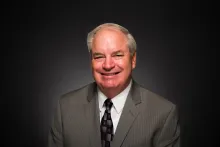
Robin Webber was born in Chicago, Illinois, in 1951, but has lived most of his life in California. He has been a part of the Church of God community since 1963. He attended Ambassador College in Pasadena from 1969-1973. He majored in theology and history.
Mr. Webber's interest remains in the study of history, socio-economics and literature. Over the years, he has offered his services to museums as a docent to share his enthusiasm and passions regarding these areas of expertise.
When time permits, he loves to go mountain biking on nearby ranch land and meet his wife as she hikes toward him.
