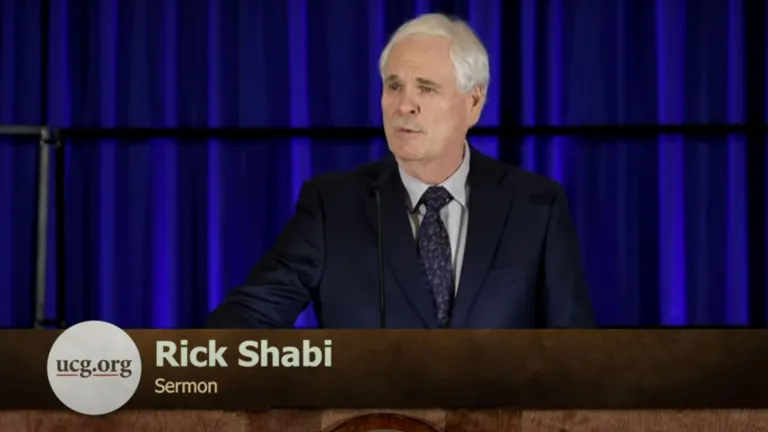

Rick Shabi
This transcript was generated by AI and may contain errors. It is provided to assist those who may not be able to listen to the message.
Well, for the last several weeks, as you know, we've been talking about agape. And we've had, you know, a few sermons about what agape is and defining agape from the Bible. And you recall, you recall that you can't really look into a dictionary, you can't really look into a commentary and see what the definition of agape is. You need to let God and the Bible define for us what agape is. So we talked about that. We gave that definition, and then two weeks ago when I was here, we talked about how important agape was that when Jesus Christ was summarizing what the commands of God are, he summarized them in two commandments. Agape, the Lord, your God, with all your heart, mind, and soul. And he said the second is like it, agape your neighbor as yourself. So a couple weeks ago, we talked about how do we go about agape-ing God with all our heart, mind, and soul, using the Bible as our guide. And as you recall, we left with what Jesus Christ's own words and as a practice for us and a reminder to us when we're making some choices between what we do and what we don't do. What God says and what we want to do, we might want to ask ourselves what Jesus Christ asked Peter in John 21 verse 15. Do you love me more than these? Or do you love me more than this? Do you agape me more than that? And if we would stop and pause before we make decisions to do this or to do that or think it's okay with God if we ignore this or ignore that, we might find ourselves making choices in a better way because we never are going to learn agape. We're never going to become the people that God wants us to become unless we practice agape. It is something we consciously have to do. If you remember the definition that we coined from the Bible, agape is a choice. It has to be a decision. It isn't something that God just pours into us and automatically one day we are the perfect examples of agape. He will pour it in our hearts. Romans 5 tells us that. He puts agape in our hearts through his Holy Spirit, but if we don't practice it, if we're not making choices, if we're not doing what God asks us to do and making those choices day by day, we won't become the people that God wants us to become. And he marks us as his people by the agape that we show. So that was last time, and as I ended last time, I said we have another another command of Jesus Christ to talk about because as important as it is to agape God with all our hearts, minds, and souls, we can't do that unless we're keeping that second command that Jesus Christ said, agape-ing our neighbors as ourselves.
It's important. And when God looks at the agape that we have, how are we demonstrating that to each other? So today we're going to talk about that. But the first place I want to go this this afternoon is in John 17. John 17. And I want you to think about this verse as we read it and ponder it through the week as well as I've been going through, you know, agape in the Bible and looking what Jesus Christ said, looking what the Bible says about it, because it is an all-pervasive. You can pretty much go from one end of the Bible to the other, and you can see agape, true agape, in the pages of the Bible. And in John 17, we know that this is Christ's final prayer, or his prayer before he's arrested on that night of Passover. And through that prayer, you remember, he says it is his will that you and I will become one, as he and God the Father are one, and that we will all become one with him, one with each other. And in verse 23, he makes an interesting and a thought-provoking comment, and I think that tells us how important it is to God for us to agape each other as he agape's us. In verse 23, Christ says, I in them and you in me, that they may be made perfect in one, and that the world may know that you have sent me, and that you have loved them as you have loved me, that you have agape'd them as you have agape'd me. Doesn't that tell us how much God loves us?
He loves us as he loved Jesus Christ, and we know, we know what he thinks of Jesus Christ. We know the agape that, well, we don't fully understand it, but we know that that's a deep love. And God, Christ says, he loves you and me as he loved Jesus Christ. Isn't that amazing? And isn't that comforting? It isn't that exhilarating? Doesn't that make us want to do what God wants us to do even more, even more, when we realize the love and the agape he has for us? So, contemplate that, you know, when we're making our choices about agape and God with our hearts, minds, and souls, that we literally over everything to him. Well, let's go over to John's epistles now in 1 John 4, verses that we've read a couple times before, but it's always helpful to remind ourselves of what God says about agape and how important it is that what we, of course, show to him by the choices that we make and how we how we agape one another as well. In verse 20 of 1 John 4, it says this, it says, if someone says, I agape God and hates his brother, that means loves less his brother or whatever, I agape God and hates his brother, he's a liar. For he who does not agape his brother, whom he has seen, how can he agape God, whom he has not seen? Fair question, right? If we can't agape our brother because God looks and sees, how does he do? How are we doing? He agape'd us before we ever agape'd him, and all of us would have to admit we weren't worthy of the agape that he showed us. And so how could we ever say one of our brothers isn't worth the agape that we may show them? Verse 21, he makes it very clear, this commandment we have from him, he who agape's God must agape his brother also. So it's not a, it's not an option. It's not a nice thing to do if we're going to please God. If we're going to be his people, we have to develop that trait. It has to happen among us. We have to practice it. We have to be aware of it. We have to make choices that along the way we grow that agape that God wants us to have. A chapter back in chapter 3, verse John 3. You know, John the Apostle makes it clear again in here in verses 10 and 11.
He says, in this the children of God and the children of the devil are manifest. Whoever does not practice righteousness is not of God. We would all agree with that, right? If we're not practicing God's way, we're certainly not of God. Whoever does not practice righteousness is not of God, nor is he who doesn't agape his brother. If we don't agape our brothers, if we're not learning how to do that, if we're not practicing that, if we're not developing that fruit of the Spirit. So remember, agape is the first of the listed fruits of the Spirit.
True agape. God will give us that, but we have to grow that fruit, remember? Just like fruit on the tree. Starts off as a little bud. You can see it grow. You know when it's ripe and ready to pick, the fruits of God's Spirit are exactly the same way. They grow over time. We have to nurture them. We have to do the things with it. We have to use God's Spirit to have those things grow in our hearts, in our minds, in our actions, in just the way that we think.
You know, as agape grows and as we begin it, we have to stop and think, oh, I need to do this.
But over time, it will just become natural. Just like obeying God and keeping the commandments that he has given us, we don't have to stop after we've been to the church. We don't think, oh, I can't do that anymore, or I must do that on this day or whatever. It just becomes natural. And you know, it just becomes us. If we look down in 1 John 3, verse 16, you know, when you're looking at what agape is, how do we agape our brothers?
And note the word brothers there. He's not talking about the entire world. Eventually, we will be able to agape the world the way that God did. We will be able to agape our enemies the way God asks us to. But it begins with our brothers. In verse 16, he gives us what the goal of agapeing. How do we know when we become to the point where we are agape-ing each other the way that God will want us to? In verse 16, he says, by this we know agape. Again, whatever God asks us to do, he tells us in the Bible, by this we know agape because he laid down his life for us. And we also ought to lay down our lives for the brethren. Well, that's a pretty tall order, isn't it? Probably, if we were asked that today, we would say, yes, I would lay down my life for my brother. I would lay down my life for my children. I would lay down my wife for my wife. But are we at that point? I include myself in that. Are we at the point that we would lay down our lives for the brethren? Jesus Christ agape-ed us so much that he was willing to do that? Would we be willing to do that? Or maybe a time not so far distant in the future that that might be part of what is asked of us. Would we be willing to do that if we really sit down and think about it and ponder what it is and where we are in that? Even a brother that you may not know that well? Maybe if it's your best friend or whatever. A family member, you would say, yes, but someone you don't even know that well, would you be willing to do that? Because we are all brothers and sisters that are sitting here today. The ones listening on the web are brothers and sisters today.
God gives us, as I often say, the opportunity to grow. He gives us the opportunity to develop these things he wants us to. We just have to be aware of them. Let's go back to the Gospel of John again in John 15. Again, this in Christ's own words, as he is talking about agape and what the standard is where we would be willing to do if we truly agape our brother as ourselves. In John 15 verse 13—now let's pick it up in verse 12—agape is again all over the Gospel of John, all over the epistle of 1 John. John 15 verse 12, Christ says, this is my commandment, that you agape one another as I have agape you. He did it. Our standard or our goal is to be able to do—to come to the point where we would do the same thing that he was willing to do. Greater agape has no one than this than to lay down one's life for his friends. And he says of us, you are my friends if you do whatever I command you. I don't call you servants any longer, for a servant doesn't know what his master is doing. But I've called you friends. For all the things that I heard from my father, I've made known to you. Now, God's made a lot known to us. We know his truth. We know we know prophecy. We know the things that God is going to bring. We don't have all the details of how things are going to come of pass. We have his Holy Spirit, which is the most valuable thing that we can have that will lead us, guide us, teach us, direct us into all understanding. He's given us all those things. He sees us as friends. If we are doing and choosing to do his will, learning to do it, every single time there's a choice between what do I want to do, what's more comfortable to me, versus what does God prefer. And when it's not comfortable for me, I do what God prefers. That's developing agape. That's choosing, even when it's against our own will, to do what God wants us to do. It takes time. It takes thought. It takes choice. It takes commitment to build what God wants us to do. So, let's read verse 16 here, as long as we're in John 15 as well. You didn't choose me, he said, but I chose you. But I chose you and appointed you that you should go and bear fruit, and that your fruit should remain, that whatever you ask the Father in my name, he may give you. We know the fruit that God wants us to be producing. He didn't call us to just stay the way we are from year to year, but to be growing in that. That it's evident to us, others can see the change in us by the way we act, by the way we respond, by the way we conduct ourselves among each other. All those things that are evident, but remember, fruit grows.
Fruit grows. It doesn't become right the moment that the tree is planted. It takes time. It takes practice. It takes fertilizing, and it takes nurturing it. The God Spirit gives us that drive, gives us that encouragement, gives us the power to do those things. Verse 17, he concludes that section with these things I command you. That's you agape one another. That's you agape one another. Now let's look at Colossians 2. Speaking of fruit, and speaking of the training ground that God has put us in. You know, you've heard me mention several times the Greek term pihadea, and the training that God has put us in. And he tells us that he puts us in a training ground.
The church, his body, is our training ground. He tells us, agape one another as I have agape agape you. Practice this with your brothers. You are put in a congregation. You're put in my body. You all are striving, I hope, towards the same goal. All striving to agape God with all your heart, mind, and soul. Striving to agape God in our hearts with each other as well. Striving to learn those things. God gives us this environment to be part of that. In Colossians 2.19, he pretty much says that. Let's just, it's cutting into the middle of the sentence here, but 19 is what I want to focus on. And I'll just begin with holding, and I'm just going to, you know, use the word hold there. Look what God says here in this verse. Hold fast to the head. We know who the head of the body is, don't we? I mean, everyone knows it's Jesus Christ. Hold fast to the head from whom all the body, that's you and me, and everyone listening, and everyone around the world who follows God, who has been called by him, who has been repented, baptized, received his Holy Spirit, striving to live his way. Hold fast to the head from whom all the body nourished and knit together by joints and ligaments. Remember, we've read many, many times about Ephesians 4, how the whole body works together. God has provided everything we need in this body in Orlando, and whatever body you are in that you've come from, in the whole church to accomplish the work that he wants done.
But we all have to work together. Not one of us has all the gifts that God expects us to have in order for the church to do his things, but we all have them. Everything that God wants us to do is here. He gives the gifts, but we have to learn to work together. We have to know each other. We have to, just like our bodies, with all the joints and all the ligaments working together so that we can move, so that we can grow, so we can get from one place to another, God does that. He provides it. He nourished and knit together by joints and ligaments. There's the word, grows. Grows with the increase that is from God. He will provide, and when we do his will, he will provide. He will add.
We water, or we plant, we water. Who provides the increase? God. We have to, just in our personal lives and our congregation, too. We have to water. We have to do the work. We have to plant. We have to water. God will provide the increase when he sees that our hearts are in it, and we're really striving to do that. So with that groundwork, what do we do? How, what does God mean when he says agape? How can we show God, and how can we agape one another? Let's look, let's look at some scriptures here, and believe me, this is not an exhausted list. As I've said before, I could give two or three sermons on this alone, but I'm not going to. I'm going to set some groundwork here for you, and as you read through the Bible, and as you study, you can look for agape and look for the examples that God gives it, because it's literally there from Genesis to Revelation, when our minds are on it, and God shows us examples. But let's start with Christ's words. Always a good place to start. When we're looking to see what does Christ want us to do, he tells us. The answers and the direction are right here in the words of the Bible. We don't have to suppose them, devise our own words. He gives them to us. So let's begin in Matthew 5. In Matthew 5, we have Christ's sermon on the Mount, and in the opening verses of the Sermon on the Mount, you remember the Beatitudes are there. So in verse 3, he says, "...blessed are the poor in spirit." Verse 4, "...blessed are those who mourn." Verse 5, "...blessed are the meek." Verse 6, "...blessed are those who hunger and thirst for righteousness." And then verse 7, we come to, "...blessed are the merciful, for they shall obtain mercy." When we get to merciful, all of a sudden involves other people, not just ourselves.
We would all be merciful to ourselves, right? We all have justifications. We all have these things. Oh, God, you can excuse me for this. "...blessed are the merciful, those who show mercy to one another." Because that's something that we do. That's something that God wants us to be able to do.
So let's look at the word merciful for a moment when God says, blessed are the merciful. Again, we learn a lot when we go back into the Greek words and see what God, what the original Greek word is there, and look at some of the helps that we have of people who have studied these Greek words and who know the definitions of them and everything and what, how they were used, that maybe unlock some of the meaning for us of what God is saying. So let me read to you from William Barkley's daily study Bible commentary about the word merciful. And he talks about the word merciful from the Greek as also from the Hebrew word as well that are tied together in the Septuagint version. Let me just read what he has to say, and notice what he says about that as we look at that word. He says, merciful does not mean only to sympathize with a person in the popular sense of the term. It does not mean simply to feel sorry for someone in trouble. It doesn't simply mean, I might add, just to be lenient with someone and say, oh, okay, okay, I'll be merciful. You didn't do this, but I'll be merciful. It doesn't mean that either. He says mercy means the ability to get right inside the other person's skin until we can see things with his eyes, think things with his mind, and feel things with his feelings. That is, that we really understand the person. We really get how he operates. We understand them because we know them.
And so when we get to know someone deeply, like Paul would say, he said, remember, he said, to the Jew, I am a Jew. I get where the Jews are coming from. I understand because I can sympathize. I can empathize. I understand what they're thinking. So the Jew I become as a Jew, that I might win some, but I also, to the Gentile, become a Gentile because I understand where they're coming from.
I get what they're coming out of. So I can be merciful, patient with them. I can bear with them because I know their background, and I see it's not easy to do, to come out of Gentileism or Judaism, that it takes work. To the weak, I become as weak, he says, because I get it.
If I'm weak, I need to work with people a different way, but I get it. I understand their character. And to the strong, who are just very, this is the way it's going to be, and, you know, have all these, this bravado about them. I understand that, too, and I have to approach them a different way. I can be patient with someone or another. I can be merciful with them if I understand them. But, you know, we can't ever really understand someone until we get to know them, right?
God knows your frame. God knows my frame. He knows our strengths. He knows our weaknesses. Look how patient he is with us. If he didn't show us mercy, none of us would be sitting here. We would have, we would be long gone. All of humanity would be long gone.
God is merciful because he understands what we're coming out of, and we need to do that as well. It's very easy to look at someone and say, I can't believe they did that or they think that because that's not hard for me to understand. But maybe when we get to know each other, and it's not, and it's more than just saying, hello, how are you on Sabbath, maybe when we get to know them, we go, oh, I can understand the background.
I understand why this might be an issue with them. I understand where they're coming from. So I can be patient, and I won't rush to judgment, and maybe I can help them in some way. That's what Mr. Barkley is saying this word means. He goes on, he says, clearly, Christ is speaking of a much more than emotional wave of pity.
Clearly, this demands, notice the words he used here, clearly this demands a quite deliberate effort of the mind and of the will. We have to choose to do it. We have to choose to agape. It doesn't come naturally. We have something we have to choose to do. To get to know each other, to understand each other, requires, he says, a deliberate effort of the mind and will. It denotes a sympathy which is not given, as it were, from outside, but which comes from a deliberate identification with the other person, until we see things as he sees them and feel things as he feels them.
Well, that's quite a, that's quite a task, isn't it? That's quite a task, too, to get to know each other and understand each other. And as we understand each other's backgrounds and some of our history when we come up, we can begin to understand, oh, I understand what the problem is there. So I won't be judgmental. I won't be thinking, oh, this is so easy to do because what may be easy for me or you to do might be quite a chore for someone else to do based on what the history has been, what they, what happened when they were growing up, the events of their lives that have led them to these serious things.
Because we all have things that we have to overcome as we come out of the world, as we come out of our own backgrounds, and as we begin to live God's way of life, it takes time. It takes effort. It takes commitment to God. Focus on him. And we are here, as Paul so clearly states in Galatians, Galatians 6, 2, bear one another's burdens. Remember what the second part of that verse says? Bear one another's burdens. Empathize. Be merciful. Work with. Talk about it. Help them. Bear one another's burdens. And so fulfill the law of Christ.
Wow. And so fulfill the law of Christ. If we bear with one another, if we understand one another, if we're binding with one another through God's Holy Spirit that does provide the bind, that ties us all together, we'll come to understand. We'll be able to work with one another. We'll be able to do what Paul tells us and others, the author of Hebrews, exhort one another, encourage one another. Know what they need. Pat them on the back, but also give them some sound, maybe advice along the way in agape to help them through what they're going through. You know, it might even be that we have to forgive them. You know, sometimes, well not sometimes, forgiving is agape, right? Jesus Christ, or God forgives our sins. He tells us, you know, you could go one chapter forward in Matthew 6, and Father, you know, Jesus Christ, remember, he said, Father, forgive them. These people who were putting him to death, forgive them. They don't know what they do. Did he understand and appreciate what those people were doing, that he could say, forgive them, for they don't know what they do? Yeah, he agape them. Yeah, he understood. You know, Stephen, Stephen, when he was martyred, said the same thing. He understood what they were coming from. That was just their background. They didn't know what they were doing. You know, we may as well turn over to Matthew 6 here.
While we're here in Matthew, and look at verse 14, you know, God tells us, basically in verses 14 and 15 of Matthew 6, forgiving is agapeing. We read about it in Paul's epistles over and over again, forgive with one another, bear with one another, do all these things. If you forgive, verse 14 of chapter 6, if you forgive men their trespasses, your heavenly Father will also forgive you.
Is there something that someone has done that's so unforgivable than to remember what Jesus Christ said? Look what he went through, and he said, Father, forgive them. There is nothing that we can't forgive others when we remember, and when we're aware, and if someone does something, we think, how could you do that? Or how could you just do something as simply as offend me, right? That I often say, I don't think anyone in the church deliberately offends one another. I don't ever deliberately offend anyone, and if anyone ever thinks I've offended, please come to me and talk, because there may words get mixed up sometimes and whatever, but forgive.
Don't bear those burdens. Don't let that be the separation. If you forgive men their trespasses, your heavenly Father will forgive you, but if you don't forgive men their trespasses, neither will he forgive your trespasses. He makes it pretty clear, what I do to you, make sure you're doing to one another. That's how I agape you. You need to agape others the same way. Pretty basic. You know, if we look at Matthew, go back to Matthew 5, when we just read about merciful, and what it to be truly merciful, what we would need to be with one another to understand some of the things that people do, some of the choices they make, doesn't mean that we accept them, doesn't mean that we approve of them, doesn't mean that we condone them, but we understand, but then we help, that others will get along, you know, will come along and not make the same mistakes over and over again, just like you and I don't make, or aren't supposed to be making the same mistakes over and over again.
We repent. We understand. We get up. We walk forward. If we look at Matthew 5 and verse 41, it's what Jesus Christ was saying in Matthew 5, verse 41. Whoever compels you to go one mile, go with him too. You know, he says in the verse ahead, verse 40 there, if anyone sues you, give him your cloak also.
Be at peace with them. If someone asks you to do something, you know, sometimes we get asked to do something, I don't want to do that. I had other things that I needed to do today. That's kind of out of my way. That's kind of like, you know, that's kind of like whatever. God says be willing to do it. If someone asks, do it. Do it and be cheerful about it. Learn agape. Take those opportunities that come our way, because the opportunities are there.
You know, the Good Samaritan, we talked about him a few weeks ago, he, that opportunity came by. The opportunity came for the priest. He blew that opportunity. He walked right on by when he saw that man in need. The Levite did the same thing. He blew that opportunity to practice agape. He walked right on by, but the Good Samaritan saw the need. He paused what he was doing, and he took the opportunity to build agape. Was that in his plan for that day? Did it interrupt where he was going? Sure. Did it take time to bandage that man's wound? Take him to the inn, pay all of his bills, and then tell the innkeeper, hey, and if there's any more charges to send them my way?
Was that in his game plan for that day? No, but he took the opportunity to do it. There are opportunities to build agape if we look for them. But I dare say, dare say all too many times, we just kind of ignore those opportunities. We just don't even pay attention to them. We aren't conditioned to be thinking, is this an opportunity for me to build what God wants me to build? It's the same thing with agape and God.
I don't feel like doing this today. I don't feel like doing this today, but what would God have me prefer? And so I'll do what God prefers. When we don't do what God prefers and we choose us and our comfort and our leisure and whatever we want to do over God, we're not taking the opportunity to build agape. Same thing, same thing, you know, with one another.
So when Christ says, whoever compels you to go one mile, you know what? Give them, give them more! Be willing to do that! If you want me to walk with you one mile, I'll give you two. If you need me to do this, hey, can I do something else as well? Hey, if you need this, do you also need this as well? If you need a hundred dollars and I can give it to you, hey, would 150 be better? Whatever it is, be willing to do that! Build the opportunity! Take care of each other's needs is what God is saying.
Again, if we go back to John's epistle, 1 John 3, and we were there earlier, the continuing past, verse 16, when we read about what the ultimate agape is that we would be willing to give our lives for our brethren, John goes on and he defines agape. He says in verse, or talks more about agape, in verse 17 to 1 John 3, he says, whoever has this world's goods and sees his brother, again notice the words there, and sees his brother in need, here's a training ground, there are opportunities to build it in here if we know each other, if we kind of understand what each other are going through and the situations that we encounter as we all walk together toward God's kingdom led by him, whoever has this world's goods and sees his brother in need and shuts up his heart from him, how does the agape of God abide in him? It doesn't, right? Because God knows our needs. He wants us to ask, but he provides what we need. We have every example in the Bible of when people, God gave them what they needed. When they couldn't give it for themselves or circumstances that were there, God knows. We have to know. We have to learn. We have to keep our eyes open. We have to love one another as the body, as brothers and sisters in the family that God has made us.
Verse 18, my little children, let us not agape in word or in tongue, but indeed and in truth.
You know, when you see the opportunity, do it. Do it. You know, it's not enough to just know it.
Gotta do it. Just the same thing that the Bible talks about, knowing God's truth. Not enough to know it, not to be able to say, oh, I can retake the Ten Commandments and verbatim from Deuteronomy 5. Gotta do them. If you don't do them, then what good is it? And if you know agape and you know, you know, if you're not ever practicing, if you're not taking the opportunities God gives you, what good are we? What good are we? Verse 19, and by this we know that we are of the truth. By this we know that we are of the truth and shall assure our hearts before him.
What did Christ say about his body, about his family, about his church?
John 13, verse 34, he said, by this will all men know that you are my disciples if you have agape for one another. People walk in, they see a difference among us than they do other places. Not just that we're friendly, not just that we shake each other's hands, but that we really care for each other. We really are family and do the things we want. By this you know the truth if you do the things that God asks you to do. You know, when we read in verse 17 about the world's goods, we do know from time to time there are people who have needs. Goods, they can't afford this and they can't afford that. And yes, it's good for us to be able to help out. And if you're aware of a need and you literally can't, bring it to someone else's attention so that we can help one another. But it isn't only goods that we can look out for. You know, goods are something, you know, it's nice to have, but there's other things that people need besides just goods.
Sometimes they need encouragement. Sometimes you can see someone and the way they're acting or the way they're behaving, they just kind of look down and depressed. You know, we could be kind of like what Barnabas did to Paul. Be an encourager. Talk to them. Lift them up a little bit. When God talks in Hebrews 10, 24, and 25, he says, you know, don't forsake the assembling of yourselves together. Come so that you can exhort one another to stir up love and good works. Do that. If we see someone just standing by themselves and no one's talking to them, go up and talk to them. Make them feel part. You know, years and years ago, I visited some church areas not here and not where we've lived, but you know, and I could literally stand there, and no one would talk to me the entire time that I was there. So I left, and I still remember those congregations that was decades ago. It hurt, and I thought, what about that body? Are we aware of what others' needs are?
If we, you know, sometimes it's just a matter of, as I say so often, today we have all the opportunities to converse with one another in ways that we don't have to actually hop on the car, hop on a horse, walk 10 miles. We can send an email if we haven't seen someone at church for a while and ask, how are you? What's going on? You okay? Anything you need? We can send a text. We can send a card. We can actually, you know, go there. I find more often people don't like you to drop in unannounced, but, you know, make sure people understand, well, we miss them. It's like, oh, you've been gone for three or four weeks, and no one ever talks to you. What do you think you're going to feel if no one ever calls or asks? They don't even know I exist. Sometimes it's just being on the phone. Sometimes just listening to someone might be an hour, might be an hour and a half. You know what? It's a gift we can give to one another, and agape we can give to one another.
I just listen, because some people just need to talk. There's many, many things that we can give to one another. It doesn't have to be just goods, and there are many, many needs that people need.
Did I say goods people need? Many, many things people need. We can understand that. As we get to know each other, we'll realize, oh, you know what? This person, if I would just send an email every once in a while or pick up the phone and call, leave a message that they know, that I know, that they're there, that would be very helpful to them. Other people? Something different. We don't know that until we get to know each other and understand what each other's needs. It's not just goods, but it's anything that we can provide for one another. Let's look at a couple examples. Back in Matthew, Matthew 26, when God puts things in the Bible, He puts them in there for a reason.
This is one of the interesting, interesting things, and we can see how the disciples responded to this incident here in Matthew 26. This is after Christ had given the Olivet prophecy and talked about the things He talks about in Matthew 25. It says in verse 6 of Matthew 26, When Jesus was in Bethany at the house of Simon the leper, a woman came to him, having an alabaster flask of very costly fragrant oil, and she poured it on his head as he sat at the table.
So the disciples, his disciples, looked at that and thought, whoa, whoa, whoa, what are you doing there? That costs a lot of money. He doesn't need all that oil. Who needs all that oil poured on his head, right? When his disciples saw it, they were in dignity, saying, why this waste? This fragrant oil might have been sold for much and given to the poor. Wouldn't that be the more noble thing to do? And on the face of it, indeed, that would be something we might think, wait a minute, we're not gonna do that for this person. Let's sell it and give it away. But Jesus Christ was aware of it, and he said to them, why do you trouble this woman? For she has done a good work for me. What she's done for me is a good thing. You have the poor with you always, but me you do not have always. For in pouring this fragrant oil on my body, she did it for my burial.
She was aware, and God put it in her heart, anoint him with that oil, pour it on him.
The disciples saw it, and they had to learn a lesson from that. Was it too much? Was she wasting what God had given her? Was it all for naught? Christ said, no, no, no. No, no, no. God had put this in her heart, and she did it. And he said in verse 13 exactly what we're doing today, assuredly I say to you, wherever this gospel is preached in the whole world, what this woman has done will also be told as a memorial to her. She followed what was in her heart what God had her to do. She could have said, well, you know what, I've got this oil, but you know what, I can't use all of it on him. I'll just give a little bit. I'll just give him a little bit of it, as in, I'll just, you know, he asked for a mile, maybe a half a mile. But no, God has put in my heart, pour it all on his head. And she did it. She didn't limit herself. She didn't use human reasoning and say, it's too much, it's too much. God's put it in my heart. I will do it.
And it's a lesson for there that we have to ponder to understand a little bit. But in verse 12, Christ says something that he also, or the Bible tells us, also back in Deuteronomy 15. So let's go back to Deuteronomy 15. You know, the Old Testament, we find many, many things. Agape is all over the Old Testament as well. When we look at it, Israel didn't, ancient Israel, didn't understand many of the things that God wanted them to do. They didn't have the Holy Spirit, but you and I do. So we can look at this and we can understand it better. In Deuteronomy 15, in verse 7, If there is among you a poor man of your brethren, within any of the gates in your land which the eternal your God is giving you, you shall not harden your heart, nor shut your hand from your poor brother. But you shall open your hand wide to him, and willingly lend him sufficient for his need, whatever he needs. So we have someone poor. They ask for something. God even uses the word lend there. Yeah, I'll give you whatever you need to do there. Now, we also have to remember the Bible talks about hard work, providing for yourself, all those other things that we need to be doing so that we're both working on the same way as God is doing for both working on the same way as we are a brother. If we down, if we...
Verse 9, Beware lest there be a wicked thought in your heart. Oh, you know what? Forget verse 9. You can look at that later. Verse 10, You shall surely give to him, and your heart should not be grieved when you give to him, because for this thing the Lord your God will bless you in all your works, and in all to which you put your hand. So do it. Do it with a willing heart.
You know one of the ways we build our heart is when we build agape. We can't build the heart that God wants without practicing agape and developing it, because the things that we do, you know, if they're just little tasks, it's just one, two, three, I've done this, you know, we can do little tasks, but if our heart isn't in it, if our heart isn't becoming what God wants us to do, it's all for naught. I mentioned on the Bible study this last week, you know, I said, you know, when people stand before Jesus Christ and he has things to say, and if we say things like, well, do you realize how much money I gave you over the years? Is he going to say, oh yeah, I'll take that into account. No, what is he going to say? That's great. That's what you should have done. Where's your heart? If we say to him, look at how many hours I did this, and I did that, I served in this area, I served in that area, I did this, I did all these tasks. Wasn't that account for something? Yes, it accounts for something, but if your heart isn't with God, that's what he's looking for. We build our hearts through the agape and the choices that we make and the things that we do. If our heart isn't with God, in a sense, we're wasting our time. Our hearts, we have to let God develop our hearts, and so much of that depends on us. So when we talk about agapeing our brother here, you know, that's what God is saying here. In verse 11, he makes a comment. He says, for the poor will never cease from the land. Therefore I command you, saying, you shall open your hand wide to your brother, to your poor and your needy in your land. What is he saying there? There's going to be opportunities to help. There's going to be opportunities to agape your brother. Some are going to be in that position that they're going to be poor and they're going to need help. Your opportunities are there to develop it. What are you going to do? Going to ignore it? What are you going to do? What are you going to do with it? Something to ponder.
And that's not just the poor. Like I said, all of us have needs in some ways.
As we understand each other, we can provide what each other needs.
Let's go back to, or forward, I guess, now to Matthew 25.
After the Olivet prophecy, when Jesus Christ gave all those prophecies that we're aware of, so many of which we see being fulfilled in the world today, and if we have our eyes open and our ears open, we see where the world is going. And we see some of the things that Jesus Christ talked about in Matthew 24 and what God revealed to Jesus Christ who revealed to John who recorded in Revelation coming about. When he's done with the Olivet prophecy, he goes into what we call chapter 25. It's all part of the same sermon or conversation that he, if you will, that he had with his disciples. But he continues from the Olivet prophecy into chapter 25. And you know what Chad is in chapter 25. He talks about things like the ten virgins. Ten virgins who half of them didn't have oil enough in their lamp, so when the bridegroom came, they weren't ready.
The other half were also asleep, but they did have some oil in their lamp, so when the bridegroom came, they were ready. And we talk about that, and we talk about the oil being God's Holy Spirit, and indeed, that is it when he's talking about oil. But you know when you look at what he's talking about, he tells us in the rest of the chapter, how can I have that oil in my heart? What is it that I can do to ensure that I have some of that oil when Jesus Christ returns that I'm aware, that I'm ready when the bridegroom comes, that I can go in? Or what can I ignore and just bury my head in the sand and go on living the way I've always lived, but be one of those unfortunate, really sad people who had every opportunity in their hands, but they just let it go because they didn't want to do it? So Jesus Christ, that when the bridegroom comes, I'm locked out because I didn't take the opportunities through life to do any of the stuff that God wanted me to do. I kind of just loathed myself to sleep thinking, if I just do this and do that and I do this task and that task and that task, I'm just here on Sabbath, every Sabbath or some Sabbath, do nothing else, that's fine. And that's not at all what God is saying. So in chapter 25, he tells us some of those things. As you go through chapter 25, of course, you have the parable of the talents. In that he says, you know, I give everyone talents. Some have more, some have less, but what I expect that you're doing with those talents in the course of the time that you're in the church, in the body, supposed to be growing, having God's Holy Spirit that gives us the energy, the power, the agape, the sound mind to get it done, if we're really focusing on it, those talents will grow. You'll develop them. You won't be the same person five years from now that you are today. Your heart will grow. You will be more of what God wants you to be. People will see it. You will see it. Your mom, your wife will see it. Your kids will see it as you give your heart to God. You have to develop what God has given you to do. You've got to grow the talents that he gives you. You have to develop. And then in the last part of chapter 25, he talks about things we've just been talking about. How do I agape my brother? It comes down to that, right? In verse 31 of chapter 25, it says, When the Son of Man comes in his glory, and all the holy angels with him, then he will sit on the throne of his glory. All the nations will be gathered before him, and he will separate them one from another, as the shepherd divides his sheep from the goats. He will set the sheep on his right hand, but the goats on the left. And the king will say to those on his right hand, Come, you blessed of my father, inherit the kingdom prepared for you from the foundation of the world. You and I want to hear those words, and everyone listening wants to hear those words. Here's what Christ says. Then the king will, from the foundation of the world, verse 35, For I was hungry, and you gave me food. I was hungry, and you gave me food.
You saw a need. You didn't wait for me to ask you, provided what I needed. You agape'd me. You saw the need. You gave me what I needed. I was thirsty, and you gave me drink. You didn't walk around the other side like the Levite and the priest did. You saw a need. You provided it.
You didn't look the other way. You didn't think, Man, if I act like I didn't know that, someone else will take care of it. You did it. You did it. I was a stranger, and you took me in.
You saw a need that I had. You did it. You didn't hesitate. You took action. When your choice came, and the opportunity was there, you took it. And you developed that love. You developed that outgoing concern, and that is such an easy definition of agape that it's not at all complete. I hear still some people say, All-all agape is is outgoing concern. Yes, it is, but without action, it is absolutely incomplete. It is so much more as we have talked about. I was naked, and you clothed me. I was sick, and you visited me. I was in prison, and you came to me. It's all about action. You saw the need. You took care of it. You didn't wait for someone else to do it. You didn't ignore it. Wish that you had not seen it. You actually did it. That's so important. That's so important that we take the opportunities and that we do those things. God's not going to give only me the opportunities in the congregation. He's not going to give only you the opportunities in the congregation. He's going to give all of us the opportunities because He's interested in how all of our hearts are developing, not just one or two of us. We all have the responsibility to agape our brother. God doesn't limit it to this one or that one. Everyone! It's all our jobs. A fruit of the Spirit, the first one listed as agape, is not just for a few. No, God doesn't give the same gifts to everyone, but He does give the fruit of the Spirit and expects agape is being developed by everyone, and He will give us the time and the opportunity to do that. Excuse me as I look at the time since I forgot my watch today. Okay. So we have to take the opportunities to do that, and here it is that, you know, Jesus Christ, you know, said to do that. Let's turn back for a moment to 1 Kings. Well, actually, it's 2 Kings. 2 Kings 17. 2 Kings 17. And interesting, you know, when you read some of these accounts, you know, rather than just reading it and thinking that's a nice story, sometimes we have to pause and think, what was God trying to show us in that? Why did He include that story in there? What can we learn from that? Because every word of the Bible, Jesus Christ, said we live by every word of the Bible we can learn from. Sometimes we just have to pause and think, what is God telling us here? And here in chapter 17, you know, we have Elijah, and he has this interesting... am I in the right place here? 2 Kings... nope, I'm sorry, it is 1 Kings. So 1 Kings 17. 1 Kings 17. And we have Elijah encountering this widow in Zarephath. And let's pick it up in, you know, in the early parts of chapter 17 here, we see God providing for Elijah, you know. He was there by the river. God had food brought to him every single day. Elijah didn't have to worry about it. And in verse 8, the word of the Lord came to Elijah saying, verse 9, arise, go to Zarephath, which belongs to Sidon, and dwell there. See, I've commanded a widow there to provide for you.
So he arose, he went to the city, and when he came to the gate of the city, indeed a widow was there, gathering sticks. And he called to her and said, please bring me a little water and a cup that I may drink. Now this woman, you know, she didn't know Elijah from Adam, as we would say, right?
But here he says, bring me a little water that I may drink. She could say, get it yourself.
You should be getting me water. You're the man and I'm the woman. But she doesn't. And as she was going to get it, he called to her and said, please bring me a morsel of bread in your hand.
Now what was God showing here? Why, you know, this kind of, as the story goes on, Elijah, it had to be a little bit uncomfortable for Elijah to say that to this widow. He doesn't know, bring me some water, bring me some bread. Then he hears the story. And look at the widow. Look what she's doing here. And could, would we have reacted in the way that she did? So he says, bring me a morsel of bread in your hand. And she said, as the Lord your God lives, I don't have bread, only a handful of flour in a bin and a little oil in a jar. And see, I'm gathering a couple of sticks that I may go in and prepare it for myself and my son, that we may eat it and die. Wow! That's something that you and I have never experienced in our lifetime. We have, we, I dare say, no one in this room is ever like, this is my last meal from here on out. I starve. But Elijah hears this and he says to her, don't fear, go and do as you have said, but make me a small cake from it first and bring it to me.
And afterward, make some for yourself and your son. Well, there's going to be some agape on her part, right? We would all look at that and say, hey, I had the perfect right to say, Elijah, sorry.
Sorry, I can't do that. But it was in her heart and look at the trust that she had in God, here when Elijah then tells her, Thus says the Lord God of Israel, the bin of flour shall not be used up, nor shall the jar of oil run dry until the day the Lord sends rain on the earth.
Facing death, she's got her son involved in it. Elijah says, feed me first. And if you feed me first, widow, God will provide everything you need. Does that take trust? Oh, yeah. Does that take faith?
Oh, yeah. Oh, yeah. And she did it. So she went away and did according to the word of Elijah, and she and her household ate for many days. The bin of flour wasn't used up. The jar of oil didn't run dry. According to the word of the Lord, which she spoke by Elijah. Now, that's something to contemplate. There was agape. What did the widow do? She agape'd Elijah more than herself. She agape'd God more than herself. Even in the face of what she thought was certain death when you looked at it physically, understanding God can provide whatever we need. When God says in Ecclesiastes 11 verse 1, cast your bread on the water. He says you'll receive it. Just do it. Do it and trust Him.
We are in training. We are people that He's working with, and He says, just do what I say. Practice it. Don't rely on self. Don't rely on your resources. Don't rely on the world and all the physical things that are there. Do what I say. Develop what I want, because, unlike the world, God is teaching us agape and what He wants us to do. And part of that agape is trusting Him, loving Him, agape-ing Him, of course. All those things that are built in to agape-ing Him. I won't turn to Galatians 6.1, but I'll reference Galatians 6.1. You know, part of agape-ing our brother—I'll let you contemplate Matthew 25 and some of the other verses you read as well on what God is saying there and what Christ is teaching us. You know, part of it is also when we see a brother straying, falling away, or wavering. And we've all seen that sometime in our lives.
And agape would be, you go to the brother and you tell them what's going on and you try to put them back on the right track, understanding that you love them and you want them to be in the kingdom. And they're not fun things to do, but they are necessary things to do. Let's look at Galatians 6.
Galatians 6. I referenced Galatians 6.2 before, but let me look at verse 1. Brethren, if a man is overtaken in any trespass, you who are spiritual restore such a one in a spirit of gentleness, considering yourself lest you also be tempted. If you agape your brother, you're going to bring that to his attention. If you agape your brother, we're going to be at peace. If you agape your brother, we'll practice Matthew 18, 15 to 17. We'll do the things the way that God said so that we continue or grow as a body that is indeed becoming one as Jesus Christ wanted us and says that his intent is that we will become one as he and the Father are one.
So when you look at agape and you think about it, boy, there's a lot that you, there's a lot that's there. As I said, I could talk about this subject another couple times, and there are things that you're probably thinking, boy, he hasn't gotten to that and that in this series yet. We'll get to it. We'll get to it. Just be patient, because there's some big things that we haven't talked about yet that we will, because this is a topic that we need to be focused on. We need to be thinking about, that we need to be actively looking at and practicing in our lives and aware of what it is.
You know, Paul says—I'll turn there in a minute. I'll let Paul say it rather than me say it—something that we need to be working with. But look for the opportunities of agape, not just in the goods someone needs, but in the encouragement they need. I mentioned Paul putting his, or Barnabas, putting his arm and coming alongside Paul and giving him encouragement when he needed it. Praying for someone, praying for someone. Remember that God told Job as he came out of his trial, Job, I'll restore you when you've prayed for your friends. Agape them. Did they do right by you? Did they cause you pain and anguish while you were suffering? Yes, they did, but God said, pray for them. Agape them. Forgive them. Pray for their well-being. The same thing that we do for one another. You know, we can do what Moses did for Israel. Let's turn back to Exodus 32 for just a second. Exodus 32. Moses showed extreme agape for Israel in the face of everything that they did. And early on, when he was irritated with them and he was angry with them, when he was up on Mount Sinai for 40 days and he came down and there's Israel, and they built this golden calf and they're dancing around it like whatever descriptor you want to put on it, right? And Moses, rightfully, is angry with them, frustrated with them. How could you do that? And in Exodus 32, in verse 30, we see the agape that God had developed and that Moses had developed for Israel. Verse 30, it came to pass. On the next day, Moses said to the people, you have committed a great sin.
So now I will go up to the eternal. Perhaps I can make atonement for your sin. And Moses returned to the Lord and said, oh, these people have committed a great sin and have made themselves a god of gold.
And then look at the prayer. What he asks God to do. It's not, you know what, I'm tired of them. I'm sick of them. They never learned their lesson. How silly is this that they would have done that? What are they learning? Yet now, he says in verse 32, if you will forgive their sin. But if not, I pray blot me out of your book, which you have written. God, forgive them. Work with them. Just eliminate me. Eliminate me because I am so agape these people that I want them in your kingdom.
You know, maybe some of us have said that about our children, you know, who wander away and who find the world enamored. And maybe we've said, God, if you would just call them back and let them be in your kingdom, you can take my name out of it. That's what we would, that's the feeling we should have for one another. Whatever I can do to help you, whatever I can do to help you along the way, that you feel part of the body, that we're all growing, overcoming the weaknesses, that we're helping each other overcome our weaknesses and develop the talents that God has given us.
There's all sorts of opportunities. We have to be here. We have to be part of the body. We have to know each other in order for it to happen. If we aren't that, then we're not doing what God wants us to do. Let's conclude here in Romans. Romans 12. Paul has a lot to say about Agape as well. Let me just read through some of these verses and finish with his words here. Verse 9, Romans 12.
Let Agape be without hypocrisy.
A poor what is evil, cling to what is good. Be kindly affectionate to one another with brotherly Agape, in honor giving preference to one another. Not looking down on some, not saying they're not worth my time, I don't want to associate with them.
Not lagging in diligence, fervent in spirit, serving the Lord. Verse 13. Distribute to the needs of the saints. Be given to hospitality. Verse 15. Rejoice with those who rejoice. Weep with those who weep. We need to know what each other are going through. Share in joy, share in sorrow. Verse 16. Be of the same mind toward one another. Don't set your mind on high things, but associate with the humble, and don't be wise in your own opinion. Drop down to chapter 13, verse 8. Oh, no one anything except to love one another or to Agape one another, for he who Agape's another has fulfilled the law. That's what we've been talking about. That's what God says. You got to do those things in those two great commandments of Jesus Christ. Encompass all those 10 commandments as we've talked about the last time. Verse 10. Love does no harm.
Excuse me. Agape does no harm to a neighbor. Therefore, Agape is the fulfillment of the law.
And do this, brethren, knowing the time that now it is high time to awake out of sleep, for now our salvation is nearer than we first believed. The night is far spent. The day is at hand. Therefore, let us cast off the works of darkness and let us put on the armor of light.
Let's keep Agape in our minds. Agape-ing God with all our heart, mind, and soul. Agape-ing neighbor as self. Keep it in your mind. Pause before you act and ask, is this what God would have me do?

Rick Shabi (1954-2025) was ordained an elder in 2000, and relocated to northern Florida in 2004. He attended Ambassador College and graduated from Indiana University with a Bachelor of Science in Business, with a major in Accounting. After enjoying a rewarding career in corporate and local hospital finance and administration, he became a pastor in January 2011, at which time he and his wife Deborah served in the Orlando and Jacksonville, Florida, churches. Rick served as the Treasurer for the United Church of God from 2013–2022, and was President from May 2022 to April 2025.
