The Fruit of the Spirit - Joy: Foundation for a Positive Life

Jesus said to His disciples, "These things I have spoken to you, that My joy may remain in you, and that your joy may be full" (John 15:11). That sounds almost too good to be true! How can we experience this fullness of joy?
Wouldn't you like to experience deep and enduring joy? Wouldn't you like to be joy-full? Please be assured—you can.
The world has a woeful shortage of joy and a surplus of fear, worry, discouragement and depression. Even the "pursuit of happiness" and obsessive pleasure-seeking do not bring deep and lasting joy.
Let's first understand the difference between joy and happiness. Happiness is an emotion, and God never intended for people to be in that emotional state all the time. There is "a time to weep, and a time to laugh; a time to mourn, and a time to dance" (Ecclesiastes 3:4).
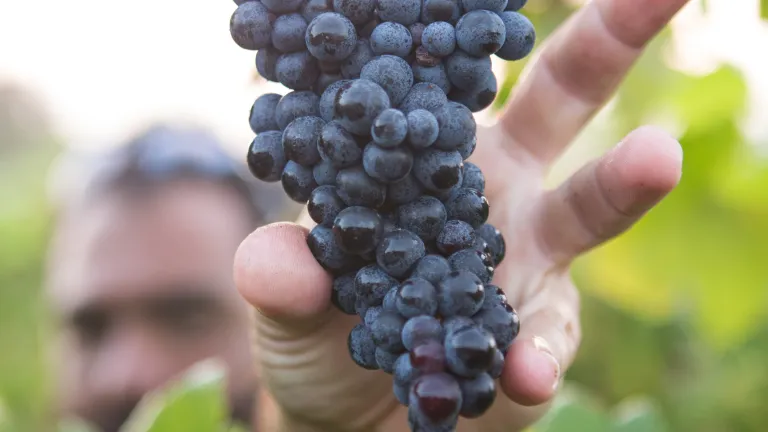
Biblical joy—the true joy—comes from filling the spiritual void with good relationships, primarily an intimate relationship with the One who is pure joy. Jesus put it this way: "I am the vine, you are the branches. He who abides in Me, and I in him, bears much fruit" (John 15:5). That fruit includes much joy!
The Bible speaks much more often of joy than of being happy. "Hap" means chance and is the root of several words— happen, happening, haphazard(dependent on mere chance), hapless, happenstance(a chance circumstance) and happy.
Happiness is a glad feeling that depends on something good happening. God wants you to experience happy times (as long as God approves of what is happening). But His greater desire is that you have unconditional joy. Jesus said His joy would "remain in you" and "your joy no one will take from you" (John 15:11; John 16:22, emphasis added throughout).
Think of joy as a strong foundation that supports a variety of healthy emotions, including happiness. The long-range evidence of joy is general gratitude, contentment, optimism, a sense of freedom and other positive attitudes.
Joy looks out and up, not inward
A common mistake is to think that getting something will make you happy. We tell ourselves, "If only . . ." But joy and happiness come much more from giving and serving than from getting.
The apostle Paul reminded his listeners that Jesus Christ had taught this very thing: "There is more happiness in giving than in receiving" (Acts 20:35, Today's English Version).
To grow in joy, we must resist not only self-pity but also being self-centered and self-absorbed. For joy to flourish, we must focus on loving others and especially on loving God.
Joy is largely composed of gratitude—gratitude for the wonderful things God has done for us and His "exceedingly great and precious promises" for our future (2 Peter 1:4). Gratitude produces joy (1 Thessalonians 5:16-18). And our gratitude should be for other people's blessings as well as for our own (Romans 12:15).
Try to follow this biblical formula: Add to your life gratitude, humility, forgiveness, faith, hope, patience and love. Take away resentment, anger, fear, worry, materialism, greed, jealousy, complaining and pride. The result? Joy!
Joy is spiritual, supernatural and essential
God is joyful—far more than any human being ever was! It's tragic that many people think of God as somber and stern rather than cheerful and smiling with a great sense of humor. He is enjoying His creation, and especially the delightful anticipation of many new "sons of God" (Romans 8:14; Romans 8:19).
True followers (imitators) of God will be joyful also. Psalm 68:3 says, "Let the righteous be glad; . . . let them rejoice exceedingly." God desires that we serve Him "with joy and gladness of heart" (Deuteronomy 28:47).
Paul spoke of the "joy of the Holy Spirit" (1 Thessalonians 1:6). It is through His Spirit that God shares and communicates His joy.
And when Paul lists the "fruit of the Spirit," joy is second, preceded only by love (Galatians 5:22-23). If we are filled with godly love, won't that produce joy? Of course it will.
Being second in the list surprises many people who mistakenly think joy is spiritually unimportant. Some religious people even shun joy, at least subconsciously, thinking that pious people should instead be solemn. A few even choose asceticism, which God abhors.
Joy is a major topic in the Bible. In the King James Version, "joy" appears 158 times and "rejoice" 198 times (not counting other variations such as joyful, joyfully, joyous, jubilant, happy and glad).
Rejoice is the verb form of joy, meaning to feel or have joy! Clearly there is great emphasis in the Bible on feeling and expressing joy. That explains why the Bible also emphasizes prayers and songs that praise (celebrate) God (James 5:13; Colossians 3:16-17).
Joy is not optional. The Bible repeatedly commands us to rejoice! The most emphatic exhortation is in Philippians 4:4, where Paul says, "Rejoice in the Lord always. Again I will say, rejoice!"
Is it wrong to have sorrow?
The Bible describes two kinds of sorrow. "For godly sorrow produces repentance leading to salvation, not to be regretted; but the sorrow of the world produces death" (2 Corinthians 7:10).
Those who have joy frequently experience godly sorrow at the same time. It can be the sorrow of repentance toward God. Those who feel the worst about their sins feel the greatest joy about their forgiveness and God's amazing grace.
Another example is mourning over the suffering of others while having the joy of knowing that God will eventually solve all problems (Matthew 5:4).
Worldly sorrow is generally self-pity or a victim mentality. While one indulges in worldly sorrow, it's virtually impossible to have either godly sorrow or joy.
Isaiah's prophecy said Jesus would be "a Man of sorrows"—sorrows over mankind's sins and suffering (Isaiah 53:3). Yet He was also prophesied to be "anointed . . . with the oil of gladness more than [His] companions" (Hebrews 1:8-9; Psalm 45:6-7). And indeed, Christ had great joy and also experienced great sorrow (John 17:13; Matthew 26:37-39).
Grieving is a healthy response when a loved one dies. However, if we believe the truth of the resurrection, we also have comfort and joy because we know our loss is only temporary. The grief is much more painful for those "who have no hope" in a resurrection (1 Thessalonians 4:13).
Joy because of trials?
God's joy continues to flow through His people even during their suffering because of their rock-solid hope. They know that all suffering is limited to this short life, and the time will soon come when "there shall be no more death, nor sorrow, nor crying" (Revelation 21:4). They "rejoice in hope of the glory of God" (Romans 5:2).
We also have good reason to rejoice because of our trials when we understand how God is using those trials to help us build godly character. "And we know that all things [even severe trials] work together for good to those who love God, to those who are the called according to His purpose" (Romans 8:28).
More specifically, Paul wrote that "we also rejoice in our sufferings, because we know that suffering produces perseverance; perseverance, character; and character, hope" (Romans 5:3-4, New International Version).
James wrote, "Consider it pure joy, my brothers, whenever you face trials of many kinds, because you know that the testing of your faith develops perseverance"—perseverance in remaining faithful to God (James 1:2, NIV).
And because Christ suffered for each of us, we should have a special joy when we are persecuted for our faith. Jesus said, "Rejoice and be exceedingly glad, for great is your reward in heaven" (Matthew 5:11-12).
The number one key to joy: God's Spirit
Supreme joy is God's nature and character! We see proof everywhere in God's creation—birds singing, animals leaping, flowers blooming, brooks babbling and the sun shining! Many people would be less depressed if they would spend more time outside. God "gives us richly all things to enjoy" (1 Timothy 6:17).
Since God is exceedingly joyful, His servants should also be joyful! Sadly, many who claim to be His disciples are austere, sour and dour. But take note of Luke's description of true disciples: "And the disciples were filled with joy and with the Holy Spirit" (Acts 13:52).
How can we be filled with joy and the Holy Spirit? "Then Peter said to them, ‘Repent, and let every one of you be baptized in the name of Jesus Christ for the remission [forgiveness] of sins; and you shall receive the gift of the Holy Spirit'" (Acts 2:38).
What then? Our unique joy begins because Christ lives in us (Galatians 2:20). He tells us to "rejoice because your names are written in heaven" (Luke 10:20). We then have an intimate relationship with the One Psalm 43:4 calls "God my exceeding joy." In His presence "is fullness of joy" (Psalm 16:11).
God's Spirit is a tree of life, producing life-giving fruit (Galatians 5:22-23). That fruit includes great joy.
Jesus prayed for His followers "that they may have My joy fulfilled in themselves" (John 17:13).
He also teaches us to pray for joy and for all our needs. As He tells us in John 16:24, "Ask, and you will receive, that your joy may be full!"

An Article from:
Good News Magazine: July - August 2008
Course Content

Donald Hooser
Don Hooser is a minister for the United Church of God. He lives in McKinney, Texas, a suburb of Dallas. He and his wife Elsie had three children, and she died in August 2020. Don married Judy in January 2022. Mr. Hooser graduated in 1963 from Southern Methodist University with a degree in mechanical engineering, and graduated in 1966 from Ambassador College, Big Sandy, Texas. For most of the time since then, he served as the pastor of churches in Ohio, Nebraska, Oklahoma, Texas, and Washington. From 2011 until his retirement in 2021, his primary responsibility was answering the many letters written to the Church.