Does the Bible say anything about the food you eat?
Why did God, in Leviticus 11 and Deuteronomy 14, distinguish between clean and unclean animals?
Are distinctions between clean and unclean meats only a matter of health or something far greater?
Does what you eat affect your relationship with God? Can consuming animals classified as unclean bring immediate or long-term consequences?
Are these dietary food laws relevant today?
Are all kinds of animal flesh suitable for food? Did God design certain animals to be eaten and others not to be eaten? Are Christians free to eat any kind of food, ignoring the dietary guidelines found in the Bible?
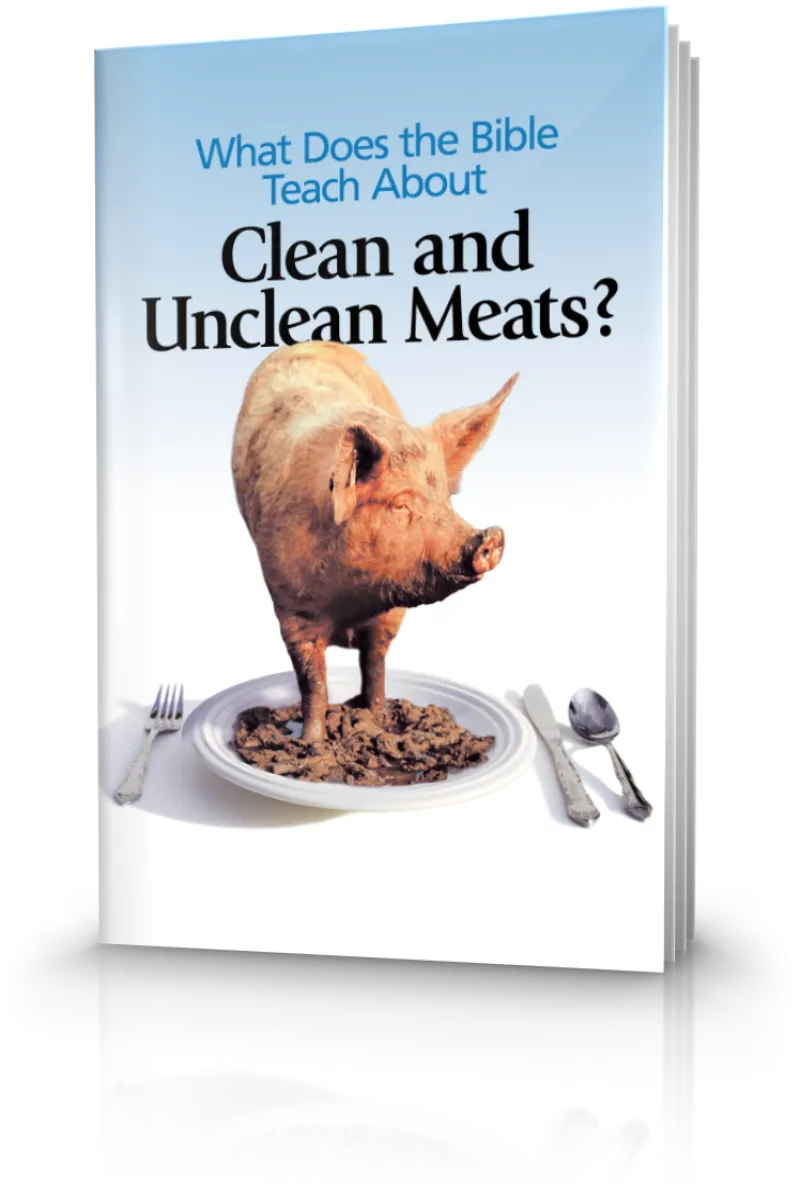
Learn the surprising answers to these questions—and the science behind them—in this Bible study aid booklet What Does the Bible Teach About Clean and Unclean Meats?
Maybe it's time to think about you put on your plate.
Request your FREE copy today!
Since many people enjoy eating pork (ham, bacon, sausage, etc.) and experience no immediate adverse effects, some have looked for scientific reasons that God may have had in mind when He told the ancient Israelites not to eat pork (Leviticus 11:7; Deuteronomy 14:8) (p. 3).
The specific purpose God gave for avoiding unclean meats is holiness. God wants us to be holy. Since we belong to Him and He purchased us with Christ’s blood, He does not want us to contaminate ourselves through any kind of physical or spiritual defilement (1 Corinthians 6:15-20). In God’s sight refraining from eating unclean animals is an identifying sign of the holiness of those God has set apart through a relationship with Him (p. 9).
Those who assume the subject of Romans 14 is a retraction of God’s law regarding clean and unclean animals must force this interpretation into the text because it has no biblical foundation (p. 15).
No New Testament passages describe Christians eating meats that had been considered unclean; such a view is glaringly absent in the Bible (p. 21).
Many factors such as diet, genetic makeup, environment, exercise and good and bad habits affect our health. However, theological as well as medical researchers have recognized the benefits of following the health laws of Scripture (p. 25).

