Letter from Dan Dowd – February 20, 2026
Sabbath Thought – Spiritual Healing
“In order to get well, you have to give up the things that made you sick.”
I happened across this quote this past week and it made me pause. We can easily think of illness as something that happens to us, rather than because of choices we’ve made. As we are quickly approaching the spring Holy Days, I believe this quote is worth considering on a spiritual level. Illness, even on a spiritual level, is rarely something that happens to simply find us bringing problems. God didn’t create human beings to be victims. He created us for the opportunity to be in His family.
We need spiritual healing as part of our overcoming and taking on the mind of Christ (Philippians 2:5). Jesus performed countless healings during His earthly ministry, and many of those healings involved physical needs, but He also performed many countless healings by casting out demons – helping bodies and minds begin to heal by removing what made them sick. We can ask for the same healing from God – a healing of our mind so it can work with His spirit.
There is also the adage that you cannot change what you don’t admit. I would add to that by saying you also cannot change what you don’t know already exists in you. This is the process of self-examination that is a theme of the spring Holy Days (1 Corinthians 11:28, 2 Corinthians 13:5). Why do we have the shortcomings that we do? Why do we hold onto the things in our life (or our mind) that are not helping us become more like God? What is it about the sin in our life that we find attractive even though it is making us “sick”? To examine is to consider what it is so we can address it or remove it so we can become what God desires. This is fundamentally what repentance is about. Repentance is not just being sorry. It is recognition that we have failed by allowing thoughts and actions into our life that contribute to being spiritually unhealthy.
The Stoics were Greek philosophers around the 300s BC, and they taught that there were natural laws ordained by a supreme lawgiver. Man, they declared, is completely powerless to change this reality, but man also has free-will to live in accordance with those laws – or not. One teaching of the Stoics was that there are seven poisons that “weaken the mind and rot the soul”. As I considered their points in this list, I realized that they tap into this thought of spiritual healing:
- Constant comparisons. “Another person’s value takes nothing from yours” – Marcus Aurelius. The apostle Paul put it more clearly regarding our calling in 2 Corinthians 10:12.
- The need to please everyone – “If your peace depends on other’s approval, it isn’t peace it is imprisonment.” The apostle Paul again instructed us to live peaceably with others (Romans 12:18), but we don’t have to try and please everyone.
- Attachment to material things. The Stoic philosopher Seneca warned, “Possess nothing that fears fire or time. If losing it destroys you, it owned you.” Jesus Christ reminds us of this truth as well in Matthew 6:25.
- Resentment disguised as justice. I Corinthians 13:4-7.
- Unnecessary noise – silence sharpens judgment and reveals truth. Philippians 4:8.
- The fear of disappointing others. The Stoics taught, “If you live for their expectations, you die to your own potential. You weren’t born to be everyone’s approval.” Living for the approval of others limits us living up to God’s approval – John 12:43.
- Self-deception. “What you avoid today, will break you tomorrow.” In order to not be deceived, we must first recognize how little we know spiritually, but also that by living in and practicing God’s instruction we are led to true wisdom. 1 Corinthians 3:18.
May we use our times of self-examination to be spiritually healed, and to become truly alive (Romans 6:13).
I wish you a very meaningful Sabbath,
Dan Dowd
21 February, 2026
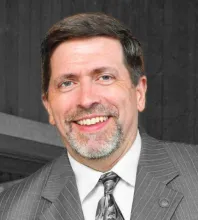
Dan Dowd
Dan currently pastors 3 congregations in Wisconsin (Milwaukee, Oshkosh and Wisconsin Dells). He has been associated with God’s church since he was a young boy.
Dan has an Associate degree in Commercial Art with almost 26 years in the publishing/advertising field. He also has a Bachelor of Arts degree (in Theology) from Ambassador College (graduating in 1986), was ordained an elder in 1997 and then was hired full time in 2004 as a minister in United Church of God.
Dan currently lives just north of Milwaukee, Wisconsin with his wife Roxanne.

