Current Events & Trends: Increasing disorder follows on heels of U.S. retreat
A Wall Street Journal article stated at the outset of the new year: "The world is messy, and it is getting more so as the U.S. retreats from its role as the protector of global order. With civil wars, uprisings against governments and other bloody disputes proliferating, it can be hard to tell the good guys from the bad" ("Global Disorder Scorecard," Dec. 30, 2013).
As the blurb under the headline of a Financial Times piece by noted columnist Philip Stephens stated, "Pressures for conflict in a more disordered world are there for all to see" ("Riches and Risk: Welcome to the World of Tomorrow," Jan. 9, 2014).
Ukraine, Syria, Afghanistan, Iran, Iraq, Libya, Gaza, South Sudan, Thailand and North Korea are all global flashpoints—along with island tensions between China and Japan.
Take the Ukrainian situation, for instance. Russian President Vladimir Putin seeks to recreate at least some semblance of the old Soviet Union, thereby restoring Russia to superpower status. Another editorial in The Wall Street Journal said that "Russia's Vladimir Putin has stoked this crisis from the first and isn't about to let up. The Russian strongman has put $15 billion in aid and billions more in cheap energy on the table to make Ukraine . . . part of a new Greater Russia" ("America and Ukraine," Jan. 27).
Late last year Putin pressured Ukraine into jettisoning an EU "association treaty." This strategic move produced massive protests in the capital city of Kiev, soon countered by repressive new laws fomenting further protests spreading even beyond Kiev to eastern provinces. At this writing the government appears to have backed off somewhat, but "no solution to the current impasse can satisfy both the Ukrainian protestors . . . and a Russian state that aspires to re-establish its regional hegemony" (James Sherr, "Putin's Imperial Project Threatens European Values," Financial Times, Jan. 27, 2014). A divided European Union has been of little or no help to Ukraine.
The Journal article quoted up front about the global conflicts scorecard concluded that "the U.S. once would have led the world in defusing these conflicts, or at least trying to defuse their harm. But President Obama has disavowed any Pax Americana"—the maintenance of peace within the reach of U.S. power (likened to that of the ancient Roman Empire).
Philip Stephens commented in his Financial Times piece: "There is nothing to replace the Pax Americana. Instead the neat symmetry of the cold war [between the two superpowers America and the Soviet Union] and the brief interlude of unipolarity [that is, America as the sole superpower] are being replaced by a fragmented mosaic of global power."
While Bible prophecy often focuses on specific peoples and places of the world, as our free booklets about end-time prophecy point out, God also issues prophetic pronouncements on a global scale. Isaiah 34:1-2 is a case in point: "Come near, you nations, to hear; and heed, you people! Let the earth hear, and all that is in it, the world and all things that come forth from it. For the indignation of the Lord is against all nations" (emphasis added throughout).
Why would this be? Isaiah 24:5 explains that it's "because they have transgressed the laws, changed the ordinance, broken the everlasting covenant." God's way of life has been spurned by all nations, with horrendous consequences for our world as a whole. To understand much more, read the free Bible study aid You Can Understand Bible Prophecy. (Sources: Financial Times, The Wall Street Journal.)

An Article from:
Good News Magazine: March - April 2014
Course Content
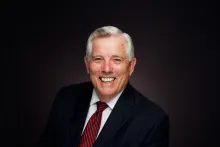
Jerold Aust
Jerold Aust has served in the ministry for 52 years, as a public speaker for 58 years, a published writer for 38 years, and is employed by UCG’s Media and Communications Services. He is a Senior Writer, interviewer, and editor for Beyond Today Magazine and has taught Speech Communication for UCG’s ministerial online program and the Book of Revelation for ABC.
Jerold holds a BA in theology from Ambassador College, Pasadena (1968), an MA in Communication from California State University, Fullerton (1995), a distance-learning Ph.D (2006), and a Famous Writers School diploma in non-fiction writing (1973). Additionally, he studied post-grad communication at University of Southern California (1995), radio, TV, voice-overs, and Public Relations at Fullerton College (1995-1996), and graduate communication at Wichita State University (1978). Jerold has taught communication at the University of South Alabama (7 years) and ABC (17 years). His published works include, Ronald Reagan’s Rhetoric: Metaphor as Persuasion and EZSpeakers: Public Speaking Made Easy in 7 Steps. Jerold's overarching goal is to share with humankind its incredible destiny!

John Ross Schroeder
John died on March 8, 2014, in Oxford, England, four days after suffering cardiac arrest while returning home from a press event in London. John was 77 and still going strong.
Some of John's work for The Good News appeared under his byline, but much didn't. He wrote more than a thousand articles over the years, but also wrote the Questions and Answers section of the magazine, compiled our Letters From Our Readers, and wrote many of the items in the Current Events and Trends section. He also contributed greatly to a number of our study guides and Bible Study Course lessons. His writing has touched the lives of literally millions of people over the years.
John traveled widely over the years as an accredited journalist, especially in Europe. His knowledge of European and Middle East history added a great deal to his articles on history and Bible prophecy.
In his later years he also pastored congregations in Northern Ireland and East Sussex, and that experience added another dimension to his writing. He and his wife Jan were an effective team in our British Isles office near their home.
John was a humble servant who dedicated his life to sharing the gospel—the good news—of Jesus Christ and the Kingdom of God to all the world, and his work was known to readers in nearly every country of the world.


