World News and Trends: U.S. infrastructure vulnerable to cyberattack
The U.S. electrical grid has been penetrated by foreign agents who inserted software that could attack the computer-controlled system, according to national security officials ("Electricity Grid in U.S. Penetrated by Spies," The Wall Street Journal, April 8, 2009).
The U.S. electrical grid has been penetrated by foreign agents who inserted software that could attack the computer-controlled system, according to national security officials ("Electricity Grid in U.S. Penetrated by Spies," The Wall Street Journal, April 8, 2009). While the cyberspies haven't yet damaged the system, they could certainly try to create major electrical disruptions in a war or international crisis.
Troublingly, many of the infiltrations weren't detected by the electrical companies themselves, but by American intelligence services investigating vulnerabilities in the system. They determined that the intrusions originated in Russia, China and other countries and were widespread across all regions of the country. They also discovered that other infrastructure systems such as water and sewage were at risk of attack.
"Over the past several years, we have seen cyberattacks against critical infrastructures abroad, and many of our own infrastructures are as vulnerable as their foreign counterparts," acknowledged Dennis Blair, U.S. Director of National Intelligence. One such attack last year disabled power equipment in several areas outside the United States.
In recent years the U.S. government has allocated $17 billion to protect government networks, and is now considering expanding its efforts by billions more to help protect private computer networks. A military official noted that the Pentagon had spent $100 million in recent months to repair damage from cyberattacks.
The threat to advanced nations is clearly serious. Just imagine the chaos and suffering that would result if electrical and water systems suddenly stopped functioning across large regions or entire nations. Transportation, food, water and heat would cease, and governments would be largely powerless to help. (Source: The Wall Street Journal.)

An Article from:
Good News Magazine: May - June 2009
Course Content
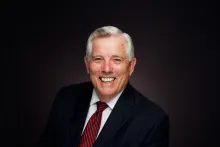
Jerold Aust
Jerold Aust has served in the ministry for 52 years, as a public speaker for 58 years, a published writer for 38 years, and is employed by UCG’s Media and Communications Services. He is a Senior Writer, interviewer, and editor for Beyond Today Magazine and has taught Speech Communication for UCG’s ministerial online program and the Book of Revelation for ABC.
Jerold holds a BA in theology from Ambassador College, Pasadena (1968), an MA in Communication from California State University, Fullerton (1995), a distance-learning Ph.D (2006), and a Famous Writers School diploma in non-fiction writing (1973). Additionally, he studied post-grad communication at University of Southern California (1995), radio, TV, voice-overs, and Public Relations at Fullerton College (1995-1996), and graduate communication at Wichita State University (1978). Jerold has taught communication at the University of South Alabama (7 years) and ABC (17 years). His published works include, Ronald Reagan’s Rhetoric: Metaphor as Persuasion and EZSpeakers: Public Speaking Made Easy in 7 Steps. Jerold's overarching goal is to share with humankind its incredible destiny!

John Ross Schroeder
John died on March 8, 2014, in Oxford, England, four days after suffering cardiac arrest while returning home from a press event in London. John was 77 and still going strong.
Some of John's work for The Good News appeared under his byline, but much didn't. He wrote more than a thousand articles over the years, but also wrote the Questions and Answers section of the magazine, compiled our Letters From Our Readers, and wrote many of the items in the Current Events and Trends section. He also contributed greatly to a number of our study guides and Bible Study Course lessons. His writing has touched the lives of literally millions of people over the years.
John traveled widely over the years as an accredited journalist, especially in Europe. His knowledge of European and Middle East history added a great deal to his articles on history and Bible prophecy.
In his later years he also pastored congregations in Northern Ireland and East Sussex, and that experience added another dimension to his writing. He and his wife Jan were an effective team in our British Isles office near their home.
John was a humble servant who dedicated his life to sharing the gospel—the good news—of Jesus Christ and the Kingdom of God to all the world, and his work was known to readers in nearly every country of the world.

