World News and Trends: European integration presses forward
With apologies to Mark Twain, it seems the rumors of the death of the European Constitution have been greatly exaggerated. The latest approvals of the Lisbon Treaty signal the coming of a United States of Europe.
With apologies to Mark Twain, it seems the rumors of the death of the European Constitution have been greatly exaggerated. The latest approvals of the Lisbon Treaty signal the coming of a United States of Europe.
Those who have followed developments in Europe may remember that European Union leaders not long ago tried to institute, through popular referendums and national parliamentary votes, a constitution that would bind the EU countries into a federal superstate with centralized power. But it failed to garner the needed unanimous approval of these countries, being rejected by French and Dutch voters in 2005.
Many claimed the integration process was thereby permanently halted. But the elitist architects of this process were determined not to let a little thing like the will of the people stand in the way of their grand dream of European political unity. Some even advocated that repeated votes be taken in the obstructing nations until the desired outcome was achieved. And remarkably, this strategy has succeeded.
A few changes were made to the massive document and it was trotted out at the end of 2007 for approval once more—called now simply the Treaty of Lisbon or Reform Treaty to sound less like what it was. Nearly all countries were denied a referendum, their parliaments for the most part rubber stamping the treaty. Only Ireland put it to a public referendum in 2008, and the treaty was rejected. Many assumed this would scuttle the project for good. Not so. In a new referendum in October 2009, the Irish approved the treaty. (According to Daniel Hannan, a Conservative Member of the European Parliament for Southeast England, the EU broke its own rules in funneling money into this referendum.)
The Irish yes vote was followed swiftly by the approval of Poland, which previously had reservations. The only remaining hold-out on the treaty as of the time of this writing is the Czech Republic, though that may have changed by the time you are reading this. (Both houses of the Czech parliament have passed the treaty but it remains to be seen whether President Vaclav Klaus, who has opposed it, will sign on.)
There had been talk among leaders that if Ireland voted no again it might be possible to create a two-tiered EU, wherein a "core Europe" could go ahead with implementation of the treaty. Yet that doesn't appear necessary at the moment. Indeed, were the Czechs to reject the treaty now, it would no doubt be repeatedly pushed on them until they acquiesce.
European political union is surely coming. The Lisbon Treaty calls for a new president of Europe—at first appointed by the member states. Former British Prime Minister Tony Blair has been consistently touted by many for this position, though some would prefer a leader from a eurozone country—that is, one that has adopted the euro as its currency.
In any event, European integration presses inexorably onward. Be assured that it will happen whether the people want it or not—and not just because elitist leaders are intent on ramming it through. Rather, Scripture foretells an end-time revival of the Roman Empire that derives its power from the evil ruler of this world (Daniel 2 and 7; Revelation 13 and 17; compare 12:9; 13:2). Keep watching events in Europe. The world is in for big changes. (Sources: Agence France-Presse, Telegraph.co.uk, The Brussels Journal, EUobserver.com.)

An Article from:
Good News Magazine: November - December 2009
Course Content
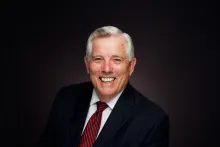
Jerold Aust
Jerold Aust has served in the ministry for 52 years, as a public speaker for 58 years, a published writer for 38 years, and is employed by UCG’s Media and Communications Services. He is a Senior Writer, interviewer, and editor for Beyond Today Magazine and has taught Speech Communication for UCG’s ministerial online program and the Book of Revelation for ABC.
Jerold holds a BA in theology from Ambassador College, Pasadena (1968), an MA in Communication from California State University, Fullerton (1995), a distance-learning Ph.D (2006), and a Famous Writers School diploma in non-fiction writing (1973). Additionally, he studied post-grad communication at University of Southern California (1995), radio, TV, voice-overs, and Public Relations at Fullerton College (1995-1996), and graduate communication at Wichita State University (1978). Jerold has taught communication at the University of South Alabama (7 years) and ABC (17 years). His published works include, Ronald Reagan’s Rhetoric: Metaphor as Persuasion and EZSpeakers: Public Speaking Made Easy in 7 Steps. Jerold's overarching goal is to share with humankind its incredible destiny!

John Ross Schroeder
John died on March 8, 2014, in Oxford, England, four days after suffering cardiac arrest while returning home from a press event in London. John was 77 and still going strong.
Some of John's work for The Good News appeared under his byline, but much didn't. He wrote more than a thousand articles over the years, but also wrote the Questions and Answers section of the magazine, compiled our Letters From Our Readers, and wrote many of the items in the Current Events and Trends section. He also contributed greatly to a number of our study guides and Bible Study Course lessons. His writing has touched the lives of literally millions of people over the years.
John traveled widely over the years as an accredited journalist, especially in Europe. His knowledge of European and Middle East history added a great deal to his articles on history and Bible prophecy.
In his later years he also pastored congregations in Northern Ireland and East Sussex, and that experience added another dimension to his writing. He and his wife Jan were an effective team in our British Isles office near their home.
John was a humble servant who dedicated his life to sharing the gospel—the good news—of Jesus Christ and the Kingdom of God to all the world, and his work was known to readers in nearly every country of the world.

