Current Events & Trends: Scottish vote highlights UK divisions
On Sept. 18, 2014, Scotland's voters decided to remain a part of the United Kingdom—at least for now. It was a long and emotional campaign. Deep divisions between Scotland and England were exposed. The union remains, but it has taken a beating.
Westminster made major concessions to persuade voters. Delivering on those promises will further alter the relationship between the two countries. "There will always be an England," the old saying goes, but its standing in the world continues to decline. The debate surrounding this vote is a symptom of the decline of the English-speaking nations—the most successful confederation of peoples in the history of mankind.
In the end the likely deciding issue was economics. Too much money already flows north to subsidize education, research and industry. Scotland's economic future was more important in this case than history, tradition and culture.
The lesson for England? Break down the elitism that forms barriers with others. Treat those with common ancestry and language as equals. There is nothing to lose by taking this kind of approach.
Writing in The American Interest on Sept. 12, Walter Russell Mead said: "The British political establishment has been tried and found wanting in this referendum; unfortunately it is not alone. The leaders of the European Union have conspicuously and repeatedly failed to master the vital and urgent issues that confront them.
"The euro has ruined and embittered a third of the European Union; populist movements of protest and resistance are bringing fascism back from the grave in more than one country. Outside, the enemies of every European ideal are gathering strength; inside, voters across Europe increasingly find the post-War social-democratic order bland, remote, and overbearing" ("A Royal Mess").
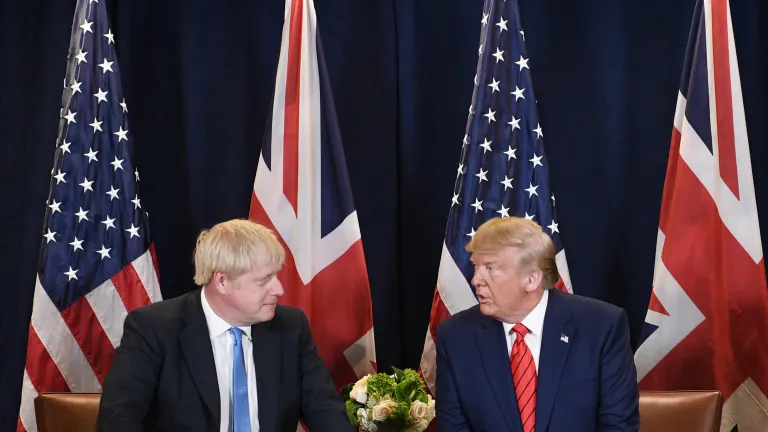
Europe and America continue to grapple with a destabilizing mixture of events. As the current leadership of America and the United Kingdom struggles to effectively defend and explain their importance to the modern world, Bible prophecy reveals that another power will arise on the world scene to ensure order—at what will ultimately prove to be a devastating cost. (Source: The American Interest.)

An Article from:
Good News Magazine: November - December 2014
Course Content

Rudolph Rangel III
Rudy Rangel attends the Cincinnati East, Ohio congregation along with his wife Judy and two children.

Darris McNeely
Darris McNeely is a retired elder in the United Church of God. He and his wife, Debbie, have served in the ministry for more than 53 years. They have two sons, who are both married, and four grandchildren. Darris continues teaching at Ambassador Bible Center and is a member of the Council of Elders. Darris and Debbie continue to travel and keep up with the many friends and relationships around the world.

Peter Eddington
Peter has retired as Operation Manager of Media and Communications Services.
He studied production engineering at the Swinburne Institute of Technology in Melbourne, Australia, and is a journeyman machinist. He moved to the United States to attend Ambassador College in 1980. He graduated from the Pasadena campus in 1983 with a Bachelor of Arts degree and married his college sweetheart, Terri. Peter was ordained an elder in 1992. He served as assistant pastor in the Los Angeles and San Luis Obispo, California, congregations from 1995 through 1998 and the Cincinnati, Ohio, congregations from 2010 through 2011.