Current Events & Trends: Turkish-Kurdish tensions reach boiling point

In an already unstable region, a divided Turkey opens the door for insurgents like ISIS to take further root.
After initially remaining uninvolved in the West’s struggle to contain Islamic State militants in the Middle East, Turkey recently announced that it would be supporting U.S. and NATO airstrikes against ISIS targets in Syria and Iraq. What initially came as welcome news, however, was soured by the reality that Turkish forces seemed more interested in engaging Kurdish targets than ISIS militants. The Kurds, for the record, have to this point been one of the West’s strongest regional allies in containing and combatting ISIS.
Turks and Kurds have a long and violent history with one another, but the most recent flare-up has the potential for far-reaching and long-lasting consequences for the nation of Turkey. Germany’s Der Spiegel magazine reports on the increased violence in Turkey’s troubled and divided eastern region:
“The killing continues, especially in Cizre and in other places in the overwhelmingly Kurdish inhabited southeast. And it won’t allow itself to be stopped again so quickly. Several municipalities have broken away from Turkey and declared autonomy. There, young Kurds with Kalashnikovs, Molotov cocktails and stones are calling the shots. Trenches and barricades made of rocks, rubble and car tires are meant to prevent the advances of security forces that are no longer simply responding with tear gas, but also with live ammunition and snipers” (Hasnain Kazim, “‘We Want a Massacre’: Turkish-Kurdish Tensions Escalate as Election Looms,” Sept. 17, 2015).
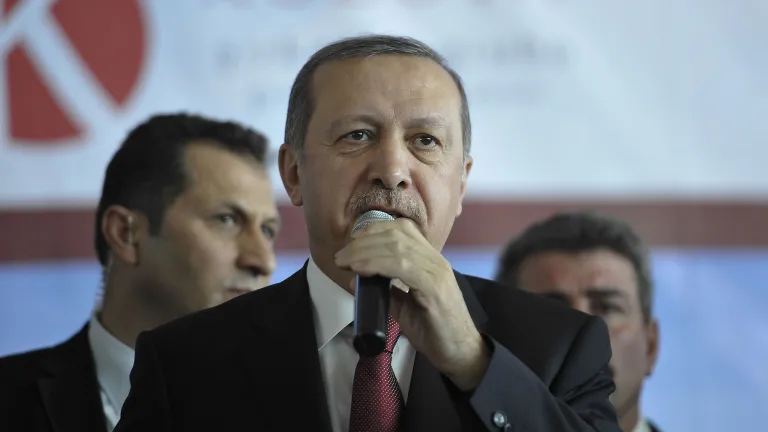
Many in the country, especially Kurds, are placing blame for the violent eruption on Turkish President Recep Erdogan: “Critics argue that Erdogan . . . consciously pushed the country into chaos in order to portray himself as a strong leader. He is risking a civil war, they claim, in order to win the Nov. 1 elections” (ibid.).
Whether or not Erdogan or other leaders are engineering a civil war in the country, the human toll has been and will continue to be large with intense violence. In an already unstable region, a weaker or divided Turkey opens the door for insurgents like ISIS to take further root. Jesus urged His disciples to watch events in and around Jerusalem—the area of the Middle East—in anticipation of His coming (Matthew 24-25). We should do likewise. (Source: Der Spiegel.)

An Article from:
Good News Magazine: November - December 2015
Course Content

Rudolph Rangel III
Rudy Rangel attends the Cincinnati East, Ohio congregation along with his wife Judy and two children.

Darris McNeely
Darris McNeely is a retired elder in the United Church of God. He and his wife, Debbie, have served in the ministry for more than 53 years. They have two sons, who are both married, and four grandchildren. Darris continues teaching at Ambassador Bible Center and is a member of the Council of Elders. Darris and Debbie continue to travel and keep up with the many friends and relationships around the world.