Current Events & Trends: Revisiting the Arab Spring
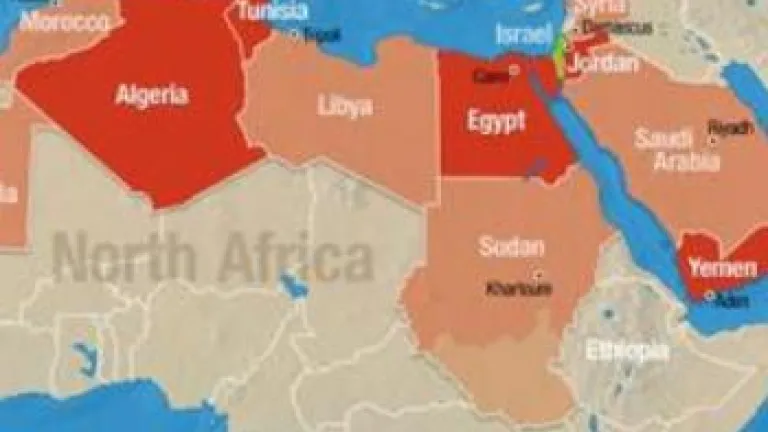
Several months ago historian and political commentator Walter Laqueur voiced his concerns in World Affairs about the unexpected end results of the much-heralded Arab Spring. He pointed out:
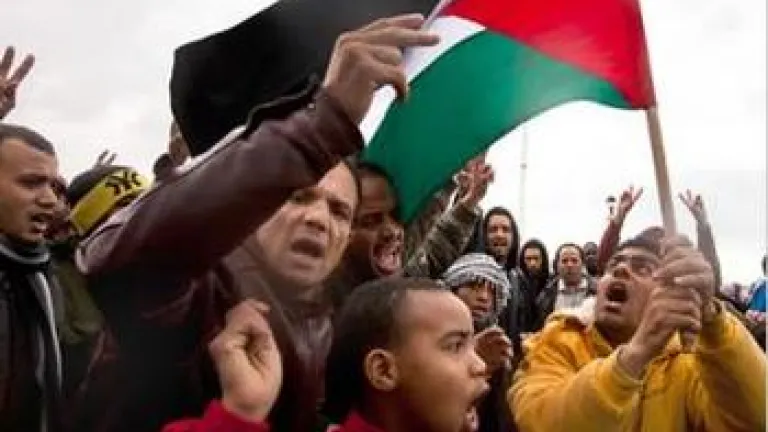
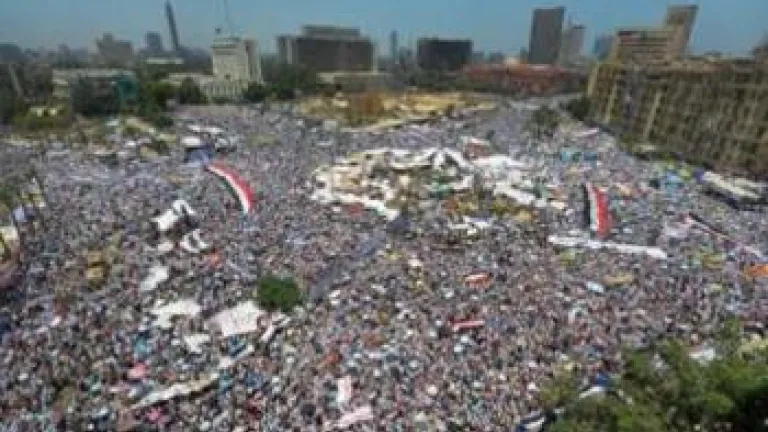
"Demonstrations in Tunisia and then in Egypt's Tahrir Square in late January 2011 brought a large influx of correspondents from the US and Europe. The tone of their coverage generally reflected [the British poet] Wordsworth's famous naive euphoria at the advent of the French Revolution [in 1789]: ‘Bliss was it in that dawn to be alive / But to be young was very heaven'" ("The Perils of Wishful Thinking: On Europe and the Middle East," March/April 2012). That revolution devolved into violence, chaos and terror.
Fast forward to century 21: "At long last, the hated [Arab] dictatorships had been overthrown and the road was open to freedom and democracy" (ibid.).
Responding, Laqueur went on to say: "Summer came and then autumn, the Arab Spring turned into an Islamist winter, and the reports and comments [of correspondents] became more muted . . . The partisans of Arab Spring failed to consider that under Mubarak [in Egypt] the position of women and minorities had been better than under the new regime that would probably succeed him." Egypt now has an Islamist president.
Laqueur continued, "Women and minorities [such as persecuted Christian groups, e.g., the Egyptian Copts] have been the main losers in recent events—not only in Egypt but in other Middle Eastern countries, even those with fairly strong secular traditions, such as Tunisia and Morocco."
Articles in the left-of-center New Statesman as well as the more conservative Sunday Times of London warned that Islamic influences had endangered the prospect of democracy taking hold in the Middle East.
Earlier, author John Bradley spoke of zealots "who wish to create Islamic states and impose Islamic law [sharia]" (After the Arab Spring: How Islamists Hijacked the Middle East Revolts, 2012, p. 1).
But why should we even be concerned about these regional events? As we noted in the March/April 2011 edition of this magazine: "The writers of The Good News have long urged our readers to closely watch events in the Middle East. And with good reason, for the Middle East will be at the center of events that in the near future will lead to the end of this age of human misrule and the establishment of the soon-coming reign of Jesus Christ. But it will not be pretty! From the Middle East will flow events that will create chaos and turmoil on a scale unparalleled in human history" ("What's Behind the Turmoil in Egypt?" p. 20).
To know more about this region's ancient antagonisms and where current events there will eventually lead, read the Bible study aid booklet The Middle East in Bible Prophecy. (Sources: John Bradley, The Good News, World Affairs.)

An Article from:
Good News Magazine: September - October 2012
Course Content
Jerold Aust
Jerold Aust has served in the ministry for 52 years, as a public speaker for 58 years, a published writer for 38 years, and is employed by UCG’s Media and Communications Services. He is a Senior Writer, interviewer, and editor for Beyond Today Magazine and has taught Speech Communication for UCG’s ministerial online program and the Book of Revelation for ABC.
Jerold holds a BA in theology from Ambassador College, Pasadena (1968), an MA in Communication from California State University, Fullerton (1995), a distance-learning Ph.D (2006), and a Famous Writers School diploma in non-fiction writing (1973). Additionally, he studied post-grad communication at University of Southern California (1995), radio, TV, voice-overs, and Public Relations at Fullerton College (1995-1996), and graduate communication at Wichita State University (1978). Jerold has taught communication at the University of South Alabama (7 years) and ABC (17 years). His published works include, Ronald Reagan’s Rhetoric: Metaphor as Persuasion and EZSpeakers: Public Speaking Made Easy in 7 Steps. Jerold's overarching goal is to share with humankind its incredible destiny!

John Ross Schroeder
John died on March 8, 2014, in Oxford, England, four days after suffering cardiac arrest while returning home from a press event in London. John was 77 and still going strong.
Some of John's work for The Good News appeared under his byline, but much didn't. He wrote more than a thousand articles over the years, but also wrote the Questions and Answers section of the magazine, compiled our Letters From Our Readers, and wrote many of the items in the Current Events and Trends section. He also contributed greatly to a number of our study guides and Bible Study Course lessons. His writing has touched the lives of literally millions of people over the years.
John traveled widely over the years as an accredited journalist, especially in Europe. His knowledge of European and Middle East history added a great deal to his articles on history and Bible prophecy.
In his later years he also pastored congregations in Northern Ireland and East Sussex, and that experience added another dimension to his writing. He and his wife Jan were an effective team in our British Isles office near their home.
John was a humble servant who dedicated his life to sharing the gospel—the good news—of Jesus Christ and the Kingdom of God to all the world, and his work was known to readers in nearly every country of the world.