Unknown God
Study the history of any human society down through the ages and you will find some kind of belief in a supernatural god or a multitude of gods intertwined into the culture.
Most people have a belief in a supreme being and have practices and traditions in an attempt to connect to the spirit world.
Paul was appalled at the extent of the idolatry he witnessed in Athens (Acts 17:16). When the local philosophers and religious leaders demanded that he explain his teachings, Paul took the opportunity to introduce them to the reality of the One whom they, in their ignorance, referred to as “the unknown God” (verses 22-23). He introduced God, the true God, as sovereign creator, with a great plan and purpose of salvation for all of mankind. Elsewhere in Scripture, Paul and other inspired writers give us a clearer picture of this “unknown God.”
Paul was appalled at the extent of the idolatry he witnessed in Athens.
In 1 Timothy 1:17, Paul explained that God is eternal, immortal and invisible. In Psalm 147:4-7 we see His greatness, power and infinite wisdom and understanding. He can do all things and nothing can be withheld from Him (Job 42:2). He knows our very thoughts (Psalm 94:11; 1 Corinthians 3:20).
God dwells in splendor, light and glory, surrounded by a multitude of angelic beings and heavenly host. He is high and glorified and inhabits eternity (Isaiah 57:15). He is the God of love and has demonstrated that love in offering His Son Jesus Christ to make possible the reconciliation of sinful mankind to Himself (John 3:16). He is the God of justice, mercy and forgiveness (Psalm 107:8; 119:89-90). Isaiah 46:9-11 says God is very much involved in His creation and knows the future in advance.
God has also revealed Himself in human flesh through Jesus who is the express image and exact representation of His nature (Hebrews 1:3).
God’s nature is further manifested towards us through the power of His Holy Spirit (which is the essence of God’s own nature and attributes). It is through the power of His Spirit that Jesus and the Father dwell in believers (John 14:20) and impart both understanding and strength. The Holy Spirit is God’s outflowing power that gives us strength to overcome sin (Luke 1:35). It imparts God’s love as it is “poured out” in the hearts of believers (Romans 5:5).
It is the means by which He created and brought into existence the very universe (Psalm 104:30). The Holy Spirit is the power by which He works in the minds of human beings made in His image (Genesis 6:3). It is also the power by which the lame walk, the blind see and the deaf hear. Moreover, that same Holy Spirit will one day quicken our mortal bodies and change them to be like Christ’s glorious body forever and we will “be filled with all the fullness of God” (Ephesians 3:19).
The complete truth of who and what God is goes far beyond anything that can be described in this brief article. The Bible itself gives us the master key to knowing God: Scriptures speak of things beyond our hearing, things beyond our imagining, all prepared by God for those who love him. These are what God has revealed to us through His Spirit, for the Spirit explores everything, even the depths of God’s own nature (1 Corinthians 2: 9-10).
The Holy Spirit is the power by which He works in the minds of human beings made in His image.
Never has mankind so desperately needed the true knowledge about God. It seems that we are living in a world clouded with confusion and bewilderment about who and what God really is. God wants us to know and understand Him better than the vague notions the world has of Him today. He challenges us to get to know Him by seeking Him with all our hearts—for if we do so, we will surely find Him (Jeremiah 29:13).
An Article from:
Virtual Christian Magazine: April - May 2008
Course Content
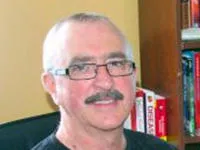
Hector Earle
Hector M. Earle was born in Roddickton, Newfoundland/Labrador and completed his secondary education at AC Palmer Collegiate. In 1986, he completed a BA(Ed) degree from Memorial University at St. John's, NL in upper elementary education. In 1976, he was a teacher/principal at Ridgewood Academy at Stoneville, NL for 24 years. In 1991, he received a Graduate Diploma in Educational Administration from Memorial and a subsequent Master of Education Degree in Educational Leadership in 1997. His thesis, School Based Decision Making, is in the education archived section of the research department at Memorial University Queen Elizabeth Library, in St. John’s, NL. Hector is a Justice of the Peace/Notary Public for the province of Newfoundland, Department of Justice and he is currently with the Northland School Division as a Special Education Coordinator in Janvier, Alberta.
Writing has been a part of Hector Earle’s life over the years and he has written numerous articles in many educational journals and Christian magazines across Canada and the United States. His educational articles have been reprinted in Educational Journals in British Columbia and Manitoba. He has been published in such magazines as The Good Tidings Magazine, The NLTA Bulletin, The Canadian Teacher Magazine and numerous articles for Virtual Christian Magazine. He enjoys sharing his Christian faith with United Church of God readers. He was converted in September 1975 after reading an issue of The Plain Truth magazine and subsequent literature in the mail from the former World Wide Church of God.
He has just recently written a book entitled Death of a Race, a historical fiction novel about the demise of the Beothuck First Nations of Newfoundland and Labrador. His work is intended to be a novel for Junior High Social Studies in the Schools in Canadian schools. The manuscript is currently being published by DRC publishing in St. John’s, Newfoundland. Hector is happily married to his lovely wife, Marilyn and currently resides in Chard, Alberta. They have three beautiful daughters: Elaine, living in Calgary, Alberta; Rhonda, a RCMP officer in Bay Roberts, NL; and Wendy, a grade 12 graduate, currently working in Fort McMurray, Alberta.
Stay up to date
Get new articles every week in your inbox and quarterly print issues in the mail.
Subscribe for freeor log in