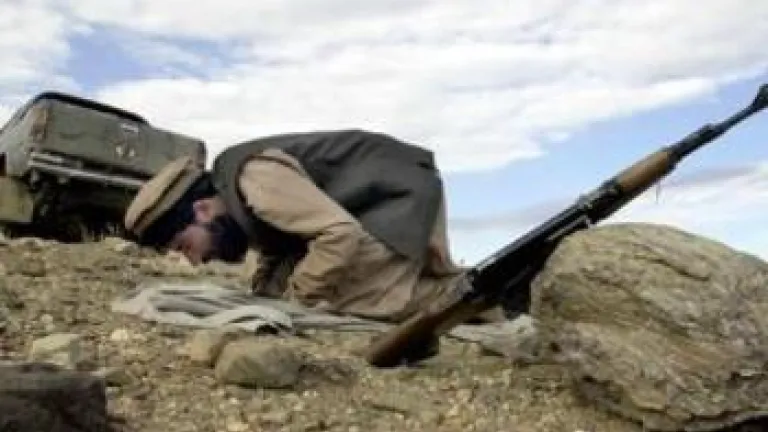
The Ongoing Clash Between Two Civilizations
The newspaper headlines about Nigeria were horrendous over the recent holiday period:
"39 die as Islamist bombers target churches" (Daily Mail, Dec. 26, 2011)
"Deadly wave of sectarian bombings hit Nigeria" (International Herald Tribune, Dec. 26, 2011)
"Four die in latest Nigeria bomb attack" (The Daily Telegraph, Dec. 31, 2011)
A religious revival in the Islamic world remains very much on the rise. Egypt is a case in point, where developments after the overthrow of Hosni Mubarak a year ago have produced a strong and growing Islamic influence, including the Muslim Brotherhood's Freedom and Justice Party gaining a dominant role in government. At the same time, Egyptian Coptic Christians have suffered enormous persecution, including murder and burning of their churches in some areas.
In other parts of the Islamic world, churches have been hit by fire bombings and other forms of attacks and threats in Ethiopia, Indonesia, Iran and Turkey.
History shows that this ongoing clash between these two powerful, largely religiously based civilizations has been happening for hundreds of years. Throughout the centuries, almost since the founding of Islam by Muhammad (A.D. 570-632), periods of relative peace have often been punctuated with sharp increases in levels of religious persecution and warfare.
Authors Peter Riddell and Peter Cotterell, both associated with London Bible College, wrote in the introduction to their book Islam in Conflict: "Islam, throughout its history, contained within itself a channel of violence, legitimized by certain pages of the Qur'an [the Koran], though put in question by other passages" (2003, p. 7). They point out that tensions have always existed between the radically violent stream of Islam and those Islamists with a much more moderate approach to disagreements with the West.
The lead article in the January-February issue of The Good News ("Islam vs. the West: Why the Clash of Civilizations?") analyzes why Islam has remained in basic conflict with the non-Muslim world. Several articles in this issue address and explore the fundamental differences between Christianity and Islam along with the Bible and the Koran.
In addition, you can request our informative free booklet The Middle East in Bible Prophecy for valuable information on this subject. You can either download it online or request your own printed copy.
Course Content

John Ross Schroeder
John died on March 8, 2014, in Oxford, England, four days after suffering cardiac arrest while returning home from a press event in London. John was 77 and still going strong.
Some of John's work for The Good News appeared under his byline, but much didn't. He wrote more than a thousand articles over the years, but also wrote the Questions and Answers section of the magazine, compiled our Letters From Our Readers, and wrote many of the items in the Current Events and Trends section. He also contributed greatly to a number of our study guides and Bible Study Course lessons. His writing has touched the lives of literally millions of people over the years.
John traveled widely over the years as an accredited journalist, especially in Europe. His knowledge of European and Middle East history added a great deal to his articles on history and Bible prophecy.
In his later years he also pastored congregations in Northern Ireland and East Sussex, and that experience added another dimension to his writing. He and his wife Jan were an effective team in our British Isles office near their home.
John was a humble servant who dedicated his life to sharing the gospel—the good news—of Jesus Christ and the Kingdom of God to all the world, and his work was known to readers in nearly every country of the world.