Understanding Our Rapidly Changing World Scene
The Good News editorial staff obviously plays no role in determining the foreign policy of the world's nations. We have no crystal ball to foresee day-to-day or month-to-month occurrences. What we do bring to our readers is basic prophetic insight, based on the Bible, making the analysis of significant global events much easier. After all, Jesus Christ did tell us to be acutely alert to what is happening in the world (see Mark 13:33-37; Luke 21:34-36).
World conditions worsen almost daily even while most sleep on, blissfully unaware of the tragic direction of major global trends. Take a brief but sweeping look at most newsstands. Today celebrity magazines almost totally dominate—filled with "tittle-tattle" about movie and TV personalities, famous sports stars and the like.
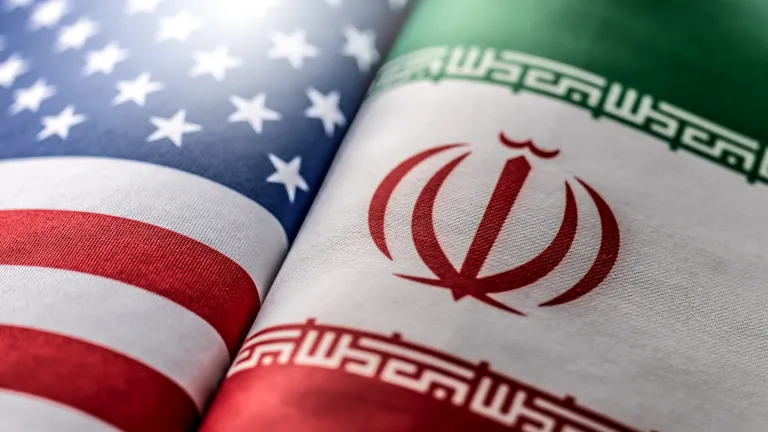
Instead much of our attention should be focused on events now occurring in the Middle East and Europe. For instance, will Iran be allowed to build the bomb or will she be forced by the West to abandon her nuclear ambitions? Observers read the signs very differently.
Take Associate Professor of International Relations at USC, Jacques C. Hymans, writing in the current issue of Foreign Affairs, for example. His article is aptly summarized in the table of contents: "Nuclear weapons are hard to build for managerial reasons, not technical ones. This is why so few authoritarian regimes have succeeded. They don't have the right culture or institutions. When it comes to Iran's programs, the United States and allies should get out of the way and let Iran's worst enemies gum up the process on their own" (May-June 2012).
But can vulnerable Israel, the United States and the West really afford to indulge in such a potentially lethal gamble? Elliott Abrams, writing in World Affairs (May-June 2012), is at the other end of the spectrum of opinion. "The dangers it [Israel] faces from an Iranian nuclear weapon are unique and, I will argue, are dangers no nation should be asked to accept . . . Official Iranian comments about Israel are continually genocidal in nature."
Make no mistake about it. This is not just rhetoric. Specific plans are already in place. One of Iran's chief military strategists, Alireza Forghani, foresees possible nuclear strikes on three Israeli cities. Elliot Abrams describes the overall strategy: "Tel Aviv, Jerusalem and Haifa contain over 60 percent of the Jewish population that Iran could target with its Shabab3 ballistic missiles, killing all of their inhabitants."
This is acceptable discourse at Iran's highest levels of government. Earlier this year, Ayatollah Khamenei, Iran's supreme leader, referred to Israel as a "cancerous tumor that should be cut and will be cut."
The lead article in the May-June issue of The Good News, "What Would a Nuclear Iran Mean for the World?," discusses these crucial issues in detail. Several related articles follow. Seriously keeping up with current affairs remains an integral part of wisely watching current events and trends. Download or request your free copy in print along with the supporting booklet The Middle East in Bible Prophecy.
Course Content

John Ross Schroeder
John died on March 8, 2014, in Oxford, England, four days after suffering cardiac arrest while returning home from a press event in London. John was 77 and still going strong.
Some of John's work for The Good News appeared under his byline, but much didn't. He wrote more than a thousand articles over the years, but also wrote the Questions and Answers section of the magazine, compiled our Letters From Our Readers, and wrote many of the items in the Current Events and Trends section. He also contributed greatly to a number of our study guides and Bible Study Course lessons. His writing has touched the lives of literally millions of people over the years.
John traveled widely over the years as an accredited journalist, especially in Europe. His knowledge of European and Middle East history added a great deal to his articles on history and Bible prophecy.
In his later years he also pastored congregations in Northern Ireland and East Sussex, and that experience added another dimension to his writing. He and his wife Jan were an effective team in our British Isles office near their home.
John was a humble servant who dedicated his life to sharing the gospel—the good news—of Jesus Christ and the Kingdom of God to all the world, and his work was known to readers in nearly every country of the world.