What’s Beyond America’s Historic Election

How can we understand God's role in the affairs of the United States in the aftermath of the election of Donald Trump?
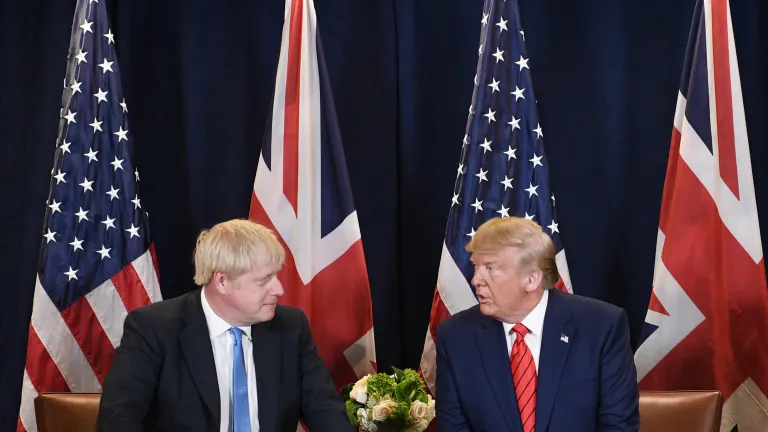
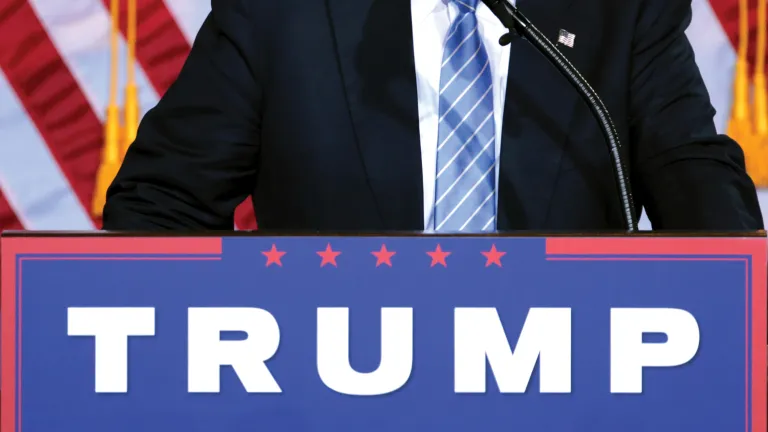
The come-from-behind, surprise upset victory of now-President-elect Donald Trump shocked billions of people. He won the electoral yet closely lost the popular vote. Embarrassed pollsters, some who derided the President-elect completely, failed to gauge the level of discontent apparent in the American electorate.
Following the unexpected victory, a heady mix of shocked reaction and defiant jubilation engulfed much of America and the world, with many expressing deep concern about potential instability and upheaval.
God has a purpose for humanity, a purpose for current events, and He will accomplish that purpose through the leadership that He allows.
In the early morning hours following Trump’s victory speech, violence broke out in California and elsewhere on the West Coast as protestors decried the results. Prior to the election, several commentators warned of divisiveness in the election’s aftermath. The Economist magazine warned in October that Hillary Clinton was “deeply reviled” by many potential voters. Other research showed that neither major candidate was preferred and many thought that voting for one or the other was more a matter of selecting the lesser of two evils. Trump himself was openly regarded by many in the media as boorish and unfit to be the U.S. President.
But was this election outcome the result of “the will of the people?”
Whether people want to acknowledge it or not, there is an unseen Hand guiding human civilization. As Wall Street Journal columnist Peggy Noonan rightly pointed out before the election: “God is in charge of history. He asks us to work, to try, to pour ourselves out to make things better. But he is an actor in history also. He chastises and rescues, he intervenes in ways seen and unseen. Or chooses not to. Twenty sixteen looks to me like a chastisement. He’s trying to get our attention. We have candidates we can’t be proud of. We must choose among the embarrassments. What might we be doing as a nation and a people that would have earned this moment?”
At the end of His ministry, Jesus Christ was on trial for His life. He stood before the senior Roman government representative who reprimanded Jesus and warned that he had the power to put Him to death. Jesus' extraordinary reply? “You would have no power over me at all unless it was given to you from above” (John 19:11, New Living Translation, emphasis added throughout).
The Bible records a detailed interaction between God and human governments. As a young man taken captive, the prophet Daniel was called in to advise the top ruler of the day, the man who had overseen the devastating conquest of his nation, Judah. What did he tell this powerful ruler? “Praise the name of God forever and ever . . . He controls the course of world events; he removes kings and sets up other kings” (Daniel 2:20-21, NLT). The apostle Paul, writing to Christians living in the capital city of the Roman Empire, summed it up: “All authority comes from God, and those in positions of authority have been placed there by God” (Romans 13:1).
Does that mean that God somehow “endorses” our new President-elect or any other leader with all of his or her flaws and foibles? No. What it does mean is that God has a purpose for humanity, a purpose for current events, and He will accomplish that purpose through the leadership that He allows.
That purpose dramatically includes the biblically certain proposition that God will ultimately replace all human governments with His own. The Bible records that God gave humans free will and the capacity to make choices. God also went to great lengths to record story after story of what happens when humans deliberately make wrong choices ensuing in pain and suffering.
So what’s our role today? First, to be honest, we have to rid ourselves of any pseudo-intellectual conceit that God is somehow not involved in world events. God invites us to prove Him (Malachi 3:10). Second, we are to show proper respect for those in charge (1 Peter 2:13). Third, we are to get on our knees and ask God to direct the affairs of our human leaders (Jeremiah 29:7).
Why are we to do this? We in the United Church of God are privileged to be a part of a millennia-long effort to proclaim the gospel of the Kingdom of God to this world. As the Bible proclaims, this gospel is humanity’s only hope. To this end, Paul encouraged first century Christians to “pray that the Lord’s message will spread rapidly and be honored wherever it goes,” and that those who deliver it would be protected (1 Thessalonians 3:1-2, NLT).
Much will happen in the days ahead, and I personally encourage you to keep reading and studying your Bible to see for yourself what will come to pass. To get things started, I strongly recommend and invite you to read one of our most popular Bible study guides: The Gospel of the Kingdom, which you can also read online.
Great things are in store for you. The time is now to find out what they are.
Course Content

Victor Kubik
Active in the ministry of Jesus Christ for more than five decades, Victor Kubik is a long-time pastor and Christian writer. Together with his wife, Beverly, he has served in pastoral and administrative roles in churches and regions in the United States, Europe, Asia and Africa. He regularly contributes to Church publications and does a weekly podcast. He and his wife have also run a philanthropic mission since 1999.
He was named president of the United Church of God in May 2013 by the Church’s 12-man Council of Elders, and served in that role for nine years.