General Conference of Elders Holds Annual Meeting

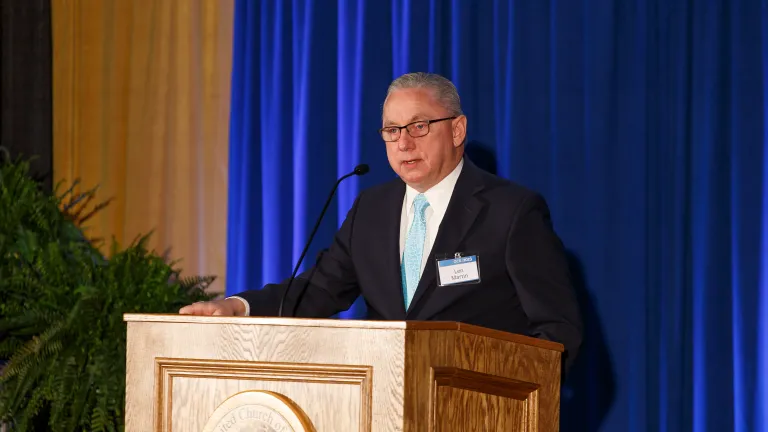
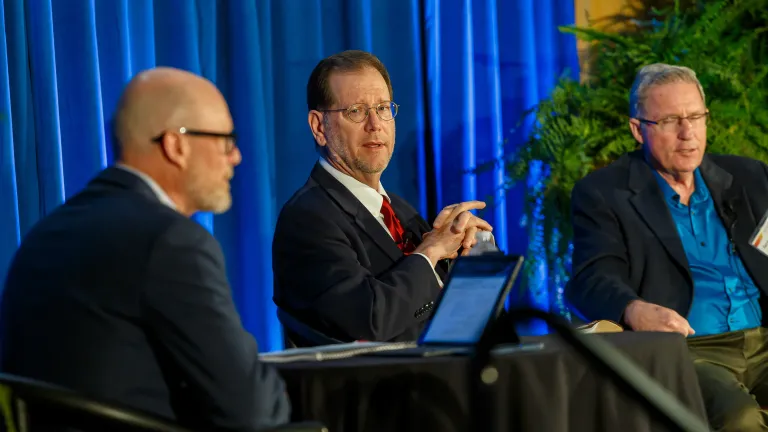
The United Church of God held its annual meeting of the General Conference of Elders (GCE) on May 2–4, 2026. The theme this year was “Enhancing Ministerial Skills,” and attendance reached over 330 elders and wives.
Prior to the meeting, on Friday May 1, an international summit was held to share updates from the international areas and discuss ways to enhance the work in those areas. Elders and their wives enjoyed a welcome reception that evening as they entered into the Sabbath.
Sabbath morning began with a group breakfast, followed by group fellowship opportunities. Each elder and wife was assigned to a discussion group for an opportunity to get to know one another better. Sabbath services were held in the afternoon and included a performance from the Ambassador Bible College chorale and sermons by Gabriel Garcia and John Elliott.
That evening, members of the GCE and home office support staff enjoyed further fellowship over dinner. A ministerial and employee recognition ceremony included introductions for 22 new elders and their wives and featured ministerial recognitions for up to 50 and 60 years of service. Recent retirees were also honored in this special event.
Introduction and Balloting
Following Sunday morning breakfast, a workshop for the ministerial wives began the day’s events. The official GCE sessions commenced with the approval of last year’s minutes and some opening comments from the chairman Tim Pebworth. In his explanation of the theme, Tim Pebworth shared how someone had once told him, “you cannot give your best sermon every week.” However, he presented the view that ministers could take this as a personal challenge to make their best effort every week. The goal of the theme, “Enhancing Ministerial Skills” was that each elder and wife would be able to take home something they didn’t have when they came. Following these remarks, secretary Frank Dunkle led the balloting process.
Financial Report
Treasurer Ted Budge opened the financial report with appreciation for the service of the ministry. Unpaid elders save the Church 2.4 million dollars through their volunteer service, while the paid ministry have also sacrificed well-paying careers to serve the brethren. Ted Budge explained that money is a tool. It’s not something to be afraid of, but rather, an object to help us serve.
After sharing some updates about financial policies and the five-year plan currently under development, Ted Budge took some time to explain the new roles in the finance area. Treasurer and operation manager of financial services are two separate roles now. The treasurer reports to the Council, while the operation manager reports to the president.
Linda Api, operation manager of financial services, presented the next part of this presentation. She explained the responsibilities which are part of her role, including managing the audit, and developing a better expense reporting system.
To conclude this presentation, Ted Budge presented the updated salary ranges for those employed by the Church.
Address from Ministerial and Member Services
Steve Myers opened his presentation with some statistics bout the ministry. We have a higher number of elders than ever—405 total. Of these, 111 are international and 294 are in the United States. Yet, despite this increase, our manpower challenge remains significant.
The challenges that we face with pastoral coverage are more significant in our international congregations. We have 256 international congregations, which is 58 percent of our congregations. Yet, they are served by only 27 percent of our elders.
Our response has to be strengthening and building healthier congregations. We plan to fuel improvements in message quality and develop future leaders. The strategic plan will give us direction on how to build the kind of congregations that will fill these needs.
Steve Myers opened some discussion questions on the Menti app, asking elders and wives to rank the effectiveness of different fellowship strategies and the importance of various tools in leadership development. To help address some of the needs of our congregations, the Council approved two new MMS roles. Ben Light will serve as senior manager for international services. He will be providing focused support for international pastors, national councils, training, translation, budgeting, Feast coordination and global planning. Steven Britt will serve as senior manager of member services. He will provide leadership for initiatives including youth, young adults, camps, festivals, education resources, accessibility services and member engagement.
After discussing some potential barriers that the ministry face in helping fellowship and leadership strategies succeed, Steve Myers opened up the Q&A session. Questions included discussion on the type of training that will be used to help improve messages in our congregations and inquiries on how congregations might better retain and engage ABC students after graduation.
Address from Media and Communications Services
With a reminder of the great commission (Mark 16:15), Scott Delamater presented next, giving some updates from media and communication services. It’s been a transitional year with the retirement of Peter Eddington and the recent promotion of several leaders in this department to help serve the growing media efforts. Most recently, we have formalized a structure that has been emerging over the decades. Scott Delamater provided an overview of each department within media.
The marketing department is led by senior manager, Kourtney Kovanis. As a Church, we have been reluctant to use the term “marketing” because we’re not selling products. However, the skills needed to reach people are found in the area of marketing, which is why this is such a crucial part of preaching the gospel. Kourtney Kovanis has been helping us streamline our efforts. For example, Magnified views went up when we re-tooled some of our ads. Over a 90-day period, we increased our views tremendously without significantly more cost. The team is also working to improve our user journey, mapping out how people engage with our content.
The editorial department is led by senior manager, Clint Porter. This department functions to produce Church publications, such as Beyond Today and United News. New this year is the creation of two new roles, staff writer (Emma Cortelyou) and senior editor of instructional media (Tom Robinson). Dan Preston serves as senior editor of proclamation media (Beyond Today magazine) while Heidi Braun continues to serve as managing editor for United News, adding United News Weekly this year as a digital addition to the print publication.
The publishing department, led by senior manager, Mitch Moss, is working to improve our publication processes. One of the current projects in motion is that of finding more effective ways to handle new subscriptions. Additionally, Beyond Today is moving to a quarterly cadence. This is part of our effort to engage digitally while making our print products more timeless, increasing quality and durability.
The video production department is led by senior manager, Jaime Schreiber. Already, this team has faced and adjusted to challenges well, as the world conditions leading to the cancellation of an Israel filming project have pushed the team to find creative alternatives. This department has reinvested their time into accelerating the Beyond Today screen test process. Finding Beyond Today presenters can be challenging, as several parameters must be met: they must be ordained, available and not too close to retirement. Besides production of Beyond Today, this team is involved in a wide variety of projects, including Jelly videos and Magnified.
For decades, we have had a mail processing department. However, in recent years, the work has become increasingly digital, moving into data analysis rather than handling the previous volume of physical mail. For this reason, the department has been renamed Donations and Development Services. Sarah Howard leads this department, who now focus largely on understanding the data we receive and how we can work with our marketing team to become more effective in our outreach.
The customer service department is led by Terri Eddington. Terri receives questions at info@ucg.org, and then works to forward those questions to the people who need to answer them. She is able to see the direct impact God’s Church is having on people, whether that is through biblical, counseling or another type of question. We receive over 6,000 messages every year!
Scott Delamater concluded this presentation with a Q&A session about media topics, moderated from Menti and assisted by the managers in the media department.
Leadership Development and Conflict Resolution
After lunch, we welcomed a guest speaker, Michael Wilkinson, who works as a professional facilitator. He presented training on how to develop leadership and how to approach disagreements—two valuable skill sets for the ministry to use for enhancing their efforts.
During the leadership portion of the training, Wilkinson shared the three levels of leadership development: overseer (task focused), coach (people focused) and visionary (forward focused). He explained how leadership can move from one level to the next and when each approach is appropriate. He also shared “the five C’s of trust,” which are: competence, communication, commitment, caring and character.
In the conflict resolution portion of his training, Wilkinson presented the surprising observation that there are only three types of disagreements. The first is based on a lack of information and is easily resolved by giving each party an opportunity to explain themselves. Begin with statements like “we seem to agree that . . .” confirm the source of the disagreement and delineate the alternatives. The second level is based in a mismatch of values. To resolve, consider the strengths and weaknesses of each option, then create a new, third option that takes the key strengths of each. A third type of disagreement is based on personality, past history with one another or other factors that have nothing to do with the alternatives being discussed. After recognizing how irrational the disagreement is, and if there is no commitment to finding a solution, resolve it by taking it to a third party or higher authority.
After his presentations, Michael Wilkinson opened the session for Q&A, allowing elders to ask questions that might help them implement these suggestions in their congregations.
Ballot Results
After these presentations, Frank Dunkle reported the results of the morning’s balloting.
- Strategic Plan—Passed
- Operation Plan—Passed
- Fiscal Budget—Passed
- Item #4 Approving Peter Eddington to Complete John
- Elliott’s Council Term—Passed
- Amendment to Add Bylaws 5.9 and 11.7—Not Passed
The individuals elected for the international and United States Council positions were:
- Tim Pebworth (International)
- Aaron Dean
- Andy Lee
- Ben Light
After a concluding prayer, Sunday finished with a group dinner and dessert reception.
Monday Seminars
On Monday morning, after a group breakfast, several seminars were conducted for training. Four topics ran at the same time in different rooms, then shifted rooms for the second batch of seminars. This allowed elders and their wives to participate in two out of the four topics.
Gary Petty presented on expository speaking. Rather than simply going through a topic, expository speaking takes the whole context of a verse or passage into consideration. One has to consider what the message meant to the people at the time it was written. Also important is the use and definition of words, which may have multiple meanings, depending on the use. Giving an expository message requires that the speaker put significant time into study beforehand and that he stays focused so the scope of the message does not become unmanageable or drift off topic. The presentation was followed by a Q&A which addressed questions including where to find good research materials and how to plan one’s time in the study phase of the preparation.
Ken Loucks gave a presentation on how to use AI in a wise manner. He helped dispel some of the fears around using AI, reminding listeners that AI is not conscious, but rather that it is software operating on pattern recognition. The real danger is when humans misuse AI, rather than something inherently wrong with AI itself. Mr. Loucks then gave some examples of how AI could be used to help prepare a message, cautioning elders that AI should never be the final authority on a biblical matter, but rather be used as a tool to help save time. AI is helpful for identifying useful material, giving suggestions on structure and readability, and summarization, to name a few uses. However, it is your responsibility as a writer/speaker to hone the final content and accept full authorship. Followed by a Q&A session, this seminar helped address many of the concerns elders had faced when deciding whether to use AI as a tool in their message preparation.
Chuck Smith shared his experiences with running interactive Bible studies, emphasizing that a Bible study should not just be a second sermon. He emphatically described the benefits of getting people to engage with the process of finding, discussing and pondering answers instead of simply giving them the answers. Techniques to encourage the more taciturn brethren, rein in the more outspoken and handle difficult topics were brought up as applicable advice for those that are interested in running their own interactive Bible studies.
Scott Ashley spoke from his experience, sharing advice on how to augment sermons and other messages with PowerPoint. He presented several principles for slide construction, such as readability and font choices. Beyond this general advice, he listed resources for downloading tools and procuring fair-use images. Among the examples of what to use PowerPoint for, one of his strongest cases was using it to directly quote scripture during a message, saving time that would otherwise add up from waiting on an audience to turn to every verse.
Final Discussions
After the seminars, the GCE sessions concluded with a hymn and prayer. Later that day, a couple of small groups met separately for international and camp meetings. The 2026 General Conference of Elders was truly an encouraging experience that equipped the ministry with tools for a productive year to come!

Course Content

Heidi Braun
Heidi Braun is the Managing Editor of Internal Publications for United Church of God. She graduated from Ambassador Bible College in 2017 and received her bachelor’s degree in Interdisciplinary Studies (English and Communication) from Liberty University. Heidi is a self-published author and enjoys reading, writing, performing music, traveling and spending time outdoors.