Genesis Part 074

Rather than foretelling the condition of the tribes at the times recorded in the books of Kings and Chronicles, Jacob describes the circumstances of the tribes at the end of the age.
Now that the blessings of Ephraim and Manasseh have been prophesied, Jacob calls in the rest of his sons and tells them all what will occur “in the last days...” When these two words are used together, it points to the time just before the establishment of the Kingdom of God (at the second coming of Jesus Christ).
Here’s what the UCG Bible Commentary states about this phrase and its implications: “Genesis 49 details Jacob’s last words to his sons shortly before he died. Jacob, under God’s inspiration, describes the state of his descendants in the future—each of the 12 sons of Israel is mentioned. Some commentaries look for the fulfillment of these prophecies for each tribe by looking at the history recorded in books of the Old Testament. Of course, some of the characteristics and destinies outlined by Jacob were fulfilled in small measure during those times. However, note when Jacob said these prophecies would come to pass:
‘Gather together, that I may tell you what shall befall you in the last days’ (verse 1).
The phrases ‘in the last days’ and ‘in the latter days’ appear around 20 times in the Bible. They refer to the period at the end of the age leading into the establishment of God’s Kingdom on Earth (e.g., Isaiah 2:2; Micah 4:1; 2 Timothy 3:1; 2 Peter 3:3). So, rather than foretelling the condition of the tribes at the times recorded in the books of Kings and Chronicles, Jacob’s blessings to his sons describe characteristics of peoples at the end of the age. This tells us something very interesting: it seems as though descendants of the tribes of Israel will exist as distinct peoples at the time of the end, shortly before the return of Jesus Christ—except for Simeon and Levi, of course, who will exist as peoples, but will be scattered throughout the other tribes.
Many of the prophecies about individual tribes prove difficult to apply with a specific meaning, due to the broad scope of the language employed. It is also clear that nations have mixed with other gene pools over time, so it is difficult to find genetic evidence to support the notion. God will have to reveal His truths at the time that He is ready, and at this point, we can at best speculate regarding the fulfillment.
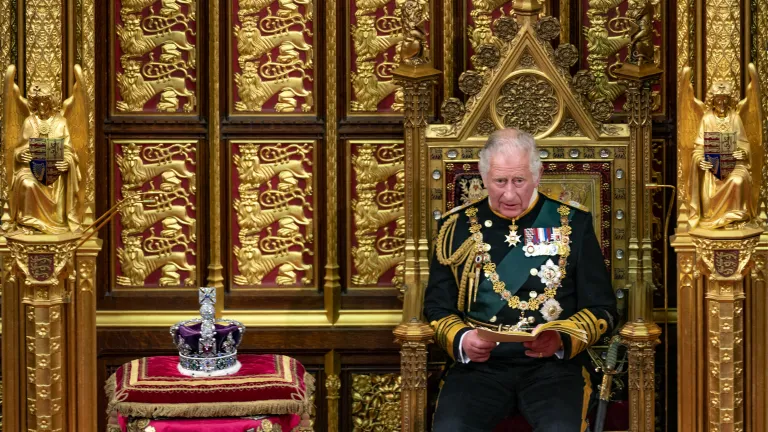
Of all the particulars mentioned, verse 10, regarding Judah, is more readily interpreted. Since the ‘scepter shall not depart from Judah,’ we know that a succession of kings descended from Judah would exist until a specified time, being that a scepter is a symbol of kingship. The specific time frame mentioned is ‘until Shiloh comes.’ Shiloh is interpreted as ‘Peaceable and Prosperous One,’ or as the ‘Savior,’ or even as ‘To Whom It [the Scepter] Belongs,’ all of which are clear references to Christ, to whom would be the ‘obedience of the people.’ Since the royal line would exist until the ‘last days,’ the coming of Shiloh here must indicate Christ’s second coming. Indeed, this prophecy explains that Christ will assume the throne of Judah in the end time—meaning that there must be a royal line of the kings of Jewish descent in existence for Him to return to. And indeed, there is. (To learn more about it, please refer to our online publication, The Throne of Britain: Its Biblical Origin and Future).”
UYA Team | uya@ucg.org
United Young Adults (UYA) primarily serves the 18–32-year age group for the United Church of God. There are three main areas of contribution to the lives of the young adults: Promoting Spiritual Growth, Developing Meaningful Relationships, and Making the Most of Your Talents. The Know Your Sword series is a daily expository message introducing God’s Word from a trusted perspective.