Gospels Part 028

In addition to hundreds of prophecies about Jesus Christ, the lives of a number of individual people in the Bible represented aspects of Jesus’ life and mission.
Here are several examples:
In addition to hundreds of prophecies about Jesus Christ, the Hebrew Scriptures are filled with many symbols, types or models that point to Him, His role and His work.
For example, the seven biblical festivals and Holy Days, revealed to ancient Israel as recorded in Leviticus 23, all teach us about the centrality of Jesus Christ in every step of God’s plan of salvation for mankind. Far from being obsolete or only intended for the ancient Israelites, the early Church kept these God-given celebrations with a new understanding of their deep spiritual significance. In fact, the Church was founded on one of these Holy Days, the Feast of Pentecost! To learn about how these festivals and Holy Days reveal a great deal about Jesus the Messiah, read “How God’s Festivals Teach Us About Jesus Christ.”
The Passover lamb and Passover celebration were also symbolic of Jesus’ sacrifice for us. The apostle Paul made this clear in 1 Corinthians 5:7 where he wrote, “Christ, our Passover, was sacrificed for us.” John the baptizer, seeing Jesus' approach, exclaimed: “Behold! The Lamb of God who takes away the sin of the world!” (John 1:29).
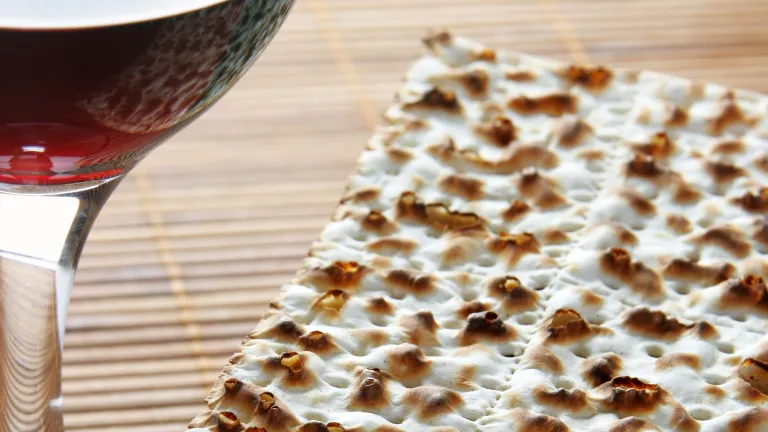
Jesus, in His last Passover on earth with His disciples, instituted symbols of bread and wine to represent to and remind His followers of His bruised body and blood shed for us. As the apostle Paul writes in 1 Corinthians 11:23-25:
“For I received from the Lord that which I also delivered to you: that the Lord Jesus on the same night in which He was betrayed took bread; and when He had given thanks, He broke it and said, ‘Take, eat; this is My body which is broken for you; do this in remembrance of Me.’ In the same manner He also took the cup after supper, saying, ‘This cup is the new covenant in My blood. This does, as often as you drink it, in remembrance of Me.’ For as often as you eat this bread and drink this cup, you proclaim the Lord’s death till He comes.”
Clearly Christians are to commemorate Christ’s sacrifice at the Passover as He and the apostle Paul instruct us to!
The tabernacle and temple were also symbolic of Christ in many ways. Both had only one entrance, representing Jesus Christ who said, “I am the way, the truth, and the life” and “No one comes to the Father except through Me” (John 14:6). The apostle Peter declared: “There is salvation in no one else! God has given no other name under heaven by which we must be saved” (Acts 4:12, NLT). On passing through the entrance, one immediately saw the large altar for sacrifices, a reminder that “without the shedding of blood, there is no forgiveness” of sin (Hebrews 9:22, NLT).
Nearby was a large bronze water basin where priests would ceremonially wash before coming to serve God (Exodus 30:18-21). Christians are similarly cleansed to serve God through the waters of baptism and washing by God’s Holy Spirit (1 Corinthians 10:1-4; Titus 3:4-7). Within the Holy Place—again with only one entrance—was a golden lampstand, the menorah, representing Jesus “the light of the world” (John 1:4-5, 9; 8:12; 9:5).
On the other side of the Holy Place was the golden table of showbread on which were placed loaves of bread representing Jesus, the “bread of God,” “bread of life,” “bread which came down from heaven” and “living bread” (John 6:33, 35, 41, 47, 50-51). The table also had golden dishes, pitchers and bowls (Exodus 25:29), apparently for drinking offerings of wine (Numbers 15:5-10). The bread and wine pointed forward to the Passover bread and wine that Jesus instituted as symbols of His bruised body and blood shed for us and which Christians are to partake of every year at the Passover (1 Corinthians 11:23-25).
Near the third wall of the Holy Place, just outside the Holy of Holies, was a golden altar of incense. It was used to burn incense, which represented prayers ascending to God (Psalm 141:2; Revelation 5:8). It represents Jesus, as our High Priest (Hebrews 3:1), who constantly makes intercession for us (Romans 8:34).
The Holy of Holies, which again had one entrance, represented God’s dwelling place in heaven, from which Jesus Christ came to earth as a human being and to which He returned after His resurrection.

The system of sacrifices and offerings also pointed to Jesus Christ and His role. Hebrews 10:4-14 (NLT) sums up how Jesus fulfilled the sacrificial offering system this way:
“For it is not possible for the blood of bulls and goats to take away sins. That is why, when Christ came into the world, He said to God, ‘You did not want animal sacrifices or sin offerings. But you have given me a body to offer. You were not pleased with burnt offerings or other offerings for sin. Then I said, "Look, I have come to do your will, O God—as is written about me in the Scriptures."' [quoting Psalm 40:6-8]
“First, Christ said, ‘You did not want animal sacrifices or sin offerings or burnt offerings or other offerings for sin, nor were you pleased with them’ (though they are required by the law of Moses). Then He said, ‘Look, I have come to do your will.’ He cancels the first covenant in order to put the second into effect. For God’s will was for us to be made holy by the sacrifice of the body of Jesus Christ, once for all time.
“Under the old covenant, the priest stands and ministers before the altar day after day, offering the same sacrifices again and again, which can never take away sins. But our High Priest offered Himself to God as a single sacrifice for sins, good for all time. Then He sat down in the place of honor at God’s right hand. There He waits until His enemies are humbled and make a footstool under His feet. For by that one offering He forever made perfect those who are being made holy.”
These are some of the many ways the Hebrew Scriptures pointed to Jesus Christ. And there are far more, enough examples to fill entire books and series of books. This overview has only scratched the surface. But even though virtually the entirety of the portion of the Bible we know as the Old Testament points to Jesus Christ, it’s important to understand that Jesus Himself always pointed to the supremacy of God the Father, as should we. Notice several of His statements:
“For I have come down from heaven, not to do My own will, but the will of Him who sent Me” (John 6:38).
“My Father is greater than I” (John 14:28)
And notice these statements from Paul’s writings:
“But I want you to know that the head of every man is Christ, the head of woman is man, and the head of Christ is God” (1 Corinthians 11:3).
“Now when all things are made subject to Him, then the Son Himself will also be subject to Him who put all things under Him, that God may be all in all” (1 Corinthians 15:28).
So as great as Jesus Christ is—and He is our elder Brother, King, High Priest, Master, Teacher and Lord—we should always follow His example in directing our worship and prayer primarily toward God the Father. We will see this is His example throughout the Gospels.
© Scott Ashley, 2025. All rights reserved.
Course Content

Scott Ashley
Scott Ashley was managing editor of Beyond Today magazine, United Church of God booklets and its printed Bible Study Course until his retirement in 2023. He also pastored three congregations in Colorado for 10 years from 2011-2021. He and his wife, Connie, live near Denver, Colorado.
Mr. Ashley attended Ambassador College in Big Sandy, Texas, graduating in 1976 with a theology major and minors in journalism and speech. It was there that he first became interested in publishing, an industry in which he worked for 50 years.
During his career, he has worked for several publishing companies in various capacities. He was employed by the United Church of God from 1995-2023, overseeing the planning, writing, editing, reviewing and production of Beyond Today magazine, several dozen booklets/study guides and a Bible study course covering major biblical teachings. His special interests are the Bible, archaeology, biblical culture, history and the Middle East.