Gospels Part 055

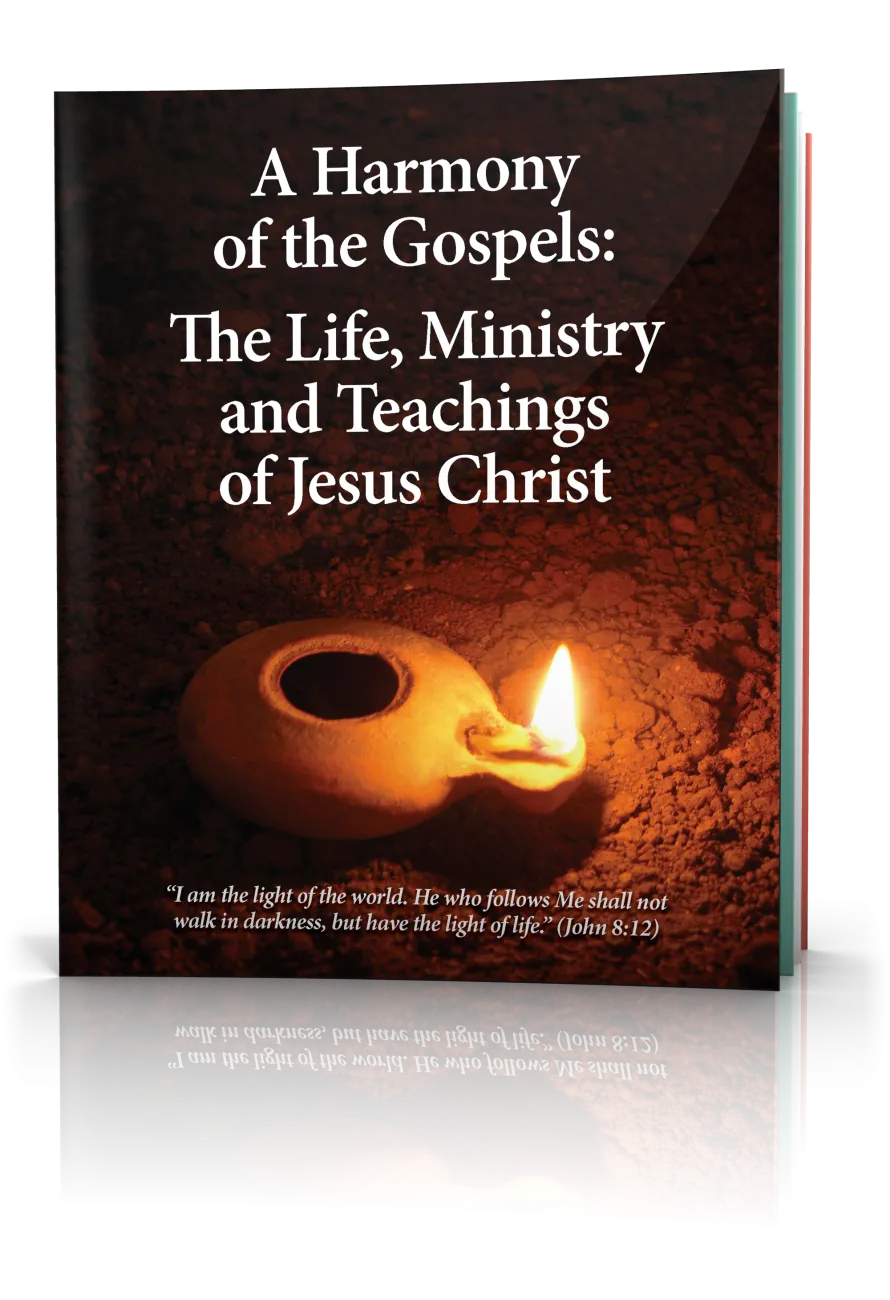
Our “textbook” for these studies of the Gospels is A Harmony of the Gospels: The Life, Ministry and Teaching of Jesus Christ, provided to you free. In today’s lesson, we cover a valuable feature of this eBook.
If you are following along in our free eBook, A Harmony of the Gospels: The Life, Ministry and Teaching of Jesus Christ, you may have noticed several Bible references included within the opening verses of John’s Gospel. Those references appear in the text in small caps like this, followed by the location where this wording appears in the Hebrew Scriptures in square brackets [like this].
In the first five verses of John’s Gospel that we have covered to this point, John has already quoted the Hebrew Scriptures three times—quoting Genesis 1:1 twice and Isaiah 9:1 once.
These references are significant when reading the Gospels. They indicate where the biblical author is quoting directly from in the Hebrew Scriptures. This is important because so many people hold the mistaken idea that Jesus came to do away with the teachings and practices of the Old Testament, but a glance through this Harmony of the Gospels will show that the Hebrew Scriptures are regularly quoted as prophetically foretelling the coming of Jesus as the Messiah as well as being held up as the authoritative teaching we are to live by (we’ll cover this in much greater detail when we reach those passages).
An important qualifier we should make in this regard is that while at times the wording quoted in the Gospels is identical to the wording in the Hebrew Scriptures, many other times the wording will differ. However, this is easily understood when we realize the language differences involved.
If you have ever studied a foreign language, you know that word-for-word translations can be quite challenging. The Hebrew Scriptures were originally written in biblical Hebrew (with a few short portions written in Aramaic), which has a quite limited vocabulary in which one word often can have several different meanings. The New Testament portions of the Bible were written in Greek (the universal language of the Roman Empire in that day). In our modern-day Bibles, both Hebrew and Greek have been translated into English (or whatever other language translation you may be using).
Another reason some quotes will differ is that the writers of the Gospels sometimes quote from their Hebrew version of the Scriptures as were originally written in Hebrew, translating that into Greek. They may also quote from the Septuagint, a Greek-language translation of the Hebrew Scriptures generally viewed as having been written in the third to first centuries B.C. and which was in common use by religious Jews in the first century when the events recorded in the Gospels took place. Here, too, the words were originally written in one language and translated into another and then translated again into English in the Bibles we use today.
To complicate the matter further, when individuals are recorded speaking in the Gospels, they are generally thought to have been speaking in Aramaic (the common language spoken among Jews of the Holy Land at that time), but also sometimes in Hebrew (often used in a religious setting, such as the synagogue or other teaching settings). The writers of the Gospels then translate those Aramaic or Hebrew words into Greek, which are then translated into English in our Bibles. Obviously, this translating back and forth can and does lead to different wordings in English.
In summary, it is often that the quotations will not line up or at times may not be evident at all—but we can better understand why when we realize we are dealing with translations and even translations of translations.
The important part to remember is that these are biblical quotations, either direct or sometimes paraphrased, and they are included in these inspired accounts so that we may see many cross-connections between biblical books. They also play heavily into understanding some of Jesus’ teaching methods, which we will go over in more detail when we reach those passages. When you see these quotations in the Harmony of the Gospels, we encourage you to look them up and read them to further see what the Gospel writers are telling us.
If you have not done so yet, be sure to download the free ebook A Harmony of the Gospels: The Life, Ministry and Teaching of Jesus Christ.
Read this lesson for an overview of this valuable resource.
© 2026 Scott Ashley. All rights reserved. Used with permission.
UYA Team | uya@ucg.org
United Young Adults (UYA) primarily serves the 18–32-year age group for the United Church of God. There are three main areas of contribution to the lives of the young adults: Promoting Spiritual Growth, Developing Meaningful Relationships and Making the Most of Your Talents. The Know Your Sword series is a daily expository message introducing God’s Word from a trusted perspective.
Course Content

Scott Ashley
Scott Ashley was managing editor of Beyond Today magazine, United Church of God booklets and its printed Bible Study Course until his retirement in 2023. He also pastored three congregations in Colorado for 10 years from 2011-2021. He and his wife, Connie, live near Denver, Colorado.
Mr. Ashley attended Ambassador College in Big Sandy, Texas, graduating in 1976 with a theology major and minors in journalism and speech. It was there that he first became interested in publishing, an industry in which he worked for 50 years.
During his career, he has worked for several publishing companies in various capacities. He was employed by the United Church of God from 1995-2023, overseeing the planning, writing, editing, reviewing and production of Beyond Today magazine, several dozen booklets/study guides and a Bible study course covering major biblical teachings. His special interests are the Bible, archaeology, biblical culture, history and the Middle East.