Revelation Part 08

Though the Ephesian Church was known for its doctrinal soundness and hard work, it had lost the passion and devotion it once had for God and for others.
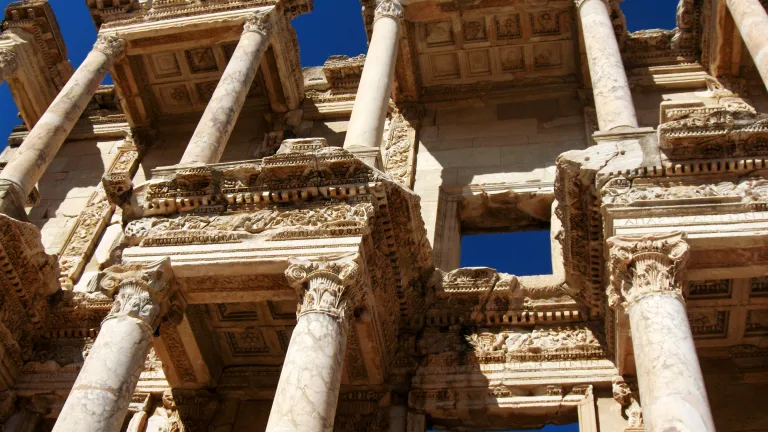
The first Church that Christ addresses in His letters is the Church in Ephesus. The city of Ephesus was a major crossroads of civilization and served as the political capital of the Roman province of Asia. As a free and self-governed city, it held significant influence. Strategically located on the western coast of Asia Minor, it sat at the convergence of three major highways from the north, east and south, making it a thriving trade center. Religiously, Ephesus was renowned as the hub of worship for the fertility goddess Artemis (Greek) or Diana (Roman), as noted in Acts 19:24. Her temple, one of the seven wonders of the ancient world, was served by thousands of priests and priestesses, many of whom were involved in cult prostitution.
In Christ’s letter to the Church of Ephesus in Revelation 2, He delivers both a warning and a call to return to a former, deeper love and commitment. The central issue Christ identifies is in verse 4, “You have left your first love.” Though the Ephesian Church was known for its doctrinal soundness and hard work, it had lost the passion and devotion it once had for God and for others. God no longer held first place in their hearts, and their outward obedience no longer reflected the love that should accompany true faith. Christ's message is deeply personal—He reminds them that relationship, not just right behavior, is at the core of discipleship.
The first point Christ makes is found in Revelation 2:5,
“Remember therefore from where you have fallen; repent and do the first works.”
This call to remember and return is foundational. Forgetfulness is often the root of spiritual decline. Just as the name Manasseh means “to forget,” the tendency to forget where we once were—our desperation, our need, our gratitude—can slowly lead us away from God. The apostle Paul never forgot his past; in Romans 7:24, he cried, “O wretched man that I am!” And in 1 Timothy 1:12, he expressed continual awareness of how much grace he had received. His experience on the road to Damascus had left an indelible mark, and it fueled his passion and humility.
The call to “remember” appears 148 times in Scripture, while “do not forget” appears 61 times. This shows how deeply important it is to God that we actively recall His goodness and our calling. To demonstrate the genuineness of repentance, we must return to spiritual habits that rekindle our relationship with God. This includes:

Reading and meditating on His Word, as Ephesians 5:26 says we are washed “by the Word.” Hebrews 4:12 reminds us that the Word of God is “living and powerful, sharper than any two-edged sword,” and it discerns our innermost thoughts.
Prayer is also essential. David’s prayer in Psalm 51,“Create in me a clean heart, O God, and renew a stedfast spirit within me,” is the perfect example of repentance and renewal.
Along with prayer, fasting helps remove spiritual burdens and break chains of sin, as described in Isaiah 58:6. Genuine fasting is not self-centered but seeks to meet the needs of others, shifting our focus away from ourselves.
Praise also plays a role in spiritual renewal, as it realigns our hearts with God's sovereignty and authority. It reminds us that Jesus is “Lord and Master,” and that there is no other way to God but through Him.
Christ commends the Ephesians for hating “the deeds of the Nicolaitans,” which He also hates. The Nicolaitans were a heretical sect who mixed Christian faith with idolatry and cult prostitution. The word means "to conquer or consume the people." This religious sect began during the Apostolic Age of the Christian Church, and their basic doctrine was one of freedom of the flesh. They taught that the deeds of the flesh had no effect upon the health of the soul. These deeds likely involved compromising with pagan practices or abusing grace, and Christ makes clear that while love must be restored, discernment and rejection of sin must not be abandoned.
His letter ends with a familiar exhortation: “He who has an ear, let him hear what the Spirit says to the churches.” It’s a call to personal responsibility—to not merely hear, but to listen with intent and then act. And then comes the promise:
“To him who overcomes, I will give to eat from the tree of life, which is in the midst of the Paradise of God” (Revelation 2:7).
This is a powerful reminder that restoration is not only possible but rewarded. The tree of life (once guarded in Eden) is made accessible again, pointing us to the ultimate goal of reconciliation with God in His eternal Kingdom.
UYA Team | uya@ucg.org
United Young Adults (UYA) primarily serves the 18–32-year age group for the United Church of God. There are three main areas of contribution to the lives of the young adults: Promoting Spiritual Growth, Developing Meaningful Relationships and Making the Most of Your Talents. The Know Your Sword series is a daily expository message introducing God’s Word from a trusted perspective.