

Peter Eddington
Everybody has sinned. Nobody's exempt. But there's a reason. The Day of Atonement isn't just about personal reconciliation—it's about understanding the root cause of all sin in the world: Satan and his deception.
This message traces the path from Eden to today, showing why God commanded His people to observe this holy day year after year. It's not arbitrary ritual. It's a picture of something cosmic: the binding of Satan, the removal of the primary source of temptation, and the restoration of all humanity to God.
Through Leviticus and Revelation, we see how the high priest entered the Holy of Holies once a year to make atonement for the nation. But that was a shadow of reality. Christ came as the ultimate high priest. With His own blood, He made atonement once and for all. And now, when you fast on this day—when you deny yourself food and water—you're remembering something profound: how temporary life is, how dependent you are on God as your sustainer, and how temporary Satan's reign will be.
God could have created a world without Satan. Instead, He put you in the middle of a battle. He gave you armor. He gave you choices: life or death, obedience or rebellion. Each day, you choose. And on the Day of Atonement, the entire holy day system points to the moment when the battle ends, when Satan is bound, and when all of humanity has the chance to know God.
Scripture: Romans 3: 23, Revelation 12: 9, 2 Corinthians 4: 3-4, Ephesians 6: 12, Revelation 20: 1-3, Leviticus 23: 27, Esther 4: 16, Acts 27: 9, Leviticus 16: 15-19, Hebrews 9: 11-12, Hebrews 4: 14-16
Why do we keep the Day of Atonement? That's the message today. The Day of Atonement symbolizes the reconciliation of God to all humanity. All people suffer because of the consequences of sin. But sin didn't just happen without a cause. Turn with me, please, to Romans 3: 23. Something else. Here it says, all have sinned and fall short of the glory of God. Everybody. Nobody is exempt. All have fallen short.
The Day of Atonement pictures the primary cause of sin, Satan and his demons. Revelation 12: 9 is very familiar with us. So the great dragon was cast out, that serpent of old, called the devil, and Satan. who deceived or deceives will deceive the whole world. He was cast to earth, and his angels were cast out with him. 2 Corinthians 4, verses 3 to 4. Even if our gospel is veiled to those who are perishing, for whose minds the God of this age has blinded, who do not believe, lest the light of the gospel of the glory of Christ who is the image of God should shine on them. They can't comprehend it.
If you please turn with me to Ephesians, Ephesians 6, verse 12. For we do not wrestle against flesh and blood, but against principalities, against powers, against the rulers of the darkness of this age, against spiritual hosts of wickedness in the heavenly places. Therefore, take up the whole armor of God that you may be able to withstand in the evil day, and having done so, stand. The Day of Atonement looks forward to the time when Satan's deception will be removed. Revelation 20, 1-3. I'll just read this one here.
Then I saw an angel come down from heaven, having the key to the bottomless pit and a great chain in his hand. He laid hold of that serpent of old, who is the devil and Satan, and bound him for a thousand years and he cast him into the bottomless pit, and shut him up, and set a seal on him, so that he should deceive the nations no more, till the thousand years were finished. But after these things he must be released for a little while. And you wonder why he needs to be released for a little while.
He doesn't realize he's been a thousand years of God's rule. Everything's perfect. They have to have that opportunity to make that choice, choose life or choose death. They'll be released that way. Satan will have his opportunity still to try to sway them, and they have to overcome that. God could have put us on here without Satan, but he chose to put us here in this battle so we would have to choose God in his way of life or choose evil in the way of death. There are only two choices, life or death. God says choose life.
Let's turn to Leviticus, Leviticus 23: 27 tells us also the tenth day of this seventh month shall be the day of atonement. It shall be a holy convocation for you, and you shall afflict your souls and offer an offering made by fire to the Lord. What does afflict your soul mean? Afflict comes from the Hebrew word anan, which means to afflict, be afflicted, be humbled, or be meek. The same word is used in Psalm 35: 13, when David spoke of humbling himself with fasting, and in Ezra 8: 21, when a fast was called, so the people could humble themselves before God.
What does fasting mean? Fasting means you don't eat or drink. Esther 4: 16. Told her maids, Go gather all the Jews who are present in Shushan and fast for me. Neither eat nor drink for three days, night or day. My maids and I will fast likewise. And so I will go to the king, which was forbidden, unless he would request you to come there. But I will go to the king. Which is against the law. And if I perish, I perish. Fasting helps us to remember how temporary our lives are. Without food and water we would soon die.
Fasting helps us to realize how much we need God as a giver and sustainer of life. The early church kept the Day of Atonement. They still measured time by the holy days. And we do that too. Acts 27: 9. Now when much time had been spent, and sailing was now dangerous because the fast was already over. Almost all Bible dictionaries and commentaries will acknowledge that the fast referred to the Day of Atonement.
On the Day of Atonement, the high priest turned to Leviticus 16. We're going to read 15 to 19. Then he shall kill the goat of the sin offering, which is for the people, and bring his blood inside the veil, do with that blood as he did with the blood of the bull and sprinkle it on the mercy seat before the mercy seat. So he shall make an atonement for the holy place because of the uncleanness of the children of Israel, and because of their transgressions for all their sins.
And so he shall do for the tabernacle of meeting, which remains among them in the midst of their uncleanness. There shall be no man in the tabernacle of meeting when he goes in to make atonement in the holy place until he comes out, that he may make atonement for himself and for his household and for all the assembly of Israel. And he shall go out to the altar that is before the Lord and make atonement for it. It shall make take some of the blood of the bull and some of the blood of the goat, and put it on the horns of the altar all around.
Then he shall sprinkle some of the blood on it with his finger seven times. Cleanse it and consecrate it from the uncleanness of the children of Israel. The symbolism is made clear in Hebrews 9: 11-12 that Christ came as a high priest of the good things to come, for a greater and more perfect tabernacle, not made with hands, that is not of this creation, not with the blood of goats and calves, but with his own blood. He entered the most holy place once for all, having obtained eternal redemption.
Let's turn to Hebrews 4. Seeing that we have a great high priest who has passed through the heavens, Jesus Son of God, let us hold fast our confession or profession. for we do not have a high priest who cannot sympathize with our weaknesses, but was in all points tempted as we are, yet without sin. So let us therefore come boldly to the throne of grace, that we may obtain mercy and find grace to help in time of need. You know, we're told to make a choice. Choose wisely. Choose life.
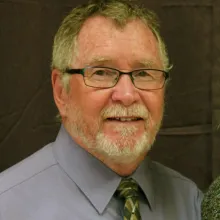
Born in Albany Oregon.
Married to Mary Jo Worrell Jackson since September 2016.
2 sons and 2 daughters
3 grandchildren
Baptized 1981
Live in Springdale AR,
attend NWA, Cave Springs, AR
Retired
