

Paul Moody
This transcript was generated by AI and may contain errors. It is provided to assist those who may not be able to listen to the message.
Well, I know the last couple weeks on our ingredients for a successful and happy marriage that it could come across at times as corrective. It was pretty strong in some areas of the sermon. So I thought this week we would change pace a little bit. I'd like to talk about studying regularly the Word of God. Reading the Word of God is important because it is part of a two-way communication process we have with God. When we pray, we speak to God. But the way that He speaks back to us is when we read and we study the Scriptures, when we read and study the Word of God.
And if we are not immersing ourselves daily into the Word of God, it's like we're talking to God a lot, but we're not giving Him an answer to speak back to us, to communicate with us. So obviously we need to study the Word of God. But you know, before mankind invented the printing press, how rare it was that someone could literally hear the Word of God read to them. That's one reason why anciently everyone looks so forward to the Sabbath day. They look forward to going to the temple, and later on after the captivity when some of the Jews came back to the synagogue, because it was only on the Sabbath day that they got to hear the Word of God read to them.
If you think about it, it was expensive to have the Scriptures, to own a personal copy yourself. They had to be handwritten. They had to be made through a very laborious process of the way they created paper by smashing reads together and by sandwiching reads together, crisscrossing them so they could create something to write on. Then a scribe had to individually, each letter, write the words of God into a book. And the average person could not afford, until the printing press, could not afford to own a Bible.
This book here that we have so much access to that we take for granted in our twenty-first century. And it is for that reason of the people who live in the twenty-first century with the incredible access we have to this book that we need to use it because Jesus said to whom much is given, much is required. There has been no other generation in humankind that has had such easy and generous access to the words of this book.
And that's what I would like to talk about today. Turn with me, if you would, to Deuteronomy 17 verse 15. As I said, one major reason everyone looked forward to going to the temple on the Sabbath later on to the synagogue was to hear the Scriptures read aloud. It was exciting to them. It was one time the whole week when someone would open those scrolls, would read aloud in the audience what God's Word was. It sent tingles up and down their spine.
Is that how we feel when we open the Word of God, when we study the Word of God, or do we have just so much access to it, so much common access to the powerful words in this book that we have taken it for granted like we in the 21st century have taken virtually everything for granted, a spoiled and self-absorbed generation we are here in the 21st century? Well not everyone could afford their own copy of God's Word, but there was one individual in ancient Israel who did have access to Scripture.
You know who that individual was? Of course it was the priest, but there was another individual with a civil responsibility who had access to Scripture. That individual was the king. Because obviously, it might have been a Mel Brooks movie. It was out once. He said, it's good to be king. You know, when you're king, you get special perks and privileges that no one else gets.
And here is the instruction that God told the civil king in ancient Israel regarding studying his Word. And this instruction is just as applicable for the kings and priests of God's kingdom that we're talking to today. Deuteronomy 17 and 15, God knew eventually that Israel would want to be like the other nations and would not want God to lead them, but would want a physical king to lead them.
So he made provisions for it all the way back in the book of Deuteronomy. But he tried to put limits knowing the sickness and the self-absorbed nature of human beings and what happens to them when they get just a little taste of power. He tried to put limits on the kingdom.
He says, you shall surely set a king over you whom the Lord your God chooses, one from among your brother, and you shall set his king over you. You may not set a foreigner over you who is not your brother. Verse 16, But he shall not multiply horses for himself. He's not to take that off as to enrich himself.
If the nation multiplies horses, that's fine. But he shouldn't look at this job as an opportunity to suck the wealth out of everyone else, to make himself a millionaire or a billionaire, or to make himself comfortable while everyone else is struggling, nor cause the people to return to Egypt to multiply horses. Don't look backward. Don't say, well, how did the other pagan nations do it? That's how I want to do things the way everyone else is doing it. For the Lord has said, you shall not return that way again. We cannot go back to a life of sin. We cannot look backward. We can only look forward. Verse 17, neither shall he multiply wives for himself, lest his heart turn away. And sure enough, if you look at the history of most kings, including kings of Europe, many of them had multiple wives. Many of them symbolically had one wife, had a number of mistresses. Henry VIII had six wives to have a son to replace the tuner dynasty on his throne.
But he said it's not about acquiring things. It's not about you, king. So you're not to worry about multiplying horses to yourself, wealth or sex, or just taking advantage of people or your privilege, lest his heart turn away from God and turn towards pleasing others. Nor shall he greatly multiply silver and gold for himself. Again, it's fine if the nation grows. If the nation is blessed and silver and gold is dispersed among everyone, and everyone benefits from the wealth that God gives as the blessings to nations. Verse 18, also it shall be when he sits on the throne in his kingdom that he shall write for himself a copy of this law in a book from the one set before the priest, the Levites.
You should go to the Levites and say, I want a copy. Make my own copy of the words that are in the law in a book. Verse 19, and it shall be with him, and he shall read it all the days of his life that he may learn to fear the Lord his God, and be careful to observe all the words of this law and these statutes. So this is what the king was told to do. You see, he had access to the scriptures on a daily basis.
Because of his privileged position of being king, he could have the very scrolls from the Levites, and he was told to take the time to copy the words of the law and make his own version, and to think about those words as he copied them, to think about God's requirements, and to think about the good blessings, the wonderful enriching stories that we hear about ancient biblical characters.
Also, verse 20, this was another reason he was to do it, that his heart may not be lifted above his brethren, that he doesn't begin to think he's superior just because he's king, that he doesn't begin to think that he is above all of these laws just because he has a position of responsibility or authority, that his heart may not be lifted above his brethren, that he may not turn aside from the commandment to the right hand, that he doesn't create laws and commands that God never intended and demand that people keep them, or on the left, that he doesn't begin to water down the things that God teaches us and tells us that we should be observing.
So he has to walk down the middle. He has to live a balanced life and look at God's way of life from the middle, not veering to the left and not veering to the right, that he may prolong his days in his kingdom, he and his children in the midst of Israel. In essence, the king was to read and study and copy the scriptures daily to keep his mind and attitude balanced.
Well, brethren, the same is true for God's future, kings and priests, preparing for the kingdom of God. Now, we may not literally be copying the Bible down like the king did here, but we have access to the Bible in ways that he would have never dreamed of in the time that he lived in. Allow me to give you a little bit of history so you can see what a difficult process that it was to make this book available to you to read in the 21st century.
So bear with me. I'm just going to give you a little bit of history. The first handwritten English Bible manuscripts go back to the 1380s A.D. by a man whose name was John Wycliffe. He was an Oxford professor, he was a scholar, he was a theologian, and Wycliffe produced dozens of English language manuscripts copies of the scriptures. By the way, doing this was illegal. The church, at that time it was the Catholic church, did not want anyone to have access to possess or to have scriptures of their own. Only the priest were to have a Bible, only the priest were to interpret what the Bible said.
Anything else was against church law, and in most civil governments anything else, of course, was also against civil law. Now he did this, he translated out of a common version at that time that was called the Latin Vulgate, and it was the only source that he had available to him. The Pope became so infuriated by his teachings and his translation of the Bible that 44 years after he died, the Pope ordered that his bones be dug up, crushed, and scattered in a river. So, as you can see, there might have been a little animosity between the teachings of the church and what John Wycliffe tried to do.
He had a follower, one of his followers' names was John Huss, and he actively promoted Wycliffe's ideas that people should be permitted to read the Bible in their own language.
And this was a death sentence. He felt people should be able to oppose the tyranny of the Roman church that threatened anyone who possessed a non-Latin Bible, and the punishment of doing that was execution. Sure enough, in 1415, he was burned at the stake, and you know what they used as kindling for fire when he was burned at the stake? They used manuscript Bibles from John Wycliffe as kindling to start the fire to burn John Huss. A few years later, a man named William Tyndale was a spiritual leader. He holds the distinction of being the first man to ever print the New Testament in the English language in 1526. By now, the printing press had been invented.
He was a scholar. He was a very smart man. He was also fluent in eight languages. They said he was so fluent in those languages that when he spoke, each language sounded like his native tongue. He was a very smart man. He is often referred to as the architect of the English language, even more than William Shakespeare. A lot of the phrases that were in the Tyndale Bible we still use today because they also found their way into the New King James scriptures. The Tyndale New Testament became the first printed edition of scripture in the English language. But what was his reward for doing that? You know what his reward for doing that was? He was betrayed to church officials in 1536.
He was defrocked in an elaborate public ceremony and turned over to the civil authorities to be strangled to death and burned at the stake. That was his thanks for printing the first English version of the New Testament. His final words were, Lord, open the eyes of the King of England.
And then he died. Scholars tell us that about 90 percent of the King James version of the Bible is from Tyndale's works with as much as one-third of the New King James or the King James translation of the Bible. One-third is a word-for-word copy of what was originally in the Tyndale Bible.
Then in 1539, Thomas Cramner, the archbishop of Canterbury, realized that they couldn't stop this movement. So under the King's authority they should create an official Bible and make it available to the common people. They realized, if you can't beat them, join them. But we'll join them with our own translation. So he hired a man named Miles Coverdale at the bequest of King Henry VIII to publish what was known as the Great Bible because of its enormous size. It became the first English Bible authorized for public use. It was distributed to every church and it was chained to the pulpit.
Imagine something considered so valuable they had to chain it to the pulpit so no one could steal it.
That's how valuable the Word of God was considered. How valuable do you and I consider the Word of God today? He also assigned—that is, the Archbishop of Canterbury—assigned a reader to every church so that the illiterate could hear the Word of God read in plain English. And then, about 70 years later, the King James Bible of 1611 was allowed to be written by King James. And many of us have either an original King James Bible or, in the case of the one that I often carry, a new King James edition of the Bible. But, as you can see, the Bible had a torturous history.
Many people gave up their lives. Some people dedicated their entire lives living in darkened room with candles burning to translate word by word the Bible from Hebrew or Greek or Latin into English so that you and I, as the inheritors, could have access to this powerful book.
So let me ask the question again. Do we value their sacrifice?
Or do we just take this book for granted? Let's go to Matthew 4 and verse 1. Matthew 4 and verse 1.
This event occurred right after the baptism of Jesus Christ, who was baptized as an example for you and I, that we should be baptized, even though he didn't need to be. Still the Spirit descended upon him, and God said he was well pleased with his Son. And here's what it immediately says afterward. Matthew 4, beginning in verse 1.
Then Jesus was led up by the Spirit into the wilderness to be tempted by the devil, and when he had fasted 40 days and 40 nights afterward he was hungry. Boy, is that an understatement. Now when the tempter came to him, he said, if, challenging his manhood, challenging who he was, if, be who are the Son of God, command that these stones become bread.
But Jesus didn't take the bait. He answered, and he said, it is written, man shall not live by bread alone, but by every word that proceeds from the mouth of God.
You know what has proceeded from the mouth of God? This book has proceeded from the mouth of God. This is the Word of God. This is our life. This is our breath. This is a book that reminds us of what our values are, what our commitments are as Christians, as believers and followers of Jesus Christ. It is a very special book. And again, I have to ask the question, are we immersing ourselves daily in the words of this book, or is it just so common, has it become so ridiculed in our media, and by so many people, as a book of myths, as archaic religious ideas, that we no longer study it like we should with the same level of dedication? Here you and I are. We're traveling this world, of all times, at the beginning of the 21st century. God could have seen fit that you and I were born at any time in human history. We could have been born thousands of years ago. We could have been born during the time of Christ. We could have been born in the medieval ages. But here we are. We are all taking the same journey together at this short space of time as man designates time, the beginning of the 21st century. We have access to scriptures that men like Wycliffe and Huss and Tyndale could have only dreamed of. And here it's all presented for us. Are we immersing ourselves again in the Word of God daily? I'd like to remind you what I said at the beginning of the sermon from Luke 12 and verse 48. Jesus said, For every one who has been given much, much will be demanded. And from the one who trusted with much, much more will be expected. Again, that's from the translation, the new century version. So with this background in mind, I wanted to show you some ways in which the 21st century has allowed us to be more openly immersed in the Word of God.
And these are ways that are either free or very inexpensive because I know many of the brethren are retired, many of the brethren are in limited income. So we're not talking about investing $100 into some Bible software package because I know that is beyond the realm of many of us in this room. But yet, it is so unbelievable the access we can have to the Word of God. I just want to make sure that we all understand some of the things that we can be doing and enjoying that are very low cost or free in order for us to make sure that daily we are connecting with the Word of God.
So let's first talk about Wi-Fi networks. We have a Wi-Fi network in this office. There was a time 10 years ago when Wi-Fi was very, very rare. People, it was a utility. Most people had to pay for it.
But over the period of time, Wi-Fi has become much more available. And the thing that I want to emphasize is most of the devices that I'm going to talk about today. I'm going to talk about some Android devices today and Microsoft Window PCs and also a Mac, a program that works in Mac.
They need network access to work. Again, there was a time when if you didn't have Wi-Fi in your home, you were quite limited. But I want us to understand that whether you have Wi-Fi at home or not, Wi-Fi is now available in many ways. For example, if you use or you own a smartphone, you already have built-in Wi-Fi. What they call 3G and 4G basically is just a form of Wi-Fi. And if you have an unlimited data package or you have a generous data package, then obviously when your smartphone, you can connect to any Android device. You can connect, you can do something on your phone itself or on an Android tablet. You can use it as what they call a hotspot. And you can use and connect your Android tablet to that and use that to connect to the Wi-Fi or a PC. If you don't have Wi-Fi on your PC, many public businesses now have free Wi-Fi coffee shops. You can afford a 50 cent cup of coffee. You can go in, buy a cup of coffee, sit in the corner, and spend an hour and a half an evening studying your Bible. Or you can use earphones so that people won't know what you're listening to. You can keep up with what's going on in the world by buying a cup of hot chocolate or a cup of coffee and sitting in a corner. Hair salons have Wi-Fi. A lot of malls have Wi-Fi. I mean, how convenient is that? You go walk into the mall, you connect on the internet, you go and sit down.
One of the many benches they have throughout the indoor mall, and you just do what you want to do on your device, and you don't have to pay for Wi-Fi access. A lot of McDonald's today have free Wi-Fi access libraries. Most of them have free Wi-Fi access. There are other institutions, including a lot of government institutions. The first thing I wanted to discuss was the open availability of Wi-Fi in so many businesses, so many institutions in our culture today, even if you can't afford to have it at home. And I know that there are some of us who cannot, in our congregation here, who do not have Wi-Fi in our homes because we can't afford it. Now I'd like to talk about Android devices. What in the world are Android devices? Android is a free open source operating system, and Android devices are now very common in our world. You can find some 7-inch Android devices for as low as $59 for a single-core Android device. It's going to be a little slow if it only has a single core, but it will work just fine. A dual core is faster. They actually have Android devices now up to 8-core, but dual core is fine. You can find those for as low as $79. It's a one-time purchase. You can find it from anywhere from your drugstore to micro center, the Best Buy. There are a lot of places you can pick up an Android. Most smartphones are Android devices. There basically are two competitors in this market. There is Google, who owns Android, and there is Apple, who has iPads and competes with Google. And both of them have fine devices. They're competing against one another, and most of them have phones. They have phones. They have tablets. Tablets are also known as slabs. That is a nickname. A slab of glass is basically what they are. And here is an example. I think this is a 9-inch Android tablet.
It's just basic. It's very light, very easy to deal with. You touch to make it do anything.
And what can you do with them? Well, you can only check your email. You can only check the internet for the purpose of our discussion today. You can put dozens of apps on it to study the Bible, depending on your taste and your lifestyle. Again, you can also put these apps on your smartphone if you have one as well. And when you first start up your Android device, there are two major programs in the Android world for you to download apps, many of which are free. And that is the Amazon App Store. The other one that usually comes already on your device, because it's so popular, they kind of own the Android world, is the Google Play Store. And when you touch those with your finger, they will make you create an account. You may need to create a new email address, Google email, for example, and they will give you access to go into either the Google Play Store or the Amazon App Store. And once you do that, you will have many, many different apps to choose from. This is one that I want to talk about for a few minutes, called the Bible App. It has become very popular. It has over 10 million downloads, and it is a very powerful program. I have been using it as a daily Bible reading program, because it will send you a reminder every day if you haven't been reading your Bible by a certain point of time in the day, which is really good.
But it also has some other incredible features. So again, when you download, for example, the one that I'm bringing up is a very powerful example. When you download the Bible app, it'll show up as an icon, as an application on your Android device. And here are some of the things it will do for you. There's just a picture of it. When you tap on that icon and bring it up, it's a free mobile online Bible provided by a group called Life Church TV. It has over 35 different versions of the Bible for you to read. All are free. Many of these can be downloaded, even, to your device.
It has over 10 translations and audio format. What I like about it is it will read the entire Bible to you. So as you're working around the shop, working in your office, rather than listening to some music, you literally are traveling in your car. If you have a smartphone and you have your 3G connection, you literally can be hearing the Word of God read to you. My personal favorite, and I just wanted to give you a sample of this, is one they have on here called the NIV Listener's Bible. I will let this gentleman... Again, this is personal taste. There are a lot of different voices, a lot of different sounds. I just like this man has an acting background, so I love the way that he reads the Scriptures. The Lubenites and Gadites, who had very large herds and flocks, saw that the lands of Jazer and Gilead were suitable for livestock. So they came to Moses and Eliezer the priest, and to the leaders of the community, and said, Adirah, Divan, Jazer, Nimrah, Heshbon, Eliale, Sebam, Nebo, and Bo'an, the land the Lord subdued before the people of Israel, are suitable for livestock, and your servants have livestock. If we have found favor in your eyes, they said, let this land be given to your servants as our possession. Okay, I think you get an example of it. Who knows? If Mr. Thomas listens to that often enough, maybe he will begin to pronounce Hebrew names properly in Hebrew cities the way they should be pronounced. Okay, there we go. Enough of that. But my point is, is that something is simple. Now, this is all free. Everything that I've mentioned to you is free. All of these versions of the Bible you download for free, and you can read them. You can scroll through any part of the Bible. You can create a 365-day reading plan, and what it will do is every day it will have the two or three chapters designated that you need to read that go through the entire Bible in one year, or one month if you're adventurous, or whatever period of time that you decide. It also has an area for notes. It allows you to have bookmarks. It has a mediocre group of videos that aren't worth watching, but it offers a lot of very good things. And again, this is absolutely free. By the way, it's also available for Windows 8. Windows, since it got left behind. Apple and Google Android has been trying to create an app process for their latest version, their latest OS, called Windows 8, and the Bible app is one of the apps available for that. But think of the kind of access you have. Now, many years ago, when I first came into the church, I paid a lot of money to have the Bible in cassette tapes, the entire Bible in cassette tapes, which I still have a library of those, and it was the new international version. And it was a lot of money back then, and over a period of time, those cassette tapes, they didn't turn very well. They would kind of stick. The machine would grind and grunt, and I stopped using them. But that, in the old days, was virtually the only way to be able to hear the Bible was to be carrying around these cassette tapes all the time. Now, you literally can download on your smartphone or on your Android device, and I'm sure Apple has a version as well, some type of app for the Bible study, to listen to the audio of a Bible or to read it. It gives us instant access to the Word of God. Some other good Bible apps, depending on your personal taste, are some called Daily Bible. You'll find these in the Google store, Play Store, or Amazon.
Bible.is. Faith comes by hearing. They specialize in audio versions of the Bible. Then there's an app called Olive Tree. It's more geared towards Bible study. And again, kind of be careful, because some of the things that they use in the Bible study are not doctrinally correct, but they'll give you access to looking at the new international version and the new King James version to read various translations of the Bible.
Now let's for a minute just talk about personal computers with MS Windows operating system. There are many free online Bible reading study sites that are available from the privacy of your home or at work on lunch if you separate yourself from your office staff or whatever on either your Android device or you might have a little laptop. Bible Gateway is a very powerful program. It has over 100 versions of the Bible to study. BibleStudyTools.com, BibleOnTheWeb.com, OliveTree.com, Slash Bible. Same company that offered that little app. It has a number of translations of the Scriptures. And again, these are free and they are online. However, with all of these, you obviously need internet access. But I'm going to give you a program that you can download either on your Mac or your PC that is free that you literally can download. Again, you have to have a Windows operating system or a Mac operating system, but this will allow you free to have a number of BibleStudyTools.com. The website is wordsearchbible.com slash basic. And it will give you a few free Bible translations. It will give you a Bible dictionary. It will give you other Bible tools, all absolutely free. And they are permanently on your hard drive. I've used this for a couple of years. They do not spam you. You won't get a flood of emails. They're obviously not selling their list to anybody. But it's a very powerful program. Once you download it and you go to their site, you will find that there are 200 other books and BibleStudyTools and translations that are absolutely free. There are others as little as 99 cents.
It comes with software that's downloaded on your hard drive. It comes with a word processor, a quick search of your entire library. If you have scriptures and if you have study aids, if you have Bible encyclopedias, a Bible dictionary, and you type in a word, it will search your entire library and tell you what's available. And here's just an idea of how you can get it. Again, your option when you go to that website is either for Windows or download a Mac version. You'll click on that on your computer. You will be given an option to run the program, which you would do. And then the first time you call it up after you've downloaded it on your hard drive, it's going to reward you by telling you there are 12 additional books that they want to instantly download. It'll give you a couple other translations of the Bible, and it will give you some other Bible study tools. So obviously you would want to say next. You would want to continue with that, and then you will end up with this icon on your desktop called Word Search Basic. And when you click on that icon, this is what you will see. To start Word Search, you just click on that, and you will go into the Basic Program. Immediately, it will start installing those 12 extra books, including the translations of the Bible, on your PC. I want to mention again, this is absolutely free. There is no cost for doing this.
It will download the 12 books, and then this is what it looks like after your 12 books. It'll give you an idea of some of the things you get. You'll get a free copy of the American Standard Version on your hard drive, Holman Christian Standard Bible, and the King James Version. Commentaries, you'll get Barnes Notes on the New Testament, Matthew Henry Concise Commentaries. You'll get some cross-references. You'll get a dictionary, Easton's Illustrated Dictionary. You will get a book about the life and times of Jesus the Messiah, some maps. You will get Knave's topical book, Strong's Concordance, and Strong's Talking Greek and Hebrew Dictionary. Again, that's what Mr. Thomas someday can learn how to pronounce those words properly. So again, these are all free. This is permanently then on your hard drive or your laptop, and you are able to use that as a Bible study tool each and every day at no cost. And here you can see an example of the windows that it creates for you. You have a main window with your Scripture, and in this one here, I think one was a dictionary and another was an encyclopedia. And as you click on particular words, these automatically scroll and go to the definition of a word that you have clicked on to. So you have a lot of powerful tools to study the Word of God. So I just wanted to mention those as just a couple of things for you to ponder to give you easy and very inexpensive access to the Word of God. Now, let's go to 2 Timothy 2, beginning in verse 11. 2 Timothy 2, verse 11, if you would please.
Paul was writing to Timothy, and here is some wisdom that he gave Timothy about becoming a faithful servant and learning to rightly divide the Word of Truth. 2 Timothy 2, verse 11, For this is a faithful saying, For if we died with him, we shall also live with him. Brethren, are we living sacrifices? Are we willing to accept persecution when it comes our way?
Are we willing to swim upstream against the current of the values and the media of this age?
Are we willing to stand for the truth of God and literally to die for him, to be living sacrifices? Verse 12, If we endure, we shall also reign with him.
He doesn't say, If you have five good years in the church and then disappear, that you will reign with him. Now, he doesn't say, If you're like a supernova and you explode in brilliance and greatness, but you just kind of fade away, and whatever happened to Mr. So-on, so I haven't seen him in 20 years. You will not be reigning with him. It says, Those who endure shall also reign with him. If we deny him, he also will deny us.
Verse 13, If we are faithless, he remains faithful. He cannot deny himself. So even where we fall short in our own carnality, in our own struggles, Jesus Christ will always remain faithful. And his promises to us are sure, and they are true, and they are absolute.
Verse 14, Remind them of these things, charging them before the Lord, not to strive about words to no prophet to the ruin of the hearers. Be diligent to present yourself approved to God, a worker who does not need to be ashamed, rightly dividing the word of truth.
Now, how do we become a worker? How do we learn to rightly divide the word of truth?
We learn that by immersing ourselves into the word of God, by understanding what this book says, and understanding what this book means, and applying the things to our lives, the way each and every day that we live our lives. Verse 15, from the New American Standard Bible, be diligent to present yourself approved to God as a workman who does not need to be ashamed, handling accurately the word of truth. We want to accurately handle the word of truth, don't we, brethren? And we do that again by making sure that each and every day we are in this book, or in this program in some way, that we are listening to the word of God, and it is becoming a part of us, that we are internalizing the things that we hear. The way that we rightly handle or rightly divide the word of truth is to know our Bibles. And I don't mean memorizing some verses as soundbites like a parrot. Somebody says something and we immediately squawk a scripture, usually totally out of context, for what the person's question was, but knowing the context and the spiritual lessons behind biblical events and stories. That's why we listen to the word of God. Verse 16, he says, "...but shun profane and idle babbling..." See, he knew the Internet was going to come in the world someday. He knew that blogs would be written. "...profane and idle babbling, for they will increase to more ungodliness, and their message will spread like cancer. Hermeneus and Phylidas are of this sort, who have strayed concerning the truth, saying that the resurrection is already passed, and they overthrow the faith of some.
Nevertheless, the solid foundation of God stands having this seal." Here is the solid foundation of God and the seal of it. The Lord knows those who are His. You see, Jesus Christ writes us in through the book of life. Men don't decide whether we're there. Men have no right to judge us. People have no right to judge us for what we understand and what we believe and the faith that we practice.
The one who judges us is Jesus Christ. And what we are told here is the Lord knows who are His.
And those are the people whom He has given His Spirit to. Continuing, let everyone who names the name of Christ depart from iniquity. So how can we understand that some of the chatter we hear is profane and idle babblings? How can we divide the truth from vain and idle babblings that we see around us so much in our world today? It is by knowing this book.
If we know what's in this book, it is like an inoculation against a virus.
A few weeks ago, I got a flu shot. And what happens when you get a flu shot? Well, they put something in you, an inoculation, that prepares your body so that when the real attack of the virus comes, your body is inoculated against it. Your body can resist it. Your body will not allow that virus to wound you, to overtake you, to make you deathly ill, as the flu can certainly do. And, brethren, the same is true for the Word of God. When we know this book, when we study this book, then we are able to divide truth from the profane and idle babblings that we see all around us in the world today. Because, as Paul said here to Timothy, for they will increase to more ungodliness. So, again, knowing the Word of God will protect you from being ensnared by those who want to devour you. Then he has a word of caution for those who have dishonoring the Church of God because they are idle babblers. Verse 20, he says, But in a great house, there are not only vessels of gold and silver, but also of wood and clay. The great house is symbolic of the Church of God. Some for honor and some for dishonor. Therefore, if anyone cleanses himself from the ladder, if someone is dishonorable, if someone doesn't know the truth, if someone is guilty of vain babbling, then what he needs to do is what Paul recommends.
He says, Therefore, if anyone cleanses himself from the ladder, he will be a vessel of honor, sanctified and useful for the master and prepared for every good work.
Let me read this from the translation to American Standard Bible. Now, in a large house, there are not only gold and silver vessels, but also vessels of wood and earthenware, and some to honor and some to dishonor. Therefore, if a man cleanses himself from these things, he will be a vessel for honor, sanctified and useful to the master, preparing for every good work. You know what the greatest risk is to the Church today?
That's always been. I've been following God's way of life for over 40 years, and the greatest risk to the Church has never been from the world. I have never seen a trial or a problem come into the Church from the world. I've only seen it happen from the inside. You see, knowing the Word of God rather than following men is your inoculation against those on the inside who have their own agendas. And that is why we study the Word of God. The greatest risk is from what's in, within, not what we find out there in the world. We need to know the Word of God. We need to start living by the Word of God. We need to know that God prepares us for every good work by studying His Word. Let's go to 2 Timothy 3 and verse 12. 2 Timothy 3 and verse 12.
We are all very familiar with this powerful instruction that Paul gave Timothy. And in context, he was talking about what we consider in today called the Old Testament, but it most certainly applies to the inspired Word of God that we call the New Testament. Yes, he says, and all who desire to live godly in Christ Jesus will suffer persecution, but evil men and impostors will grow worse and worse, deceiving and being deceived. But you must continue into things that you have learned and been assured of knowing from whom you have learned them and that from childhood you have known the holy scriptures which are able to make you wise for salvation through faith, which is in Christ Jesus. Paul continues, all scripture is given by inspiration of God and is profitable for doctrine, for reproof, to prove something all over again a second time, a third time, a twentieth time, for correction, to straighten us out when we've gone astray, and for instruction in righteousness, that the man of God may be complete, not as the ancient king of Israel was warned, warned about going off to the right, starting to follow and tell people to do things that God never intended or God never commanded, certainly not going to the left, starting to compromise with God's law, compromise with the Sabbath, compromising with the holy days with the Ten Commandments, but he should be balanced that the man may be complete, thoroughly equipped for every good work. So here we see Paul's view of the importance of scripture. He encouraged Timothy to read it and study it for personal growth. Are we reading the word of God daily for personal growth?
He said, by doing this, you'll gain wisdom. Are we reading it daily to gain wisdom so when those tough decisions come in life, those tough financial decisions, or the things that we struggle with, with relationships, or any other of the complex problems we face in life so we know what to do, we can make wise choices? He says to study it for instruction. Are we open-minded enough to study the word of God with an open mind and let God instruct us on how we can be more like Jesus Christ? Or have we rigidly become know-it-alls? If there's nothing more for me to learn, I'm not going to read the Bible anymore. I read the Cliff Notes version. I read Hurlbut's story of the Bible, which is like that thing. It reads like a novel. Or are we daily studying the word of God?
Paul says, if you read this, you will gain inspiration. Everyone that I know of, certainly I, need to be inspired every day. I need encouragement and I need inspiration each and every day because it's a dog-eat-dog world out there. And it's the word of God that gives us faith and peace and gives us joy and helps us to understand the importance of God's Holy Spirit.
Think how much more we have access again to this word here in the 21st century.
Are we truly taking advantage of it? Or again, you know, there's an old saying, familiarity breeds contempt. Have you ever heard of that saying? Has the Bible just become so common to us? And we have so much access, you know, 20 translations and read it and hear it and see it and smell it and taste it, that we're contemptible towards it? Maybe some of the things in scriptures we don't believe in anymore? Stories? We say, well, that couldn't have happened. That's surely expansible. That couldn't have happened. Have we begun to doubt the word of God? Or do we realize the power that lies in the words that come out of the mouth of God? Jesus said again, man shall not live by bread alone, but by every word that proceeds out of the mouth of God. Well, in conclusion today, let us read and know and live by these scriptures. Let's be faithful to God's Word. And how can we do this? By taking advantage of the incredible, easy access we have to the Bible in the early part of this 21st century. Like no other generation before us, we can surround ourselves in the Word of God to develop the mind of Christ. And that's what it's all about. That's why we are on this walk. Brethren, when he was just a boy, his parents were separated from Jesus, as Mr. Graham mentioned in a recent sermon. And the parents went back to Jerusalem. And what did they find? They found this boy asking questions and interchanging with the teachers of the law. He was in the temple, so they weren't talking about macrame hobbies. They were talking about God. They were in the temple. And he's exchanging, and it says they were astonished at how much he knew being a young man, being basically a boy. Jesus Christ understood the Word of God. You and I also need to understand and immerse ourselves and live the Word of God. Much like Jesus Christ, let us all be about our Father's business. And being about our Father's business means that we are learning what the Father thinks and what his value system is. And we are changing ourselves and conforming to his way of life. So on this Sabbath day, let us appreciate the gift that we have been given called the Scriptures. Let us use them as never before to study the Word of God and allow God to work through us to become a blessing to the world as we prepare to serve with Jesus Christ as kings and priests in that wonderful world tomorrow. Have a wonderful Sabbath.
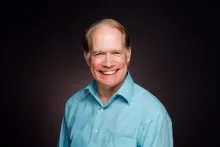
Greg Thomas is the former Pastor of the Cleveland, Ohio congregation. He retired as pastor in January 2025 and still attends there. Ordained in 1981, he has served in the ministry for 44-years. As a certified leadership consultant, Greg is the founder and president of weLEAD, Inc. Chartered in 2001, weLEAD is a 501(3)(c) non-profit organization and a major respected resource for free leadership development information reaching a worldwide audience. Greg also founded Leadership Excellence, Ltd in 2009 offering leadership training and coaching. He has an undergraduate degree from Ambassador College, and a master’s degree in leadership from Bellevue University. Greg has served on various Boards during his career. He is the author of two leadership development books, and is a certified life coach, and business coach.
Greg and his wife, B.J., live in Litchfield, Ohio. They first met in church as teenagers and were married in 1974. They enjoy spending time with family— especially their eight grandchildren.
