
Greg Thomas
This transcript was generated by AI and may contain errors. It is provided to assist those who may not be able to listen to the message.
Thank you, Emily. Thank you and your famous green guitar for special music today. Very beautiful. It reminded me of a lot of the folk music I used to play on the guitar as a teenager. Very soothing. Hopefully not too soothing. To those of you out there, if I see heads falling backward and mouths wide open, then I'll know the song was too good. So that's how we'll judge it today. Well, obviously, happy Sabbath till it's wonderful to be here to worship our great God.
And it's hard to believe that it's been nine years since terrorism struck the United States homeland. Like those seminal events in our lives, we all have specific memories of where we were the day that those towers were hit by an airplane. I mean, in my life, I know exactly where I was when Jack Kennedy was shot, when I found out he was shot.
I was in elementary school. A custodian came into the classroom and told our teacher, of course, we were wondering what the communication was about, and she burst into tears. She immediately had the entire class stand, and we all had a public group prayer for the President of the United States.
I don't know what the Supreme Court would think about that today, but frankly, we don't care, do we? I'll never forget where I was when that occurred. On 9-11, I was getting ready to leave for a trade show at the IX Center, and just before I was getting ready to leave, I had CNN on, and they said, if we have a flue splash, a small plane is hit, one of the Twin Towers, and that's all they said.
Didn't think much of it. Drove to the trade show at the IX Center, and I fiddled around with my booth a little bit, and I noticed the group of vendors like myself were all gathered around the TV, and I walked up, and I said, what are we watching here? And they said, well, one of the Twin Towers is on fire, and you could see the light, the flames coming out of it, and as we all stood there, we saw the first tower literally collapse like a deck of cards, and looking around the group, you could just see the jaws dropping in amazement that something that large, that huge, literally, like, could pancake and collapse downward.
And we knew that that was serious. Some economists estimate that we've consumed over a trillion dollars of our national treasure, a trillion dollars of our limited natural resources in increased security and to conduct war since 9-11. 9-11 should remind us that we live in a very fragile world. Western civilization and all that we hold dear is on a thin veneer of a predatory world of violence and chaos.
And a lot of times, we just simply forget that. Nine years ago today, a few events and just four airplanes changed the world forever. Have you tried to fly through an airport lately? Compared to getting through an airport, say, 10 years ago before 9-11, our world has dramatically changed. It used to be that it was very easy to go to our largest colony to the north, some call it Canada.
But now, because of increased security and restrictions, it's a lot more difficult to get in and out of our beloved neighbor to the north, the Canadian people, simply because there's so much sensitivity and concern about terrorism in the world today. Just four airplanes, a couple of relatively simple events on one day changed the world forever. Just imagine what real terrorism or a serious war, I mean with real bloodshed, tragically involving hundreds and hundreds of thousands of troops, think what that would do to our nation, what that would do to this world.
And it's for that reason, on a day like this, the ninth anniversary of 9-11, that I think it's essential for us to remember that annually God gave us something to remind us to transcend these world events, including the very tragic ones that are going to occur in the future, to remember, portray, and act out God's plan for the world.
And we know of this plan as the Holy Days, and we know it as the Feast Days. And even though, and I'll discuss this in a little more detail in a bit, even though many Protestants have discovered and are embracing the Holy Days, and I was just shocked at a recent Google search of the Holy Days to find major evangelical Protestants and complete denominations at Sunday-keeping churches embracing the Holy Days, even though that is beginning to happen.
Most people don't have a clue about what they mean or why God's Holy Days are important. Many sincere people have been told only bits and pieces about the Feast Days, and some individuals, frankly, have been taught a number of myths about them. So today, for the sermon, I would like to discuss just three common myths about the Holy Days that we observe every year according to God's plan.
Three myths, common myths about the Holy Days that we observe.
And here's myth number one.
The Feast Days were only intended for the Hebrews or Jews and given to Moses in Leviticus 23.
That's the first myth. The Feast Days were only intended for the Hebrews or Jews and given to Moses in Leviticus 23. And if you read many commentaries, if you do any research on the Holy Days, that is kind of a reoccurring theme that you will find in a lot of literature. But is that true, or is it a myth? Well, let's go to Leviticus 23, indeed, and see, as these days are introduced to Moses, let's see what God says about them. Leviticus 23, beginning in verse 1.
I'm going to move this one glass of water down here because it's almost empty and it looks like salt water.
Try this glass here. Maybe they put vodka in this one.
No, just water. Leviticus 23, verse 1.
And the Lord spoke to Moses, saying, Speak to the children of Israel, and say to them, The Feast of the Lord. Okay, that's one. The Feast of the Lord, which ye shall proclaim to be holy convocation. These are my feasts. That's two. Six days. You shall well work be done. The seventh day is a Sabbath asylum rest, a holy convocation. You shall do no work on it. It is the Sabbath of the Lord in all your dwellings.
These are the feasts of the Lord. That's three holy convocations, which you shall proclaim in their appointed times. Now, three times in four verses, we are told that these are God's feasts. He takes ownership in them. He doesn't say these are your feasts. He doesn't say these are Jewish feasts. These are Hebrew feasts. He takes ownership of them. He says, These are my feasts. Is it possible, or even probable, that others knew of and observed the Holy Days before this time in Leviticus 23? Is it possible that God had revealed the concept of Holy Day observance before Leviticus 23? Are there indications they were established or kept before that time? Now, I can't prove a negative because things are not mentioned directly in the Bible. It doesn't mean they didn't occur. For example, I cannot prove to you that Abraham never had a bowel movement. The Bible does not say he ever had a bowel movement. But I think understanding the way the human body works, because it isn't mentioned in the Bible, there's probably a pretty good indication, since he lived over a hundred years, that he did. So you cannot prove a negative. And I think that's important as we look at Scriptures. But I believe we can find indications, very strong, serious implications and Scriptures, to teach us what God had intended from the very beginning. Let's go to Genesis 1 and verse 14, at the creation itself. Genesis 1 and verse 14.
Genesis 1 and verse 14, on the fourth day, speaking of when God said, Let there be lights in the firmament of the heavens to divide the day from the night, and let them be for signs and seasons and for days and years. The Hebrew word translated seasons here is Moed, M-O-W-E-D. This word is translated feast in other Scriptures, including the one we just read in Leviticus 23. Moed means feast. In Leviticus 23, it is translated the Moed of the Lord. These are my Moed. And again in verse 4, in Leviticus 23, the Moed of the Lord. So here, in the context of the creation, the translator used the word seasons. But the Hebrew word again implies it's a festival. The translation, Bible translation, called God's Word for Today, translates verse 14 this way. And I quote, Then God said, Let there be lights in the sky to separate the day from the night.
They will be signs and will mark religious festivals, days, and years. Again, let me read that from the translation of God's Word for Today. They will be signs that will mark religious festivals, days, and years. So what we're being told here by God Himself through Moses, who wrote this, is one of the purposes of the sun and moon is to mark time to observe religious festivals. Whose religious festivals? Do you think God just thought it would be noble of Him to have the stars and the moon and the sun be able so that man could begin to worship trees and create his own religious observances? Do you think that's what the Creator had in mind? Or is He a jealous God who created the moon and the stars to mark religious festivals to worship Him the way He chooses to be worshipped? Do you think that the same orderly God who is creating all of these things on the earth might have His own religious festivals in mind when He creates the moon and the sun and says, I'm doing this partly so that they will be signs and mark religious festivals? Well, of course, they're religious festivals towards the true Creator God and not simply some convenient way for man to create the worship of His own gods. This goes all the way back to creation. Let's now go to Exodus 11, verse 10. We're going to go to Exodus. I have not yet left Egypt, and I want to make a point about the calendar that the Hebrews would use here. Exodus 11, verse 10, so that you can understand the rest of the scriptures that I will use here in the Old Testament. Exodus 11, verse 10, it says, So Moses and Aaron did all the wonders before Pharaoh, and the Lord hardened Pharaoh's heart, and he did not let the children of Israel go out of his land. Now the Lord spoke to Moses and Aaron in the land of Egypt, saying, This month shall be your beginning of months. It shall be the first month of the year to you. So God is literally changing the calendar that they were observing because they were Egyptized. They had spent many, many, many, many, many, many, many, many, many, many, many, many, many, many, many, many, many, many, many, many, many, many, many, many, many, many, many recovered. hundreds of years in Egypt. They had lost knowledge of a calendar that celebrated harvest festivals, and they were observing a calendar that celebrated the flooding of the Nile. It says, This month, meaning the springtime, when he was speaking of this, the Passover was assumed to occur. This month shall be the beginning of months. It shall be the first month of the year to you. Speak to the congregation of Israel, saying, On the tenth day of this month, every man shall take for himself a lamb, according to the house of his father, a lamb for a household. So again, God instructs Moses as to when the year should begin because Israel had become Egyptized in their culture after many generations. The Egyptians began their civil year in mid-June, around the time of the emergence of the Star Sirius, because their calendar was central to the flooding of the Nile, because the Nile brought life to them. It grew crops. It was the center of their culture. And so their year began in mid-June when they saw the emergence of the Star Sirius. The Egyptian calendar had 12 months, but it had just three weeks, and each week had 10 days. So their calendar was all warped compared to what God instituted in creation with seven days. And they had to be retaught about what God intended from the beginning.
Now that only equals, by the way, 360 days. So the Egyptians added five holy days right after one another at the end of the year to equal a 365-day calendar. This isn't going to work. This is not what God intended. So he helps Moses understand that there's a new different calendar, a new cycle, that would be centered around harvest, because God is all about harvesting human souls. He's all about salvation. So he was going to introduce a calendar that was centered around celebration of harvest seasons that represent God's plan of salvation for all mankind throughout the ages. So when we are given dates in the Pentateuch, in the five books that Moses wrote, it's using time that would occur in the Hebrew calendar, not in the Egyptian calendar. And the reason I say that is so that we can appreciate the statement going back to Genesis 8 and 4. If you'll turn there with me, Genesis 8 and 4. Now we're all familiar of the story of Noah. And Noah built an ark, and Noah and his immediate family were saved. They went into the ark. The flood waters began. Most life died. And here's what it says in Genesis 8 and 4. Then the ark rested in the seventh month, the seventeenth day of the month, on the mountains of Ararat. And the waters decreased continually until the tenth month. And the tenth month, and the first day of the month, the top of the mountains were seen. So it says, the ark rested in the seventh month, the seventeenth day of the month. The Feast of Tabernacles begins on the fifteenth day of the seventh month. Now I don't know why the ark came to rest on Mount Ararat during the Feast of Tabernacles. But it could be that the new, fresh world that Noah would find was just a small type of what would occur in the world tomorrow. It could be that leaving a destroyed world to begin a new civilization may have been symbolic of a representation of something that was far greater to occur, many thousands and thousands of years later, known as the Kingdom of God. But there is no doubt that of all the days that occur in a year, that the ark rested during the Feast of Tabernacles. There is tremendous symbolism there that God had intended at that time for those people who would read this scripture thousands and thousands and thousands of years later and have an understanding of His holy days. Let's take a look at something else that you may find interesting. Genesis 18, verse 1.
Of course, Abraham was a friend of God. Abraham had a unique relationship with God. And we see an event here that, again, if you look at everything that occurs, it certainly provides food for thought. What I'm about to say isn't doctrine. I cannot prove to these scriptures that Abraham and the three angels ate unleavened bread.
I cannot prove that. It doesn't use the word unleavened bread. I'm just asking you to think about the circumstances here and think about the discussion that would follow their dinner regarding sin and whether God would save any righteous in the city of Sodom. Let's take a look at it. Beginning Genesis 18, verse 1.
Anyway, he's at his tent door in the heat of the day.
It says, he's sitting at the heat of the day, and suddenly there are three individuals standing. He didn't see them coming. He didn't see them in a pin-dot, slowly getting closer and closer. They suddenly appear. So he knows. He's a pretty smart man. He says, hmm, they're either from the IRS or they're angels.
And he determines immediately that there's something special about them.
It says, so he bowed himself to the ground and said, my Lord, if I found favor in your sight, do not pass by your servant. Please let a little water be brought and wash your feet and rest yourselves under the tree.
And I will bring a morsel of bread, just a little bit of bread, that you may refresh your hearts and that you may pass by in as much as you have come to your servant.
They said, do as you have said. So Abraham hurried into the tent to Sarah, said, quickly make three measures of fine meal, knead and make cakes.
Quickly! And Abraham ran to the herd, ran to the herd, took a tender and good calf and gave it to a young man. And he hastened to prepare it.
So Abraham is hospitable. He wants to provide a meal, but it knows that they're not going to be there for a long period of time. He hurries, he rushes. It says he runs.
What kind of bread do you get when you quickly knead it, when you shape it into cakes and you rapidly apply it heat to feed somebody?
I want you to consider these facts in this story.
Moses is in his tent in the heat of the day and three angels, three guests suddenly arrive. The hottest part of the day is typically around 3 p.m.
Depending on the part of the earth, you're in it could be anywhere from 2 to 4 p.m. But it usually is an average about 3 p.m. on a typical day.
Genesis 19, verse 1, which we'll get to in a few minutes, states that after they leave Abraham, that the two angels arrive at Sodom in the evening, that very evening, after leaving Abraham at Mamre.
If you look at a good Bible map, you'll see that the distance between Mamre, which was north of Hebron, and what is the suspected location of Sodom, which is now under the Dead Sea, is about 45 miles' journey by road.
Now, a camel can run at a top speed of 40 miles an hour, but only for a short burst. I found out that a camel for a short period of time can run as fast as a horse. I would like to see that. I can hardly even imagine that.
But according to the article I read, they can. However, a camel can maintain a good, rapid, constant speed of about 25 miles an hour for a long distance. This means that the journey to Sodom was about two hours if they didn't stop anywhere and linger.
If they arrived in the evening, about 7 to 8 p.m. before dark, that means they would have spent about two hours with Abraham to have a meal and a short conversation with him.
Two hours is not a long time. Were they eating unleavened bread? I can't prove it. I only ask that you look at the circumstances.
Let's now go in verse 18.
And the Lord said, Because the outcry against Sodom and Gomorrah is great, and because their sin is very grave, I will go down and see whether they have done together according to the outcry against which it has come to me, and if not I will know.
Then the men turned away from there and went toward Sodom, but Abraham stood before the Lord, and Abraham came near and said, Would you also destroy the righteous with the wicked?
Isn't that the theme of the Days of Unleavened Bread? Sin, representing leaven, and unleavened bread, righteousness, representing Christ in us? Isn't that the theme of the Days of Unleavened Bread?
Is it a coincidence that after eating this bread that a discussion begins contrasting sin and righteousness?
Let's go to chapter 19 now in verse 1.
Now the two angels came to Sodom in the evening, and Lot was sitting in the gate of Sodom.
Now I'm going to say something here that is just totally my opinion. This is not doctrine. It's just how I feel. I believe that Lot was tipped off.
Alright? I believe that when Abraham was entertaining the angels, that he sent one of his servants.
Remember, this was a man who saved Lot earlier when he was kidnapped by a king. He loved his nephew.
I believe that he sent one of his servants ahead of the angels to Sodom to warn Lot that the angels are coming to check over the city.
Just my opinion, they arrived. He's standing at the gate waiting for them. Now let's enjoy this conversation.
Lot was sitting in the gate of Sodom. When Lot saw them, he rose to meet them, and he bowed himself with his face toward the ground.
He said, Here now, my lords, please turn into your servant's house and spend the night and wash your feet.
Then you may rise early and go on your way.
In other words, it's a shame that you can't stay long. Come on, my house, I'll feed you, get a good night's sleep.
Then in the morning, get on your way, you know, like, go. So that's what he says to them.
Then you may rise early and go on your way. And he said, Nah, we'll spend the night in the open square.
But he insisted strongly. Why did he insist strongly? Because he knew the evil that existed in that city.
He knew they were not safe sleeping in the square of the city. He insisted strongly. So they turned into him and entered his house.
Then he made a feast and baked unleavened bread, and they ate.
Now, what's this about? This is about a story of sin and whether there are any righteous people in this city.
What do the days of unleavened bread represent? They represent the leaven of sin and the righteousness that comes by Jesus Christ, pictured with unleavened bread, the bread of life himself, Jesus Christ.
Now, coincidence? A story about sin and righteousness? Eating unleavened bread with angels? Perhaps.
But again, to me, the symbolism is remarkable. Lot, the one man to be spared, makes unleavened bread, and the three of them eat the bread together that represents the righteousness of Christ.
Lot is going to be saved. Is this a mere coincidence? Or are there underlying symbols of Christ and God's plan in this very biblical event regarding his holy days?
Now, does it say they were keeping the days of unleavened bread? No. Does it say they were observing the days of unleavened bread? No.
All I ask you to do is look at the Scriptures, look at the context of the events, the meaning behind the events, and perhaps you can see that God had a reason in Genesis 1 when he created the sun and moon and said, One of the reasons I'm doing this is to mark off religious festivals, obviously festivals to worship God.
Let's now go to Zechariah 14, verse 16. Now, let's fast-forward to the future. Scripture we're all very familiar with. And many folks who don't like the holy days say, this is an allegory, this is a parable, this is an allegory.
Well, when do we get to choose what's an allegory and what isn't an allegory? I know, I volunteer.
An allegory is anything I don't want to believe in. And then it's not an allegory if I accept it as truth. How's that one?
Zechariah, prophecy, chapter 14, verse 16, now it shall come to pass that everyone who is left of all the nations, obviously this is after the return of Jesus Christ, all the nations which came against Jerusalem, to go up from year to year to worship the King, the Lord of Hosts, and to keep the Feast of Tabernacles.
And it shall be that whatever the families of the earth do not come up to Jerusalem to worship the King.
You see, it's always been about Christ. All of the holy days are about Jesus Christ.
The Lord of Hosts, on them there will be no rain. Verse 18, if the family will not come up and enter in, they will have no rain.
They shall receive the plague which the Lord strikes the nations that do not come up to keep the Feast of Tabernacles.
This shall be the punishment of Egypt and the punishment of all nations that do not come up to keep the Feast of Tabernacles.
Now, I want you to go back and take a look at verse 16.
This is a prophecy about what we call the world tomorrow after the return of Jesus Christ.
I want you to notice that the nations don't go up to Jerusalem the first year.
They don't go up as just some kind of token symbolism that this day is important.
After all, the Jews kept it all those years. All right, God, for your want after Jesus returns, we'll play the game. We'll go up once.
We'll fulfill a symbol. No, it says, All the nations which came against Jerusalem shall go up from year to year.
That means year one, year two, year three, year four, year 100, year 1000. From year to year, all peoples, including Gentiles, will go up to worship the king at the Feast of Tabernacles.
I also want you to notice that it is not called a Jewish festival.
It's not called a Hebrew festival because its purpose is to worship the king.
That's why God said, These are my feast. These are my days.
Now, this past week, I was in for one of the biggest shocks in my life.
In that, I Googled a phrase, and I Googled, Why don't Christians keep Jewish feasts?
And I was stunned to see that virtually every page of the top 25 were evangelical Sunday-keeping churches now embracing and endorsing the Holy Days.
Individuals like Paula White, the mayor may not mean anything to you. She's a pretty prominent evangelical.
John Hagee, who's a rotund, bombastic-type individual. Many, many, many Protestants are in a desire to discover their roots, probably because of the messianic movement within Protestantism.
And they are coming to see the meaning of the Holy Days. I wanted to quote just one. This is from Awareness Ministry of Gentlemen named Robert Somerville.
And he writes this with the enthusiasm that only someone who recently discovered the rich meaning of the Holy Days could write in the way that he does.
And I'm just going to read it, this paragraph that's on his website. Again, this is Awareness Ministry. The gentleman's name is Robert Somerville. He's a Sunday-keeping Protestant.
But here's what he says.
The biblical feast day celebrations were instituted by our God as a system for teaching and served as a liturgical calendar. They identified special times in the year for offering praise, thanksgiving, and honor to our Heavenly Father for specific acts on behalf of His people.
Every major event in biblical history occurred on a feast day.
The precise states of Noah's Ark landing on Mount Ararat, the exodus of Israel from Egypt, the giving of the law in Mount Sinai, the dedication of Solomon's Temple, the birth of Jesus, His death, burial, and resurrection, the coming of the Holy Spirit, are all prime examples of God's faithfulness to His appointed times and seasons.
Proper recognition of these special days of memorial is being restored to the Church as a vital part of worship and celebration.
That kind of shocked me. That is a dramatic shift in what you see in mainstream Protestantism going back 20-30 years ago.
But my point is that many people are coming to see the rich value of God's holy days, of His holy day plan, and what they represent and what they mean.
So again, myth number one was that the feast days were only intended for Hebrews or Jews and given to Moses in Leviticus 23. And that's a myth. Because God intended the holy days to be kept by everyone, He instituted the concept of them at creation itself, when He made the moon and the sun and instituted a calendar to mark religious festivals.
We can see through the examples of the Ark on Mount Ararat, the examples of Lot, who himself made unleavened bread for the visitors to a city of sin, when He was one of the few righteous who were there, that there are strong threads of God's holy days throughout Scriptures even before they were given, restored to Moses in Leviticus 23.
That was myth number one. Myth number two. The holy days were fulfilled in Christ and are now obsolete. The holy days were fulfilled in Christ and are now obsolete. This is a belief that the feast days are part of the old covenant. And since we're under the new covenant, old covenant observances are obsolete and they are no longer valid. Let's begin in Hebrews chapter 8, beginning in verse 1. Hebrews 8 verse 1. We'll allow the author Hebrews to contrast the two here. I believe the author was Paul. Hebrews chapter 8, beginning in verse 1. Now this is the main point of the things we are saying.
Verse 3.
Also have something to offer. For if you were on earth, he would not be a priest, since there are priests who offer the gifts according to the law. Jesus would not be a priest on earth because he was not a Levite. He is of a different order of the priesthood. Verse 5. Who served the copy and shadow of the heavenly things, again referring to the physical priest. As Moses was divinely instructed when he was about to make the tabernacle, for he said, See that you make all things according to the pattern shown you on the mountain. Verse 6. But now he has obtained a more excellent ministry, speaking of Christ, inasmuch as he is also mediator of a better covenant, which was established on better promises. For if that first covenant had been faultless, then no place would have been sought for a second. But finding fault with them, he says, Behold, the days are coming, says the Lord, when I will make a new covenant with the house of Israel and the house of Judah. So the reason the old covenant failed wasn't because God had a problem. He always keeps his promises. He keeps his obligations.
They were the ones who could not keep their responsibilities under the old covenant. Speaking of this new covenant, we're picking it up in verse 9.
Verse 11.
Now what is becoming obsolete and growing old is ready to vanish away. As Christians, we are living under the new covenant. So as we contrast the two, what is Paul telling us in these verses? Well, the old covenant was made with, indeed, the children of Israel. It was an agreement based on physical promises and blessings. Not spiritual, physical promises.
You do the right thing if you're going to get rain in good season. You're going to have good crops. You're going to be healthy. You're going to receive a lot of wonderful material blessings from God. The priest performed physical offerings to maintain a covenant relationship with God. The blessings were contingent on strict, complete obedience. Sin was punished and it was unforgiven. All the offerings did was maintain that covenantal relationship with God. But it did not forgive sin. Only the shed blood of Christ could ever forgive sin. It allowed a maintenance of their relationship to occur, those animal sacrifices. Because the people were unable to keep their part of the covenant, it was replaced and it became obsolete. How about the new covenant that you and I are under? It was brought by Jesus. It said here that he's a mediator of a better covenant, the one that we're under. It was brought by Christ and it's based on spiritual promises, eternal life. As a matter of fact, a lot of us go through, rather than physical blessings, a lot of us go through physical trials, don't we? We go through physical challenges in spite of doing the best that we can, in spite of the right motives and being close to God. We receive physical affliction in many cases, but the new covenant is based on better spiritual promises, not physical ones. Jesus, as the one high priest, shed his blood for all sin. And those who have become disciples of Jesus Christ now receive mercy for our sins. When we go and we claim that shed blood of Jesus Christ, we say, Father, forgive me. Help me through your Holy Spirit to become better, to do better, to be more faithful to your word and your values. God is pleased with that. He chooses not to focus on or remember the sins of his children because Jesus Christ paid the price for all of our sins. Christ in us makes us righteous in God's sight, even though we have flaws.
It's Christ living in us through the Holy Spirit that makes us righteous and helps us to have a relationship of Father and Child with God. Where many people go wrong in understanding the covenants is they assume that everything that was part of the old covenant is obsolete and it's not part of the new covenant. And that simply is not true.
Let me give you an example right here from this verse. Verse 10. For this covenant that I will make with the house of Israel after those days says, Lord, I will put my laws in their mind. Laws were part of the old covenant according to what we read in the Old Testament. My were their laws. Their laws had laws in the old covenant, didn't they? But you know what? Laws are also part of the new covenant.
Let's take a look at just some common sense thinking here if we can. Under the old covenant, community worship was part of the old covenant. People would go to the temple and they would worship together as a community. When the synagogues were instituted after the exile or during the exile, they would go to the synagogues.
Jesus often went to the synagogues rather than the temple on the Sabbath day to worship. Is community worship part of the new covenant? Well, of course it is. And how do we know? It's because of the written examples of the earliest Christians. They tell us so. They tell us that Paul went throughout the entire Roman Empire to raise up congregations so that they could have community worship in their cities and worship God.
How about prayer and fasting? The study of Scripture was part of the old covenant. Many biblical patriarchs fasted and they prayed often and they studied the Word of God. Are these characteristics part of the new covenant? Of course they are. How do I know that? Because of the written examples of the earliest Christians tell us so. We see the Bereans who were more noble than others because they studied the Scriptures daily. We see the example of Paul and others who fasted.
We see continual prayer on behalf of God's people. The spiritual quality of faith was part of the old covenant. You go to Hebrews 11, the faith chapter, and you see many characters in the Old Testament, including the Old Covenant, Moses and others, who it commends for their tremendous faith. Now, is faith part of the new covenant?
Of course it is! How do I know that? I know it because the written examples of the earliest Christians tell me by their example and the statements of Paul that they've had faith and they believed in the quality of faith. A ministerial order was part of the Old Covenant. It was called the Levites. They were there to serve the people, to help the people, to honor and worship God. Is a ministerial order part of the new covenant?
Of course it is! How do I know? Because of the written examples of the earliest Christians tell me so. Paul considered himself an apostle. He told others who ordained elders in other cities, we see that there was a ministerial order established to serve so the people could be servants to the people of God, to help them to draw closer to God and keep order in the Church. Repentance was a part of the Old Covenant. Many in the Old Testament prothels, prophets, REVENT!
Now, is repentance part of the new covenant? Well, of course it is! How do I know that? Because of the written examples of the earliest Christians in the book of Acts, where Peter said, repent and be baptized, every one of you in the name of Jesus Christ, for the remission of your sins, and you go on and on and you see the theme of repentance. Sanctification was part of the Old Covenant. Sanctification is a big word. It simply means the lifelong process in which we grow in the grace and the knowledge of God, and we grow in the likeness of God.
It's becoming spiritually mature as we change from being a carnal human being who is self-centered over a period of time into being one who is more God-like. That's what sanctification is. That was part of the Old Covenant. Is sanctification part of the new covenant? Well, of course it is! Most of Paul's writings are focused on encouraging people to eliminate sin and weaknesses from their lives and to draw closer to God. So here is the bottom line. How do we know if something that was in the Old Covenant is still in the New Covenant? Well, how do we know if something has validity? Well, we know it if it was practiced by example by the early church.
That's how we know. When we look at the book of Acts, when we look at the writings of Paul and Peter and James and John and others, that's how we know. Now, let me ask you this question. Do we also learn what things are no longer valid in part of the new covenant?
Of course! Take a look at the example of circumcision. We know in Acts 15 that they determined that circumcision is no longer required as a physical act. Circumcision should be of the heart. Circumcision is conversion. It's a change in attitude and frame of mind. It's not regarding cutting off a piece of flesh. So we see that, by example, things are told to us. They continue in the New Covenant. And also, by example, we see things that are no longer part of the New Covenant.
So let me ask you this question. How about the Holy Days, then? Are they obsolete? Certainly they were a part of the Old Covenant. I'm not going to doubt that. And I'm not even going to hinge on myth number one. I'm not even going to hinge on the fact, give someone the benefit of the doubt, that they were intended from creation and that they were understood when Noah's ark landed on the Mount during the Feast of Tabernacles or Lot gave unleavened bread to the angels. I'm just going to pass all over that and ask the question, aside from that, are the Holy Days part of the New Covenant? Well, let's go to 1 Corinthians 5 and verse 6. You may have already figured out that I was going to go there as an example, because we're going to see a letter that was written about 53-55 AD. A letter that's written 20 years after the death and resurrection of Christ. 20 years is a long time. I know that things I was taught by a church 20 years ago are obsolete, and I stopped believing them and teaching them. So 20 years is a long time, isn't it? In a human lifespan. What is Paul saying here to a congregation, a predominantly Gentile congregation? He's dealing with sin.
A member in the congregation who was doing something he should not be doing that violated God's law. Paul makes a comment here showing that he was writing this during the very days of Unleavened Bread themselves, but he says here, chapter 5 and verse 6, again, this is more than 20 years after the death and resurrection of Christ.
Your glorying is not good. Do you not know that a little leaven leaven is the whole lump? Let me stop there. How do Gentiles know about what leaven represents unless they were taught? How did that have any meaning to Gentiles unless someone taught them what leaven represents and the fact that it represents sin? Therefore, purge out the old leaven that you may be a new lump since you truly are unleavened, for indeed Christ our Passover was sacrificed for us. So that phrase, truly you are unleavened, can mean two things. It can mean this was written during the days of Unleavened Bread, but I think it's more powerful to understand that it means that because Christ was sacrificed for them, that they were now unleavened spiritually in the mind of God. And that's why this sin could not endure. For indeed Christ our Passover was sacrificed for us. Therefore, let us keep the feast, not with old leaven, nor with the leaven of malice and wickedness, but with the unleavened bread of sincerity and truth. What is Paul thinking here? Paul, what are you thinking? Don't you know that these days are obsolete? Didn't you get the message from headquarters? These days are done away. And how can you keep the feast? For years, I have read, people have this reasoning. You cannot keep the holy days as God intended because there is no temple, there are no Levites, there is no altar. Therefore, you cannot keep those days.
The problem with that is someone forgot to tell Paul. You see, he's writing to a congregation in Corinth. The temple isn't in Corinth. There are no Levites in Corinth. There's no altar to sacrifice animals on in Corinth. He's not expecting them. He doesn't tell them, all of you get up and go to Jerusalem to keep the feast. So what is he thinking? Here's what he's thinking. He's keeping the New Covenant holy days. There's no need for a temple, there's no need for Levites, there's no need for animal sacrifices. You worship God in spirit and truth. You acknowledge and appreciate the gift of those appointed times. And you recognize now that they're all about Christ. Every one of them always was about Christ, always will be about Christ. And you keep the feast days in a new way. That's why he says, keep the feast not with old leaven, nor with the leaven of mallet and witness, but with the unleavened bread of sincerity and truth. Paul is not teaching them the Old Covenant holy days. He's teaching the New Covenant holy days. That's what he's doing. It's a New Covenant observance with a new meaning surrounding the sacrifice of Jesus Christ.
We begin with the Passover that was fulfilled in his first coming. The Passover reminds us that it was the shed blood of Jesus Christ, the Lamb of God, who forgives all sin, who made our conversion even possible and ultimately will save all of mankind.
It's all about Christ. The days of unleavened bread, which were fulfilled in part by his first coming, that reminds us that sin is destructive. It spreads and it corrupts and consumes everything that it touches.
What is the antidote to sin? It's righteousness, the shed blood of Jesus Christ. Jesus Christ being in us that gives us the ability through the power of his Holy Spirit, which is symbolic in the day of Pentecost, which was fulfilled in part by his first coming.
That's the anniversary of the Holy Spirit being given to the Church by Jesus as our helper, to help us in our daily journey to become more like God.
We come to trumpets, which will be fulfilled at his second coming. It looks forward to the return of Jesus Christ. Atonement, which will be fulfilled at his second coming.
It looks forward to a time when Satan, the God of this present age, is dethroned by Jesus Christ himself.
The Feast of Tabernacles, fulfilled by his second coming, which looks forward to the thousand-year reign of Jesus Christ and his saints.
The Last Great Day, which will be represented by his second coming, looks forward to a resurrection and a time when all will know about the good news, the gospel of Jesus Christ, and the fact that man can be saved from their sins and that God has a plan and a purpose for all humankind.
All of the Holy Days have always been about what Jesus has done, what he is doing now as our great High Priest, and what he will do in the future. That's what the Holy Days all represent. Why would that be obsolete?
Why would something that looks forward to the future be obsolete?
Why would something that he's already done have so much meaning for me be obsolete?
I mean, I understand through the Passover that he shed his blood for me, but the majority of people who have ever lived have not accepted Jesus Christ as their Savior, as their God, as their Lord, as their High Priest.
They have yet to claim the gift of the shedding of his blood.
So why would that be considered something that's obsolete when so many billions and billions and billions have never even recognized it or accepted it?
Let's go to Acts 29 and verse 4. I could go to a number of other scriptures that show that Paul kept the Holy Days, but we'll go near the end of the book of Acts, because maybe he finally got the message.
Maybe that slow letter from headquarters came and showed up on his trip to Rome.
Acts 27 and verse 9. Acts 27, actually, we'll start in verse 4.
This is Luke discussing their journey to Rome.
When he had put to sea from there, we sailed under the shelter of Cyprus, because the winds were contrary.
And when we had sailed over to the sea, which is off Solicia and Pamphylia, and we came to Myra, the city of Lycia, there the centurion found an Alexandrian ship sailing to Italy, and he put us on board.
When we had sailed slowly many days and arrived with difficulty, off Nitus, the wind not permitting us to proceed, we sailed under the shelter of Crete, off Samone, passing it with great difficulty, passing it with difficulty.
We came to a place called Fair Havens, now the city of Lycia.
Now, when much time had been spent, and our sailing was now dangerous because the fast was already over, Paul advised them.
A couple of interesting things about this. Luke is a Gentile. How would he know about the Day of Atonement?
Why would that have any meaning to a Gentile unless he had been taught by someone, like maybe Paul, for example, that the Day of Atonement was valid?
Do you notice, I don't know about your translation, but mine fast is capitalized, the letter with a capital letter F is capitalized, because it's even acknowledged by the translators that it's referring to the Day of Atonement.
I'd like to read to you something from reary Bible notes regarding this verse.
Only one fast was prescribed by the law, and that was on the Day of Atonement.
If this was the year AD 59, the fast was on October 5. To sail this late was very hazardous. This means Paul left Caesarea in August for September and did not arrive in Rome until the following March.
And let me add, if this date of 59 is correct that they hypothesize it is, that's almost 30 years after the death and resurrection of Jesus Christ.
Almost 30 years later, the Gentile Luke refers to the Day of Atonement as being observed.
Again, someone forgot to tell Paul that the observance of these days are no longer necessary.
Now, the critic will say, well, there aren't enough references in the New Testament that they kept the Holy Days.
Well, how many do you need? If people are just keeping the Holy Days and it's a way of life, why would you bring them up over and over again?
How many times does God have to say yes before you get to the point? Is there a magic number? Is it 70 x 7? What is the number that you're looking for to realize that God is saying yes?
And the answer is, if somebody doesn't want to observe the days, it could be in there 10,000 times and they'd find a way to dance around it.
That's the truth and the reality of the situation. Hebrews 12, verse 22.
Hebrews 12, 22.
Again, I'd like to focus on the second time this phrase is used in Hebrews about Jesus being the Mediator of the New Covenant.
Hebrews 12, verse 22. But you have come to Mount Zion, under the city of the living God, the heavenly Jerusalem, to an innumerable company of angels, to the General Assembly and the Church of the Firstborn, who are registered in heaven, to God, the Judge of all, to the spirits of just men, made perfect.
To Jesus, the Mediator of the New Covenant, and to the blood of sprinkling that speaks better things than that of Abel, see that you do not refuse him who speaks, for if they did not escape who refused him who spoke on earth, much more shall we not escape if we turn away from him who speaks from heaven, whose voice then shook the earth, but now, he has promised, saying, yet once more, I shake not only the earth, but also heaven.
To paraphrase that, listen to what Christ says.
Verse 24 is translated in the New Century version this way.
You have come to Jesus, the one who brought the new agreement from God to his people, and you have come to the sprinkled blood that has a better message than the blood of Abel.
Now, the reason I read this is that three times in the book of Hebrews, Jesus is mentioned as the Mediator of the New Covenant, or a Better Covenant, and as this translation has the New Century version, he brought a new agreement.
I personally just find it remarkable that people say that you can't trust what Jesus said or what he did.
Because Jesus was a Jew.
Jesus was speaking to people who were under the Old Covenant.
Jesus himself lived under the Old Covenant.
Well, again, the Scriptures tell us three times alone here in the book of Hebrews that he was the Mediator, he was the messenger of a new covenant. Jesus brought the message of a new covenant.
Brethren, God is not the author of confusion. Some would have us believe that he spent three and a half years telling people things that would soon become obsolete.
Now, tell me, is that confusing? If you want to confuse mankind in how to worship God, have the Son of God run around for three and a half years and say and do things that are soon to become obsolete within a matter of months?
That's not confusing, is it? Or we can believe, what we're told here, is that his personal example and the things that he did were the message of the new covenant.
And yes, I'm sorry that he kept the Sabbath. I am sorry that he kept the Holy Days if that offends someone, if they want to find some way to denigrate what God has established as appointed times.
I am very sorry that people feel that way. But you cannot convince me that Jesus Christ does all of these things that are soon to be obsolete within a matter of months, so that someone can get out of keeping the Ten Commandments, get out of keeping the Sabbath, get out of respecting the Holy Days, and begin to pick and choose what they want to believe, like it's a smorgasbord table. I believe the life of Christ was an example for us to follow, and was not obsolete, and should not be filtered because he was, after all, a Jew.
Which, frankly, to me, smacks of anti-Semitism, when I hear people say those kinds of things.
Let's take a look at myth number three. I'm running out of time. Myth number three. Faithfully observing the Holy Days makes us righteous or provides salvation. Faithfully observing the Holy Days makes us righteous or provides salvation.
As I mentioned earlier, the Holy Days have one central focus, and that central focus is Jesus Christ, what he's done, what he's in the process of doing, and what he will soon do.
Some people, including the history of some of the Church of God movement, have idolized the Holy Days and forgotten about their true purpose.
I've read articles, and I've heard sermons. I've heard sermons where people spent two hours obsessing over calendar calculations of a Holy Day in which you would need advanced calculus to follow them.
And nowhere in the entire message was the word Jesus Christ ever mentioned.
I've read articles that obsess over how to keep the Holy Days and rights and wrongs and do's and don'ts and what is the exact day.
And I'm more righteous than you are because I keep it on this day because I understand that there were calendar changes and on and on and on.
And they never even mentioned Jesus Christ as King in the entire rant.
I've read where some people believe they're more righteous because of how many services they have on a Holy Day or how long their services are on a Holy Day.
They're more righteous because they have two services on the Day of Atonement because they're God's people.
I'm sorry, I must have missed that comment in the book of Leviticus about how many services to have on the Day of Atonement. Forgive me. But it can become very easy for people to begin to worship and idolize the created rather than the creator.
Some want to make the Holy Days a litmus test on how godly they are depending on how you keep it.
And that concerns me because that's a myth.
1 Corinthians 1, verse 27 We need to be reminded what makes us righteous. We need to be reminded what saves us.
What makes us righteous and what saves us? 1 Corinthians 1, verse 27 Paul wrote to the Corinthian congregation, But God has chosen the foolish things of the world to put to shame the wise, and God has chosen the weak things of the world to put to shame the things which are mighty, and the basings of the world, and the things which are despised God has chosen, and the ones which are not to bring the nothing things that are, that no flesh should glory in his presence.
But of him you are in Christ Jesus, who became for us wisdom from God, and righteousness, sanctification, and redemption.
So who became those things for us? Who became wisdom for us? Who became righteousness for us? Who became sanctification? Who became redemption? It's Jesus Christ.
It's not what we do. It's not our works that give us salvation. It's Jesus Christ's shed blood that makes us right with God.
We do not believe in salvation by works. And that includes if those works are observing the Sabbath faithfully, or observing the Holy Days faithfully. The New Century version says here in verse 30, Because of God you are in Christ Jesus, who has become for us wisdom from God, in Christ you are put right with God, and have been made holy, and have been set free from sin. So, brethren, it's the shed blood of Christ that makes us righteous, and through his Holy Spirit he's made his home in us. He said that in John chapter 14 and verse 23, that he would come and make his home in us.
There is nothing that we can do to make us righteous, or to save us, including observing all the commandments, the Holy Days, and getting 16 hours of prayer and Bible study in every day. That still isn't going to save us. The good works, the obedience that we have, are a positive indication and reflection of God's Holy Spirit in us.
We do those things, not because we believe they save us, not because we believe they make us righteous. We do those things because they're a natural reflection that Christ is in us, and our obedience is enthusiastic. It should be filled with zeal. It should be filled with an attitude that I want to please my Father in every way that I can.
Not out of fear, not out of terror, not out of worry, but out of joy and enthusiasm and godly zeal to be a disciple and an ambassador of Jesus Christ. Isaiah 1, verse 10. Is it possible for people to keep the Holy Days and literally disgust God because of an attitude that they have? They might be doing all the right things. They might keep the exact day. They might do everything ceremonially right. But is it possible that God would look down on some observances and say, That makes me sick? Isaiah 1, verse 10. Hear the word of the Lord, you rulers of Sodom. Obviously, Isaiah in this prophecy is not speaking very kindly of the rulers of Judah or the priesthood. Give ear to the law of our God, you people of Gomorrah. To what purpose is the multitude of your sacrifices to me, says the Lord. I've had enough of your burnt offerings of rams and the fat of fed cattle. I do not delight in the blood of bulls or of lambs or goats. When you come to appear before me, who has required this from your hand to trample my courts? Being no more bring, no more futile sacrifices, incense, is an abomination to me. The new moons and the Sabbaths and the calling of assemblies, I cannot endure iniquity and the sacred meeting. It's not enough just to idolize the Holy Day. God says, what's in your heart? What is your attitude when you come before me? Verse 14, your new moons and your appointed feast, my soul hates. They're a trouble to me. I'm weary of bearing them. When you spread out your hands, I will hide my eyes from you. Even though you make many prayers, I will not hear. Your hands are full of blood. I will think hateful thoughts of other people. Verse 16, wash yourselves, make yourselves clean. Put away the evil of your doings from before my eyes. Cease to do evil, learn to do good, seek justice, rebuke the oppressor, defend the fatherness, plead for the widow. You see, Israel was observing the festivals as a show. It just became a habit. It's something you do. It had lost all meaning. When you're observing God's feast out of habit, rather than enthusiastically looking forward to them and realizing the rich meaning that Jesus Christ has in every one of them, when we do it out of habit, we begin to idolize the holy days. We begin to take those days and honor them instead of the Creator. Some people idolize God's holy days and worship the created more than the Creator. They become self-righteous and smug in their observance, and condemning everyone else who isn't keeping the holy days with them or in their location, or exactly on the day or the way that they would do it. The focus should be on Christ and not on an attitude of superiority or self-righteousness. We observe God's holy days because they're a gift to us, appointed times by God, for us to honor Him and to worship Him. Notice again in verse 13, God is not pleased with observances while at the same time we're selfish or hateful or oppressing others. In verse 13, He says, I cannot endure iniquity and the sacred meeting. They're not compatible. To come before Me to worship while in your heart you hate your brother or you have some smug, arrogant, condescending attitude towards someone else who's different than you are, God says, that does not please Me. God doesn't even take ownership of those kinds of celebrations. He refers to them as yours. Instead of my feasts that He talks about in Leviticus 23, He refers to them as yours. Now let's go to Mark 2, verse 24.
Jesus makes a statement here about the Sabbath that's also true for the other feast. Mark 2 and verse 24, he said, Look, why do they do what is not lawful on the Sabbath? Well, actually, they were doing what they said was not lawful on the Sabbath.
But have you never read, Jesus said to them, have you never read what David did when he was in need and hungry? He and those with him, he went out into the house of God in the days of Abathar the high priest, and he ate the showbread which was not lawful to eat except for the priest. And he also gave some to those who were with him. And he said to them, The Sabbath was made for man, and not man for the Sabbath.
Therefore, the Son of man is also Lord of the Sabbath. Again, what Jesus says here about the Sabbath is also true of the other feast. First of all, they were made for man. And the Greek word here is anthropos. It comes from the same word we use for anthropology, something with a manlike face. He doesn't say the Sabbath was made for Jew. The Sabbath was made for the descendants of Abraham. He says the Sabbath was made for man, and not man for the Sabbath.
Christ is the Lord of the feast because they're all about him. He is the one that made the feast days. They were created for our enjoyment, and to worship God with thanksgiving. The translation, God's word for today in verse 27 says this. Then he added, The day of worship was made for people, and not people for the day of worship. For this reason, the Son of man has authority over the day of worship. So Jesus Christ has the authority to change the Passover from an old covenant time and ritual to a new covenant time and ritual.
How can he do that? Because he has authority over it. He is the Christ. He has the authority to take a holy day that under the old covenant had animal sacrifices and had lots of rituals, and to allow it to be a new covenant observance in the congregation of Corinth in which they kept the feast in sincerity and truth without those sacrifices. Who said they could do that?
Jesus Christ said they could do that. He is the one who has the authority over the days of worship. And we must understand that. We must realize that God's holy days are a tremendous gift. They reveal to us the complete plan of God for all of mankind.
It is a privilege to know about God's holy days. But let's not allow that knowledge to be transcended into something that makes us judgmental or makes us feel superior to other people because they keep the holy days in a different group than we do. Or they might observe the holy days with two services on atonement rather than one service on atonement. Or they might do something a little different than we do. Because God says, I honor you when I look at your heart on my sacred dissemblies. So He says in Isaiah, what I want to see is compatibility there between a sacred meeting and what's in your heart.
And what should be in our hearts is an attitude of thankfulness and joy and the privilege of being favored by God with being given His truth. And let's not allow that to become an attitude of arrogance or superiority because all that does is turn everybody off around us. That doesn't attract people.
That retells people. And it's very important for us to realize. So what were the three myths today in closing? Myth number one was that the feast days were only intended for the Hebrews or Jews and given to Moses in Leviticus 23.
And we saw that God at the creation designated even the heavenly signs to use them as a way to worship Him, going back to the very creation of the earth. They are referred to as My Feast in Leviticus 23 because they reveal the unraveling of His plan throughout human history that would be fulfilled by His Son Jesus Christ. Myth number two, the Holy Days were fulfilled in Christ and are now obsolete.
The Holy Days picture what Christ has already done, what He's doing now as a high priest, and what He will do in the future. The early believers understood this as they celebrated the Holy Days in their own congregations as part of the New Covenant in a new way that celebrated Jesus Christ.
And myth number three, faithfully observing the Holy Days makes us righteous or provides salvation. Observing these days does not make us righteous or it doesn't allow us to become superior to other people. They don't provide us salvation, only the shed blood of Jesus Christ can do that. God gave us the knowledge of His Holy Days as a gift and He appointed these days as a time to worship Him, to acknowledge Jesus Christ as our Savior. These days are a blessing to us and they've been appointed for our benefit. They are worshiped first and foremost. They are worship days. And we shouldn't forget that because that's what these days are all about. Well, brethren, this may be the last chance we get to see some of you. If you're traveling for parts unknown around the world, we certainly wish you a wonderful day of atonement, as wonderful as that can be under the circumstances. We wish you a great feast of tabernacles. We'll be going to the Wisconsin Dells to air out our parkas and our winter gloves and muckas and other things in the snow. But when we get back, we hope to see you and have a wonderful feast of tabernacles.
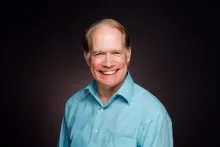
Greg Thomas is the former Pastor of the Cleveland, Ohio congregation. He retired as pastor in January 2025 and still attends there. Ordained in 1981, he has served in the ministry for 44-years. As a certified leadership consultant, Greg is the founder and president of weLEAD, Inc. Chartered in 2001, weLEAD is a 501(3)(c) non-profit organization and a major respected resource for free leadership development information reaching a worldwide audience. Greg also founded Leadership Excellence, Ltd in 2009 offering leadership training and coaching. He has an undergraduate degree from Ambassador College, and a master’s degree in leadership from Bellevue University. Greg has served on various Boards during his career. He is the author of two leadership development books, and is a certified life coach, and business coach.
Greg and his wife, B.J., live in Litchfield, Ohio. They first met in church as teenagers and were married in 1974. They enjoy spending time with family— especially their eight grandchildren.
