
Greg Thomas
This transcript was generated by AI and may contain errors. It is provided to assist those who may not be able to listen to the message.
Well, thank you again, Alan, and thank you, Mr. Housen.
And again to all of you, Happy Sabbath once again. Well, it was exactly 50 years ago, this very day and month, November 13, 1971, that I attended my very first Sabbath service as a 17-year-old teen. Someone picked me up, and I drove with him to Berea, Ohio, the old high school there in Berea. I was in awe of the arrangement of the service. It was so much different than the Methodist services that I was used to as a younger man. We had hymns. We had two messages, a shorter message, shorter sermon called the sermonette, and then a much longer sermon known, of course, as a sermon. We were there with many brethren. It was pretty well a packed house in that high school, which was good to see. I was actually very encouraged to open my Bible and be encouraged to read scriptures to the Bible, to follow along with the messages that were given. And again, growing up in the Methodist Church, very few people brought their Bibles to church. I'm not sure the pastor brought his Bible to church, but that's a different matter.
I also noticed, after services, there was a black metal box that was placed on the stage after services where brethren put in their tithes. And then after the service, the minister would take that black box home. He would put all of those in a large envelope, and he would mail all of them to Pasadena, California at the time. For the most part, the people who attended were enthusiastic about God and very serious about their beliefs. I expected the teens that I met there to be light years ahead of my own spiritual growth because they had been in the church for years. I found out over a period of time that was not the case. But thankfully, there was a good network of guys that I was able to hang out with. About my age, we bonded quickly. We became friends. One individual at services was even someone that I had known at high school. He had been attending the church all through the high school years, and here I was just reading literature and listening to a radio broadcast and being led in that direction, but we didn't know that either of us had a similar religious faith. We became, obviously, very quick friends.
It was an exciting time in the early 1970s.
But that was a long time ago. That was half a century ago. That's a long time. That's a long time. Five decades. Half of a century. To make an understatement, things have changed greatly since then. Our society and our culture is dramatically different than it was in the early 70s. Our technology just boomed. We could not, in our wildest dreams, have imagined the kinds of things that we have at our fingertips today in the 21st century. The Church of God changed greatly over that period of time. And, of course, I myself have changed greatly over those 50 years. So, in this sermon today, what I would like to do is I'd like to share with you some of the major life lessons that I have learned about God and His Church over the past 50 years. Since that time, when I walked through that door in Berea High School on November 13, 1971, let's begin by going to 1 Corinthians 13 and verse 4. 1 Corinthians 13 and verse 4.
Paul wrote that love suffers long and is kind. Love does not envy. Love does not parade itself. It is not puffed up. It does not behave rudely. It does not seek its own. It does not provoke. It thinks no evil. It does not rejoice in iniquity, but rejoices in the truth. Bears all things. Love puts up with an awful lot of stuff.
That's part of endurance. That's part of enduring for a long time, including enduring for 50 years and beyond. Bears all things. Believes all things. Hopes all things. Endures all things. Love never fails. But whether there are prophecies, they will fail. Whether there are tongues, they will cease. And in the past, frankly, the Church made prophetic statements about dates and times that were not true. Every year there are languages on earth that go extinct. You can easily find that on Google. A certain number of languages every year die out forever. Knowledge changes. What we thought in the early 1970s about the universe and about science was incomplete. We know a whole lot more about the universe and science and so many other things 50 years later.
So it says here that whether there are prophecies, they will fail. Whether there are tongues, different languages, they will cease. Whether there is knowledge, it will vanish away. It will be replaced by real knowledge, greater knowledge, more accurate knowledge. Verse 9, For we know in part, and we prophesy in part, but when that which is perfect has come, when Jesus Christ returns, and He's the one who's perfect. But when that which is perfect has come, then that which is in part will be done away.
So Paul's saying, I see the world in part. I don't see it fully as it is, because I'm human, because I'm limited. From my mental capacity to the way that I view everything is a product of my culture, my upbringing, the world that I grew up in. I only see things in part, is what Paul is saying. But when that which is perfect has come, when Jesus Christ returns, that kingdom is established on the earth, then that which is in part will be done away. Then I will know fully, completely, absolutely all prophecies and all knowledge, all truth and all love.
Verse 11, when I was a child, I spoke as a child. I understood as a child. I thought as a child. And I can say, looking back now, that age 17 is pretty young. When I was 17, no one could have told me that. I certainly thought I was smart and responsible to make all of my own decisions, that I was a pretty mature individual. But the longer you live, the more you realize that at age 17, you are just a young kid. You haven't experienced very much in life yet. So, as Paul says here, when I was a child, I spoke as a child. I understood as a child.
I thought as a child. But when I became a man, when I grew up, as we spiritually mature, we could say, I put away childish things. We changed. Things that interest us when we were 17 were no longer interested in it, 50 or 60. Our interests have changed. Our minds have grown and matured. There are other things that are important to us now. I put away childish things, for now we see in a mirror dimly. Again, we're physical beings.
The things that we think we know, we really know dimly by looking at them in a mirror. But then, face to face, when Jesus returns, we'll see Christ, we'll be with Christ, we'll be spirit with Christ. So then, face to face, we will know, truly know, completely know and understand. He says continuing, now I know in part, because he was physical, but then I shall know. In other words, he'll have the fullness of understanding, just as I am also known.
Just as God knows me now, God is spirit, and God looks down on our hearts, and God knows us better than we know ourselves. He knows our thoughts, our motives, our attitudes, our intentions, even though sometimes we deny our thoughts, our motives and intentions. We live in a land of denial.
Often, you can't fool God. He looks down and he sees our hearts and our minds and our attitudes the way it truly is. Verse 13, and not abide faith, hope, love, these three, but the greatest of these is love, Paul says. So what Paul is reminding us here is that the purpose of this physical life is to grow in mature and godly love.
Paul is humble enough here to say he didn't know everything. He was humble enough to admit that there are spiritual things that he saw dimly. Are we humble enough to admit that? Or do we think it's a sign of weakness or some type of vulnerability that we don't have all of the answers? Well, Jesus said in John 16, verse 12, He said, I still have many things to say to you, but you cannot bear them now.
Jesus told his very own disciples in the eve of his death that you're not grown up enough yet. You're not mature yet to understand certain things, so I'm not going to reveal them to you right now. You see, growing is progressive. Understanding what truth is is progressive. Matureing is progressive. It takes time. It takes experiences. It takes trying something and realizing, I was told that was true, but that obviously doesn't work.
Maybe I should try something else. Maybe I should look at it in a different way. Maybe I should respond in a different way. So that's what growing and maturing is all about. Jesus also said there in John 16, He said, However, when he the Spirit of truth has come, he will guide you into all truth. Now, it's interesting that Greek word guide, hoda yao, and it means he'll show the way.
This spirit will show the way to truth. You know, there's an old saying, you can lead a horse to water, but you can't make him drink. All God's Spirit can do is lead us to truth. We have to accept it as truth. We have to accept real truth as truth. But if we already have an agenda, if we already have come to a conclusion in our minds that something different is the truth, we won't even recognize the truth, though the Holy Spirit led us into that.
So, this is the spiritual prism that has led me to learn many lessons about God's Church and God's people and myself and spiritual maturity. So, while we're in the book of Corinthians, let's go back to chapter 12. The first major lesson that I've learned in 50 years, since 1971, is what really is the Church?
What really is the Church? 1 Corinthians 12. So, Paul's going to draw a beautiful metaphor here between the human body, human physical body, and the body of the Church, the body of Christ, which is the Church, which is a spiritual body, not a physical body. 1 Corinthians 12. Paul writes, Paul writes, For in fact, the body is not one member, but many members. And he continues his metaphor. Verse 15, if the foot should say, Because I am not the hand, I am not of the body, is it therefore not of the body?
Of course, the foot is part of the body. It's a very necessary part of the body. If you want to stand, if you want to be mobile, if you want to be able to walk, you need to have a foot. It is different than the hand, but it's no less important or valuable than the hand is. Verse 16, if the ear should say, Because I am not an eye, I am not of the body, is it therefore not of the body? Well, of course, that's ridiculous. They're two totally different senses, both of which are very important to the body.
If the whole body were an eye, where would be the hearing? And if the whole were hearing, where would be the smelling? But now God has set the members, each one of them, in the body just as He pleased. As God has pleased, as God has desired. And yet, they were all one member. Where would the body be? But now, indeed, there are many members, yet one body. So in His time, those members might be Jews, might be Greeks, might be free people, might be slave people, would be males, would be females, would be people who are artisans, people who are aristocrats, people who are poor, people who are wealthy, those who are in the ministry, those who are members.
You see, all of these contribute a very important part in playing for helping the church to grow and be all that God desires it to be. Verse 21, any eye cannot say to the hand, I have no need of you, nor again the head to the feet I have no need of you, no much rather, those members of the body, which seem to be weaker, are necessary.
They're all necessary, every part of the body. Someone might say, well, I'm a widow, there's not a whole lot I can do physically, Mr. Thomas. You can be a prayer warrior. You have more time to pray than everyone else, certainly more than an active young couple that are trying to raise some children and maybe working outside of the home 40 hours a week.
You've got lots of time in your hands, you can be a prayer warrior. So we all have a very important part to play. Verse 23, and those members of the body, which we seem to be less honorable on these, we bestow greater honor. And on our unprecedented parts, have greater modesty.
So we wear pants, and we cover up the things, areas of our body that we want to show more modesty. We cover those parts up, but they're all important. You don't think those parts are important? Go a week constipated and see if your bowels are important. Have a bladder infection for three days and see if your bladder is important. Everything is important, whether we cover it up or not. It all makes the body function. All essential. Verse 23, and those members of the body, which we think to be less honorable on these, we bestow greater honor.
And on our unprecedented parts, we have greater modesty. Verse 24, but our presentable parts have no need. That is no need to be covered up, have no need for greater modesty. But God composed the body, having given a greater honor to that part which lacks it. That there should be no schism in the body, but that the members should have the same care for one another. And if one member suffers, all the members suffer with it. Or if one member is honored, all members rejoice with it.
Now you are the body of Christ and members individually. So what Paul is saying here is that the Church of God is a spiritual organism, spiritual body, led by the Spirit of Jesus Christ. And it has nothing to do with human organizations. The Church that Jesus built is a spiritual body, and it's led, it's guided by the Spirit of God. It has never been a human organization limited to an organization's name. Now, humanly speaking, people of like mind or of similar purpose create organizations to work together to achieve certain things. That's what we do as a people.
We create organizational names that give us an identity. For example, this is true of families. You have a family name. Your family is an organization. Ideally, it's composed of a mother and father and children. It might be extended to grandparents and great-grandchildren.
It may go pretty far and pretty deep, but it's an organization. It functions like an organization under your family name. Businesses are organizations. Microsoft is an organization. Apple is an organization. They're all organizations. Governments are organizations. We live in the United States of America. That's an organization. We also live in the state of Ohio, another identifier. That's an organization. It functions like any organization.
There are church organizations in which people of like mind gather because they want to share a common mission or they have similar beliefs. They gather together and they create an organization, and they give that organization a name. The true church of God is a spiritual organization, and it is not limited to organizational names. For example, within the United Church of God are individuals who absolutely, obviously are part of the spiritual body of Jesus Christ. You know that by seeing their fruits, by seeing their lives. But there are people in other organizational names, again created by groups of people who have similar beliefs, who also have this spirit of God. Because the church of God is spiritual, and it's not limited to any organization or any organizational name.
Organizations are a human concept. And that's very important for us to understand. That's one reason, by the way, that we pray for those who have left us. Oftentimes we'll have a prayer request for a couple who used to fellowship with us, and we're bringing together goods to help them out.
It's because we try not to judge them. We don't know where God is working in their lives. Hopefully, in some cases, they'll be like the prodigal son, and they'll come back home. But meanwhile, we want to give people the benefit of the doubt. It's why we pray for people who attend different fellowships than our own. Because that's the Christian thing to do. Because they may very well, though they're part of another fellowship somewhere else, be part of the church of God, which is a spiritual body. And all of this is very important for us to understand.
There are other individuals and other organizations who are also part of the spiritual body of Jesus Christ. Where are they? Who are they? That's none of our business. That's really none of our concern. It's not our job to judge them. It's not our job to determine who God is working with or who God is not working with. We have a job to do. As Paul stated in Romans chapter 14 and verse 4, he said, Who are you to judge another servant to his own master? He stands.
Or falls. Paul's referring to church brethren judging each other. The servant that he's talking about, being judged, the servant, it's Jesus Christ who owns them. And Paul is saying, Who are you to judge a servant of Jesus Christ? He will decide whether they're right or wrong. He will decide whether they stand or they fall. And that's very important for us to realize, including what we've all experienced the last two years, where there have been far too much judging on whether someone's wearing a mask, not wearing a mask, being vaccinated, not being vaccinated. That's a very important scripture from Romans 14 to remember and keep in mind.
And this leads me to another question, another thing that I've needed to come to grow and understand over the years, and that is, who does God work with? Who does God work with? Well, I can see within the Church of God movement. I certainly can see within the United Church of God that God is absolutely, positively working with individuals. You see the changed lives, you see the fruits. It's an obvious indication that God's Spirit is at work. And that's wonderful. But there's something else that we need to keep in mind regarding God's authority and what God can do.
Let's go to Numbers 11 and verse 18. Let's see a situation that occurs here in the time of Moses and see maybe something that we can learn from this about God. This is something that I had to learn about God because it was dramatically different from what I had been taught and believed in 1971. Numbers 11, to give you a little context, the people had whined for meat. Their whining, of course, had implications of judging that God is not serving us, Moses isn't serving us. It was better in Egypt.
Things were so much wonderful back in Egypt. Again, talking about denial, human denial, living in a fairy land. And let's pick it up here in verse 21. And Moses said, The people whom I am among are six hundred thousand men on foot. That doesn't even include women and children. Could have been two, two and a half million people. Moses is saying to God, there's a lot of people here, Lord. You have said I will give them meat that they may eat for a whole month.
Shall flocks and herds be slaughtered for them to provide enough for them? Or shall all the fish of the sea be gathered together for them to provide enough for them? And the Lord God said to Moses, has the Lord's arm been shortened? God says, you don't have to do this, Moses. Have I let you down yet? God says to Moses. Is there anything that I can't do? Moses, have some faith here. Now you will see whether what I say will happen to you or not. Verse 24. So Moses went out and told the people the words of the Lord, and he gathered the seventy men of the elders of the people, and placed them around the tabernacle.
Then the Lord came down in the cloud and spoke to him, and took the spirit that was upon him, the same Holy Spirit that Moses had, and placed the same spirit upon the seventy elders. And it happened when the spirit rested upon them that they prophesied, although they never did so again. At one time of prophesying was this a sign to everyone else?
That God took the spirit that was on Moses, and he's given it to these seventy people. Only needed to do it once for everybody to see, yep, it's an absolute miracle. God did it. I believe. I get it. So that's why it never happened again. Verse 26. But two men had remained in the camp. You see, they weren't around the tabernacle like everybody else was. They remained in the camp. The name of one was El-Dad, and the name of the other was Medad, and the spirit rested upon them. Now, they were among those listed who had not gone out to the tabernacle, yet they prophesied in the camp.
They were like everyone else, except they didn't go around the tabernacle like everyone else. Then the young man ran and told Moses and said, El-Dad and Medad are prophesying in the camp. Joshua, the son of Nun, Moses' assistant, one of his choice men, answered and said, Moses, my Lord, forbid them! They're not like us! Why, they weren't around the tabernacle. They didn't do it the right way. They did it a different way. Verse 29, then Moses said to them, Are you zealous for my sake? O, that all the Lord's people were prophets, and that the Lord would put his spirit upon them.
And Moses returned to the camp both he and the elders of Israel. You see, brethren, there's a good lesson here. The two men were not doing everything exactly the way everyone else expected. Even the young Joshua criticized them. But it was God who gave them his spirit in the camp, not around the tabernacle. People, because we're carnal, we just want everything to be so black and white and right and wrong and put God in a box, and God has to do this, and God only does this, and this is only done this way.
And that's a human dysfunction to look at the world, to look at whom God works with in that way is a spiritual dysfunction. Again, we all like things easy. We all like simple answers. We all like cliches. We like to put God in a box.
But the truth, brethren, is that God is allowed to work with anyone and anywhere he chooses to. We don't decide who God is allowed to work with. He does. He makes those choices for his own reasons. Let's see another example here. 1 Kings chapter 19 and verse 11. Elijah was threatened by Jezebel, so he's a little bit terrified. He's been beaten down. He's starting to feel like a martyr. And he meets God at Horeb. So let's see what happens here in 1 Kings chapter 19 and verse 11. Then he said, Go out and stand in the mountain before the Lord, and behold, the Lord passed by, and a great and strong wind tore into the mountains and broke the rocks into pieces before the Lord.
But the Lord was not in the wind. There's no presence, Lord. The wind doesn't say anything to the prophet. And after the wind and earthquake, but the Lord was not in an earthquake. And after the earthquake, a fire. But the Lord was not in the fire. And after the fire, a still, small voice. Elijah. Not ferocious. Not earthquakes. Not winds. Not power. Elijah. A small, still voice. So it was when Elijah heard it that he wrapped his face in his mantle and went out and stood at the entrance of the cave.
Suddenly, a voice came to him and said, What are you doing here, Elijah? Elijah, get to work! What are you doing here? You have a mission to fulfill. Verse 14, and he said, I've been very zealous for the Lord God of hosts because the children of Israel have forsaken your covenant, tore down your altars, killed your prophets with the sword, and I alone and left, and they seek to take my life. That's his really? Then the Lord said to him, get to work, go return your way to the wilderness of Damascus, and when you arrive, anoint Hazael, the king over Syria.
And after you're done with that, you shall also anoint Jehu, the son of Nimshih, as king of Israel, and Elisha, son of Shebat, of Abel, Meholath. You shall anoint as a prophet in your place, and it shall be whoever escapes the sword of Hazael, Jehu will kill, and whoever escapes the sword of Jehu, Elisha will kill. Yet, verse 18, I have reserved seven thousand in Israel, all whose knees have not bowed to Baal, and every mouth that has not kissed him.
So God is saying to Elijah, stop making a martyr of yourself. First of all, you alone are not the last faithful one. It just so happens that there are seven thousand other people who are faithful to me. And I've got a job for you to do, and you're sitting around in this cave feeling sorry for yourself.
And true, Elijah had been greatly persecuted, but he thought that he was the only one. He thought that he was unique. He believed he was the only one left in Israel who worshipped God and had not sold out to Baal worship. He was feeling sorry for himself. And again, he had developed a martyr's complex. But God tells him there are seven thousand others unknown to Elijah. Why? Because God works with anyone he wants to. He doesn't need to tell us about it. He doesn't need our permission.
Because that's why he gets the title God. He has that authority. He has those prerogatives. So he tells him there are seven thousand others unknown to Elijah who were faithful to God because God gets to choose whoever he will work with. Let's go to John chapter 1 and verse 29. Go to the New Testament now. See some examples pertaining to John the Baptist and Jesus. What they said, what they taught.
John chapter 1 and verse 29. We're all familiar with Jesus being baptized by John the Baptist. And this is the event here. John commenting on that. John chapter 1 and verse 29. The next day John saw Jesus coming towards him and said, Behold the Lamb of God who takes away the sin of the world.
This is He of whom I said, After me comes a man who is preferred before me, for he was before me. John says he's coming after me, but he's preferred. He's the Son of God. He's existed since the beginning of time. He's literally the Lamb of God, and he's preferred before me, even though his ministry begins after mine. Verse 31. I did not know him, but that he should be revealed to Israel. Therefore I came baptizing with water, and John bore witness, saying I saw the Spirit descending from heaven like a dove, and he remained upon him. So Jesus is baptized by John the Baptist. So what do you think John did after this event?
Do you think he joined Jesus, the one he said was preferred above me? Do you think he became a disciple of Jesus? Do you think maybe he went into retirement, he collected from the Prophet's pension fund for the rest of his life? Well, let's go to John chapter 3 and find out what he did.
A few chapters later, John chapter 3 and verse 22. After these things, Jesus and his disciples came into the land of Judea, and there he remained with them and baptized. So Jesus is baptizing. That's part of his mission. That's part of what he does. Now, John also was baptizing. What? Two ministries? At the same time? John also was baptizing at Aenon near Selim because there was much water there. And they came and were baptized, for John had not yet been thrown into prison.
Then there arose a dispute between some of John's disciples and the Jews about purification. And they came to John and they said to him, Rabbi, you have a competitor. And not only a competitor? You're losing what they tell him. He, referring to Jesus Christ, who is with you beyond the Jordan, to whom you have testified behold, he is baptizing just like you. And all are coming to him. John answered and said, A man can receive nothing unless it's been given to him from heaven. You yourselves bear me witness that I said, I am not the Christ, but I have been sent before him.
Verse 29, He who has the bride is the bridegroom, but the friend of the bridegroom, he's referring to himself, as the best man, as the friend of the bridegroom, whom stands and hears him, rejoices greatly because of the bridegroom's voice. Therefore, this joy of mine is fulfilled. He must increase, but I must decrease. You see, John refuses to play the competition game.
He says, look, he's doing what God called him to do. I'm completing my ministry of what God called me to do, John says. And I think it's wonderful that more people are now going to him to be baptized than me. You see, there's no competition there. There's no bitterness, no resentment, because someone was first, someone was before someone else. John doesn't feel that way at all.
I'm going to read verse 29 from the new century version. The bride belongs only to the bridegroom, but the friend who helps the bridegroom stands by and listens to him. He is thrilled that he gets to hear the bridegroom's voice. In the same way, I am really happy. He must become greater, and I must become less important. What an incredible example of humility.
John the Baptist shows us all here. It's not about who gets to be number one, who gets the most attention, who has the bigger attendance numbers. It's not at all. It has nothing to do with it. When you look at things from a spiritual perspective, what did John do after he baptized Jesus? He continued his ministry because he still had work to do.
Jesus didn't feel threatened by John's ministry, and John was happy. Jesus' message was becoming so well received. And God continued to work with both of them. Although, indeed, by now most individuals appear to be going to Jesus for baptism and to hear the good news of the kingdom of God. Remember, God is allowed to work with anyone whom he chooses. Luke 9 and 49.
Let's turn there and take a look at an example of something Jesus said. Luke 9 and 49. Luke 9 and 49. Then John answered and said, We saw someone casting out demons in your name. They were casting out demons in the name of Jesus Christ in your name. And we forbade him because he does not follow with us. He's not here. He's not one of our group. So we told him, stop it. You can't do that. You're getting outside of the box that we've put God in.
But Jesus said to him, Do not forbid him, for he who is not against us is on our side. Jesus is saying, don't worry about what other people do. Don't judge them. Just let them do what they feel they've been called to do.
And you, my disciples, do and fulfill the commission that I've called you to do. Stop judging, mind your own business, and stop worrying about what other people do. And having this competitive attitude that we must destroy someone who's not one of us. We must harm someone. We must condemn someone. We must judge someone who's not exactly like us.
This statement, by the way, of John comes from the same group of men who fought over which one of them would be greatest in the kingdom of God. John 10, verse 14. Take a look at another scripture here from the New Testament, something Jesus says. John 10, verse 14.
Jesus says, I am the good shepherd, and know my sheep, and am known by my own. As the Father knows me, even so I know the Father, and I lay down my life for the sheep. And other sheep I have which are not of this fold.
What? Get them back in the box. You can't do that.
Other sheep I have which are not part of this fold, them also I must bring, in other words, I'll work with them. I must bring that they will hear my voice, and there may be one flock with one shepherd. Therefore my Father loves me, because I lay down my life that I may take it again. So, brethren, God works in ways and with individuals we don't even know about. Now, am I saying that everyone who claims to be a Christian, or all of these churches that exist out there, who do things that are against the Ten Commandments, or against the Law of God, are somehow Christian? I'm not saying that at all. But what I am saying is it's wrong to have a mindset, the mindset in 1971. It's wrong to have the mindset that my church with an organizational name of whatever it is, is the one true church. And the only people that God works with are the people that are within the organizational name, which is the one true church. That's something that I had to learn. It was a very difficult lesson, but something I had to learn and understand. Brethren, the truth is, out of a world of 7.7 billion people, it's the pinnacle of self-righteousness and arrogance to think that God is only working with a few thousands of people over the entire earth out of 7.7 billion who walked this planet today. Let's humbly give God the right to work with anyone, any group, anywhere He chooses. Who are they? Where are they? It's none of my business.
I have a work to do. You have a work to do. And we need to be about doing it. And not be judging and worrying about whether God's working through these people or this fellowship or this denomination or this group or this group. That's just wasted energy. It's judgmental and it provides nothing good or healthy for the Church of God. Another thing that I came to understand since 1971 was the nature of God and His truth. And this is the final point that I'll mention in this sermon today. Let's go to Acts 28, verse 30. Really a remarkable thing that it says about the Apostle Paul. The very end of the book of Acts, these verses. The incredible thing about Jesus Christ is that He was a very humble man. He rarely talked about Himself and His divinity. A few times in John, scattered throughout the other Gospels, He just simply did not talk about Himself because it wasn't about Him. He had a mission. He had a job. He fulfilled that mission. He oftentimes gave vague references about who He was. Jesus was a very humble man. It wasn't about Himself that He talked about. It was a mission, the good news of the coming Kingdom of God. But after He was resurrected, Paul and the early Church got the connection that something dramatic had occurred. So let's read about it. This is the end of the book of Acts. Then Paul dwelt two whole years in his own rented house and received all who came to him, verse 31, preaching the Kingdom of God. Now this is a Greek word that means proclaiming, like an herald, the Kingdom of God. And... there's something attached to the Kingdom of God now. This is different. And... teaching... this is the Greek word darasko. In other words, helping people to learn, being taught, and teaching the things which concern the Lord Jesus Christ with all confidence, no one forbidding Him. So Paul is now incorporating within the Kingdom of God who and what Jesus Christ is. And he's teaching them. The prophet Isaiah, he speaks about the suffering servant. That's the Lord Jesus Christ. The book of Psalms, this verse here, that refers to Jesus Christ. He fulfilled that. So Paul, along with preaching the Kingdom of God, introduces things which concern the Lord Jesus Christ. And he does it with all confidence. It says, no one forbidding Him. I want you to notice what Paul includes as part of the Gospel message. The things that concern Christ Jesus Himself. So why is this focus on Jesus Christ an essential part of the good news of the coming Kingdom of God? Well, whose birth and mission was prophesied and advanced by the Old Testament prophets? Who's the one individual whom all the Holy Days are centered on, from the first to the last? Whose sacrifice makes it possible for our sins to be forgiven? Whose resurrection makes it possible for our resurrection to even occur, for us to be changed from mortal to immortal and even be in the Kingdom of God? Who is the King of this coming Kingdom? Well, of course, the answer to all of those questions is Jesus Christ Himself. 1 Corinthians 1 and verse 30. We'll go through some scriptures here in 1 Corinthians. Chapter 1 and verse 30.
Some people, again, this is going back to now, what was taught and believed by many in 1971, believe that if you mention Jesus, that somehow diminishes from the Father's glory. See, they're looking at God as if it's a human father and son relationship, which are often dysfunctional and competitive. But in this place of God, it is not dysfunctional and competitive. When you give glory to one, you give glory to the other.
1 Corinthians 1 and verse 30. But of Him you are in Christ Jesus, who became for us wisdom from God, became for us righteousness, became for us sanctification, growth towards perfection, became for us redemption, made it possible for us to be redeemed. Verse 31.
Paul said that's the focus of my ministry. Because if you want to talk about the Kingdom of God, your message now is incomplete. Unless you also mention all the things concerning the Lord Jesus Christ and how He relates to that Kingdom, how He makes that Kingdom possible. This is what Paul is saying. Verse 3. Many scholars think that he was ill. He wasn't feeling very well physically when he arrived in Corinth. I was with you in weakness and fear and in much trembling. My speech and my preaching were not with persuasive words of human wisdom, but in the demonstration of the Spirit and of power that your faith should not be in the wisdom of men, but in the power of God.
I'm going to read verse 2 from the translation of God's Word for today. While I was with you, I decided to deal with only one topic, Jesus Christ, who was crucified. Again, that's from the translation of God's Word for today. Paul puts, first things first, and so should we. So should the Church of God. To fully walk God's way of life requires a number of things, but we should never put anything, any requirement, any need before the core of our faith, Jesus Christ. Only when we have the right foundation will God's way of life bear fruit in our lives. Over 50 years, I've seen some very sincere individuals focus on everything but Christ, instead of focusing on Christ crucified. I've seen people focus on cosmetics, counting days, college accreditation, whether it's godly or not, which person is in charge of a human organization, which brand of marshmallows have a K on the package, and sadly I could go on and on, including whether someone is wearing a mask or not, or whether someone's been vaccinated or not. It doesn't change. Only the items change. The attitudes, the problems don't change. Brethren, Paul reminds us here that what really matters is knowing Christ and having a relationship with God. As part of this, it's also important to realize who in our lives we should idolize. I'm just stunned by the way in our culture today that we idolize, for example, celebrities and athletes. There was a headline the other day, a man who traveled in space with Bill Shatner dies in plane crash. Right? No, Mr. Shatner was Captain Kirk in the original Star Trek episode. No one knows who this guy was, but it's important because he was on a spacecraft with William Shatner. But that's just the way our culture is. If a basketball player burps, if an actress is on her third boyfriend this week, that's all news, entertainment, that's all over the headlines. We have a world that is focused on idolizing other human beings, making more out of them than they are, making more out of them that they deserve. Well, you know, religious people do that, too. Jesus Christ is sinless. He's the son of the Father. He's God from the beginning of time. Jesus is our Savior and High Priest. Along with the Father, Jesus Christ is the one whom we should praise, the only one whom we should praise. We should never put men on a pedestal. That's unbiblical, and I've seen it destroy the faith of thousands over time, because human beings are flawed. Human beings are selfish. As Paul said about himself in Romans 7, verse 14, he said, I am carnal, sold under sin. And when you put a human being on a pedestal, eventually some situation is going to come, and that pedestal is going to be kicked out from under them, and the real them is going to be exposed. Our hope should be in God. Our faith should be in God. The only one we should ever idolize should be God. We should respect our historical church leaders and appreciate what they did. We certainly should appreciate how they served us, but we should never idolize them, never quote their words as if it's some part of inspired Scripture, because it's not. The difference is, this is stood the test of time. People are quoting from Paul almost 2,000 years after he wrote.
That's how important this is. And we shouldn't be confused by things that other people write, by putting them on a pedestal or thinking that what they said is somehow inspired or incredible or great. They all, all human beings, all ministers, all church leaders, have feet of clay.
And they're simply human vessels that God works with for a time, like he did the ancient patriarchs. And we went through some sermons to see how the patriarchs were human beings and had feet of clay, and sometimes were very deceptive and sometimes didn't do what God told them to do, because they're human. And that's why we should never, ever, ever, ever put human beings on a pedestal. I was just talking to a gentleman a couple weeks ago who called me out of the blue. I don't really know him. Struggling with various things, just all kinds of problems. Yeah, I said, I was called into the church in the 1970s. I heard so-and-so on the radio. Man, was he good! I told all of my relatives, you've got to listen to this guy. He's really good! And the problem with all of that is he built his Christianity in the wrong foundation.
He built his Christianity on the foundation of idolizing a man.
Instead of idolizing our Lord and Savior, Jesus Christ, and our God.
Let's go to John 17, verse 1.
Jesus spoke these words, it says, lifted up his eyes to heaven and said, As you have given him authority over all flesh, that he, this is referring to Jesus Christ, should give eternal life to as many as you have given him. And this is eternal life, that they may know you, the only true God, and Jesus Christ, whom you have sent. Not just the Father, and Jesus Christ, whom you have sent. I've glorified you on earth, I've finished the work which you have given me to do, and now, O Father, glorify me together with yourself, with the glory with which I had with you before the world was. As I said earlier, Jesus Christ and the Father are not in some kind of competition for glory or attention. That's what human beings do. Jesus said in John chapter 10, verse 30, I and my Father are one. You want to get to know the Father? That's wonderful. And I'm going to explain to you how you can do that, the only way you can do that. Because the Father, there isn't much about the Father. There are a few brief cameo performances and visions and things in the Old Testament and New Testament. His presence is sometimes mentioned briefly, but there's only one way to get to know the Father. And that is to study the life and teachings of Jesus Christ, who said, the Father and I are one. So if you want to know the Father, you need to know the Son. And then you'll understand exactly what the Father is like, what He believes, how He believes it. That's why there are four accounts of the life and teachings of Jesus, the four Gospels. That's why in all of Paul's 14 epistles, if you include Hebrews, there's always an emphasis on Jesus Christ. They give glory to one, does not diminish glory to the other. Again, that's human, carnal thinking, presupposing that God is like we are, and God is not like we are. Our final scripture, 1 Corinthians chapter 3 and verse 10. 1 Corinthians chapter 3 and verse 10.
This is something that to me is very important, because in the early 70s and 80s, I saw many very sincere people come into the church and immediately build the wrong foundation of their entire Christian life. What was important to them? Build it on the wrong thing. And if you build your foundation on the wrong thing, when the trials come, when the storms occur in life, and they will, your foundation will crumble. It will fall to pieces. And then you're either going to fall away, or you're going to have to quickly rebuild your foundation of what is true and right. Paul says in 1 Corinthians chapter 3 and verse 10, According to the grace of God, which was given to me as a wise master builder, I have laid the foundation, and another builds on it. You know, after Paul Peter came, and he preached in Corinth, Apollos came, he preached in Corinth. So Paul laid the foundation, but others came after Paul left, and they helped the congregation, continuing, but let each one take heed how he builds on it. For no other foundation can anyone lay than that which is laid, which is Jesus Christ. Jesus Christ is the only foundation that won't crumble when physical and spiritual storms happen in our lives. Some people I know built foundations of prophecy. It's all they talked about. It's all they prophecy, prophecy, prophecy, prophecy. And when things didn't happen as quickly as they thought, or at the time when the church had implied they would happen, their foundations crumbled to dust. Some people built their foundation on escape to a place of safety. I just need to endure until I can get to the place of safety, the place of safety. Well, time went on. No one was called to a place of safety because that was their foundation. The foundation crumbled, turned to dust, and they're long gone. The foundation of weirdo tangents. I could give a sermon on this. The many, many weird agendas and doctrines people come up with. That's their whole foundation for belief. Their whole belief system is, I know something you don't know. That makes me superior. So let me tell you about it. Let me hand literature out in church. Let me put something on the bulletin board.
Foundation of weirdo tangents. The foundation of hero worship of leaders. I saw many people do that, including the gentleman I talked on the phone with. His problem is he came into the faith originally on the wrong foundation, and he's been struggling ever since. To rebuild the right foundation, which is Jesus Christ. There are many other foundations people have built their Christian walk on over the years, but only one lasts. Only one gives you the ability to endure. And that's the one that Paul mentions here, which is Jesus Christ.
Well, brethren, that's all I'm going to discuss today. I just wanted to give you some basic understanding of some of the things that I've learned through 50 years of being in the faith. Some of these things I learned the hard way. Some of these things I resisted for a long time. Some of these things I had to accept kicking and screaming, but nonetheless, I had to accept. So that's all we'll discuss today. Next time I'll continue to share what I've learned about God and His church over the last 50 years. I wish all of you a wonderful Sabbath.
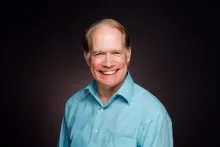
Greg Thomas is the former Pastor of the Cleveland, Ohio congregation. He retired as pastor in January 2025 and still attends there. Ordained in 1981, he has served in the ministry for 44-years. As a certified leadership consultant, Greg is the founder and president of weLEAD, Inc. Chartered in 2001, weLEAD is a 501(3)(c) non-profit organization and a major respected resource for free leadership development information reaching a worldwide audience. Greg also founded Leadership Excellence, Ltd in 2009 offering leadership training and coaching. He has an undergraduate degree from Ambassador College, and a master’s degree in leadership from Bellevue University. Greg has served on various Boards during his career. He is the author of two leadership development books, and is a certified life coach, and business coach.
Greg and his wife, B.J., live in Litchfield, Ohio. They first met in church as teenagers and were married in 1974. They enjoy spending time with family— especially their eight grandchildren.
