
Steve Myers
Halfway through the 1,000 years, Our role as teachers.
This transcript was generated by AI and may contain errors. It is provided to assist those who may not be able to listen to the message.
Thanks. Terry and I were married in August, and right before the wedding, I took a job in Austin, Texas. I'd been a ministerial trainee, but then they canceled the program the year after I came on board, and so I had to find a job. I just so happened to find a job in Austin, Texas, which is the city in which Terry was born. It was also kind of a blessing to be there because her grandparents were living in the area, and since I had just taken a job, I had to work for a month or so before we were married, and I had the opportunity to stay with her grandparents, Victor and Victor Stolle and her grandma Jerry. Wonderful, wonderful folks, just salt of the earth, and every night after dinner, I was able to listen to stories from Pop, as we called him, Terry's grandfather, who was a great storyteller, as her dad was a great storyteller, and he told me all kinds of things about basically his life from the beginning of the turn of the century up until the 1920s, and he told me about his father, Otto Stolle, who had been a German immigrant and came to this country and came to Texas, as a lot of other Germans came to Texas during those years.
In the late and the early, even 1800s, in the 19th century.
Terry's grandfather told me stories about how his father, Otto Stolle, was a millionaire in the 1920s. He was a well-known in central Texas land developer. He was a rancher. He actually had two ranches, one in northeastern New Mexico and then one in Austin, Texas, the site of which is now Dell Computers.
But that was way back when Roundwalk was just a spot in the road. Now it's kind of absorbed into the megalopolis of Austin, Texas itself, and part of all of that. But in the year prior to taking that job, I had had the opportunity right out of college and being assigned to Corpus Christi to meet Terry's parents as well. And for about a month before I met Terry, because she was visiting cousins in Austin, I got to know the Stolle family very well because they'd invite me out to have tacos at their house in the state park, Corpus Christi State Park.
And so we found out we had a lot in common. Her parents were not as old as my parents, but they're kind of right in between my age and my parents' age. And, you know, we had a lot in common in terms of our values and ideas. And of course, we were in the church. And then when Terry came back from Austin, she just fell head over heels in love with me.
And, you know, then it was not exactly who could resist, right? But not quite exactly that way, but close. I mean, and eventually. But she put up quite a fight for a while. Wore her down. But one of the stories that Victor, her grandfather, told me was one night we were sitting around after dinner and talking, and he was telling about the family and everything.
And, you know, I'd stayed with him for the time until we got married. And it was a great time. But he said, he said, boys, he says, I'm a millionaire now. His two young sons, Victor and his brother, he said, I've made a million and now I'm going to go out and make you boys a million each, too. So that you can have you can have something to start with when you get married.
Well, he had an untimely death and that wasn't possible. But I did learn a lot about Otto Stolle, Terry's great grandfather, and it was just a pleasure to get to know that family on that particular level. A number of years ago, in 2003, Terry's parents were celebrating their 50th anniversary and the whole family got together in Dallas, Texas.
And one Sabbath afternoon as a family, we kind of played hooky that week in church and we just kept together as a family and just had a nice little family reunion. And we sat around and listened to Terry's dad talk because he was a fabulous storyteller. And many of you may remember or may know that when the college opened in Big Sandy once again in 1980, then they asked Terry's dad, who had been a police officer in the past and had been a park ranger, they asked him to head up the security program of the newly reopened Ambassador College in 1980.
So he left his career with the state of Texas. And of course, by that time, Terry and I were already married for several years, but the rest of the family moved up to Big Sandy. But a lot of people remember Lee as just the consummate storyteller, and he was. And we just sat around that Sabbath afternoon and talked about family, talked about what had happened in the past. And we had heard some of the stories before, but some of them we hadn't heard before.
And Terry's dad was recalling stories about his dad and his grandfather. He'd never met his grandfather because his grandfather had died in 1934 and Lee was born in 1935. But he'd heard all these stories from his own dad about some of the things that his grandfather had done, like get into the oil business, which was booming back in the 20s and the 30s. And Terry's grandfather had told me about the story about his dad and five partners that they had in the oil business, who Standard Oil at that time was kind of a monopoly, and they were suing them for some mineral rights in West Texas.
And they came and offered the five partners a large sum of money, which Terry's great-grandfather Otto wanted to take and several other partners do, but they were outvoted 3-2, and they said, well, let's go to court and fight them. Of course, when they got to court, Standard Oil showed up with about 25 lawyers, and they had, you know, like one guy representing them, so they were outgunned from the beginning. But those were some of the stories that we heard and that I had heard before, and we just, you know, heard a lot of things during that day. It was a very enjoyable Sabbath day, and as we were sitting there gathering as a family, I had my laptop with me, and I decided to do a little search on Otto Stolle.
And after a few minutes, I must have looked like I had seen a ghost, because I was just typing away, looking for West Texas and Otto Stolle and what he had done. And I guess maybe my jaw kind of dropped, because as I was doing research on Otto Stolle, I looked at Terry's dad, and I said, did you know that your grandfather ran for Congress in 1924? And Lee had never heard this before. He said, what? I said, yes. Your grandfather, Otto Stolle, ran for Congress in the district that includes Austin, Texas, in 1924.
He did? I said, yeah. And do you know who he ran against? He said, no, who? James Buchanan. We couldn't believe it. I couldn't believe it. Now, no relation that we know of, but just the same last family name. And you talk about shock and awe, but Terry's great-grandfather, Otto Stolle, ran as a Republican in Travis County, in the congressional district, I think, number 10, against the incumbent James Buchanan.
He lost. Terry's great-grandfather, Otto Stolle, lost. And not only did he lose, he lost big time. One of the biggest landslides in Texas electoral history. He did get 10% of the vote, though, and Buchanan got 90% of the vote.
But again, as I explained to Terry's family, it's no shame. After all, he did lose 90% to 10% to a Buchanan. And he beat all comers during his time as an elected official, James Buchanan. He never lost an election, and some years he won 100% of the vote, because he ran unopposed.
Nobody wanted to go up against him, but it may sound a little bit suspicious after what we've all gone through in recent history, but this James Buchanan served in the United States Congress until his death in 1937, and guess who replaced him? Lyndon Johnson.
Kind of a scallywag, as history would prove later on, but that's another story for another time. One of the Highland Lakes in Texas is named after this James Buchanan, but the crazy Texans call it Lake Buchanan.
So I mispronounced your names, some of you, the other day. Well, this is what they name my family Lake, okay? Buchanan. And it's not pronounced to Buchanan, it's Buchanan, but at any rate, he is the one that sponsored the legislation, the federal legislation, which created the series of Highland Lakes throughout Central Texas.
And so they begin at Buchanan Dam with Lake Buchanan, and then just filter on all the way down to Lake Travis, which coincidentally was the house in which I met Terry's grandparents was on Lake Travis.
So it was kind of like they didn't even know. I don't think even Terry's grandfather knew that his dad had run for Congress in the 1920s.
But the intersection of the Stolle and Buchanan families occurred 52 years prior to our marriage, Terry and I. And we've been married for 49 years now.
So it's, you know, the recent past is of interest. And of course, since that time, hearing all the stories from Terry's grandfather where he said that Otto, his father, told him, never ever sell the mineral rights to the land that you own. You can sell the land, but don't ever sell the mineral rights. And that stuck with him. And so in the last 20 years, we've been still searching to see if there are any mineral rights that have been still out there that maybe the Stolle family is the actual owner of, but we haven't found anything so far.
But for our family at that time, and I include myself in with the Stolle family, that was kind of a teaching moment to understand our past, to understand what the families were like. And for all of us that have fond memories of our families, these are teachable moments because they teach us about not only our past, but they teach us a little bit about ourselves.
And undoubtedly, you remember the stories and the lessons from your own family history, correct?
You know, there's been a renewed interest in the last probably 20 or 30 years about family genealogies and all sorts of things, and companies are devoted to searching out genealogies for you and finding this.
And of course, everybody brags about, okay, I was related to this real famous person, but almost nobody ever says, hey, I was related to Billy Kidd, or I was related to some serial killer in the 14th century.
But these industries have sprung up because it's interesting to us. But if you go back more than 700 years, you can't really find accurate written records that much.
So if one of you wants to say that you're a direct descendant of our subject of yesterday's sermon, King David, then maybe you are.
Maybe we're all related to King David in some way, but let's just leave it at that.
Why do we want to learn more about our families and our ancestors? I think almost instinctively we have a desire to understand about ourselves because there are family tendencies, there are strengths and weaknesses that continue for generations.
I don't know if you've ever thought about it in this way or not, but as a member of the Church of God, recounting stories of our parents, our grandparents, our great-grandparents is actually great training for the greatest job that we will offer.
We all ever have, and that's to become teachers in the thousand years and ruling with Christ.
Understanding our personal past is one of the ways in which we learn and one of the ways that we will teach for a thousand years.
In fact, one of the reasons you've been called to and are attending the Feast of Tabernacles right now is to learn about your future role in the millennium. We've heard a lot about that already. So today I'd like to show you one of the ways you will serve mankind when you're in the family of God as a reigning member of the God family and helping all of mankind.
We're now at the halfway point for the Feast of Tabernacles, so let's build toward the climax of these days and what they picture as we move toward the conclusion of God's plan for all of us.
If you're like me, and for me it was over 50 years ago, and coming into the church and being told, I remember at that time Mr. Armstrong had revealed, Look, your main job is going to become teachers in the world tomorrow. And that was explained over 50 years ago, I think maybe for the first time when I first came into the church.
That's when he was talking about it many, many years ago. But I think a lot of us have probably been stumped about, okay, we're going to reign with Christ for a thousand years.
We're going to be kings and priests, and I don't know anything about government. I, you know, am insignificant. I'm whoever you think that you are.
Maybe you've been looking at it from a wrong model. Maybe we need to divorce ourselves from the leadership and the positions of this world and its worldly governments and recognize it's probably going to be a lot easier than we think.
And we're being prepared to occupy that position now.
Let's turn to Revelation chapter 3 and verse 12. I want you to look at this from this particular perspective. You've read through this passage many, many times.
Let's take another stab at it and take a look at what this means in terms of today's sermon.
That means you'll be in the God family, right? You'll have God's name. But there's more to it than this. As you know, a pillar is a supporting mechanism. On each side of the stage we have pillars, but these are kind of faux pillars. They're for show. They don't have any supporting mechanism.
But most of the pillars in buildings that are constructed have a support aspect to them. They uphold what is happening there.
And from ancient times, the temple in Jerusalem was the center of educational activity. The priesthood was there. They were responsible for teaching the law to the people. When Christ came to the second temple, he found that they were teaching a lot of the tradition of the temple.
The traditions of men, those who were occupying positions of teaching at that particular time. But in ancient Israel, the temple was the center of instruction. It was intended to be teaching the rest of the people God's law.
We read notice in Malachi 2 and verse 7 that this was in the last book of the Old Testament. This is the instruction it was given, and it shows us what we needed to be doing in even our lives now.
But it says, The priests should keep knowledge, and people should seek the law from his mouth, for he is the messenger of the Lord of hosts. So the temple priesthood was responsible for teaching God's law to the people.
And speaking of the Levites in Deuteronomy chapter 33 and verse 10, we read, They shall teach Jacob your judgments and Israel your law. Pretty simple statements. So again, the priesthood role was instruction, not just the ritual and the sacrifices and the offerings and all that.
They had real teaching duties to the people of Israel. So when Christ says that he is going to make overcomers, pillars in the temple, he's identifying them as permanent, stabilizing core of his government and a teaching work, and a spiritual priesthood. The role is further described in chapter 2 of Ephesians. And we recognize that this is a present reality within our lives at this particular time, which is so awesome to think about.
That what you have been called to is reflected right here in what Paul is speaking to peoples who are in Ephesus at that time. Ephesians 2, verse 19-21, it says, Jesus Christ himself being the chief cornerstone, in whom the whole building, being fitted together, grows into a holy temple in the Lord. So that's us. This is the present reality of our lives. We've been placed into God's temple. We will be responsible for being teachers in the thousand-year reign with Christ. But this is where we are now. This is the present reality. We are in the temple of God. So wherever you came from in this world, you've been placed into a different dimension of learning from the entire Bible. This is the temple that God is building now that will serve Christ during the thousand years. That's one of the reasons that you're keeping the Feast of Tabernacles. Now, I want you to think. Let's just take a little bit of a break from that thought. And I want you to think about school. First of all, let me ask this question. I've asked this before, but let's just get a show of hands. How many of you really liked school or like school? Come on, just put your hands up. How many of you really enjoyed going to school? Home school, school, whatever. How many of you didn't like going to school? How many of you didn't like school? That's being very honest. Raise your hands again, those of you that didn't like school. That makes a lot of sense now that I'm picking out individual faces. Just kidding. For either group. Okay, yes, I see. Thank you. I would have figured that. Roger Smith. Okay. I think all of us can look back at school time and remember one individual, one individual who was an inspiration to us, whether we really enjoyed going to school or whether we really didn't. Can you think about that person that really inspired you to do something that maybe you might not have done? And let's expand it maybe even beyond school. Is there anybody that was an adult figure in your life as a child or as a young teenager that inspired you to be better than you were previously? There's got to be somebody that was a mentor for somebody, even if it's outside of school. So if you can just think about that individual and what they did for you. I think all of us can come up with at least one individual, if not several, who made us feel special, made us want to exceed even beyond our own expectations.
Now, I'm afraid to ask for a show of hands, so I won't, because if it fails, then everybody will know it. So I'm not going to ask you to show of hands if you had somebody like that in your life, outside of your family. But I will bet that everybody did. The point is that for most of us, there is probably some kind of model as to what good teaching is all about. There's an old cartoon that Mr. Armstrong used to refer to, and it was a picture of a classroom of young students. Many of you are going to remember this. With the top of their heads opened up like a little bird mouse. Do you remember that? And it was a cartoon that was popular at one time. He didn't come up with it. But the teacher would just go around with a picture and pour knowledge of the day into their little heads, and they were like little yapping birds that were receiving this knowledge. As silly as it sounds, it's similar to the way that we're taught today. Oftentimes, we're taught, you know, this is what the truth is, and even as adults, we're taught, you know, from whatever medium that we receive our information. It's what whoever wants us to learn. The teacher that made us want to seek out information on our own was a special teacher. And I had several of those that I can think of in high school and college that were inspirational in forming my quest for knowledge, and hopefully you can relate to somebody in that way. What was it about that teacher that made us feel that way? In the same way that that teacher imparted knowledge or shared wisdom or inspiration or encouragement or motivation, that is our job. That is what we are going to become. Because I think a lot of people get intimidated about thinking about running a city. I don't know anything about running a city. We don't really have to. That will probably be taken care of by a lot of people with technical skills that maybe you don't have and I don't have. But that inspirational individual in your life probably helped you at whatever age it was to see a larger picture, to see something deeper that was going on. You saw it not just the information, but how you could be a part of it. It affected us personally. They made us feel like we were part of a larger whole.
And if you can get that fixed in your mind, that is what our role is. In Jeremiah chapter 3 and verse 15 we read, And I will give you, this is speaking to Israel, I will give you shepherds according to my heart, who will feed you with knowledge and understanding.
We are those shepherds, as a bunch of other passages point out, but let's just take a look at it. Those individuals that Jeremiah is speaking about are you and I. Whether we like it or not, that's what we've been called to. The book of Obadiah is only one chapter, but let's turn to Obadiah verse 17, speaking of the time of Christ's return. But on Mount Zion there shall be deliverance. Mount Zion is a physical place in Jerusalem. It's where the Temple Mount is. But as I'm explaining this, maybe some of my local members are going to think this is redundant. It's not just a place. It's speaking about the Church of God. It's speaking about God's people. This is Mount Zion. You are part of Mount Zion. It's a spiritual thing as well. It's part of the Temple that is spoken of in Ephesians 2. But on Mount Zion there shall be deliverance and there shall be holiness. The house of Jacob shall possess their possessions. Let's move on down to verse 21. Then saviors shall come to Mount Zion to judge the mountains of Esau and the kingdom shall be the lords. Those saviors are us. All of us. We are going to occupy the positions in Mount Zion in the Temple of God. We are going to help God execute judgment at the beginning of his reign and Jesus Christ. Notice also to supplement this point, Jude 1. In verse 14, Jude is only one chapter as well. Here's a prophecy that apparently was a spoken prophecy by the patriarch Enoch, who we don't know a whole lot about. But it says, It would have been given to him directly by the one who became the Word, the pre-existent Jesus Christ. We know that there was the written record of God's interaction with Abraham, the same individual, interacted with Enoch, undoubtedly. And that manner of communication with God and man in those early days of man's history was not uncommon. But this is a prophecy about everyone sitting here and everyone of your friends that are sitting in various congregations around the world and attending the Feast of Tabernacles. The people of God today are and will be uniquely equipped to teach for a thousand years because you've lived the truth in the most difficult time in the history of mankind, as mankind has been deceived in an ungodly way. And you've proven its veracity during one of the most difficult times in history. You really have. So now we're being prepared to share your knowledge, your wisdom, your inspiration, your encouragement and motivation with millions more throughout the thousand years. And that's where the story of Terry's folks, my parents, others, your ancestors, come into play. In Revelation 5 and verses 8 through 10, it says, What an incredible promise! This is one of several that we find in the book of Revelation. But these are and have been tribes and families, each with their own specific characteristics. The kings and the priests of God will be responsible for teaching and preparing everyone through the thousand years. For the next great adventure in God's plan, we'll kind of leap ahead to the time of Tuesday, the last day, the eighth day, and part of that meaning, the second resurrection, the time in which billions will be resurrected and prepared to enter into the next phase of the plan of God, which is eternity in the New Jerusalem and the New Heavens and the New Earth. One of the ways that you may teach is what I've been talking about. Now let me back up and tell a little bit of the story about my business career. Some of you are in business. You have positions.
As a representative of a company, our managers we knew, oftentimes before a new product was released or before some new initiative was released, they would go off to the home office somewhere and they would conduct train-the-trainer meetings. And that way, when our managers came back, they would train us the way they had been trained.
Some of you are familiar with that kind of thing. If you're one of the employees of a company, a large company especially, the people who serve as our supervisors are trained and then they come back and they relate that information to us on our level.
Managers attend train-the-trainer meetings before the main event, before the initiative or whatever the launch is involved. The millennium, in the same way, is going to be a humongous train-the-trainer for a thousand years. We will be training people who will be responsible for training people at the great resurrection that happens in which billions who have ever lived are resurrected. So one of the advantages of living during the thousand years will be all the teachers and teaching that will be grounded in the law of God, and it will be constant and it will be abundant. It will be the main source of inspiration for everybody. There won't be the kind of conflict that we have with us today, the competition for the right and the appropriate instruction. It will all be grounded in the Bible. It will all be coming from the temple of God. It will all be coming from you. In Ephesians chapter 2, verses 1-2, we find a different atmosphere that we live in now. We find a different world that we live in. We have to fight against this. It says, and you, he made alive, who are dead in trespasses and sins, meaning all of us, in which you once walked according to the course of this world. So before your calling, we were subject to this world in the sense that we recognize that it is a different world. It's not God's world, and from the time of the Garden of Eden, it has been different. We recognize it. Now, our minds are not totally polluted by it, because the greatest effect that that spirit, which is spoken of in the next verse, it says, in which you once walked according to the course of this world, according to the prince of the power of the air, that's Satan the devil, the spirit who now works in the sons of disobedience. I don't think any of you were massive sinners in the past. I don't think you were purposely sons of disobedience.
But we do find that the greatest effect that this spirit has in this age today are the people who believe in lawlessness, the people who are intent on breaking law, man's law, God's law, you name it. So it does not have the same kind of effect on you that it does on somebody that is subject to it and is not directed by the law of God. Sure, it's there. The tempter is always there. But just please understand the clear distinction that is made here, and it is working. And as time goes on, it'd be more and more so you'll be able to see the divide and the difference between right and wrong, even more so, should, now working in the sons of disobedience. So when you connect this with some of the prophecies that Paul gave to Timothy and 2 Timothy 3, and it talks about how people are going to be traitorous, how they're going to be libelous, slanderous, these are people that operate in that direction. But you understand that this is what you've had to be a part of for all of our lives. But God called us out of that world today, and that is why you're here today, sitting at the Feast of Tabernacles, and your friends are elsewhere in the Church, sitting at the Feast and being taught and learning. In Ezekiel 44, verse 23, And they shall teach my people the difference between the holy and the unholy. It's going to be a teaching aspect of your job in the world tomorrow, and cause them to discern between the unclean and the clean. In controversy, they shall stand as judges, and judge it according to my judgments. They shall keep my laws, my statutes, and all my appointed meetings, and they shall hallow my Sabbath. Now, here is one of the greatest things. As teachers.
As teachers, and being a teacher, the most wonderful thing is knowing that you have a receptive audience. The greatest thing as a teacher is knowing that people are eager to learn from you.
And so, you're already set up for success because the prophet Isaiah was told in chapter 2 and verse 3, That many people shall go and say, come you, and let us go to the mountain of the Lord, to the house of the God of Jacob. And he will teach us his ways, and we will walk in his paths. For out of Zion shall go forth the law, and the word of the Lord from Jerusalem.
What a great opportunity! Everyone will have, and you'll have a receptive audience, an audience that wants to learn, wants to change, and you will be there as a dynamic example. Now, since we're halfway through the Feast of Tabernacles here, let us imagine what the millennium will be like 500 years in. That's actually the title of the sermon today, 500 Years In. Let's think about the millennial reign of Christ and his saints, because from the time of Christ's return, there will be probably 20 or 30 generations, give or take a few, by the time 500 years are up. Can you imagine that 20, 30 different generations of people?
Now, to go back to my story of my association with Terry's folks and her association with my folks, I chose to highlight the Stolle family, very influential to me. But before marriage, I had a year to spend with Terry's parents and with her as well, and I knew them very, very well. I knew their strengths. I knew what they were like as a family.
I knew how similar they were to my family and how, in some ways, they were a little bit different. But there were so many similarities that I really feel that God did bring us together. I didn't bring it up, but I've got a book in my briefcase, and maybe some of you have heard it in your professional careers. It's a book that is backed up by tons and tons of research.
It's called Now Go Discover Your Strengths. It was done by one of the major companies in the United States. Basically, there are other things that are similar to this book. Discover Your Strengths is something that we used in business to help us to identify what our strengths were as individuals.
They outlined about 34 different personality types in the book. Now Go Discover Your Strengths. If you're interested in buying it at some point in the future, just make sure you get a brand new one. The book is really interesting, but it just takes all 34 types and tells you a little bit about yourself, ranked from 1 to 5.
They rank you after you've taken an inventory online, and you've got to buy a brand new one because it's the only one that has an unused code in the back to where you would go online with that code. Once that book has been purchased and that code is used, then it's no good. I used the book one time for a seminar in my company, and I ordered a bunch from my colleagues. I found out about 6 of them were from a company that sold used books, and they came across as new, but they were no good. Anyway, we replaced those. If you do take that inventory, it may be similar to other personality types and inventories. It's highly accurate in identifying you and your strengths and what you bring to the table in business and what you should build on. Every one of you are going to be different. You're going to have a ranking that's different than my five top ones. No two people are exactly alike. There may be some similarities. But the best thing that this book shows is that everyone has talent. Everyone has ability. It's kind of a blanket statement, but every one of us has something to build on. For teachers, understanding where your strengths are, it can be very helpful to be able to understand what you do best as an individual. If you happen to be somebody that's still in the working world, I would highly recommend it as a book to use and to apply in what you do. Sometimes, in the industry that Steve and I were a part of, they tend to try to make everybody do exactly the same thing in every certain instance when you're presenting information. It just doesn't work like that. It doesn't work like that at all. You have to be an individual. You have to be the individual teacher that you are. That's where you're going to be most effective in the world tomorrow. Basically, the book says, this is where your strengths lie, and this is what you should try to develop because actually it's in your genetic makeup. Even as I learned about the nature of Terri's parents, her grandparents, and her great-grandparents, I realized that there was something imprinted in their DNA from long ago, from generations that made them the kind of people and made them the success in some cases. Sometimes, maybe it was the reason that they didn't have success in one area, but it shows that this might be an area you have a weakness in. This might be an area where you have some issues or problems. But you don't have to get the book to know that you're special, to know that you have strengths, to know that you have talents and abilities. Maybe you've tapped into them, maybe you haven't, who knows. But if you look forward 500 years into the millennium, as an individual that knows that you're going to be there from the beginning, and that you're going to be entrusted with developing and working with a certain number of people, can you imagine the wealth of knowledge that you will accumulate of families and certain genetic types that have been passed on from generation to generation? Do you know how it's more effective you're going to be after 500 years than you were at the beginning? Simply because you will have that learning experience of understanding who the folks are that are entrusted to you. And you'll be able to help them and guide them in that same way, knowing them intimately.
We will help people see their role and how their past will play into their future. We'll be able to recall and make things that will live in their minds 500 years into the future of the millennium.
And it's going to be incredible. Even as we sat around as a family a number of years ago, and we talked about our families and what this person did and how he was successful there and how Otto Stolle, you know, this is a new revelation, how he lost his bid for Congress by 90% of the vote, but it was still kind of fun to relive that information. We'll be able to help people and families to understand their past just as easy and with as much relevancy as if you met somebody five days ago or three days ago for the first time at the Feast of Tabernacles, and you can begin to understand who and what they are.
We are going to be excellent in helping people understand themselves. It's as simple as that. Being a great teacher is, you know, pointing out the law, obviously. Understanding the law, we're going to be experts at the law in helping people to understand their commitment to it, but we'll be able to help them to understand their past and then also the future.
The object of teaching in the millennium will be to lead and develop many, many millions of people to become just like Jesus Christ.
So when you think about your calling as teachers, perhaps it should be with the thought and the expression that your responsibility in calling is going to be the greatest that anyone could ever aspire to.
To lead others to the same path that God has lovingly brought you. He brought you to this place right now, and it's going to be your joy and your opportunity to help others to learn about this, and you're going to have a willing audience to do so.
So what are the qualities of individual teachers that you need to be?
Well, you know what? I did a search one time, a little Google search. I said, okay, tell me, what are the best qualities of being a teacher? Or what makes a teacher good?
And you can find all kinds of websites if you do that. You'll find the seven qualities of an outstanding teacher. You can find the ten qualities of an outstanding teacher.
The twelve qualities, or the twenty-one qualities, you know, go wild with that if you want to take it on as an assignment.
But they all have a similarity. They have the ability of the teacher to identify with their audience and to be able to impart information to the audience in the way the audience is best suited to receive it.
So knock yourself out on doing that, but that's, you know, understanding what makes a great teacher today really isn't all that important.
You have to be yourself and you have to understand the people that you are working with. But here is what is important now. Matthew 24, verse 13. A very simple statement.
He who endures to the end the same shall be saved. That's our job now. Enduring, prospering and enduring until the time making it to that point. To be a great teacher, the highest calling one could ever have, you will have qualified by endurance, by perseverance, by your own overcoming.
And this is what you've been doing since God called you. Great job. Keep up the good work. You're now being prepared to share your knowledge, your wisdom, your self, your inspiration, your encouragement and motivation with millions more during the thousand years. What a great calling that is.
So blessed and holy are you who have been called to the first resurrection as teachers.
Thank you, Mr. Buchanan, for that message. Everyone please rise. Let's sing a final hymn, just a very closing prayer. It will be hymn number 122, Great Is to Lord. I'm just waiting for the words to come up right now. Hymn number 122, and after this hymn, the closing prayer will be given by Mr. Lance Christensen. Hymn 122.
In this cage we have our God upon His holy hill.
The hill is the city, Jesus in the land.
Christ rules the nations, His kingdom is at hand.
Let us rejoice, our King has come to reign.
He who's judged with righteousness, the faithful one and true.
Glory, hallelujah, unto Christ our King.
Behold our senior, of His great power we sing.
Worship the Lord, present yourself to Him.
Hail the land who is our life, they honest to His name.
Look within the city, there shall be no strife.
Enter Him faithful, known from the book of life.
Thank you, everyone. Please remain standing for the closing prayer.
Father in Heaven, our great God and merciful God, we thank You so much for the calling You've given us.
And to be able to know Your plan, to be here at Your feast, to be able to learn, to be able to have that opportunity to be teachers.
There's so much unlearning out there in the world, God, that needs to be turned around.
You've given us that responsibility, and we're going to do that.
Teaching Your ways and Your statutes, and how to live right and be at peace.
So we just pray, God, that give us that strength to keep going on, and the goal that You've set before us.
Now, we thank You, God, for this day, and for any activities that might be going on.
You would be with us, watch over us, and do Your will as far as the rain is concerned, so that we won't disrupt too bad. So we thank You, God, for everything You give us, and for this feast, and all the blessings that we have that come from You, in Jesus' name we thank You for it all. Amen.
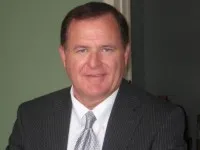
Steve Buchanan, native of Maryland, has served in the ministry since 1975. Steve and his wife Terri, have been married since 1976 and have lived in Tucson, Arizona with their family since 1988.
Steve is a volunteer Pastor of three United Church of God congregations, Tucson, Sierra Vista, Arizona, and El Paso, TX. Steve has worked full time for the Church of God for 23 years, and retired from the Pharmaceutical industry in 2017, after 20 years in Sales. Terri works for the Department of Medicine at the University of Arizona.
