


Mario Seiglie
By using an acronym "ABCC", this message discusses four principles in life regarding relationships with others. Each letter represents a valuable fundamental, as a lesson to learn: Adaptability, Balance, Character and Care (or Concern) for others.
This transcript was generated by AI and may contain errors. It is provided to assist those who may not be able to listen to the message.
In the old Ambassador College building, which is just about 30 miles away from here in Pasadena, California, they had a big monument, a rock, and on its polished face, it simply said, the Word of God is the foundation of knowledge. And we would go to classes, and we'd just go through, and we'd always go by that big stone. And now we have something similar over an Ambassador Bible College there in Cincinnati, Ohio. We have a rock, and it says the same thing. And the idea is that whatever we did there, we tried to follow God's Word as a foundation. Now, it didn't say it encompasses all knowledge. It's just the foundation. It's a good foundation to build your spiritual life upon. And it is based on the Scripture, 2 Timothy 3, verses 16 and 17, which says all Scripture is inspired by God, and is useful for teaching and helping people and for correcting them and showing them how to live. So it has many different purposes, but it is, the Bible is the fundamentals of life. It's the basic. And if we don't do that, as Christ said, if you build your house upon sand, the world's shifting values, you're going to have a very weak foundation. But the foundation of the rock is built on biblical teachings from Genesis to Revelation.
So we wanted to have at that time a university where the Word of God was central in all the teachings, regardless of the subject matter. It was a liberal arts college. It wasn't a Bible seminar because we wanted to have what is called the liberal arts, which is where you go to college for four years and you study all about science and humanities and every area, so that at least you know something about the basic themes of knowledge that there are.
Even in Mexico, they have one in Monterrey, Mexico, Institute of Technology and Higher Education, which they teach a liberal arts degree, and there are still liberal arts colleges. It used to be you'd go for four years and then later you would specialize in a certain area, but you had that broad and encompassing knowledge of things. And so the vision of Mr. Armstrong was to train people that had a broad culture that could fit in wherever they went.
He wanted students not only to learn about the Bible, but also to have a biblical approach with a wide range of studies so you could be well versed in multiple fields.
He wanted not only for us to learn how to make a living, but more importantly, how to live it.
And so what we have now is Ambassador Bible College, which is much reduced, but it's still there. It's still teaching God's ways, still training people that are coming along.
And I thought about what I had learned at that time. Basically, I call it the ABCs of ABC. ABCs means fundamentals, but this one has four letters, A, B, and two Cs at the end. That, to me, summarizes the teaching, the aim, what you should come out with. And so I'd like to share with you those four great principles, because they apply in life. You don't have to go to a college to learn them. You can do it on your own. There are four fundamental areas that I have found to be so helpful. To me, they're the basic tools in life to go forward. And the first that I learned there, and of course it's just sampling, it's just dipping your toe in the water when you go to the college. It's just something basic, but it gives you a basis to continue building upon the rest of your life. And so the first principle is adaptability, which is the ability to adapt to all kinds of people, cultures, and economic status. To know a little bit about practically any subject being discussed. To be able to adapt, you have to understand how others think, what culture they come from. And an ideal example of that broad education was King Solomon, which Scripture describes in 1 Kings 4, verse 29, as possessing, quote, great wisdom and understanding, and a mind of wide scope, as vast as the sand on the seashore. That's from the Bible, basic Bible English version. In verse 13, it continues. He described and classified the trees from the cedar of Lebanon to the hyssop that grows on the wall. He described and classified animals, birds, reptiles, and fish. So God gave him that wisdom and that understanding, but he did a lot of work to study, to broaden his understanding of things. And people would come from all over the world just to listen to that band. But again, it wasn't all just directly from heaven. No, God equipped him, gave him so much, but he had to do the heavy lifting. He had to study about all of these things, science, biology, many other things as well. And this principle is based on what God said about the Apostle Paul, that he was preparing him to not just deal with Israel, but with the rest of the world. In Acts chapter 9, verse 15, he says, But the Lord said to him, to Ananias, Go, for he is a chosen instrument of mine to carry my name before the Gentiles, and kings, and the children of Israel. In other words, this man could adapt to just about any circumstance. He had the training, and now he had God's Spirit to guide him, and to be able to use that broad education to reach people.
Paul recognized the importance of understanding the cultures of other peoples. As he said in 1 Corinthians 9, verses 9 through 22, 1 Corinthians 9, 19 through 22, he says, For though I am free from all, I have made myself a servant to all, that I might win more of them. To the Jew I became as a Jew, in order to win Jews. To those under the law I became as one under the law. So, it had to do with the Pharisees, and many of these very strict, legalistic type of people. Though I myself am not under that law, talking about all the practices of the Pharisees, but under the law of Christ. The biblical law he was under, as Christ expounded on it, that I might win those under the law, to those outside the law, who have no knowledge of it, I became as one outside the law. Not being outside the law of God, but under the law of Christ. Again, he wasn't imposing his point of view on people, that I might win those outside the law. To the weak, I became weak. A lot of people had all kinds of maladies and sicknesses, and maybe they just had all kinds of different pet theories and things like that, which he didn't offend that type of person, that I might win the weak. I have become all things to all people, so that by all possible means, I might save some. In other words, how they come into the church and be able to get to know. Back in the time of Chile, we had a fellow that came to one of these Plain Truth lectures that we had, and he talked to me later, after we had finished, and he said, Well, I want you to know I'm an atheist. I don't believe in God at all. And he was thinking, Oh, yeah, this guy's going to kick me out or say something. And I said, Congratulations! You've gotten halfway into knowing God's truth. At least you don't believe in all the stuff out there that's wrong of religion. So at least you've cleaned it up. You know what? He had no reply for that, and he finally came into the church, and he became a big helper and things like that. So sometimes you can disarm a person if you know their culture, if you know the approach to take.
When Paul went to Athens, and he likely stopped at the Oropagus, which was the council of the wise men and the judges of the town of Athens, and they had that big court on top of Mars Hill. How many have been able to go to Mars Hill? Yeah, quite a number of them.
And so, he went before this August Greek philosophers and knowledgeable people. But when he went there, he didn't talk about, oh, I want to tell you about my Jewish religion. No, he talked about what they thought, and how even with the Greek religion, there was this search for truth. There was this search, as he put it, the unknown God, who I'm going to bring it out to you.
So, the Greeks said, well, we've always thought about, we've got a statue here. There had about 3,000 statues over there in Athens. We had one just in case we missed. We don't want to offend any of the gods. So, we did this one on the unknown God. And so, he went out there and started talking to them. And guess what? He quoted two of the Greek poets. One is a Pimides. A Pimides, the Cretan poet, and Eradus, the Sicilian poet. He tried to connect with the people at their level, adapting to their perspective.
As Colossians 4, 6 tells us, let your conversation be always full of grace, seasoned with salt, so that you may know how to answer everyone. Be able to give the right answer in the right way. One of my definitions of wisdom is knowing what to do according to God's word at the right time, at the right place, and according to the right circumstance.
To be able to speak in that way, that you fit what you're going to say in a proper way. It's not hard to offend people. It's very hard to avoid offending them. That's what's hard. It's so easy to offend people. And yet, here Paul, he says, let your conversation be full of grace.
If it's not full of grace, what should we be doing? Seasoned with salt. Salt makes everything taste better. Anybody like to have just eggs raw without any salt? I certainly don't. It needs a little bit.
Not too much either. It's seasoned with salt just so that you may know how to answer everyone. And that's what takes time. And that's what we had to learn there at the college and then apply it the rest of our lives. And it was a wonderful experience, that atmosphere that we had there. We had student dances, but it was good music. The men all dressed up, and the ladies, and it was all very, in a sense, cultured.
You didn't come in there with rags on you or all kinds of things. You wanted to present yourself. I remember I spent one year in Big Sandy, Texas, and we were so enthusiastic. We saw Mr. Armstrong, and we were going to have the freshman ball. And not knowing any better. There was a famous musical song at that time, when the lion sleeps tonight. And so we chose that, and we said, you know what? We're going to take that whole area, which is the big student center, and we're going to build a jungle. And so we're going to have that as our main theme.
And being enthusiastic, 18-year-olds, we said, okay, we had people painting on the walls, all the different animals, jungle animals. And then we had others that were building huts, so that you'd have the table, and you'd have the hatch huts. And we had to find bamboo, which was in some of those big sandy creeks and stuff. And so my job was, with a machete, with a couple of guys, we cut down about part of the whole bamboo section of part of that river there. And they came and they built bamboo huts. And yeah, Mr.
Armstrong was there. He was impressed. I mean, it was fantastic. But the point here is that you learn to adapt, to have fun. It was fun to be at that college. And we had fantastic dancers, and as far as mostly ballroom and Spanish and other type of dances, we had different clubs, Italian clubs, French clubs, Spanish clubs. And so the idea was, this isn't some haphazard idea.
No, it was intentional to help us understand the cultures. And a lot of these people, they learned German while they were there. And they became a German club, and they spoke. They ended up working over in the German area of the church. And so in the ministry, you have to try to adapt to the different cultures of the countries where you go. And I would read, as we were sent to different countries in Latin America, I would read the country's whole history, sometimes 10-15 volumes, just starting from the days of the Indians in that area, all the way through the Spanish colonies to the modern day, so I could understand the people, how they thought.
And I adapted myself. It wasn't an American church in Chile. It was a Chilean church served by an American. And so you learn to adapt, as Paul mentions there, it wasn't about adapting the church to my mindset, but to theirs. And don't ever compromise with God's truths, but you have to adapt it to the culture and the people around you. You have to connect with people at their level and from their perspective, not your own.
To be comfortable if you have a visit request at a dirt-floored hut in one of these poorer countries, or if you go to a palatial house and make everybody feel respected and valued regardless of their status. As Roger Kipling had his famous poem, If, addresses this point of adapting to all of life's circumstances. It's called If. He says, if you can keep your head when all about you are losing theirs and blaming it on you. Now keep your head. Cool. If you can trust yourself when all men doubt you, you might never get a word of discouragement, but you go on forward.
You only need that encouragement from God. He says, if you can trust yourself when all men doubt you, but make allowance for their doubting too. You don't think you're always going to be right. Also recognize when you're wrong. That's a person that adapts to circumstances. If you can wait and not be tired by waiting, learn patience or being lied about and don't deal in lies or being hated, don't give way to hating. And yet, don't look too good nor talk too wise. Certainly a scripture there in Ecclesiastes, which says, don't pretend and don't act like you're just so righteous because you end up being self-righteous.
And that turns people off. Kipling goes on to say, if you can dream and not make dreams your master, have goals, have vision, but also don't be enslaved by them. If you can think and not make thoughts your aim. If you can meet with triumph and disaster and treat those two imposters just the same, because sometimes what you thought was a great triumph ends up being a disaster because people didn't know how to take it right. It might be the beginning of the descent of that person because of that great triumph. Got cocky, got vain, lost so many opportunities. And disaster, sometimes you take disaster and you learn. So it's such valuable lessons.
It was Winston Churchill that said, it's not the disaster that kills you. It's not learning from the disaster that eventually kills you. He says, if you can bear to hear the truth you've spoken, twisted by knaves to make a trap for fools, or watch the things you gave your life to, broken and stoop and build them up with worn out tools. Just continue on. Nobody bats a thousand in life. We all have to get up, learn from it, and continue forward.
If you can gather all your winnings into one heap and risk it all on one turn of pitch and toss and lose and start again at your beginnings and never breathe a word about your loss. In other words, accept it, go forward. I once met a gentleman along with Cottie in Columbia when we were stationed there for almost two years. And that gentleman, he was part of the church, but he never looked happy. And we always tried to get conversation and get to know them better.
He was never happy. So one day I just took him to the side and said, what makes you so unhappy? And boy, he was ready to blurt out. I was 10 years old, and I lived in this big house with my father, who was the foreman of this big Latifundia, which is the big places where they have foremen that take care of these big lands. And then the owners that go to the city, and they just live off of the land that everybody else is working.
And so he said, I had my brother with me, and this big mansion had burnt down years ago, and nobody would get close to it because it was all ruined. But we decided to play hide and seek. And so they went into these rooms that were burnt out. And all of a sudden, the floor gave way, and he fell through the floor to the basement. And his brother came and helped him, and guess what? They found this chest of gold coins. And so they went back and, oh, they told the father, Father, look, we found these gold coins.
And guess what? Somebody was looking, and they said, oh, they found something. So then they notified another person that was also the foreman, and he came with a gun. He says, if you ever get close to that house, we'll kill you all. And that man took all that gold. And he could never get his mind away from that. I could have been so rich. All this would have been so wonderful.
And I said, this is part of the past. You're 60 years old. You're still living as you were at a 10 year old. Yeah, people can just get stuck in the past and never move on. And so it tells you here that sometimes you're going to risk things. Don't work out. We don't make it into this big depression. Says if you can force your heart and nerve and sin you to serve your turn long after they are gone and so hold on when there's nothing in you except the will to say to them, hold on.
You know, just that never give up attitude. Just go on. No matter how tired you are, get the thing done. If you can talk with crowds and keep your virtue or walk with kings nor lose the common touch. If neither foes nor loving friends can hurt you. So again here, neither foes nor loving friends can hurt you. That you are a person that is based and rooted in principles that go forward and that you don't have to worry about just depending on others to go forward. He says if all men count with you, but not too much. In other words, again, you have your principles.
You don't go along with a crowd if you see they veer off someplace. Some people just don't have that strength of will to just say, I'm not going to go that way because they're friends or they're pressuring me. He goes on to say if you can fill the unforgiving minute with 60 seconds worth of distance run, yours is the earth and everything that's in it and which is more, you will be a man, my son.
And so again, that has to do with adapting to the circumstances, having the strength inside you that you can be with other people, but you don't have to depend on them for your happiness or for your joy. And yet don't act like you're something special. Just you've got your own solid foundation, your life, and you adapt to others. The second letter is for B, for balance or equilibrium. To have balance in your life.
The ability to balance the values at stake and not go to extremes. So we learned that too. Like I said, we weren't some Bible evangelical college. They can't dance. They can't drink wine or anything.
And you basically have to sit around and always look somber and austere like the Puritans. So they're never happy. We've got a tough job and we've got a tough God. I'm ready for that lightning bolt to come down at any time. No, it's not that way. You have to have balance. So that was created where we could dance but not go into the wrong type of dances or the wrong type of music.
Everything has its place. Jesus had that balance. He could deal with the Pharisees without thinking like a Pharisee. Or be with the publicans, the tax collectors, without being one of them. In Matthew 23, verses 23 through 24, He told the Pharisees and the scribes, who were the religious leaders of their day, woe to you scribes and Pharisees. Hypocrite, which means actors. You're just acting out something that's not really genuine inside of you. For you tithe mint and dill and comin' and have neglected the weightier matters of the law, justice and mercy and faithfulness.
These you ought to have done. In other words, you should tithe, but don't make it into this big acting and boasting about it. He says, without neglecting the others. Blind guides who strain out a gnat and swallow a camel. They were straining a technical gnat and swallowing the spiritual part of the law. But, oh, they were just always... they had to strain a gnat when they drank wine. Because they thought, oh, if I swallow this wine, I have eaten unclean food.
You know, a drowned gnat. They were really concerned, so they'd actually have this strainer they would use. Oh, very careful. And then they would hate Jesus Christ, envy, self-righteous, greedy, envious. Oh, they didn't see that at all. Now, that was a camel, a spiritual camel, that they were willing to swallow without any problems.
But the gnat... oh, no, we can't have that. Paul uses the medical term orthotomeo, which means to make a straight cut. Not going to the right or to the left. When he says this in 2 Timothy 2, verse 15. 2 Timothy 2, verse 15. He said, Do your best to present yourself to God as one approved, a worker who has no need to be ashamed, rightly handling the word of truth.
What it says there, handling, means straight cut. No side cuts. Nothing. Just what the Bible is saying, you just follow that like a furrow on the ground. Just a straight furrow. That's another part of orthotomeo, the term. And then he continues in verse 16 through 18. He says, But avoid irreverent babble, for it will lead people into more and more ungodliness. Their words are like spreading gangrene. Hymnias and Phileidas are an example of this. For they have deviated from the truth, saying that the resurrection has already taken place. So you see, some went off the deep end. They didn't have balance. In Ecclesiastes 7 verse 16, it says, Do not be overly righteous, nor be overly wise.
Why should you destroy yourself? This idea of trying to impress others with one's righteousness, that's not the way. And about self-righteous people, God says in Isaiah 65 verse 5, He says, These are smoke in my nostrils, a fire that burns all day. Really offends God when he sees that. That's why Christ was so upset with the self-righteous Pharisees. So now we go to the third letter of ABC, the C, which stands for character. We're talking about a godly character. And it means the term character in the time of Jesus Christ was used to describe what is left of the impression of a stamp.
You stamp something and it leaves a character. It leaves an imprint. It's the same thing that you see in the stamp. It means in the Greek to stamp something to make an engraving. Notice in Hebrews chapter 1 verse 3, Hebrews chapter 1 verse 3, talks about Christ here, He being the radiance of God's glory and the exact representation of His being. You see God the Father and same characteristics Jesus Christ has.
A holy and righteous character is a mark or seal that perfectly reflects the object upon which is imprinted. That's what Ambassador College was about.
And this is Mr. Armstrong's definition of righteous character. This is from the book The Incredible Human Potential, page 41. He says, a perfect, holy and righteous character is the ability of an individual to discern the true and right way from the false, to willingly and fully and unconditionally surrender to God and His perfect way, to allow oneself to be conquered by God, to decide even against temptation or one's own desires to live and do what is right. Furthermore, this holy character is a gift from God. It is obtained by surrendering to God so that He may instill His law, God's right way of life, in the person who so decides and desires it.
I can put it in a better expression than that. As Romans 5, verses 3-4 says about that term character, just like it had in Hebrews 1-3, it talks about the character. Christ is the imprint there. It's the stamp of what God is, God the Father, Jesus Christ.
That's why He told Philip, Philip, if you have seen Me, you have seen the Father. It didn't mean they're exact. It's not one being. No, you've seen Me, the same characteristics God the Father has, because He is the stamp, the character of God. As Romans 5, 3-4 says, we can also rejoice when we run into problems and trials, for we know that they help us develop perseverance.
And perseverance develops strength of character, and character strengthens our confident hope of salvation. New Living Translation. But you see there, develop the strength of character. If it comes from God, it's a wonderful thing in a person. If it just comes from your own self, it's second class. Stephen Covey, in his famous book, The Seven Habits of Success, says the following about character building. You don't hear that too much nowadays, but that used to be central here in this country, from the very founding fathers, the pilgrims, all the way through to at least the 1950s.
Then things went to pot, not only with the weed, but also with lack of character, right? I was almost like now, celebrated. I have a lack of character. Look what I do. Look how I act. All this should be shameful. But there's no more pursuit of that type of character. Stephen Covey defines character. He says, So a thought reap an action. So an action reap a habit. Reap. So a habit reap a character. So a character reap your destiny. So that goes on to say these sayings express the idea that our daily and consistent actions, our habits, ultimately define who we are, our spiritual character, and will determine our future, our destiny.
Yeah, people can take shortcuts in life, but eventually you pay for it. And if not in this life, in the next life. Now I'd like to go to the last C, and that is care. Last C means care, the caring for others or concern for others. As Paul said in 1 Corinthians 13, 1-8, If I speak in tongues of men and of angels, but have not love, that loving concern for others, I am a noisy gong or a clanging cymbal. If I have prophetic powers and understand all mysteries and all knowledge, and if I have faith so as to remove mountains, but have not love, in other words, that interior concern and sacrifice for the welfare of others, I have not love.
I am nothing if I give away all I have, and if I deliver up my body to be burned. Here it says, you know, it doesn't matter what, if you're giving to charities and doing all these wonderful things, but if you don't have true godly love there, it's not going to amount to much before God.
He says, but if I give away all I have and if I deliver up my body to be burned, but have not love, I gain nothing. Then he starts talking about the attributes of love, which is the central element of godly character. It says, love is patient, love is kind, it does not envy, it does not boast, it is not proud, it does not dishonor others, it is not self-seeking, it is not easily angered, it keeps no record of wrongs. Love does not delight in evil, but rejoices with the truth. Love never gives up, never loses faith, always has hope, and perseveres in every circumstance.
Certainly Jesus Christ gave that example. He was still thinking about others when he was being crucified, you know, with nails through his, what would be the wrists and the, ankles of his feet and just the worst type of death.
And he's still there, Father forgive them for they don't know what they're doing. To John, take care of my mother, because I won't be able to do it anymore.
He never lost his love for others. He says, prophecy, speaking in tongues and special knowledge will cease to be useful, but love will endure forever. So that's the motivating power of godly character. In Proverbs 27 verse 23, it tells us here, Proverbs 27 and verse 23, it says, Be diligent to know the state of your flock and attend to your herds. So the principle, okay, what is it that you're taking care of? Be diligent. Make sure you know what's going on, that their needs are being taken care of. So, it doesn't matter whether anybody ever goes to ABC or not, but these are the qualities that we have to learn and never lose sight of. So regardless of whether we attend, Ambassador College, which now disappeared, but ABC is the continuation of it, these are some of the life principles we need to serve and to please God. So let's remember these four fundamental values of life. They are one, adaptability, the ability to fit in wherever you are, whether you're in a palace or you're in a jail like Joseph. Joseph still stood out as a servant and he was made in charge of that jail. Eventually he was made charge of all of Egypt under the Pharaoh. So he knew how to adapt. Number two, balance. Balance in your life. Remember, God's law is shown to us here, but how to apply it with balance, that depends a lot. You have to read the scriptures because they do fill in a lot of the gaps to be able to know how to apply them properly and not go to extremes. The third is character, godly character. That's still the main purpose we're here on the earth is to develop that spiritual character that was drummed into our minds by Mr. Armstrong. And it's very biblical. And the fourth, caring or concern for others, be able to always have that loving character. So brethren, that's what I call the ABCs of ABC.
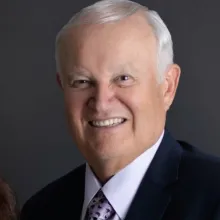
Mr. Seiglie was born in Havana, Cuba, and came to the United States when he was a child. He found out about the Church when he was 17 from a Church member in high school. He went to Ambassador College in Big Sandy, Texas, and in Pasadena, California, graduating with degrees in theology and Spanish. He serves as the pastor of the Garden Grove, CA UCG congregation and serves in the Spanish speaking areas of South America. He also writes for the Beyond Today magazine and currently serves on the UCG Council of Elders. He and his wife, Caty, have four grown daughters, and grandchildren.
