

Roy Holladay
This transcript was generated by AI and may contain errors. It is provided to assist those who may not be able to listen to the message.
I'll be Sabbath once again, brethren. Well, very soon we are going to be observing the four Fall Holy Days. And my sermon today is kind of an introduction on the Fall Holy Days, because, in my count, there are at least four people within our fellowship who this will be the first Fall Festival season they will experience. And it's always an exciting time. And the beauty of the Fall Holy Days is they picture something that is profound. What we're going to talk about today. They picture something that has been lost, a knowledge and a truth that has been lost on most of the world. Because the four Fall Holy Days picture the restoration of a kingdom and a philosophy and a way of life. And very few people know that that philosophy and way of life was for a brief time established on this earth and was lost about 7,000 years ago, but yet will be restored. Today I would like to talk about, in contrast, two kingdoms. One we know of as the kingdom of God and it's replete in prophecy. Jesus Christ preached and prophesied about that kingdom. And in contrast, we'll be talking about the world that you and I presently live in. I call it the anti-kingdom. And for almost the last 7,000 years there has been a struggle between the soon coming kingdom of God and the anti-kingdom. These kingdoms have different rulers, different value systems and different philosophies. And to understand that contrast and why they are so different and why one must come to an end and be replaced and restored by another kingdom, we need to go to the beginning. So let's go to Genesis 2, beginning in verse 1. Genesis 2, beginning in verse 1.
And we will see these two kingdoms outlined and contrasted in unique symbolism here in the original Garden of Eden.
Genesis 2, verse 1. Thus the heavens and the earth and all the hosts of them were finished. And on the seventh day, the same day that we are here today, God ended his work which he had done. And he rested on the seventh day from all his work which he had done. Then God blessed the seventh day and sanctified it. You see, God sanctified the Sabbath day. Church councils do not have the right to sanctify a day. Popes in the first or second century do not have the right to sanctify a new day. Religious councils of the fourth century, bishops, archbishops, do not have the right to sanctify another day. Days are sanctified by God, and he sanctified the seventh day. We know of as the Sabbath, because in it he rested from all the work which he had created and made. This is the history of the heavens and the earth when they were created. In the day that the Lord God made the earth and the heavens before any plant of the field was in the earth and before any herb of the field had grown. For the Lord God had not caused it to rain in the earth, and there was no man to till the ground, but a mist went up from the earth and watered the whole face of the ground. Now let's get into the nitty-gritty of why we're here. Verse 7. And the Lord God formed man from the dust to the ground and breathed into his nostrils the breath of life, and man became a living being. The Lord God planted a garden eastward in Eden. Now when God does something, he does it in a big way. This garden was not like a little briar patch that God just had spring up with weeds and some tall grasses and maybe a flower blooming in the center of it. God is a God of order. He is a God of perfection. And when God plants a garden, it is beautiful. It is perfect. He did allow, at his own discretion and his own will, one being to slither in that garden and dwell in it because it was part of his will. But when God plants something, when God creates something, it is beautiful. It is wonderful. And that's why it is referred to here as a garden, eastward in Eden. And there he put the man whom he had formed, and out of the ground the Lord God made every tree to grow that is pleasant to the sight and good for food. The tree of life was also in the midst of the garden, and the tree of the knowledge of good and evil.
So the Lord God put in this garden that he had created two trees that represent the contrast of many things. But one of the things each tree represents is a kingdom based on a spiritual philosophy with its own value system. The tree of life represents a kingdom and a philosophy of peace and prosperity and fulfillment and healthy relationships. Adam was given a foretaste of what this would be like because God put him in the garden that God had made. It's a philosophy based on the law of God, which is cause and effect. And part of that says that when you work hard and you sacrifice long term, you produce good and wonderful and lasting things. So your philosophy towards everything is the long term benefit of it. Now in contrast to that tree, there was another tree, the tree of the knowledge of good and evil. And it represents a kingdom and a different philosophy. It's based on chaos, fear, poverty, a culture of which the have, those people who are blessed to live on good lands with plenty of crops or oil under their soil or gold, are the haves. And those poor folk who grew up in a part of the world that doesn't have a lot of natural resources are the have-nots. That's the philosophy that it is built on. And it is a philosophy that is very deceptive because it is good and evil mixed. And sometimes the good masks the depravity of the evil that exists in that kingdom. The depravity of the lives that are tortured and afflicted by living in that kingdom and in that culture. The good can often mask the hideous suffering it produces because that philosophy is based on self-centeredness, on manipulation of others. It's a philosophy based on, I want it and I want it now. Furthermore, it's a philosophy that says, I want what you have. And if I want what's in your bank account, then I will go ahead and scam you through an email and I'll take money out of your bank account. If I like the shoes in your feet, I'll hit you over the head and take the shoes off your feet. This is the philosophy that this kingdom represents. It's based on short-term desires, instant gratification. It's based on pride. And that's exactly what these two trees represented, two different ways of life, two different value systems, ultimately symbolizing two different kingdoms. Verse 16. And the Lord God commanded the man, saying of every tree of the garden, you may freely eat.
But the tree of the knowledge of good and evil, you shall not eat. For in the day that you eat of it, you shall surely die. Now, brethren, the tree of life has that name because the philosophy behind the tree of life blesses someone who has physical life and leads to eternal life. That's why it's called the tree of life. In contrast, the tree of the knowledge of good and evil is based on a philosophy of evil, and it leads to eternal death by being cut off from the Creator due to sin. Sadly, we know that Adam and Eve chose to eat of the tree of the knowledge of good and evil. So one kingdom was removed, the man and the woman were taken out of that garden, barred from even going back into it, and they left the kingdom of God, and they went into and began to live in the anti-kingdom. And this is where you and I are today. This is what has led us, humanity, mankind, to where we are today in the 21st century. Now, these two kingdoms are also based on two different value systems. First, let's take a look at the value system of the tree of life, of that kingdom, 1 John 4 and verse 8, if you'll turn there with me. This is the value system that that original garden was intended to have and could have been expanded to include the whole earth if Adam and Eve would have made the right choice. But this is the value system of the tree of life. 1 John 4 and verse 8. It says, He who does not love God does not know God. And our world basically does not love God. Our world is cut off from God. It is cut off from the presence and influence of its creator. He who does not love God does not know God, for God is love. So this is a value system that is based on love. And what is love? Love is the desire and the willingness to sacrifice yourself for the benefit of others. And if I sacrifice myself for your benefit and you sacrifice yourself to my benefit, there's not going to be any conflict. There are not going to be any problems. The problems arise when I want it my way and you want it your way. That's when problems arise. That is the value system of the tree of the knowledge of good and evil. But we want to focus on the tree of life. Verse 9. In this, the love of God was manifested towards us that God has sent us, His only begotten Son, into the world that we might live through Him.
So we're not orphans. When God gave us His Holy Spirit, the same Spirit that dwell in Jesus Christ now dwells in us. Christ in us. Verse 10. In this is love, not that we loved God, but that He loved us and sent His Son to be a propitiation for our sins. A propitiation just basically means an atonement, a covering. His shed blood covers up our sins and we are forgiven.
Verse 11. Beloved, if God so loved us, we ought to love one another. Let's drop down now to chapter 4. We're already there. Let's go down to verse 16.
Continuing, and we have known and believed the love that God has for us. God is love, and He who abides in love abides in God and God in Him. Love has been perfected among us in this, that we may have boldness in the day of judgment because as He is, so are we in this world. You see, when Christ dwells in us, He is perfect. He is righteous in God's eyes. And that's how we are in the world today. Because Christ fills the void where our righteousness ends and we're weak, the righteousness of Jesus Christ fills the gap.
And that's the way we are today. He says, there is no fear in love, but perfect love casts out fear because fear involves torment. But He who fears has not been made perfect in love. We love Him because He first loved us. When we were sinners, when we were living like animals, when we were doing our own thing, in spite of that, God made the first move and He called us.
And He opened up our minds to begin to understand His way of life and His truth. And He drew us to Him. When we weren't interested in His way of life, He made the first effort and He loved us first. Chapter 5, verse 1. Whoever believes that Jesus is the Christ, is born of God, and everyone who loves Him, who begot, also loves Him, who has begotten of Him. So, we not only have to love God, but we have to love one another because the person sitting next to you was also begotten of God. They are our brother and sister and Jesus Christ. Verse 2, by this we know that we love the children of God when we love God and keep His commandments.
Now, that's not a popular thing to say in religious circles today because people want to think that the grace of God has replaced any need for obedience, has replaced the need for God's law, has replaced the Ten Commandments. And certainly that isn't true. Matter of fact, He re-emphasizes this in verse 3. For this is the love of God, that we keep His commandments. How many times does God have to say this? He's just said it twice, hasn't He? And His commandments are not burdensome. You see, when you have the mind of a thinker who's someone who wants to live in the kingdom, the Sabbath isn't a burden. For someone who dwells in the anti-kingdom, they can't do what they want, so the Sabbath is a burden day. Some are certainly willing to worship the Sabbath hour and to go to church on Sunday and go through a few motions and look at their watch because the preacher is speaking overtime. He's gone seven minutes now. And they're all willing to give God the Sabbath hour, but then it's off to the races as soon as services are over. If you stand by the door in many cases, you'll be stampeded by the people fleeing that church. But God says His commandments are not burdensome, for whoever is born of God overcomes the world, and this is the victory that has overcome the world, our faith. Our belief that Jesus Christ is our Savior, that He lives, and that His shed blood indeed paid the penalty for our sins.
And our faith that we now are the children of the living God, and that His Spirit dwells in us and has made us new creatures in Jesus Christ, with a new mission and a new reason for living, and a new zeal in zest to live out our lives with purpose and with greater meaning. That's what our faith can do for us. Verse 5, Who is He who overcomes the world, but He who believes that Jesus is the Son of God? So, brethren, this is the philosophy of the Tree of Life. It's based on universal values. The values are God's law and His commandments. They apply to everyone, and they bring about personal fulfillment.
You may remember what Jesus said in Mark 2, verse 27. Jesus said, for example, that the Sabbath was made for man. And Mark was inspired, to use the Greek word for man, as anthropos, from which we get the word anthropology. Jesus didn't say the Sabbath was made for Jew. Mark could have easily written that down. Sabbath was made for Hebrew? Could have easily written that down. No, the Greek word he used was anthropos. Jesus was saying that the Sabbath was made for the benefit of all humanity. But people don't want to accept that, because they live and they dwell, and their thinking is likened to being in the anti-Kingdom, instead of being people who seek the Kingdom of God. Well, now let's see the value statement of the tree of the knowledge of good and evil. If you go to Judges, chapter 17, verse 5. It doesn't take many words. I'll give you a little background about this part of Judges. After the original leadership of Moses died, and Joshua and the next generation died, we can say Israel went to hell in a handbasket. It was amazing how quickly they degenerated from the laws of God, and from all that they had been taught for 40-plus years of God's way of life, the nation degenerated into being not much better than a group of animals. And this situation, this man Micah, to give you a little background, he steals money from his mother, and his mother puts a curse on whoever stole my money. And he finally fesses up, and he says, Okay, Mom, I took your money. You can have it back. So she takes some of that money, and she has a craftsman make an idol for her. And what does he do? He takes that idol, and he creates his very own shrine, and he ordains one of his sons to the priesthood, totally in violation in numerous ways to what you were to do in ancient Israel. So let's pick it up here in Judges 17, verse 5. The man Micah had a shrine and made an ephod and household idols, and he consecrated one of his sons, who became his priest. Verse 6. And here is the value statement of the anti-kingdom. It says, In those days there was no king in Israel, and everyone did what was right in his own eyes. You see, unlike the kingdom of God, which has a universal set of laws and commandments, for everyone, the anti-kingdom is a gathering as diseased of dysfunctional cultures and values that result in chaos. Now, Satan is the ruler, and he doesn't care about a common set of values as long as whatever you do violates the law of God. And your culture can do its own thing, and we'll look at some of those in a minute, and he really doesn't care. As long as your culture is dysfunctional, spiritually diseased, and revels against the will of God. That's all that he cares about. Now, let's go to Judges 21. And once again see this value statement reinforced. Again, to give you a little bit of background, a civil war occurred in Israel, and Israel turned against Benjamin and almost literally destroyed an entire tribe of Israel, the tribe of Benjamin. It says that there were over 25,000 men of Benjamin were killed in a couple of battles. And then they went in and they destroyed all of Benjamin's cities and they killed all their wives and children. Nice guys, huh? Great way to be treated by your brothers. Oh, and then they felt sorry. This is the one, we almost wiped out Benjamin. Well, duh!
Well, then they felt sorry for it. So they came up with this scheme so that Benjamin could survive the few men who were left and didn't have enough women to make babies, that they could go and kidnap innocent women who were dancing in a particular city and kidnap them and steal them and make them their wives. So let's just read about this. Judges 21. Therefore, they instructed the children of Benjamin, saying, Go, lie in wait in the vineyards and watch. And just when the daughters of Shiloh come out to perform their dances and then come out of the vineyards, and every man catch a wife for himself from the daughters of Shiloh and go to the land of Benjamin, kidnap them, take them with you, steal them. That sounds righteous. That sounds like a logical thing to do.
Verse 22. Then it shall be when their fathers or their brothers come to complain that we will say to them, Be kind to them for our sakes, because we did not take a wife or buy any of them for the war, for it is not as though you have given the women to them at this time, making yourselves guilty of your oath. This occurred, by the way, because all of Israel had made an oath that they would not give their daughters to Benjamin to be wives. So they're basically saying, Look, it's not your fault. Your daughters are being stolen from you. Don't you feel better now? You didn't do it willingly. They're being kidnapped and stolen and taken to another place to live. Don't you feel better over that? Verse 23. The children of Benjamin did so. They took enough wives for their number from those who danced, whom they caught. Then he went and returned to their inheritance, and they rebuilt the cities and dwelled in them. So the children of Israel departed from there at that time. Every man was a tribe and family and went out from there. Every man to his inheritance. Verse 25. In those days, there was no king in Israel. Everyone did what was right in his own eyes. So the tree of life represents the kingdom of God, which is built in the value system of God's love. The tree of the knowledge of good and evil, which is represented by the anti-kingdom. Its ruler is Satan the devil, and it's built in a value system to do your own thing. Do whatever you want to do. There are no rules. And you do what you want to do, and you do what you want to do, and I'll do what we want to do. We'll all be happy. And we'll all live in a harmonious world of contentment and joy. But it doesn't work that way, does it? Do you see contentment and joy in the world that we live in today? Do you see peace and harmony in the anti-kingdom? Do you see fulfilled lives in the anti-kingdom? Did Robin Williams have a fulfilled life? But that's what happens when we accept the values of the anti-kingdom. Every kingdom has a king. Every kingdom has an ultimate ruler. So who is the ruler of the anti-kingdom? And who has qualified to dispose him that are represented so beautifully by the four all holy days? Let's begin by going to Matthew 3, verse 13. Matthew 3, verse 13. It says, Jesus came from Galilee to John at the Jordan to be baptized by him. And John tried to prevent him, saying, I need to be baptized by you. You're coming to me. But Jesus answered and said to him, Permit it be so now, for thus it is fitting for us to fulfill all righteousness. And then he allowed him. I know that's kind of cryptic, so I'm going to read this from the translation, God's Word for today. Jesus said, This is the way it has to be now. This is the proper way to do everything that God requires of us. Jesus was saying, I'm going to ask others to be baptized. Through the baptism and receiving of God's way of life, they are going to receive the Holy Spirit. And I'm going to set the example right now for everyone. Now, let's take a look here in verse 16.
Notice it doesn't say, And they came and they dabbled the few drops of water off his forehead with a napkin. No, he was immersed. He was totally plunged under the water because it represents a watery grave and coming up in a new life. He came up immediately from the water, and behold, the heavens were open to him, and he saw the Spirit of God descending like a dove, aligning upon him, and suddenly a voice came from heaven, saying, This is my beloved Son, in whom I am well pleased. Here's Jesus Christ, who possesses the Holy Spirit, is acknowledged by the Father as his beloved Son. What is most interesting is what happens in the very next chapter. The very next verse is not much. Time elapses because it's time for the representative of God's kingdom to confront the king of the anti-kingdom. There's a lot of symbolism here, and we don't have time today for the half of it, but we'll take a look at Matthew 4 and verse 1. It says, Probably one of the most dramatic understatements ever made. Now, when the tempter came to him, he said to him, If, immediately challenging his authority, if you are the Son of God, command that these stones become bread. But he answered and said, It is written, Man shall not live by bread alone, but by every word that proceeds from the mouth of God. So the devil challenges Jesus' authority. He says, If you are the Son of God, I want you to notice he also tempts Christ to yield to his physical gravings, at the expense of his spiritual strength. He fasted 40 days and 40 nights so that he could be spiritually strong and prepare for this confrontation. And the devil says, Just eat a little bit. Just go ahead, eat a little bit. You'll feel better. But Jesus was spiritually strong. It was through that testing of going without food and water for 40 days and 40 nights that had prepared him for this confrontation. Now let's pick it up here in verse 5.
So instantaneously, Satan transfers Christ, along with himself, to Jerusalem at the top of the temple. It happens just at the twinkling of an eye because Satan has that kind of power and that ability. And Satan sits above, and this is the symbolism here, Satan sits above and controls the religious systems of this world, including what had eventually morphed to become Judaism at that time. I want you to remember what Jesus said in John 8, verse 44.
He said to the Jews, You are of your father the devil, and the desires of your father you want to do. So the symbolism here, by Satan taking him up on the pinnacle of the temple, is Satan is saying, I control the religions of this world, even what has morphed and become left over from the truth that God originally gave Moses. What's left of it? I control its leaders. I control the Romans. I control the destiny of this temple. That's what Jesus is being told by Satan himself.
He also challenges Jesus' authority, and he says, Destroy your physical body. Just jump down. The angels will save you. You won't dash your foot against the stone. Now, he's saying this because if Jesus Christ kills himself, how can he shed his blood and become the savior of our sins? If he kills himself by jumping off the temple and destroys himself, then that same body cannot be used to shed his blood to atone for sins.
Let's go down to verse 8. Again, the devil took him up on an exceedingly high mountain and showed him all the kingdoms of the world in their glory. First, represented by being on the pinnacle of the temple, the king of the anti-kingdom says, I control the religions of this world. Now, he takes him up on a high mountain, and he says, I control the political systems of this world.
I own it all! I am its ruler! I am the commander! Now, let's continue here. And he said to him, all these things I will give you if you will fall down and worship me. And Jesus said to him, away with you, Satan, for it is written, you shall worship the Lord your God, and him only shall you serve. One of the Ten Commandments. And the devil left him, and behold, angels came and ministered to him. Jesus doesn't dispute the fact that the devil controls the nations of this world. Satan offers them the Christ because they are his to give away. He, Satan, is the king of the anti-kingdom.
And, again, Jesus refuses to break God's law or compromise with the truth. So the symbolism of this confrontation between these two kings, representing two different kingdoms, pictured originally by those two trees in the garden, is that Jesus Christ is preparing to return as the king of kings and Lord of lords and put an end to the anti-kingdom. Let's go to 2 Corinthians 4 and verse 3. See that Paul acknowledged who the God of this world is. 2 Corinthians 4 and verse 3. He says to the church at Corinth, who was certainly struggling with its own issues, but even if our gospel is veiled, it is veiled to those who are perishing.
They're blind. They can't see the truth. They cannot see the good of the Lord. They just can't see it. In whose minds, this is verse 4, whose minds the God of this age, God, small g, the God of this age has blinded who do not believe, lest the light of the gospel be the God of the world be the God of the world.
And that's why we're going to look at the Bible. We're going to look at the Bible. The God of this age has blinded who do not believe, lest the light of the gospel of the glory of Christ, who is the image of God, should shine on them. So most people who live in this present age, that I've been talking about, the anti-kingdom, are spiritually blind.
They don't understand that God's kingdom is coming to replace this evil world. One of the deceptions they have been told, they have been deluded into believing that they will immediately go to heaven when they die, and that the kingdom of heaven is there. Now, first of all, that appeals to people. That's instant gratification. We all like something now rather than having wait for it, so it does have an appeal.
But there are a couple of issues of that. If the gift of God is eternal life, and you already have an immortal soul, then it's not a gift. That presents a little bit of a problem. And the thing that I always find rather humorous, of all the funerals I've attended in my lifetime, why is it that no one ever goes to hell?
I've attended the funerals of some real scoundrels, yet they all end up in heaven. Hell must be a lonely place, because the bar is so low. I guess if you breathe in and breathe out, you've made it. So one of the deceptions is that there's no kingdom to look forward to. Don't worry about the earth, because as soon as you die, you're immediately going to go to heaven, and there is the kingdom of God. And it's a deception.
But let me talk a little bit about some of the cultures that have been created as a result of eating from the tree of the knowledge of good and evil. I would just like to mention some things for you to think about.
This is the fruit. Mr. Mango talked about the fruit of what we do, and this is the fruit of some human cultures. One is female circumcision. Now, because we have children here, I'm not even going to go into detail to discuss what this is. I will just say that it is a form of mutilation. It's still valued and performed in 27 countries. It's estimated that 125 million girls have received this form of mutilation, according to the UN.
That's one culture. That's a culture of doing what is right in your own eyes, which your religion tells you will make a girl more righteous for marriage, better for marriage. Another one is sati, which is a funeral practice within some Asian communities in which a recently widowed woman throws herself on her husband's funeral pyre. When the British controlled India, for example, they outlawed it. It didn't have very much success.
One reason they outlawed it, found many widows being hyped up on drugs and then thrown into the funeral pyre, not even by their own will. Chinese foot binding, there's a practice that is a result of the anti-kingdom. It was the practice of modifying a woman's foot to make them about three inches long. And here's what it says on the Internet about it.
It says, this physical process of foot binding was extremely painful and usually led to a lifelong disability. Though the practice was primarily restricted to the ethnic community, an estimated two billion women had their feet bound in the 19th century alone. Every man does what is right. In his own eyes, every culture does what is right in its own eyes. Lip plates. This is wherein someone puts a plate or a plug in their lips. This is part of a culture in South America and also in Africa.
The diameter starts out with one and a half inches and the first lip plate is made of clay. It's inserted and every woman crafts her own plate and takes pride, including some ornamentation. The final diameter ranges from eight centimeters to 20 centimeters, which is eight inches. So, stretch your lip around an eight-inch plate. Every man does that which is right in his own eyes. How about neck rings? They're a form of stiff jewelry worn as an ornament around the neck. Neck rings push the collarbone and ribs down. The neck stretching is mostly an illusion. The weight of the rings twists the collarbone and eventually the upper rib cage at an angle 45 degrees lower than what is natural, causing the illusion of an elongated neck.
Every culture in the anti-kingdom, everyone doing what is right in their own eyes. By the way, I want you to notice that most of these cultural abuses have been forced on women. And that's the harsh reality of it. I want you to remember that God prophesied to Eve in Genesis 3, verse 16. And by the way, this was a curse. He said, I will greatly multiply your sorrow and your conception. In pain you shall bring forth children, your desire shall be for your husband, you will want to be loved, and he shall rule over you.
In other words, you don't want to be in this garden, but you need to know that when you go into the anti-kingdom, you will be abused, you will be manipulated. And that's exactly what has occurred in human cultures. Well, how about the good old Western cultures? Mr. Mango mentioned some wonderful things about the United States about our Western culture, and he was exactly right.
But remember that the tree of the knowledge of good and evil is good and evil mixed. Sometimes the good masks and hides just all of the evil that lingers within there. According to the U.S. Bureau of Justice Statistics, 2,266,800 adults were incarcerated in U.S. federal and state prisons and county jails by the year end of 2011. We have more people per person. We have more people incarcerated in the United States than any other nation on Earth, including China.
In 2008, approximately one in every 31 adults, 7.3 million in the United States, were behind bars or being monitored through probation and parole. What a happy world we live in here in the Western world. According to the Bureau of Justice Statistics, about 15,000 Americans are murdered every year. Every night, an average of about 40 men and women are killed in our cities. That's 150,000 people in the last 10 years. Let's take a couple of comparisons here.
The Vietnam War lasted 13 years, and 58,000 Americans were killed, and that was considered a national tragedy, wasn't it? We, to this day, mourn for the 58,000 boys, young men, who went and fought a war and died. And indeed, that was a national tragedy. But I would like to remind everyone that they were soldiers. And when you're a soldier, you know there's a great possibility of dying when you're in war. Now, 58,000 Americans were killed in Vietnam in 13 years, and in the United States, in 10 years, 150,000 people are killed. Where's the outrage? Where's the protest? Why doesn't anyone care? Because we are a degenerate nation.
In our recent war in Iraq and Afghanistan, in the last 10 years, 6,800 U.S. servicemen have been killed in Iraq and Afghanistan over the course of the decade-long war fought in these nations. Terrible. 6,800 people cut off in the prime of their life the last 10 years.
Why doesn't anyone care about the 150,000 Americans who were killed in our cities? Because the system is corrupt.
Because our politicians think they're disposable. Because the God of the anti-Kingdom has a corrupt world in which human life is not valued.
I could go on and on about the disintegration of the family, the corruption of our government, of business. I could talk about the 50 million induced abortions performed in the United States since 1973, and what crime did these innocent fetuses commit? The heinous crime of being conceived.
We live in a degenerate culture, in a sick and diseased and denying nation, because of the influence of the anti-Kingdom.
Now, if that isn't enough, I'd just like to read you something. Thankfully, this judge was suspended. But I want you to understand the kind of things that are coming, brethren.
I hear some of my beloved brethren saying, Oh, Christ has to come soon because it can't get any worse. Wrong!
It can get and will get a whole lot worse. It says, Judge Jerry Nielsen was suspended over inappropriate incest remarks. An Australian judge has been suspended from his duties after saying incest may no longer be taboo, just as homosexuality is now accepted. The New South Wales District Court Judge, Gary Nielsen, likened incest to homosexuality while presiding over a trial of a man charged with raping his younger sister.
He told the court that just as gay sex was socially unacceptable and criminal in the 1950s and 60s, but is now widely accepted, the same could happen for incestuous relationships.
You see what happens when you open up the floodgates? You see what happens when you destroy the family?
These are the kind of things that we can expect in the future.
Here's quote. He says, A jury might find nothing untoward in the advance of a brother towards his sister once she has sexually matured, had sexual relationships with other men, and is now available not having a sexual partner. End of quote is what the judge said in a courtroom.
In front of the victim.
This is what we can expect to see now that we have opened the floodgates and destroyed the American family and redefined marriage. These are the kind of things that we can expect to see more and more of in the future. Right. And I think we can see that our world's cultures and the result of partaking of the tree of the knowledge of good and evil has very terrible consequences and it has harmed humanity in immense way for the past seven thousand years. But the good news pictured by the fall holy days is that our loving and merciful God has a plan to put an end to the anti-kingdom. Let's go to Revelation chapter 11 and verse 15.
And look at this beautiful time that we can look forward to.
Revelation chapter 11 and verse 15.
It says, In the seventh angel sounded, blew its trumpet, and there were loud voices in heaven, saying, The kingdoms of this world, the kingdoms of the anti-kingdom, have become the kingdoms of our Lord and of His Christ, and He shall reign forever and ever. And the twenty-four elders who sat before God and their thrones fell on their faces and worshipped God.
Well, brethren, in a few weeks we're going to be celebrating the fall holy days. Some say that these days are obsolete or done away. One reason is because they think they're going to go to heaven when they die, and the kingdom of God is there. Another reason is they think, oh, prophecy is just mythical. It's just sweet stories about events that people long for in the past, and that's old covenant. So it must be done away. It must be obsolete.
But the plan is outlined in Leviticus 23. We will begin by celebrating the Feast of Trumpets, which pictures the literal second coming of Jesus Christ, and we'll have more to say as that holy day soon falls upon us. Then we will be observing the Day of Atonement that looks forward to the disposal of the King of the Anti-Kingdom, the disposal of Satan, and the removal of His presence from this earth. Then we will celebrate the Feast of Tabernacles, which pictures the one thousand year reign of Jesus Christ when the kingdom of God is instituted on this earth, and the thousand years are used to clean up the mess and the degeneracy that has been caused by seven thousand years of evil and perversion. And then on the eighth day, the day that follows the seven days of the Feast of Tabernacles, will be the eighth day or the last great day that pictures the great white throne judgment when all of those who were never called in their lifetimes will have an opportunity, their first opportunity, to be called by God to accept Jesus Christ as their Savior and receive the Holy Spirit. We'll be talking about all of these holy days in more detail as we draw closer to each one. Brethren, today we have contrasted and we have examined two different kingdoms. One is the present world, the anti-kingdom, and the other is the kingdom of God. Which one do you want to inhabit for eternity? God created the first man and woman and put them in a garden paradise. It was a foretaste of what awaited for them if they would have chose the tree of life instead of the tree of the knowledge of good and evil. It was a foretaste of what God desired for them, a world of peace and a world of plenty, of fulfillment that would lead to eternal life. Sadly, they made another choice. For almost 7,000 years, humanity has lived outside of God's garden and inside of the anti-kingdom. The results have been terrible. They've been painful. The fall holy days remind us that God is bringing all humanity back home again to his garden, his paradise. We call the kingdom of God. One final scripture as we conclude our sermon today, Revelation 2, verse 7. Here's what the Spirit says to the churches, of which we are included, Revelation 2, verse 7. Our final scripture. And why we must carry on. Why we must stay faithful to the truth of God. Why we must stay close to God. He who has an ear, let him hear what the Spirit says to the churches. To him who overcomes, I will give to eat from the tree of life, which is in the midst of the paradise of God.
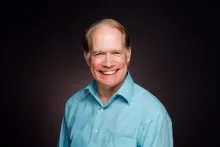
Greg Thomas is the former Pastor of the Cleveland, Ohio congregation. He retired as pastor in January 2025 and still attends there. Ordained in 1981, he has served in the ministry for 44-years. As a certified leadership consultant, Greg is the founder and president of weLEAD, Inc. Chartered in 2001, weLEAD is a 501(3)(c) non-profit organization and a major respected resource for free leadership development information reaching a worldwide audience. Greg also founded Leadership Excellence, Ltd in 2009 offering leadership training and coaching. He has an undergraduate degree from Ambassador College, and a master’s degree in leadership from Bellevue University. Greg has served on various Boards during his career. He is the author of two leadership development books, and is a certified life coach, and business coach.
Greg and his wife, B.J., live in Litchfield, Ohio. They first met in church as teenagers and were married in 1974. They enjoy spending time with family— especially their eight grandchildren.
