
Roy Holladay
This transcript was generated by AI and may contain errors. It is provided to assist those who may not be able to listen to the message.
We're going to have to reset this clock up here. It's 15 minutes slow.
I thought I had maybe 40 minutes for a sermon. Now I find I've got an hour and a half. No. We will not do that, but it is a little disconcerting to look at that clock and you think, uh-oh, it's almost 12 o'clock here. Brethren, how do we know that we can trust the promises of God, what God says is going to happen?
How do you know that God will fulfill and carry out all the prophecies that He's made? We've heard over the years that one-third of the Bible is prophecy. How can we trust what God has given us? Can we trust God? That might sound like a silly question to us, but many theologians, many ministers today try every form of human reason to nullify what God says or what God has promised when it comes to prophecy.
In fact, I remember back in 1992, this was when the regional pastors were first selected in the worldwide Church of God, that one of the first sessions we sat in on, we had a quote-unquote visiting theologian come in and explained to us that the book of Revelation was not literal, that it was just all symbolic. Consequently, it had no meaning for us today. We just sat there with our jaws, gaped open, wondering why was this guy brought in to try to teach us?
He obviously didn't know anything about the book of Revelation. We know that God's promises are true and that He will do what He said He would do. This day, the Feast of Trumpets, is a day that shows some of the greatest promises that God has given to us, and specifically the great promise and hope of the resurrection that we all look forward to. But it is a day that portrays a broad panorama of prophecies and some amazing promises from God that we will look at today.
But we want to look at it through a certain filter. I'd like to quote to you, to begin with, out of Baker's Encyclopedia of the Bible, from the topic, Amen. Every time we have an opening and closing prayer, we say, Amen. When you get down on your knees and you pray, you say, Amen. We have a very brief definition in our mind as to what that means. We know that when we say Amen to somebody who gives a prayer in the congregation, we say, I agree with what you say.
When we say Amen before God, we are saying, well, what I've said here, so be it. That's basically what we tend to think of the word Amen. The Hebrew word meaning is, so it is, or let it be, quoting from Baker's, it's derived from a verb meaning to be firm or sure. Some translations of the Bible retain the Hebrew word throughout the New Testament, and so it's just translated as Amen. The King James Version basically does that. Others translate it by an expression such as truly or verily. Most of us when we see where Christ said, truly, truly, I say unto you, we don't stop and think.
What he actually said was, Amen, Amen, I say to you. But we tend to only think of it in that way. It says, because the use of in the Old Testament Amen was also used in Christian worship, Jewish worship, religious writings, and by the Muslim world, this word is used in a variety of languages. It's one of the most commonly known words in the world because it's used by three major religions. But as we're going to see today, the word Amen has a much more significant meaning than merely being the last word in a prayer.
It carries a lot more connotation than that. In fact, that practice is not evident that much in the Bible and was not especially frequently used in ancient times when you look at it. In the 30 times it's used in the Old Testament, Amen nearly always occurs as a response to what has preceded it. Something goes on before, and the word Amen follows.
The significance of the response is that with it, the people adopt what had just been said as if it were their own. Now, let me illustrate. If I were to get up and say, we are going to do something, maybe have a fundraising. All of those in favor say Amen. Well, if you agreed with that, you wanted to adopt that, then you could say Amen. Now, we tend to today do what? Well, if you agree, would you raise your right hand?
We don't raise our hands to swear. But would you in some way indicate that you favor that? A good example of what I'm referring to here is found back in the book of Deuteronomy, chapter 27. So, let's turn over to the book of Deuteronomy, chapter 27, beginning in verse 15. Now, here the word Amen appears 12 times. The people responded with Amen after each statement of a curse is directed towards those who disobeyed God. In verse 15, it says, Cursed is the one who makes a carved or a molten image, an abomination to the Lord, the work of the hands of the craftsmen, and set it up in secret.
And all the people shall answer and say Amen. Curse, verse 16, is the one who treats his father, his mother, with contempt. And all the people shall say Amen. Verse 17, Cursed is the one who moves his neighbor's landmark, and all the people shall say Amen. So, we find that something is pronounced, the word Amen is used afterwards, and it's used as a response to what was said. Now, in this particular case, God had one of the persons who was pronouncing this to stand on one hill, the people on another. And this would echo across the valley, and then they would say Amen.
So, they were actually, in one sense, binding themselves to this. Now, just as a side point, we don't necessarily say Amen when this occurs, but you and I have been baptized. And we were baptized, we made a commitment to God. We said, I will follow you, I will put you first, I will do what you say, I will keep your commandments, I will observe your Sabbath, I will keep your holy days. And, in essence, if we don't, there's a blessing and a cursing, isn't it?
There's a blessing if you obey God, there's a curse if you disobey God. And this is basically what these people were faced with. You find the same thing is true after statements of promises when God would make a promise to Israel. There were times when they would say Amen. In other words, they realized that God was going to back that promise. In 1 Chronicles 16, beginning in verse 7, we find a situation where this was also done in the Old Testament with praise or thanksgiving.
When they were praising God or thanking God. Here you find the ark being placed in the tabernacle. In verse 7, on that day David first delivered this psalm into the hands of Asaph and his brethren to thank the Lord. So here's a psalm, thanksgiving to God. Verse 8, O give thanks to the Lord, call upon his name, make known his deeds among the people, sing to him, sing praises to him. We're not going to read this whole psalm, but let's notice as we get down to verse 36.
In verse 36, Bless be the Lord God of Israel, from everlasting to everlasting, and all the people shall say Amen and praise the Lord. So brethren, there are times, and it shows here, that the people would say Amen, and they would praise God by so doing. The word Amen is also used at the conclusion of the first four books of psalms.
Now, I think most of us realize, but in case you don't, the book of psalms is divided up into four books. Let's go over to Psalm 41. Psalm 41. Psalm 41 verse 13 says, Bless be the God of Israel, from everlasting to everlasting, Amen and Amen. Now, notice, book 2, heading in my Bible, Psalm 42 through 72. So let's go over to chapter 72. We won't read all of these, but just so you see what I'm talking about.
Psalm 42 verse 19 says, Bless be his glorious name, Psalm 72 verse 19, forever, and let the whole earth be filled with his glory. Amen and Amen says, The prayers of David, the son of Jesse, are ended. So up through Psalm 72, these are the Psalms of David. Following are mixed Psalms. There are some of them from Levites, Asaph, some from Moses, various ones. An important use of the word is found in Isaiah 65 verse 16.
Now, I want you to notice this is an extremely interesting Scripture. Isaiah 65 verse 16 says, So that he who blesses himself in the earth shall bless himself in the God of truth. Actually, the word for truth here is Amen. So what it actually says, it could be translated either way, He will bless himself in the God of Amen, or the God of truth.
And he who swears in the earth shall swear by the God of truth, or the God of Amen. Because the former troubles are forgotten, and because they are hidden from his eyes. Notice, going right on into verse 17, For behold, I create a new heaven and a new earth.
So what he's talking about here is intricately connected with prophecy. God is the God of truth and the God of Amen. So what that means, brethren, if God says it, it's true. And if God prophesies it, it will come to pass. There's a phrase, the phrase, the God of Amen, stresses that God is the one who is firm, that is. He is completely trustworthy and faithful. He is faithful to fulfill his promises. Whatever he is promised, he will fulfill. Notice the net translation of Isaiah 65.
Net translation says, Are the God of truth or the God of Amen? So here it's translated as the faithful God. Whoever makes an oath in the earth will do so in the name of the faithful God. Now, the C-E-V translation, or the contemporary English translation, translates this way. I am God. I can be trusted.
I can be trusted. Your past troubles are gone. I no longer think of them. When you pray for someone to receive a blessing or when you make a promise, you must do in my name I alone am God. Who can be trusted. God tells us very clearly in the Scriptures that we are not to trust men. Human beings don't have the power to always do what they say they will do or carry out everything that they say. But if God says it, it will happen. Because he has the power, there is nothing that will stand in his way. Now, in Revelation 7, verse 12, we read this.
Revelation 7, you might remember, is where the 144,000 are sealed and the great multitude are enumerated here. Verse 11, to give you the context, says, All the angels stood around the throne and the elders and the four living creatures, and they fell on their faces before the throne, and they worshipped God's saying.
Amen! Blessing and glory and wisdom and thanksgiving and honor and power and might be to our God forever and ever. Amen! So they use amen at the beginning and they use amen at the end. The first amen is in response, actually, to verse 10. If you go back to verse 10, where the people cry out with a loud voice, saying, Salvation belongs to our God who sits on the throne and to the Lamb. Amen! After a statement, the praise has the connotation, That is what I say also. So when it says here in verse 12, Praise and thanksgiving and honor and power and might and so on to our God forever and ever. Amen! It means simply, I say that too. I agree. Amen! Now, as a response to the benediction or prophecy, the idea is precisely, May God do it. So when it involves a prophecy, it's also carrying the connotation. This is absolute or precise. This is exactly what God says. And may God do it. May God carry it out. May He fulfill what He says. Now, the two uses of Amen by the early church focus special attention on Jesus Christ. Let's notice in 2 Corinthians chapter 1. 2 Corinthians 1 and verse 20. 2 Corinthians chapter 1 and verse 20.
It says, All the promises of God are in Him. Are yes. So all the promises of God are yes. Now, if they were no, it would mean that God would give a promise, but He would not do them. When it says they are yes, it means yes, they will be done. And then it goes on to say, All the promises of God are in Him. Yes, and in Him, Amen. So basically, it's saying that Jesus is viewed as God's means of saying yes to us in fulfilling His promises. The fact that Jesus Christ came to the earth when He said He would. That He lived for 33 and a half years and never sinned. That He was willing to die for us. That He was resurrected by the power of the Father. That He sits on the right hand of God in heaven. That He is there to fulfill His promises that He has made to us. There is nothing that can hold Him back from doing so.
Now, there's another use that refers to Christ over here in Revelation 3.
This is probably the most important scripture we'll read. Revelation 3 and let's notice verse 14. This ties in with Isaiah 65.16.
But here in Revelation 3.14, to the angel of the church of the Laodiceans write, these sayings says the Amen. Now, here's Christ and He calls Himself the Amen.
So, one of the names of God is Amen. He is the truth. He is faithful. He is the trustworthy one. It goes on to say in verse 13, these things say Amen, the faithful, the true witness, the beginning of the creation of God. So, the Amen here is used as a title of Christ to emphasize His reliability and the truth in what He says. If we can rely upon what He says, what He says is true. Now, the net translation translates, verse 14, to the angel of the church in Laodicea write the following. This is the solemn pronouncement of the Amen, the faithful and true witness, the originator of God's creation. So, God here, or Christ, is the great Amen. Not only is His name I Am, but He is Amen. The use of Amen in the Gospels, where Christ used it, is entirely different from its use in the Old Testament, or its use in the early church or elsewhere, and Jewish literature. Of the hundred times in the Gospel where the word Amen is spoken by Jesus, it always precedes what is said rather than follows what is said. It precedes it.
In the synoptic Gospels, Matthew, Mark, and Luke, the form is always Amen, or as the Revised Standard Version says, truly I say to you. In John, He doubles it, and He says, Amen, Amen. Or, in the RSV, He says, truly, truly I say unto you. Now, the New King James Version translates it even different. Let's go over to John 3. I'll show you one example here, John 3.
We could read dozens of examples, but this will show you what I'm talking about. Jesus answered and said to him, most assuredly.
Now, if you read that in the King James Version or other translations, you would be, Amen, Amen, I say to you. Or, truly, truly, I say to you. Here it's translated, most assuredly I say to you, unless one is born again, he cannot see the kingdom of God. So, if we're going to be in God's kingdom, we have to be born again. We have to be born from the physical to the divine, to become a spirit being in God's family.
Christ was very clear on that. The S-V translates this. Jesus answered him, truly, truly, I say to you, unless one is born, again, he cannot see the kingdom of God. So, that unique use of Amen stresses both the authority with which he taught and his magisties. Jesus' words come with absolute certainty and are binding upon all. That's exactly what the word Amen means. We'll look up one final place here in John 1. You just cross the page here in my Bible.
Jesus said to him most assuredly, or Amen, Amen, or truly, truly, verily, verily, however you want to translate it, I say to you, hereafter you shall see the heavens open, and angels of God ascending and descending upon the Son of God. So, he was telling them, I'm telling you the truth, this is going to happen. Now, notice all that we've discovered about the word Amen, and let me summarize it for you very quickly.
It means to be firm or sure. In the Old Testament, the word Amen nearly always occurs in a response to what has preceded it. The significance of the response is that the people adopted what had been said. When we say Amen at a prayer, it means that we agree with what was just said.
The God of Amen stresses that God is the one who is firm, that he is completely trustworthy and faithful, and that he fulfills his promises. God alone is the God who can be trusted. It's another thing we found out about it. We show agreement with what is being said. That is what we say also. If you don't agree with something that somebody prays, you can't say Amen to it. Because you're saying, I agree with that, too. Are the ideas precisely what I believe? May God do it?
It means saying yes to us, fulfilling his promises to us. The Amen is used as a title of Christ to emphasize his reliability and the truth of what he says. Jesus' words come with absolute certainty, and they are binding on all of us. I am the Amen, or truth itself, tells you a most certain infallible truth. Rather, when you stop and you think about it, God is truth. The Bible says God is love, but the Bible also shows that God is truth. Without God, there is no truth.
God is the one who shows us what truth is. This is his revelation. This is the word of God. This is what he wants us to do. God has revealed to us some of his truth. We know that there's much that we don't know.
Why does all of this have to do with the day of trumpets? There are many prophecies about the future. What does it take place at the end time? Do we really believe, as Mr. Dance was saying, that these things are going to happen? I haven't counted. I think my wife was saying this is her 60th year, something like that, of keeping the feast and observing the Holy Days. It's something like 50, 2, 3, 4, 5, somewhere in there for me. Brethren, do we really believe? We've heard for 50 years, 40 years, 30 years, 20 years, these prophecies.
We come year in and year out, and we dutifully sit here. We listen to sermons on the Feast of Trumpets at the Feast of Tabernacles about what God says is going to happen. After a while, it can become old hat, especially when 1975 came and went, 82 came and went. Here we are in 2012, and the Mayan calendars, people think it's predicting the end of the world. All of these ideas that people have, and yet these prophecies are going to happen. They will take place. Are we in total agreement with them? Do we believe? Do we say, that is what I say also?
That is what I believe also. I think God is faithful. I believe that He is true. I think that what God has promised, He is going to do. He is going to carry it out. Now, the only caveat to that is if we as a nation repent. God said He would not carry out certain prophecies if the nation repented. If the world repents, God will not do it. But they are going to be carried out. We've heard these prophecies so often, brethren, and we've gone year after year.
It seems that another year has gone by. I can remember 40 years ago, 40 years ago, if there was a reported case of bubonic plague out in the far west somewhere. Ah-ha! Here's a sign that plagues are spreading. Well, when you look at what the Bible has to say, it's not one isolated incident of bubonic plague here or there. These prophecies are real. I think that we as a church, as a congregation, or congregations, as a people, need to look at prophecy as something that is absolute, that God is going to do.
He's bound himself by it. He's the truth when he utters it. Let's take a quick survey of the prophecies that the Day of Trumpet pictures. We know that the Day of Trumpets pictures trumpets. That's the name. And that there are seven trumpet plagues that are listed here in the book of Revelation. Let's go back to Revelation 6 in our Bible. Revelation 6. Let's take a quick survey of these prophecies, of what the Bible says is going to take place.
We all remember that there are seven seals, seven trumpets, seven last plagues. The seventh seal, when it is open, is comprised of seven trumpets. The seventh trumpet also is going to help to unleash the seven last plagues. The seals are mentioned in Revelation 6. Revelation 6 starts out with four horsemen. These, we find, are things that have been unleashed over the last couple thousand years.
As we see, first of all, the white horse, beginning in verse 1 and 2, pictures false teachings. There have been false Christ teachings, prophets, and so on, down through the ages. Yet, the Bible indicates that as we get closer to the end time, that this type of activity is going to increase. So much so, that Jesus Christ, in the Olivet prophecy, warned His disciples that there's going to come a time when people would be deceived.
Even the very elect would be deceived if they weren't on their guard. We need to be aware. The second seal here is the red horse, picturing warfare. The third seal in verse 5 is a black horse. Then the fourth seal in verse 7 here is a pale horse. I want you to notice, though, verse 8, as a result of false teachings, false religions being promulgated and spread around the world. As I mentioned to the Chattanooga congregation yesterday, the whole world is looking for the return of some type of a religious Messiah. The Jews are looking for the Messiah to return. We look for Christ.
The Muslims are looking for the 12th henman, or whatever he is called. The Buddhists, the Hindus, they're all looking for a great deliverer to come back and to intervene at the end time. People are very much aware of that. But there, as the Bible shows here, are going to be wars that begin to take place. As a result of that, there will be scarcity of food. There will be famines that will take place. There will be plagues that will take place.
So we read in verse 8, I looked, and behold, a pale horse. And the name of him who said on it was death, and Hades, the grave, followed him. And power was given to them over a fourth of the earth. Notice, one quarter of the earth is affected by this. To kill with the sword, with hunger, and with death, and by the beast of the earth. And so we find that one quarter of the earth suffering from warfare, hunger, death, and beast, or wild animals and plagues, taking place.
And then the fifth seal is talking about martyrdom of saints. And it talks about those who have been slain, as verse 9 talks about here. He opened the fifth seal, and I saw under the altar the souls of those who have been slain for the word of God and for the testimony which they held. And they cried out with a loud voice, asking God to intervene on their behalf. And God says, well, wait, because there are others who are going to join the ranks of martyrs.
And so at the end time, you find the servants of God will be hated by all nations. And the Bible is very clear about that. And true Christians, especially, who are willing to stand up and say they believe the truth are going to be martyred. And then we come to the sixth seal in verse 12, which talks about heavenly signs taking place, the sun becoming black as sackcloth, and the moon becoming like blood, the stars of heaven falling to the earth. And all of this takes place. Verse 17, we come down to the last part of it here. Verse 17, For the great day of the wrath has come, and who shall be able to stand?
So we find the seals being opened up, and even though there have been wars and famines and droughts and all of this, down through the ages, as we get closer to the end, it is going to intensify greatly, and there's going to be an end-time fulfillment, and then there's going to be Christians being martyred worldwide. You find there are going to become heavenly signs, and then God intervenes.
That's what verse 17 is talking about. The great day of his wrath has come. The great day of God's wrath is the day of the Lord. And so the great day of his wrath comes. The Tribulation is three and a half years. It's a three and a half year period. The last year of that three and a half year period will comprise the day of the Lord leading up to the Second Coming of Christ to the earth.
Now, we have a break in the story thread here in chapter 7. We find that before all of this takes place, God intervenes to protect the 144,000. And then also there is a great multitude of people who are converted. Who are these great multitude of people? It says, After these things I look and behold a great multitude, which no one could number, of all nations, so this is not just Israel, but Gentiles of all nations, tribes, and people, and tongues standing before the throne, before the Lamb, clothed with white robes and poms.
And they have come out of, as verse 14 says, the Tribulation. I said to him, to the angel, The angel said to me, These are the ones who come out of the great Tribulation. They've had to go into the Tribulation. They've been converted in the Tribulation, and they've washed their robes. That means that they've been converted and made them white in the blood of the Lamb. And so here you find people being converted at that time. So chapter 7 describes that, and then we come back to the theme of the book in chapter 8.
You find the seventh seal being opened in verse 1 here. Chapter 8, verse 1, He opened the seventh seal, and there was silence in heaven about half an hour. And I saw seven angels standing before God, and to them were given seven trumpets. And so they get ready to sound and to be poured out. And now the seven trumpets are to be poured out. Rather, that's what this day begins to picture. It pictures the fact that God Himself is going to send Christ back to intervene in the affairs of mankind. Satan the devil has been out here with great wrath against the church, against the nations of Israel, against the United States. Look at how much we are hated around the world.
I mentioned yesterday here in Chattanooga. We woke up yesterday morning. There were over 24 different countries, where they are demonstrating against the United States. They are attacking our consulates, they are attacking our embassies. Quite frankly, I think that when you look at the Mideast in that area in Africa, very few people are going to be transferring this year to those areas. Right now, they are not safe at all. I would not want to go to the feast in Nigeria this year, or some of those areas, or go over to Israel to keep the feast.
Because of what is going on. And rather, this is going to be something that I think we will see more and more of. When our country is perceived as being weak and ineffective, and that we no longer are willing to stand up for what we believe, those who hate us will try to do us in, and take advantage of it. So, we've got to wait and see what God has in mind. You see, that's what I always think of when there's an election. What does God want? Because He's in charge. If God wants a certain individual to be president, or continue as president, I don't care what anybody does.
That person will be, because God's in charge. He will make sure that it happens. That's why we need to really pray about those things. Well, going on here, you'll notice beginning in verse 7, trumpet plagues begin to be poured out. First trumpet, a third of the trees were burned up, and all the green grass was burned up in verse 7. These are devastations to ecology, to agriculture, to the planet.
Our planet itself is being affected by the warfare. Who knows what all is going on at this time? Second one sounds, and a third of the sea becomes blood, and a third of the living creatures in the sea die. Third trumpet in verse 10, and a third of the rivers and springs of water turned into blood or bitterness. The fourth trumpet, verse 12, the fourth angel sounded, and a third of the sun was struck, a third of the moon, and a third of the stars.
Can you imagine people going out at night and looking up at the moon? One night it's full moon, the next night one third of it has disappeared. They look up in the sky and hear all these stars over here. Right in the middle there are no stars, and there are stars over here. What do they have to think? Well, the scientists will be explaining this phenomenon. They'll try to explain what's going on. But God will begin to intervene. Anybody who has a Bible and picks it up and reads these scriptures could see that God has prophesied it.
Now, brethren, one of the duties and responsibilities that we have as a church and organization is to take the gospel of the kingdom to this world as a witness. Those that God calls, He will call, add to His church. We need to realize that it's incumbent upon us to preach this message and to let the world know what's going to happen. At this time, there will be two men called the two witnesses who will be very vibrantly, very powerfully preaching the gospel to the world.
Let's go on here in chapter 8 and 9. Chapter 9, the theme carries on. The fifth angel sounded, and the key of the bottomless pit is open. You find this locust, the beast power, comes up out of the bottomless pit here. They come out and they fight. There's a king over them, as verse 11 says, who is Satan the devil. This has to do with militarily, they begin to attack. And you find in verse 13, there is a counter-attack against them.
And here we find the major powers of the world beginning to assemble together. They come together at Armageddon, and they go up to Jerusalem, and they fight for control of the world. They are going to be so filled with lust and power at this time, that they say, well, there's only one power that stands between me and controlling and ruling the world.
If I eliminate them, then I'll be in charge. And so they're willing to drop bombs, they're willing to kill millions of people. And we find in the book of Revelation that there are going to be over one-third of human beings who are left alive when a battle takes place, who are going to die in that battle.
Today, there are over seven billion people. What if at that time, I don't know how many people will be left alive when that particular battle takes place. What if there are six billion people alive at that time? One-third, two billion die at that junction. Now, in Revelation 11, the theme carries on in verse 15, where the seventh trumpet sounds. And this is probably the one that we emphasize the most on the Feast of Trumpets.
Because, let's notice, The seventh angel sounded, and there were loud voices in heaven, saying, The kingdoms of this world have become the kingdoms of our Lord and of His Christ, and He shall reign forever and ever. So the seventh trumpet is when Jesus Christ returns to this earth, sets up His government on this earth, and begins to rule over the world. The kingdoms of this world, all nations, are going to come under His government.
And when this happens, notice, The twenty-four elders who sat before God on their thrones fell on their faces and worshipped God, saying, We give you thanks, O Lord God Almighty, the One who is, and who was and who is to come, because you have taken your great power and reign, and the nations were angry, and your wrath has come, in the time of the dead that they should be judged, and that you should reward your servants, the prophets, and the saints. See, it's the time of the resurrection, the time when God will hand out rewards, responsibilities, and duties, unto His servants, unto His prophets, to us, the saints, and to those who fear your name, small and great, and you should destroy those who destroy the earth.
So this is when the kingdom of God will be established, and once Christ comes back, it says, what? He will reign forever and ever. Now, let's go over to Matthew 24 very quickly. Matthew 24. Now, let's tie in Amen again with what we've been reading here. I want you to notice that Jesus Christ, in the Gospel, backs up these prophecies, and absolutely puts His stamp of approval, saying that they are true.
They're actual. In verse 2, Jesus said unto them, Do you not see all of these things? Assuredly I say to you, or Amen, or truly, or verily, I say to you, that one stone shall be left here upon another, that shall not be thrown down. So He's saying, this is the truth. What I'm about to tell you here is what we would say is the Gospel truth. It's what is right, and it will take place. Notice the ESV, translation of verse 2.
He answered them, You see all these? Do you not? Truly, I say to you, there will not be left one stone. The net translations, He said, Do you see all these things? I tell you the truth. Not one stone will be left upon another. And then, the good word translation, Jesus says, You see all these buildings, don't you? I can guarantee the truth. See, that's what that word, amen, means in this connotation. I'll guarantee you that this is true. Now, verse 34, it's already been referred to, but let's notice verse 34.
Surely, I say to you, or truly I say to you, that this generation will by no means pass away till all these things take place. The generation in which it's possible for all life to be destroyed off the face of the earth is the generation that these things will take place. Guess what? All life can be destroyed today. It's our generation that Christ will come back in. So, what Christ is saying here, in essence, in Matthew 24, and we know that Matthew 24 is a parallel to the book of Revelation, Christ is saying that what was said in the book of Revelation, the prophecies, you know, they overlap with one another, are true.
They are Amen. Verse 45 of this chapter. Verse 45.
So, brethren, Christ has reassured us, has verified it, has said Amen to it, that He will make us rulers over you. All things when He comes back. Now, let's go back again in Revelation. Well, I'll just refer to it. Take a look again at Revelation 11, 18. It might remember, it said that the time of the dead that they would be judged. People who are dead are dead. They don't have life. For them to be judged, they're going to have to be resurrected. And He will reward His servants, the prophets, and the saints. So, the resurrection takes place at the time of the seventh trumpet, or the last trumpet. This is the hope of a Christian. Brethren, without that belief, we have very little to hope for. Our hope, what should motivate us every day, what we should think about constantly, is the fact that there is going to be a resurrection of the dead. Let's notice 1 Corinthians 15 and verse 12. 1 Corinthians 15 and verse 12 to begin with. First of all, it says, Now if Christ is preached that He has been raised from the dead, how do some among you say that there is no resurrection from the dead? How do you say that? But if there is no resurrection of the dead, then Christ is not risen. And if there is no resurrection, and if Christ is not risen, I should say, that our preaching is empty and your faith is also empty. Yes, we are found false witnesses of God because we have testified of God, that He raised up Christ, whom He did not raise up. If in fact the dead do not raise up, for if the dead do not rise, then Christ is not risen, and if Christ is not risen, your faith is futile, and you are still in your sins. And also those who have fallen asleep in Christ have perished. In other words, they won't live again. If in this life only we have hope in Christ, we are of all men most miserable, or if that's our hope and it's a farce and there's no truth to it, then we would be of all men most miserable. But there is truth. It is factual. It has been promised. Let's notice the great fulfillment of the seventh trumpet over here in verse 50. 1 Corinthians 15, beginning in verse 50. Now this I say, brethren, that flesh and blood cannot inherit the kingdom of God, as long as you're physical, nor does corruption inherit incorruption. Behold, I tell you a mystery. A mystery is a hidden truth. You hear something that's been hidden from mankind down through the ages, but it's been revealed to the church. We shall not all sleep, but we shall all be changed. In a moment, in the twinkling of an eye, at the last trump, the seventh trump, at the last trump, the trumpet will sound, and the dead will be raised incorruptible. We shall be changed. For this corruptible must put on incorruption, and this mortal must put on immortality. So when this corruptible is put on incorruption, and this mortal is put on immortality, then it shall be brought to pass as saying that his written death is swallowed up in victory. So, brethren, this is the promise of the Great A.M. That this will happen. He has said it will. When it comes to the hope or the promise of the resurrection, we know that God is absolutely trustworthy. That he is somebody who is faithful. He will carry out his promise. He is true. One of his titles is the Amen, the Truth. So these promises are absolute. Now, in John 5.25, one last scripture here, John 5.25, Jesus Christ, again using the term Amen, verifies that the resurrection is truth. John 5.25. We discover that Jesus Christ's Gospel backs up all these prophecies about the resurrection.
Let me read this. He says, He says, He says, He says, The hour is coming, and now He is, when the dead will hear the voice of the Son of God, and those who hear will live. For as the Father has life in Himself, so is He granted the Son to have life in Himself. He has given Him the authority to execute judgment also because He is the Son of Man. The Son of Man, do not marvel at this, He says, For the hour is coming, in which all who are in the grave shall hear His voice, and come forth those who have done good to the resurrection of life. There will be a resurrection of life, and those who have done evil to the resurrection of condemnation. So, brethren, there are going to be the resurrections. In essence, Christ is saying, I am the truth, my very nature is to be faithful, and my Father and I have the power and the authority to bring this all about. It will happen. So, brethren, when we stop and think about it, let's just interject a little different thought here. Can our word and our promises be relied upon? You as a human being, can you be relied upon? Will you be in God's kingdom if God doesn't think that you are trustworthy or reliable? You and I have entered into a covenant with God when we were baptized. We said that we would bury the old man, rise up in the new way of life, and God is in the process of changing our nature. By saying this, I am not implying that we never sin. We all know we sin daily. We have to repent. That's the difference. We, as human beings, have to change and repent. So, we do. God is in the process of changing our nature, our thinking, our approach. We are transformed from a person whose major influence is Satan the Devil, and his way of life, of pride, of vanity, of ego, selfishness, to one whose major influence is God, and who is being transferred into love and service. In the resurrection, God will change us. He will change our bodies. We will be transformed to the spirit realm and have a spirit body. This will affect our minds, our emotions, our body, our motivation, our understanding, our involvement. Because at that time, all of these things will be changed from physical to spirit. How are we going to be a spirit being that God can trust unless God can see us faithfully obeying Him today? In our minds, in our hearts, we want to do what God says. Maybe, as the Bible, Paul said in Romans 7, in the flesh, he did sin. Our very nature will be like God. We will be, and should be, Amen and our character, and will be at that time. God will change us so that we will be filled with love as He is, and we will also be filled with trustworthiness. We will be human beings that, in the millennium, people will be able to look to, trust, rely upon, and know that we are there and that when we say something, it will be done. So, brethren, we truly are looking forward to the fulfillment of the Feast of Trumpets.
Thank you.
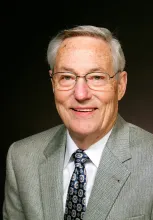
At the time of his retirement in 2016, Roy Holladay was serving the Operation Manager for Ministerial and Member Services of the United Church of God. Mr. and Mrs. Holladay have served in Pittsburgh, Akron, Toledo, Wheeling, Charleston, Uniontown, San Antonio, Austin, Corpus Christi, Uvalde, the Rio Grand Valley, Richmond, Norfolk, Arlington, Hinsdale, Chicago North, St. Petersburg, New Port Richey, Fort Myers, Miami, West Palm Beach, Big Sandy, Texarkana, Chattanooga and Rome congregations.
Roy Holladay was instrumental in the founding of the United Church of God, serving on the transitional board and later on the Council of Elders for nine years (acting as chairman for four-plus years). Mr. Holladay was the United Church of God president for three years (May 2002-July 2005). Over the years he was an instructor at Ambassador Bible College and was a festival coordinator for nine years.
