

Paul Moody
This transcript was generated by AI and may contain errors. It is provided to assist those who may not be able to listen to the message.
Well, thanks a million, Mark. Thank you, Mr. Housen. The sermon I have, you should tie in very well with the sermonette that was given today. We all indeed celebrated Thanksgiving just a few days ago, so I wanted to give a sermon today with a little bit of history and a little bit of context about where our nation has been, where our nation is today, and a little bit about where our nation is heading. We live in a nation at the crossroads of history and destiny.
We, as God's people, have to be very careful not to be caught up in the vortex of a national chaos that is occurring in our country at this time. First of all, we have a number of national obsessive-compulsive disorders. We have a national obsessive-compulsive disorder over skin color. The United States has a national obsessive-compulsive disorder over sports and athletics. The United States has an obsessive-compulsive disorder over the entertainment industry. TVs, movies, Hollywood actors, actresses, gambling casinos.
The United States has a national obsessive-compulsive disorder with the social media.
If the average American spent one one-hundredth of the time they spend looking at their tablets and put one one-hundredth of that time in prayer, we would be a righteous nation.
Add to that the fact that we have the second election in a row where one half of the electorate doesn't feel the president is legitimate. I've seen a lot of elections in my lifetime. I've read a lot of American history. I cannot tell you of two elections in a row in our history where half of the electorate felt that election was not legitimate. Democracies only function because people have faith and confidence in the system.
We've had a virus that has caused further division. Should I wear a mask? Should I not wear a mask? Should I be vaccinated soon? It'll be should I be vaccinated? Should I not be vaccinated? It's caused greater division, fear, and anxiety. As a post-Christian culture, we now have challenges in every aspect of our value system. Christian values in this nation have been replaced with secular theories and ideas and concepts. So we need to avoid being caught up in the kind of problems and difficulties that this nation faces. And I want to talk about that today and again give a little bit of a historical construct about our nation. Just a few days ago, most of us observed Thanksgiving. It's an important secular holiday that reminds us to give thanks to God for the many blessings that we have. If it has one weakness, here's the one weakness. It's only one day. We don't, as a nation, as a people, give thanks the other 364 days of the year, which we certainly should. Giving God thanks daily is important because of a tendency of human nature that we all have. The idea of giving constant thanks to God was so important in the Old Covenant that there was an entire type of temple offering that was called the thank offering or the offering of thanksgiving. That's how important the concepts of being thankful for the things that we have are so important. And why is being thankful so important? Because it counters and it balances one of the most despicable and vile and selfish traits of human nature that we have to continually resist and overcome. And that is the attitude of entitlement. There's something about the way that we're wired as carnal, selfish human beings, physical, that when we receive something that we've wanted, we immediately begin to take it for granted.
We immediately begin to feel entitled. Entitlement is defined as believing oneself to be inherently deserving of privileges or special treatment. Well, I'm going to give you some examples that I see. One example is marriage. I've done some weddings and marriages. It usually starts off with, Oh, look at this! Look at my new wife, everybody! Look at my new bride!
And a short time later, I hate you! Drop dead! Drop dead! Well, what happens between point A and point B? Well, a number of things happen, but I can assure you that one of the things that are going on there is one or both have developed a sense of entitlement. About satisfaction of getting a new job or a big raise. Oh, I just got this new job. This is awesome! I got this big bump in money, and a few months later, I hate this job. I think I've given on myself in past times. I've worked for places and I'd get a nice raise. Oh, got a raise! Look at this! Got it right! A couple paychecks later. That's it! When's the next raise coming? Why? Because we are wired. We have to be on guard. Constantly, we are wired to think that way. I can remember a time when people were very delighted to have their very own church building. After so many years of renting from others, some pretty bad places, I remember one place where religious services and a school and the basketball team came here. You boom, boom, boom, boom! All these basketballs bouncing during our religious service out in the hallway. Mothers trying to nurse their children in unclean restrooms. I can tell you a lot of horror stories of renting our own buildings. So now that we have our own building, have we decided that we should let everyone else do all the work to maintain it? To keep it up? Keep it looking nice? Have we developed a sense of entitlement?
Let's go to the book of Deuteronomy. If you turn there with me, Deuteronomy 6 and verse 10. This is actually a prophecy. God told ancient Israel that this would happen, and indeed it did. So how would he know this? How would God know this? Well, he had a couple of experiences. That's how he knew this prophecy was for sure. First of all, while you're turning to Deuteronomy chapter 6 and verse 10, I'd just like to remind you of what happened in Genesis 3. God creates this man and this woman, and he gives them the gift of life. They went from non-existence to having life. He gives them a garden, a beautiful garden to live in.
They didn't have to plant the garden. The garden was there for them to enjoy. The moment they became conscious and aware of their existence, he gave them a purpose. Says to the man, till the garden, tend the garden, keep the garden up, maintain it, be a gardener. And the wife, of course, is helping him, working alongside. They're working together as a team. They're going to have children. They have a relationship with their Creator.
He walks in the garden, talks with them. They have love. They're the only two people on earth. They don't have any clothes on. If they want to, they can make love all day. You know what I call that? I call that, it doesn't get any better than that. What a great life!
But it didn't take long for the sense and attitude of entitlement to kick in. God, what have you done for me lately? Yeah, I appreciate all, you know, life and gardens and spouses, purpose. But what have you done for me the last 10 minutes? Another example would be Exodus 17. I'll refer to it later. Ancient Israel, after God had brought them out of slavery, what a miracle, defeated the great superpower on earth who bows with the great God and lets these Hebrews leave Egypt.
They're trapped at the Red Sea. Another miracle happens. The sea divides. They walk on dry ground across it. The Egyptians follow them. The sea goes back, destroys the Egyptian army. And a few days later, they're getting a little thirsty. And what do they do? They begin to complain to Moses and they insult God. They say in verse 7, Is the Lord among us or not?
In other words, where are you, God? What have you done for me lately? Yeah, I know about that leaving Egypt thing. I know about that Red Sea stuff. Yeah, thank you for that. But what have you done for me lately? Again, it doesn't take long for that attitude of entitlement to kick in. So let's read this prophecy. Deuteronomy 6, verse 10. So it shall be when the Lord your God brings you into the land which he swore to your fathers to Abraham, to Isaac, and Jacob to give you large and beautiful cities.
Now these are metaphors that are very applicable to our experience here in the United States in the 21st century. Aside from our heritage of Israel, these are very powerful metaphors that apply to the world we live in today to give you large and beautiful cities. Large and beautiful cities give you protection. They give you organization. Advancement always occurs in large and beautiful cities, whether it's technological advancement, scientific advancement, educational advancement that takes place in cities. To give you large and beautiful cities which you did not build. Now in their case, they were going to inherit some cities that were built by the Canaanites, but to even a greater degree than that.
Who made the wood to build a home? Who made the stone to make a building? Who created the world and all the materials, the metals, the oil, and everything to create what we have in life today that came from God.
So again, large and beautiful cities which you did not build. Houses full of good things. That's a metaphor for all kinds of great toys. Material possessions you can't believe which you did not fill. They're just there. You're wealthy. You have a good life. You can afford to buy these things. Cune out wells. In other words, clean, drinkable water, which you did not dig.
Vineyards and olive trees. In other words, an abundance of food. All kinds of great stuff to eat, which you did not plant. When you have eaten and are full, when you enjoy all that good stuff and you're self-satisfied, when you get married to that beautiful person, when you get that new job, when you get that church building that you didn't have for 50 years, how are you going to react? Verse 12, then beware, lest you forget the Lord who brought you out of the land of Egypt from the house of bondage, you shall fear, have in awe, not necessarily fear like trembling, but literally hold in extreme reverence and awe, you shall fear the Lord your God and serve him.
Not primarily serve your own wants and needs. Not serve the dictates of the government, if it conflicts with what God says that we should do. We should serve him and shall take oaths in his name. You shall not go after other gods, the gods of the people who are around you, for the Lord your God is a jealous God among you, lest the anger of the Lord your God be aroused against you and destroy you from the face of the earth. You shall not tempt the Lord your God as you tempted him in Massah. I just read or mentioned that, referred to it in Exodus chapter 17, where they crawled with Moses and they insulted God because they were getting thirsty. After all he had done for them, lack of faith, lack of respect for God. Verse 17, you shall diligently keep the commandments of the Lord, your God, his testimonies and his statutes which he has commanded you, and you shall do what is right and good in the sight of the Lord, that it may be well with you, and that you may go in and possess the good land which the Lord your God swore to your fathers to cast out all of your enemies from before you as the Lord has spoken.
So here's a warning. The prophecy. Ancient Israel did this, violated God, Judah did this, the United States has done this.
Ancient Israel was a nation that was founded in religious principles.
If for God, it's God. Ancient Israel doesn't exist anymore. The United States was founded by religious people on religious principles, and we too have forgotten our God. And there's consequences for forgetting our God. Just a brief history of a little bit of our religious background, because some people say, oh it really doesn't matter. That was then, this is now. There's a large segment of our culture today that says that the religious people who founded this country were losers and suckers, because they were religious and they believed in a God.
And that's not important for our founding, we're told today. That's not important to our founding at all. But it is important, because along with the belief in a God and justification of using God as your reason for founding a state, founding a colony, founding a nation, you have responsibilities and obligations when you claim that God is on your side and that God has led you to do those things. The first settlers were deeply religious people called Puritans who came to North America for religious freedom. Here are some of the things they did that were rather remarkable, even leading up to the founding of this nation. In 1620, the first written agreement of self-governance in America was the Mayflower Compact. And here's what the colonists wrote together before they left that ship and came on shore. Quote, in the name of God, amen. We whose names are underwritten have undertaken for the glory of God and the advancement of the Christian faith, a voyage to plant the first colony, due by these presents solemnly and mutually, in the presence of God, combine ourselves into a civil body politic. Did some say this was never found to be a Christian nation?
In 1643, four New England colonies created articles of governance for themselves, and here's what they said. Quote, whereas we all came into these parts of America with one in the same end, namely, to advance the kingdom of our Lord Jesus Christ and enjoy the liberties of the gospel and purity, we therefore conceive it our bounden duty, that as in nation and religion, so in other respect we shall be and continue one. End of quote.
So some say we weren't founded on Christian principles as a Christian nation. In 1776, the Declaration of Independence, primarily written by Thomas Jefferson, mentions God and the deity numerous times. As a matter of fact, it says that nature's God is the one who gives us the right at this separation. He gives us the justification to rebel against the King of England.
In 1778, our very first constitution, which we're not under today, our very first constitution was called the Articles of Confederation. And here's what they wrote in our very first constitution of the United States before it was replaced with the constitution we have today. Quote, and whereas it has pleased the great governor of the world, they capitalized G for great and G for governor, obviously talking about God, a deity, the deity. Whereas it has pleased the great governor of the world to incline the hearts of the legislatures we respectively present in Congress to approve of and to authorize us to ratify the said articles of the Confederation and Perpetual Union. They went on to sign the bottom of the document the 9th day of July in the year of our Lord, 1778. That constitution didn't work very well, so it was replaced with the one that we have now. And though, indeed, within the heart of the constitution, there's no mention of God, the end does say that done in convention by the unanimous consent of the states present the 17th day of September in the year of our Lord, 1787, and the independence of the United States of America.
Those are some of the historical facts. I'm sorry if they offend some today who want to discard that as just these people that want to believe in the myths of God and religions, and that was then. And this is now when we should take no concern, we shouldn't respect their traditions, we shouldn't honor what they did. I'm telling you that anyone who has that mindset has put this nation, these peoples, under a curse. Yet we continue to have a lot of ceremonies, rituals in this country that attempt to honor God.
Now, many refer to these as ceremonial deism, meaning it's just a token. It's just kind of like a a little remembrance of the time when we were religious, that it really, these things really don't have any meaning. They really don't have any function. They're just kind of like ceremonies we've been doing a long time, and that's why we continue to do them. Here are some of them you may or may not know of. Every presidential inaugural address since George Washington acknowledges God in his presence in their inauguration address. Everyone since George Washington. According to the Pew Research Center, God, or the divine, is mentioned at least once in each of the 50 state constitutions, including the state of Ohio, there are nearly 200 times in those 50 state constitutions where God is mentioned, an average of four times per state constitution.
Both the House of Representatives and the U.S. Senate have chaplains who open their daily sessions with prayer. You may or may not know that. You may or may not know that the current Senate chaplain, whose name is Barry C. Black, is the first Sabbatarian, the first individual who keeps his seventh-day Sabbath in the history of the Senate to be a Senate chaplain.
He's also the first African-American to hold that position. He's a seventh-day Adventist.
He walked into the Supreme Court. Take a look at the South Wall Freeze. You will see inside the courtroom a carving of Moses, the great lawgiver. He's depicted in the freeze holding two overlapping tablets written in Hebrew, representing the Ten Commandments. He has the same Ten Commandments that we've taken out of everyone else's courtroom in the country the last decade. The Supreme Court opening session. Whenever the Supreme Court has a session that opens, here's what is said. I quote, The Honorable, the Chief Justice and Associate Justice of the Supreme Court of the United States, Oyez, Oyez, Oyez! That happens to be French Norman for give me your ear. Listen up. Oyez, Oyez, Oyez! All persons having business before the Honorable, the Supreme Court of the United States are admonished to draw near and give their attention, for the Court is now sitting. God save the United States and this Honorable Court! Said before every session of the Supreme Court. But you know, aside from all of this tokenism, and unfortunately that's what it has become, it's like the phrase, In God we trust on our money. It should say, In God we trust all others pay cash the way our economy operates. But I think, in my opinion, that there was a time in history when there was a tipping point. And I'd like to talk about that for a few minutes. If you look at history, there's always an event. There's always a time, something you can point to, in which history changed. Something from that point on began to slowly change to become transformative, become something that was new or different. And I believe that we had a time of a tipping point in our nation, and I'd like to talk about that for a minute. It happened 58 years ago in my lifetime, my wife, BJ, in many of your lifetimes. It happened on June 25th, 1962. The U.S. Supreme Court, in a 6-1 decision, declared that school-sponsored prayers are unconstitutional in a landmark case, Engel v. Vitaly. By the way, the six justices who said it was unconstitutional, for those of you that are fascinated with the Supreme Court, three of the justices were appointed by Democratic presidents, three of the justices who said it was unconstitutional, were appointed by Republican presidents, including the Chief Justice at that time, Earl Warren, who had been appointed by President Eisenhower. So they declared that the following prayer that I'm going to read to you violated the First Amendment's Establishment Clause. Are you ready for this? Are you ready to hear this egregious prayer that the state of New York had approved through a piece of legislation that was being used in schools to start their days, first with the Pledge of Allegiance, and then with this incredible, egregious prayer? Here it is. Almighty God, we acknowledge our dependence upon thee, and we beg thy blessings upon us, our parents, our teachers, and our country. Amen.
Now, isn't that deeply offensive?
No, not at all. But this was the prayer that the Supreme Court, six to one, said was unconstitutional and basically took prayers out of our schools. Now, the cynic may say, ah, you know, what does it matter? Did it really matter that much? Well, here's how much it mattered. Probably for most of those students, it was the only one time during the day when they were reminded to acknowledge that there was a superior being to them, that there were obligations that we have in this world, that there was a being whom we are dependent upon, and there may be something that we have to do as a result of that.
It may have been short, but for many of those students, it was the only time during the entire day when they would be reminded of that. By the way, the justice that dissented said, this is totally ridiculous. The Establishment Clause is about the federal government not establishing a state religion and has nothing to do with acknowledging or respecting God in a prayer in a school. This is totally ridiculous. But here's why I believe that was a tipping point. It established the fact that our secular government, of all people, the Supreme Court, was basically saying, we do not want to acknowledge our dependence on a deity. We don't want to acknowledge God's supremacy over this nation. And I believe, and again, this is just my personal opinion, that was a tipping point, and that it placed the United States of America under a curse. And if you look at the results of virtually every negative statistic from 1964 to where we are today, you will see an incredible decline in values. You'll see increased divorce rates, staggering increase in out-of-wedlock births, drug addiction, overdoses, multi-generational poverty now, and some families going into the fourth to fifth generation, depression, increased crime, political division, social dysfunction, an overall feeling of malaise within the country, like we're just just knowing that something is wrong, and of course, anxiety. I believe that that was a turning point in this nation's history, and when all the dust settles and all is said and done, that people will look back at that decision at that time in 1964 and say that is when the United States, officially, through the highest court in the country, rejected the supremacy of God. Let's go to Deuteronomy chapter 8, just a couple chapters from where we were. Chapter 8 and verse 6.
Moses, inspired to write here from God's instruction, therefore you shall keep the commandments of the Lord your God to walk in his ways and to fear him. Do we walk in God's ways as Americans today? Do we fear him?
For the Lord your God is bringing you to a good land, a land of brooks, of water, of fountains and springs that flow out of valleys and hills, a land of wheat and barley, of vines and fig trees, pomegranates, a land of olive oil and honey, a land in which you will eat bread without scarcity, in which you will lack nothing, a land whose stones are iron, meaning rich in minerals and metals, whose stones are iron and out of whose hills you can dig copper. When you have eaten and are full, then you shall bless the Lord your God for the good land that he has given you. That's what you should do. But then the warning again, for emphasis, the second time in two chapters, verse 11, beware that you do not forget the Lord your God by not keeping his commandments, his judgments, his statutes, which I command you today, lest when you have eaten and are full self-satisfied, smug, entitled, thinking everybody owes you something, and have built beautiful houses and dwell in them. And when your herds and flocks multiply and your silver and your gold are multiplied, and all that you have is multiplied, when your heart is lifted up, arrogant, proud. Look what I've done. Look how important I am. It's all about me, my rights, what everyone owes me. When your heart is lifted up and you forget the Lord your God who brought you out of the land of Egypt, out of the house of bondage, who led you through that great and terrible wilderness in which were fiery serpents and scorpions and thirsty land where there was no water, who brought water for you out of the flinty rock, who fed you in the wilderness with manna, which your fathers did not know, that he might humble you, that he might test you to do you good in the end. I've made this challenge before, and I'll make it again.
I dare anyone who listens to this message, anyone, to tell me that they don't live phenomenally better than their grandparents did. I don't care your religious faith. I don't care your ethnicity. I don't care your skin color. I don't care what it is. You live phenomenally better than your grandparents were able to live.
And that's something to be tremendously thankful for. Now, I know there's a human tendency. It's not enough. The guy next door, his house has two more square feet than I do. That's not fair. I've got a 2019 Honda. He's got a 2020. That's not right.
I'm still married to the same wife. He's been married five times.
So people make those comparisons. Again, they think they're entitled. Verse 17, then you say in your heart, My power and the might of my hand has gained me this wealth, and you shall remember the Lord your God, for it is he who gives you the power to get wealth.
I've also said this before, and I've openly admitted it. My ancestors primarily came from Wales, named Thomas as Welsh, and my other grandfather came from Sicily.
If they hadn't emigrated here, I would no way live the lifestyle that I live now. I've been the Wales. Nice people, nice place. I would nowhere near live near the quality of life, the material blessings I have received because I live here.
And that's something for all of us to be thankful for. God gives us the power to get wealth, that he may establish his covenant, which he swore to your fathers, as it is this day. Then it shall be, if you by any means forget the Lord your God and follow other gods. Those other gods may be materialism. It might be the government. We don't need God. The government's going to provide everything that I need. It may be science. It may be the entertainment industry. It might be media.
What are the other gods that we have turned to in our lives? And follow other gods and serve them and worship them. I testify against you this day that you shall surely perish. As the nations which the Lord destroys before you, so you shall perish because you would not be obedient to the voice of the Lord your God. Sadly, this prophecy was fulfilled. First the northern tribes, ancient Israel, then Judah, all forgot their God, all went into captivity. We, as God's people, obviously don't want our national sins to lead us into making a serious spiritual mistake.
Of all people on earth, we don't want to become entitled and have the attitude of entitlement. So how can we prevent this happening? Let's take a look at some New Testament scriptures as we begin to conclude the sermon today. Just a few scriptures from the New Testament. Start in Matthew chapter 15 and verse 36. Matthew chapter 15 and verse 36.
Jesus Christ himself was an example. He regularly thanked God for everything from food to fellowship to forgiveness. To how about us, brethren? Are we thankful in that way?
Something as simple as eating. Matthew chapter 15 and verse 36. And he took the seven loaves of bread and fish and gave thanks and broke them and gave them to his disciples. And the disciples gave to the multitude. Now go to chapter 26 here in Matthew. Matthew chapter 26 and verse 27, to turn just a few pages. Chapter 26 verse 27. Then he, speaking of Christ, took the cup and gave thanks and gave it to them, saying, drink from it all of you, for this is the blood of the new covenant which is said for the remission of sins. You see, Jesus Christ himself set the example. When you live a life of daily thankfulness, when you're thankful for even the little things, it's hard to become entitled and take things for granted. How about within our own families? Do we demonstrate thankfulness? And even in our own county, pass me the butter, please. Thank you. Do we demonstrate thankfulness even for the small things?
In Walmart, when a woman checks out our bag, and thank you, sir, have a nice day, thank you.
Do we demonstrate thankfulness in even the small things in life? It's a reflection of kindness. It's a reflection of respect for that other person, to thank them even for the smallest things. You see, when we're God-centered, it's difficult for the enemy to lead us astray.
If you look at all of Paul's letters, every letter that Paul ever wrote, except for Galatians, he was angry and peeved. But except for Galatians, every letter that Paul wrote, he begins with thanksgiving. Let's take a look at an example. First, Thessalonians chapter 1 verse 1. Turn there with me. He was very focused on the importance of having a thankful attitude, and he wrote about thankfulness often. First Thessalonians chapter 1 verse 1.
He begins, Paul, Savannah, St. Timothy, to the church of the Thessalonians in God the Father and our Lord Jesus Christ. Grace to you and peace from God our Father and the Lord Jesus Christ. We give thanks to God always for you all. Are we thankful for one another? Are we thankful for the spiritual family that God has given us?
Are we just taking people for granted? We give thanks to God always for all of you, making mention of you in our prayers, remembering without ceasing your work of faith, labor of love, and patience of hope in our Lord Jesus Christ and the sight of our God and Father, knowing, beloved brethren, your election by God. He says, I do this because I know that each and every one of you were personally selected by God to be part of his family. Is that the mindset that we have? This is how Paul balanced having a mindset of entitlement, is always being thankful. First Thessalonians chapter 5 and verse 14. Let's take a look here within the same book. Chapter 5 and verse 14. He says, Now we exhort you, brethren, warn those who are unruly. Someone calls you up and they're gossiping or they're slandering someone in the congregation. It's certainly okay to say, you know, that's not acceptable behavior. I'm not going to listen to that. Warn those who are unruly. Comfort the fainhearted, uphold the weak, be patient with all. See that no one renders evil for evil to anyone, but always pursue what is good both for yourselves and for all. Rejoice always. Pray without ceasing in everything. Give thanks. Everything, even the little things, as well as the big things, give thanks. And why? Because it's a nice thing to do. Because Mr. Thomas suggested it. Nah. For this is the will of God in Christ Jesus for you.
So why should we give thanks in everything? Because it's God's will. That in everything we give thanks. Paul states here that part of the very will of God is that we are thankful for everything that we have. And again, why? Because if we are, we won't degenerate into an attitude of smug, self-satisfied entitlement if we're thankful for the magnificent blessings that we have. Let's see Paul put this in another way in the book of Ephesians chapter 5 and verse 17. Again, he's going to talk about the will of God. He's going to put this in a different way. Ephesians chapter 5 and verse 17. Paul writes to the congregation in Ephesus, Therefore do not be unwise, but understand what the will of the Lord is. Let's find out what his will is. Do not be drunk with wine, in which is dissipation, but be filled with the Spirit. So instead of being filled with alcohol, be filled with the Holy Spirit. Speaking to one another in psalms and hymns and spiritual songs, singing and making melody in your heart to the Lord. Being positive and upbeat in your fellowship. Being a positive person. Verse 20. Giving thanks always for all things to God the Father in the name of our Lord Jesus Christ, submitting to one another in the fear of God. So once again, Paul tells us that it's God's will that we daily give thanks to the Father for all things.
All things, Mr. Thomas.
All things.
Even the negative things, even the difficult things, I think it was Mr. Scapura that mentioned a statement last week about even the difficult things make us appreciate the good things that we have, something to that effect.
Even illnesses teach us something and make us stronger and better, if we're allowing God's Spirit to guide us.
All things. Be thankful for all life experiences because they help to build character.
As I mentioned before, earlier in the Old Covenant, there were three types of peace offerings. One of those types of peace offerings was called an offering of thanksgiving and just mentioned the Leviticus 7. Now, we're not going to turn to Leviticus 7 simply because Jesus Christ fulfilled the meaning of an offering of thanksgiving. And why don't we need to make that sacrifice today? Because we've been given God's Holy Spirit. It's the same reason we don't wear little boxes tied to our wrist to remind us of God's law because God's law is supposed to be written on our hearts. We no longer need little boxes tied to our wrists. Anything attached to our foreheads to remind us of God's law, it's supposed to be written in our hearts. We no longer need to offer an offering of thanksgiving because we have God's Holy Spirit and an attitude and a mindset of thankfulness should be written on our hearts.
So, once again, I'd like to remind us of some of the things we have to be thankful for as we conclude this sermon today.
Physical life.
Sometimes we're in pain. Sometimes we get diseases. I understand that. Sometimes we're not feeling very good. But are you still breathing in and breathing out? That's a gift.
Last night, hundreds of thousands of people stopped breathing in and breathing out. They died.
They would have been very appreciative of another day of life.
So, our physical lives.
Again, some of us are not very healthy, but are we thankful for the health that we do have? If we're in pain, are we thankful that we can move?
If we have some other disability, some other challenge we have, are we thankful for the things that we can do?
How about our calling? Are we thankful, out of all the billions and billions and billions of people on Earth, that God opened up our hearts and minds and dropped the blinders off to understand his way of life, to have an opportunity to receive the gift of the Holy Spirit?
Ultimately, the gift of eternal life? Are we thankful for that, considering how few there are in this world who have been given that blessing and that privilege? Are we thankful to the Church of God, for the Church of God to nurture us, to provide the facilities, to provide the resources so that we can worship together every Sabbath, so that we can have people praying for us in times of need?
Are we thankful for the Church of God, for the United Church of God, or, again, have we just become entitled?
Taking it for granted. Ungrateful. Unthankful.
How about families, our families, physical families, and friends? I know we don't get to choose our physical family, but they're still a blessing. They add a lot of richness in our lives. We also don't get to choose our brothers and sisters in Christ. God chooses who they are.
Are we thankful for them, for what they give us, as far as fellowship and experiences that they've had that we haven't?
And growing with each other through fellowship and worshiping with each other and having each other over our homes? I know very non-COVID times I get that. But are we thankful for the people that are in our lives, for our spouses, our siblings, our parents, if they're still alive? Our children, grandchildren, cousins go out as far as you want to go. How about the day that you won the lottery? That was the day you were born in the United States. You won the lottery. This is a nation of tremendous wealth.
And because of that, it's lifted up many peoples. It created the concept of a middle class. This is a nation that provides incredible opportunities. You truly can be just about anything you want to be in this nation if you're willing to work hard enough for it. You can't say that about many nations on Earth.
Basic freedoms, like the freedom during a pandemic to come and worship, if you desire to do so without the government telling you you can't do it? Are we thankful for that? For the safety social net that we have? If you lose your job, if you have a crisis in your life, the government provides some help, the church provides a little bit of help with what we can? Are we appreciative of all of those things?
When you're a little chilly in the morning, do you go to that strange box in the wall and make the heat come on? I doubt that your grandparents or your great-grandparents could make the heat come on by pushing a little button on that box. When you wanted some cool milk, did you open that big box in your kitchen and everything was chilled and cold? I'll bet your great-grandparents didn't have a box like that to offer you cold milk. Maybe, maybe if they were well off, they had an ice box and somebody gave them a block of ice, delivered a block of ice once a week that they put in this box. Who knows? But my point is we can spend the rest of our lives focusing on things we don't have and things that we're entitled to and things that we're entitled to and our constitutional rights.
Or we can take the biblical approach and be thankful for the gifts and the things we have been given and many of them are so small in our minds that we just merely take them for granted. The homes we live in, the food choices we have to eat every day, the clean water that's available to us, central heating, the clothes that we wear that we can easily buy that are affordable. What about the incredible material blessings we have, hobbies that we can indulge ourselves in, technology that's available to us that was available to no other generation?
Cell phones. Cell phone has more computing power than the Apollo that took man to the moon in that little thing in the palm of your hand. Think about it. The cars we have, the utilities that make our life comfortable more than any other generation who has ever lived, and living in an economy structured so that we can actually afford some of those things.
Those are all blessings, all things that we should be thankful for. And again, don't forget the little things. Don't take anyone for granted. It is true that the terrible part of human nature that familiarity breeds contempt.
People get used to each other, and it may become entitled. Then they think they're privileged, then they think they're abused, and it all goes downhill from there. Don't allow that to happen in your life. Don't allow this culture and its dysfunctions to have you chasing a fool's gold, a misguided dream, some secular idea of what our value should be, the values of everyone demanding their own rights. It's supposed to be a It's supposed to be we the people, not we the person. That's what the Constitution says. We the people, the collective, not some selfish me too individual who has a grievance or a problem about anything. Don't allow that to affect you. Final Scripture Colossians chapter 3 and verse 15. Final Scripture today.
Paul writes again a very thankful man. He writes about the concept of being thankful to virtually all of his congregations.
Chapter 3 and verse 15, and let the peace of God rule in your hearts, to which also you were called in one body, and be thankful. You want to have peace? You want to go through the COVID craziness without fear, without anxiety? Here's the first thing to do. Be thankful. Be thankful that you have a God who watches over you. Be thankful, as it says in the first chapter of Hebrews, that there are ministering angels whom God has sent out to protect those who are heirs of salvation.
Be thankful that you have not just a physical family, you have a spiritual family who will pray for you if you do get sick. If you do struggle with something in your life, you have other people who love you, who are here for you. Be thankful, verse 16, but the word of Christ welling you richly in all wisdom, teaching and admonishing one another in psalms and hymns and spiritual songs, singing with grace in your hearts to the Lord, verse 17, and whatever you do in word or deed, do all in the name of our Lord Jesus, giving thanks to God, says, whatever you do, give thanks to God, giving thanks to God the Father through you.
So, in closing, brethren, let us not become unthankful, as so many in this world are entitled, let us not become ungrateful, let us not become unappreciative of God's many gifts, let us not become selfish, wrapped up in the unsolvable problems and dysfunctions of this world. I don't care how many trillions of dollars we borrow, we run on the printing press and feed into our culture, we are not going to solve the problems that we have. Man is incapable of solving his own problems. Let's be more thankful daily for all the things we do have, including the little things, and never drift away from that personal relationship we can have with God the Father and his Son Jesus Christ. And we can be sure that we won't drift away from either of them if we're faithful and if we're thankful. Have a wonderful Sabbath day!
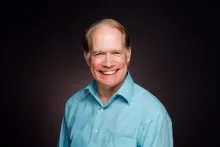
Greg Thomas is the former Pastor of the Cleveland, Ohio congregation. He retired as pastor in January 2025 and still attends there. Ordained in 1981, he has served in the ministry for 44-years. As a certified leadership consultant, Greg is the founder and president of weLEAD, Inc. Chartered in 2001, weLEAD is a 501(3)(c) non-profit organization and a major respected resource for free leadership development information reaching a worldwide audience. Greg also founded Leadership Excellence, Ltd in 2009 offering leadership training and coaching. He has an undergraduate degree from Ambassador College, and a master’s degree in leadership from Bellevue University. Greg has served on various Boards during his career. He is the author of two leadership development books, and is a certified life coach, and business coach.
Greg and his wife, B.J., live in Litchfield, Ohio. They first met in church as teenagers and were married in 1974. They enjoy spending time with family— especially their eight grandchildren.
